


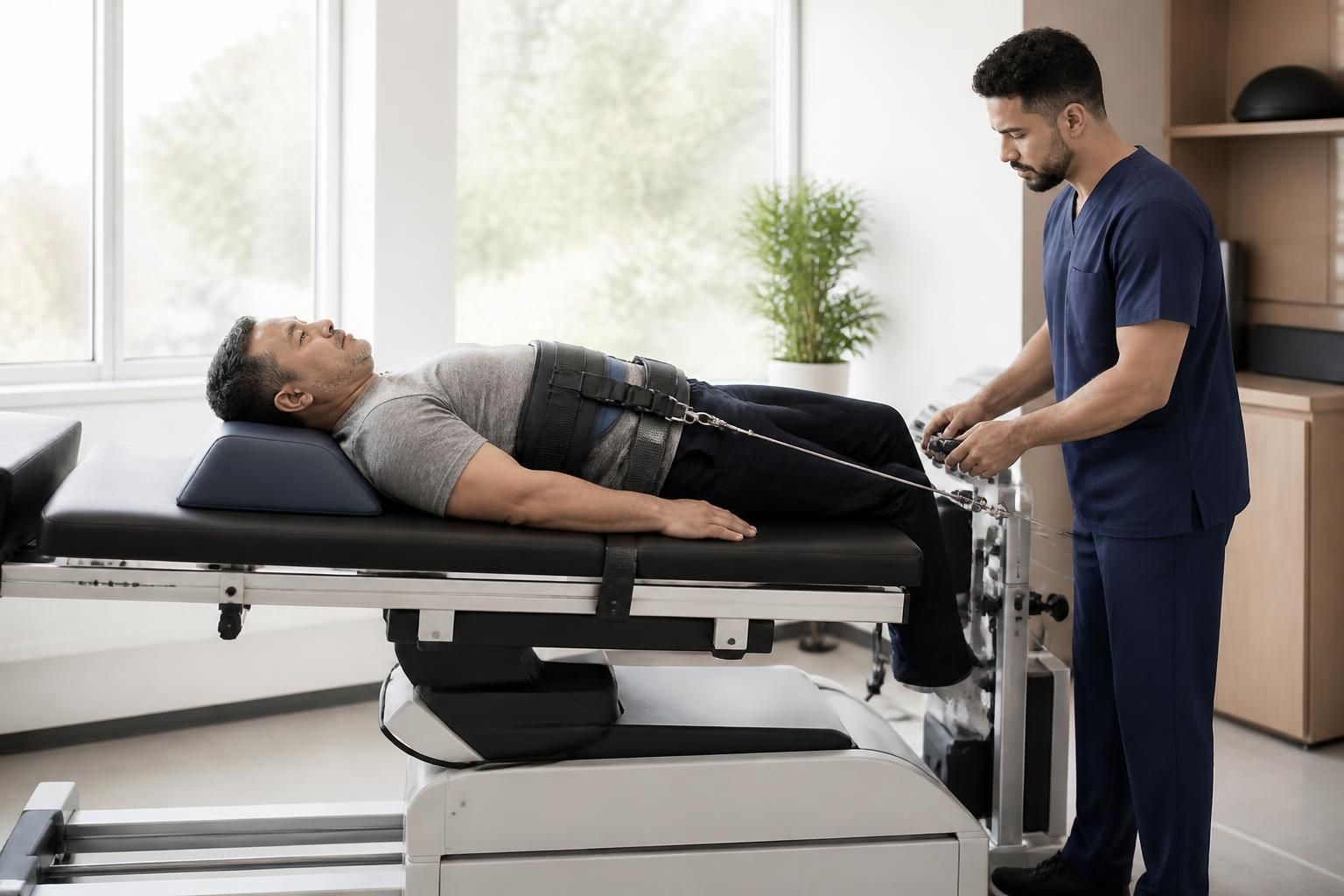
Sciatica, often described as pain that can radiate from the lower back to the leg, affects many residents of Anjou and the surrounding Montréal area. This nerve pain, often related to compression of the sciatic nerve, may result from various conditions such as herniated discs or foraminal stenosis. When facing these issues, spinal decompression stands out as a non-surgical treatment option to consider for certain patients.
However, several factors must be considered to determine when spinal decompression may be appropriate. Every case of sciatica is unique and requires a detailed assessment of the cause, symptoms, and progression. Treatment should also be part of a comprehensive approach that may include rehabilitation, manual care and, when needed, specialized management tailored to the local characteristics of Anjou and neighbouring areas.


Key points about sciatica and spinal decompression in Anjou
Understanding spinal decompression in the context of sciatica in Anjou
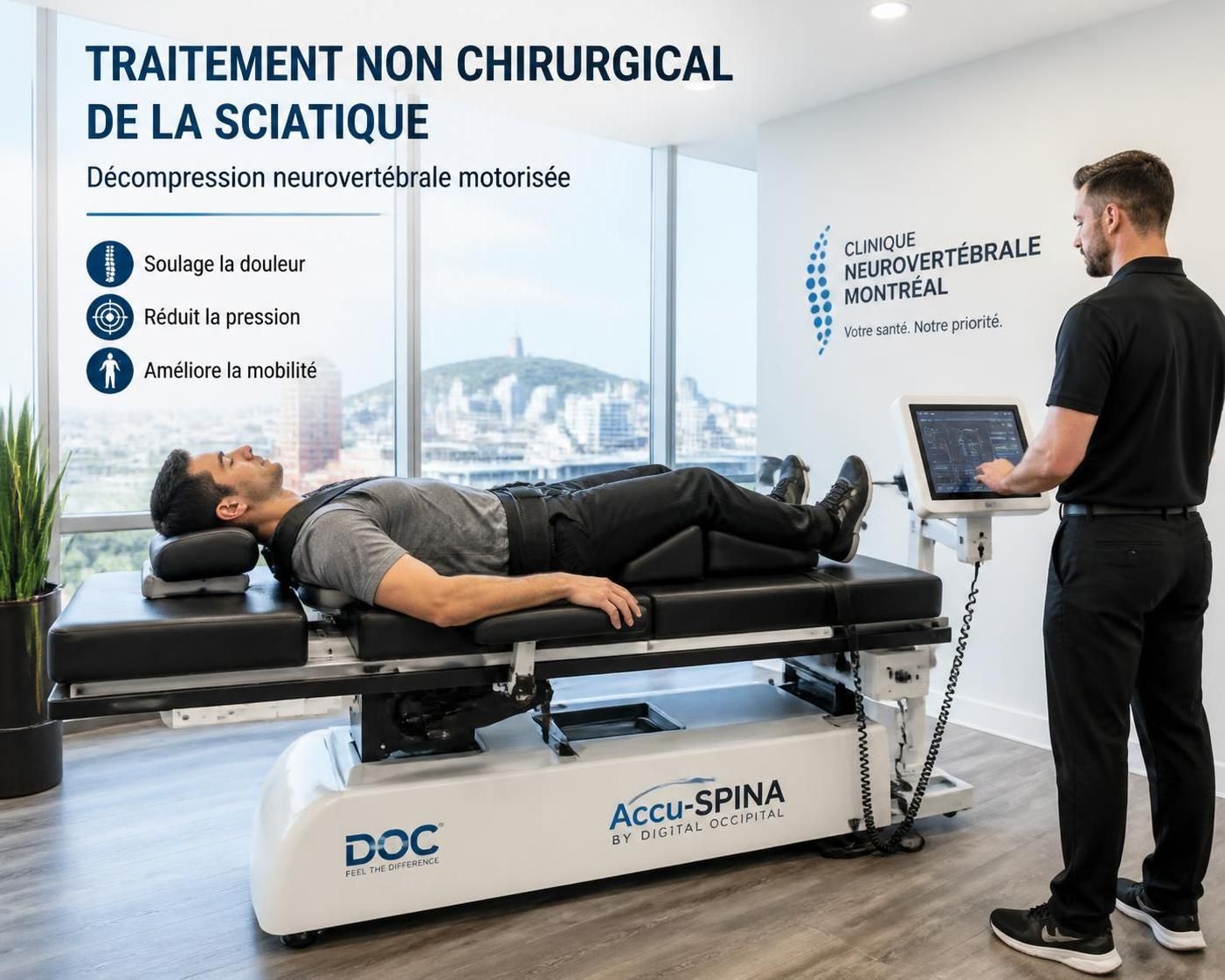
Spinal decompression is a non-invasive technique that uses a specialized table to stretch the spine in a controlled and gradual manner. By creating a traction effect, it aims to reduce pressure on the intervertebral discs and nerve roots involved in sciatic pain.
In the Anjou area, where the population may face specific challenges related to sedentary lifestyles, remote work, or occupational activities requiring prolonged posture, this approach can often relieve compression on the sciatic nerve. By reducing this pressure, patients may experience pain relief, reduced inflammation, and sometimes repositioning of displaced discs, particularly in cases of a herniated disc or disc protrusion.
Spinal decompression should be prescribed following a thorough assessment, including consideration of clinical signs and imaging examinations. It is not suitable for all forms of back pain or all patient profiles, as some conditions require more appropriate medical or surgical follow-up. For example, in cases of severe nerve compression with motor deficit, urgent medical intervention may be required.
According to reliable resources such as SOS Sciatica and TAGMED Clinic, decompression may offer meaningful benefits within a conservative care framework, while emphasizing the importance of careful patient selection and contraindications.
Factors that influence the appropriateness and success of spinal decompression treatment in Anjou
Several factors can alter the presentation and progression of sciatica symptoms, thereby influencing the decision to choose spinal decompression. In the daily context of Anjou residents, these include:
- Prolonged sitting, common among people working remotely or in office jobs, which can worsen nerve compression.
- Moderate physical activities, adapted for certain patient profiles, which may help maintain mobility without worsening pain.
- Sudden movements, or excessive flexion or extension of the lumbar spine, which can exacerbate symptoms.
- The duration of symptoms, as recent pain may respond differently to treatment than chronic pain lasting several weeks.
- Personal factors, such as age, body weight, associated medical conditions, and stress level.
It is important to note that the results of spinal decompression vary from person to person. Some patients experience rapid pain relief and improved mobility, whereas others experience a more gradual reduction, requiring several sessions. The intervention should therefore be personalized and accompanied by ongoing monitoring.
The table below provides a brief comparison between spinal decompression and other common conservative management options in Anjou:
| Approach | Main mechanism | Advantages | Limitations |
|---|---|---|---|
| Motorized spinal decompression | Controlled, progressive spinal traction | Non-invasive, may reduce nerve pressure, improves local circulation | Variable results, requires careful assessment, contraindicated in cases of severe deficit |
| Physiotherapy and targeted exercises | Muscle strengthening and joint mobilization | Improves stability and function, adaptable to the patient | Effects may be slow, requires adherence to the program |
| Anti-inflammatory and pain-relieving medication | Reduction of inflammation and pain control | Rapid symptom relief, accessible | Does not treat the underlying cause, possible side effects |
| Epidural or nerve injections | Targeted injection of corticosteroids or anesthetics | Powerful local anti-inflammatory effect | Invasive intervention, temporary results, not suitable for everyone |
Signs and situations to watch for requiring urgent consultation in Anjou
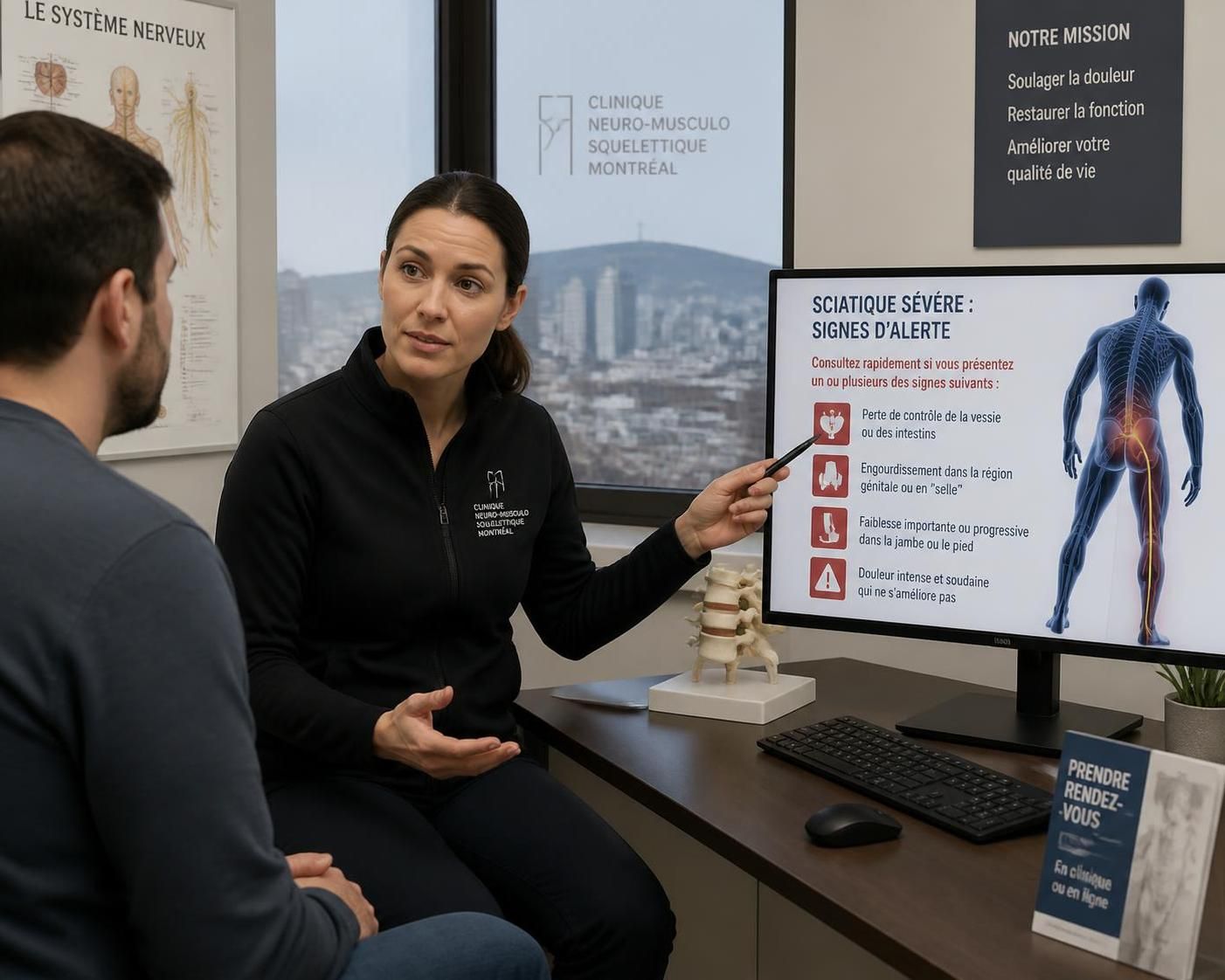
It is essential to remain alert to signs that may indicate a serious complication or require prompt medical assessment. In cases of sciatica in Anjou, the following situations should prompt immediate consultation:
- Loss of bladder or bowel control (incontinence or retention), which may suggest cauda equina syndrome.
- Numbness in the perineal area (the so-called “saddle” area), severe motor impairment, or rapidly progressing muscle weakness.
- Severe, persistent pain that does not improve despite treatment and is associated with fever or general malaise.
- Recent major trauma affecting the spine.
- History of cancer or infections, with new and unusual low back pain.
In these cases, urgent medical consultation is required to rule out serious conditions requiring specific treatment, often in a hospital setting. Conservative care, including spinal decompression, should not delay this care.
Sciatica treatment options in Anjou: spinal decompression as part of a stepped-care approach
For patients with sciatica consistent with moderate nerve compression, spinal decompression may provide an effective complement to usual strategies. This method is part of a multifaceted approach that prioritizes comfort, function, and safety.
This motorized and controlled approach aims to:
- temporarily reduce mechanical pressure on the intervertebral discs and nerve roots,
- promote local blood circulation and thereby help reduce inflammation,
- improve tolerance for movement and certain rehabilitation exercises.
It is essential to undergo a thorough professional assessment before beginning spinal decompression, to confirm the absence of contraindications and ensure that the patient profile, particularly in Anjou or the Montréal area, meets the recommended criteria.
At the same time, treatment may include:
- adapted exercises aimed at strengthening the core and improving posture,
- specific osteopathy care to optimize spinal mobility,
- the cautious use of pain-relieving and anti-inflammatory medications according to a health professional’s recommendations,
- in some cases, targeted injection treatment may be discussed as an adjunct.
It is essential to understand that spinal decompression does not replace spinal surgery when the latter is necessary due to severe compression or significant neurological deficit. However, for certain patients, it represents an interesting alternative to consider because of its non-invasive nature.
Clinics and professionals specializing in the Anjou area, such as TAGMED Clinic, often offer personalized approaches by combining these different modalities, providing support tailored to the medical assessment and the patient’s specific situation.
An educational video available online explains in detail how this technique works, its indications, and the conditions that may make notable symptom improvement possible.



Frequently asked questions about spinal decompression for sciatica in Anjou
If you are experiencing nerve pain consistent with sciatica in Anjou, a personalized assessment may help clarify the likely source of your symptoms, monitor important signs, and determine whether spinal decompression or another approach is recommended.
Dr. Sylvain Desforges, B.Sc., D.O., N.D., osteopath
This content is for educational purposes and does not replace a personalized medical consultation.
