


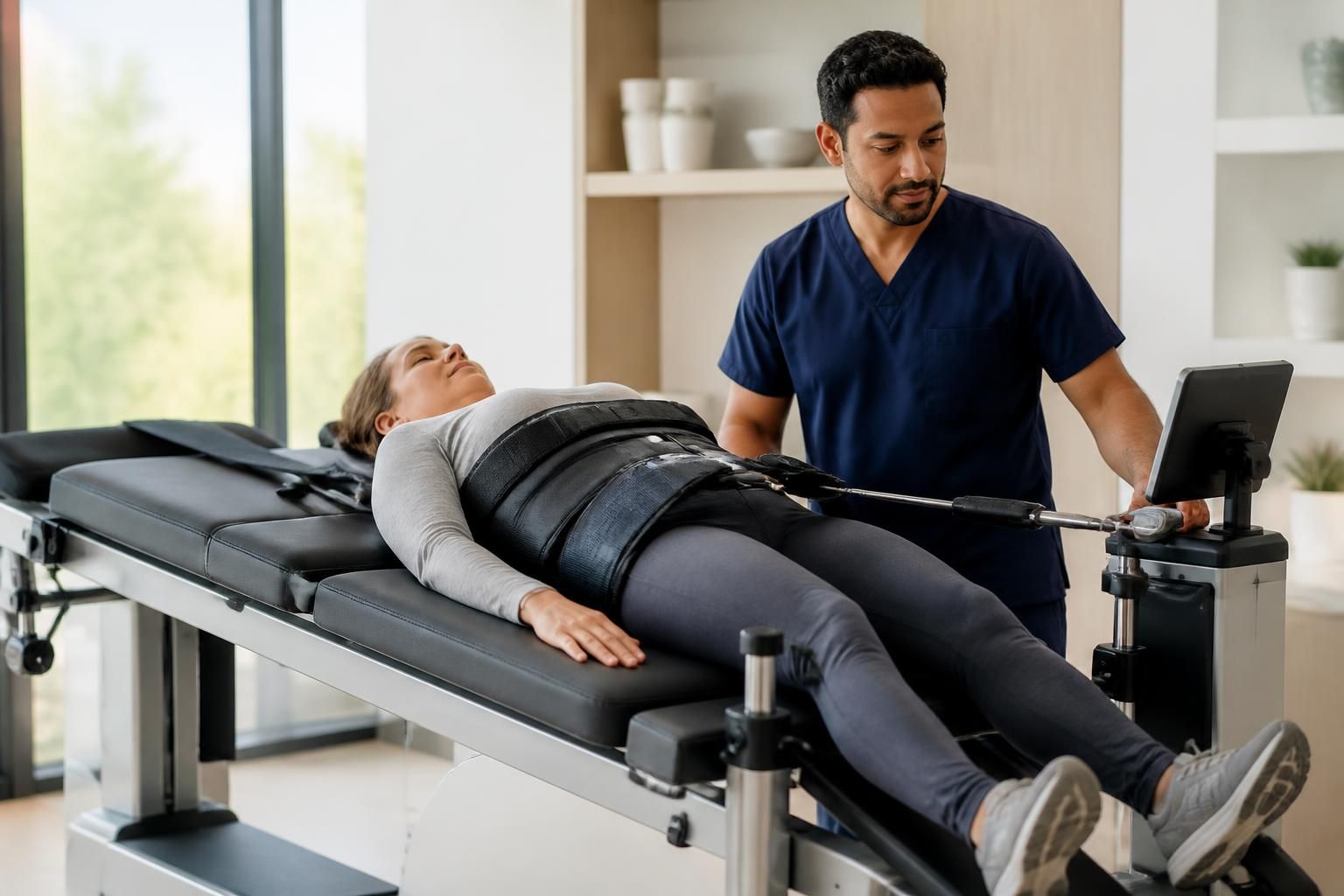
Sciatica is characterized by pain that radiates from the lower back to the leg, often accompanied by burning sensations, numbness, or weakness. These symptoms, which are common in the Greater Montréal area, can considerably affect quality of life and require a clear understanding of their origin to guide effective treatment.
Far more than a simple symptom, sciatica may reflect a range of causes, such as a herniated disc, foraminal stenosis, or local muscle tension. In Montréal, this complexity calls for a thorough clinical assessment, during which a professional will consider your specific symptoms to guide you toward the most appropriate treatment options, ranging from manual methods to motorized spinal decompression.



Key points about sciatica and its symptoms in Montréal
Throbbing or sharp pain radiating from the lower back to the buttock, leg, and sometimes the foot, often associated with tingling, numbness, or even muscle weakness.
Lumbar disc herniation, disc protrusion, foraminal stenosis, lumbar osteoarthritis, and piriformis syndrome are among the main possible causes.
The path and intensity of pain vary according to the affected nerve root and mechanical cause, which makes self-diagnosis more difficult.
Consult a professional in Montréal as soon as progressive weakness, widespread numbness, or persistent pain occurs to help avoid complications.
Detailed clinical assessment of sciatic pain in Montréal
Sciatic pain begins when a lumbar nerve root, particularly L4, L5, or S1, becomes irritated or compressed. This may result from a herniated disc that protrudes into the foraminal space where the nerve exits, spinal or foraminal stenosis that mechanically narrows this passage, or inflammation caused by osteoarthritis. Understanding that pain is not due to a single cause but to a combination of mechanisms is crucial for an accurate diagnosis.
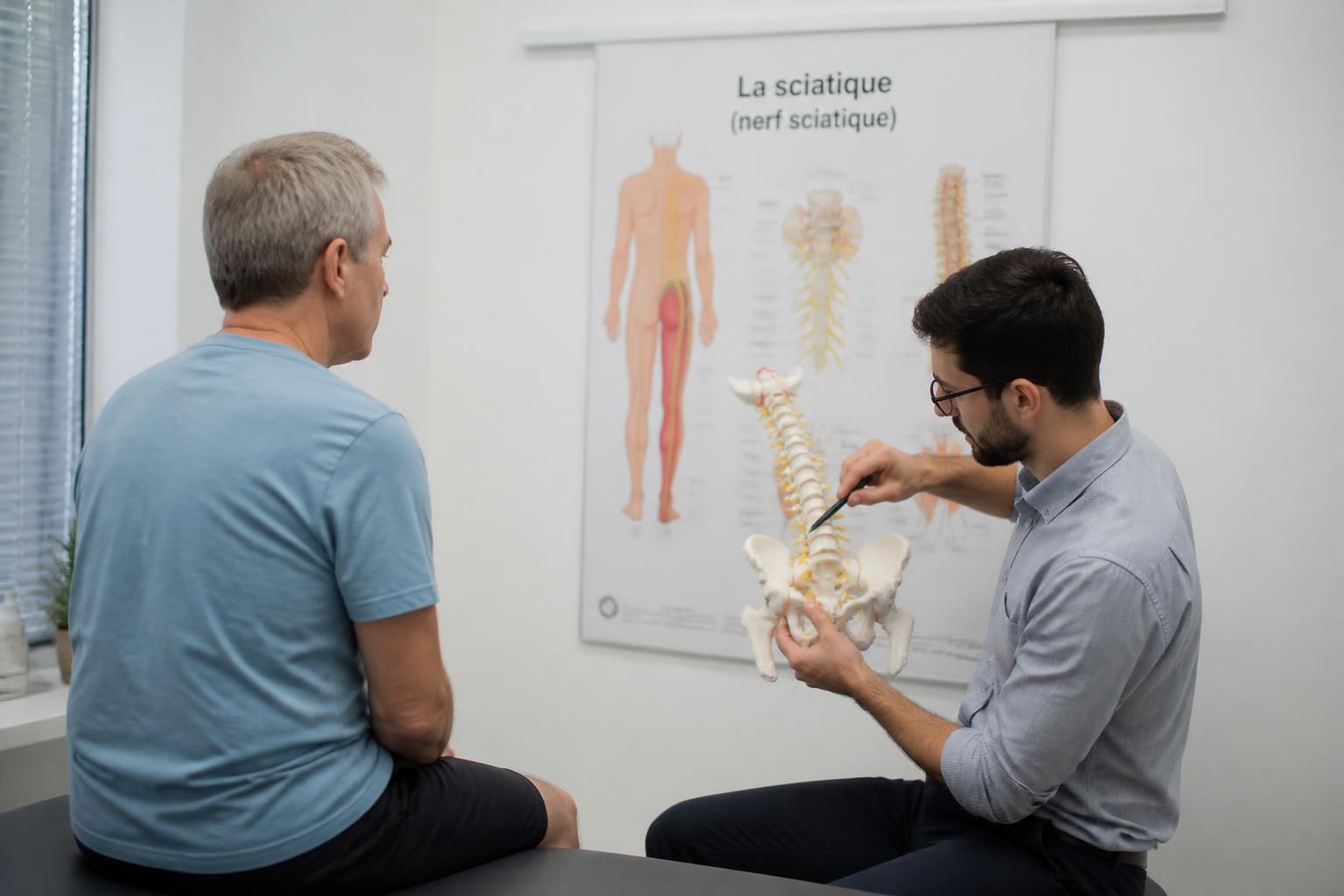
The sciatic nerve, the longest nerve in the body, originates in the lower back, passes through the buttock beneath the piriformis muscle, and then travels along the back of the thigh and calf to the foot. This pathway explains why nerve irritation in the lumbar region can cause pain radiating to these areas, sometimes accompanied by electrical sensations, burning, or tingling.
Pain located only in the buttock or thigh without radiation may nevertheless not represent classic sciatica, making a clinical assessment essential to distinguish sciatica from referred pain or other forms of neuralgia. In Montréal, back medicine specialists use physical tests such as the Lasègue sign or a neurological examination to identify signs of nerve irritation: reduced reflexes, muscle weakness, or loss of sensation in specific areas.
In addition, imaging such as an MRI may reveal disc herniations or narrowing of the spinal canal, but its interpretation must always be considered in the clinical context, since certain imaging findings may not be the actual source of pain. For example, a disc protrusion visible on MRI does not necessarily cause sciatic symptoms and may coexist with other mechanical factors.
This level of precision helps guide the treatment plan, which differs depending on whether there is acute disc compression, osteoarthritic degeneration, or another underlying cause. Among Montréal resources in osteopathy and physiotherapy, some clinics, such as TAGMED Clinic, offer a comprehensive assessment incorporating these factors.
Factors affecting the perception and nature of sciatic symptoms
Sciatic pain presents differently depending on several factors related to lifestyle habits and individual mechanical characteristics. Prolonged sitting, common in office jobs or remote work in Montréal, is particularly known to worsen symptoms, especially when sciatica is disc-related. This position increases pressure on certain lumbar discs and may intensify nerve irritation related to a protrusion or herniation.
Walking or standing for long periods can also increase pain, especially in cases of foraminal stenosis, where the narrowed passage for the nerve roots undergoes increased mechanical compression under body weight. Intensity also varies with movement: flexion or extension of the spine may relieve or worsen symptoms, which explains why some patients in Montréal experience improvement when leaning slightly forward.
Stress and muscle tension play a significant role in worsening sciatic symptoms. A tight or spasmed piriformis muscle can compress the sciatic nerve in the buttock area, mimicking classic sciatica. This piriformis syndrome must be differentiated to tailor treatment. Leg pain may also fluctuate in intensity, sometimes involving more burning, tingling, or weakness depending on physical activities.
It is important to clarify that so-called “universal” exercises are not suitable for everyone. Certain positions or movements may actually increase tension on the nerve. Professionals in osteopathy in Montréal support personalized rehabilitation based on a clear understanding of aggravating and relieving factors. Regular clinical follow-up is recommended, particularly if new weakness, widespread numbness, or changes in symptoms occur.
List of factors that modify sciatic pain:
- Prolonged sitting, particularly at work or while commuting.
- Prolonged standing or walking, particularly in cases of foraminal stenosis.
- Manoeuvres that increase intra-abdominal pressure: coughing, sneezing, physical exertion.
- Postural variations: flexion, extension, twisting of the lumbar spine.
- Muscle tension, particularly in the piriformis or lumbar muscles.
- Psycho-emotional factors, stress, and anxiety that may amplify pain perception.
- Unsuitable physical activities or repetitive movements that may worsen nerve irritation.

Warning signs and when consultation is necessary in Montréal
Sciatica can sometimes progress to situations requiring urgent medical assessment to prevent serious neurological complications. Warning signs include loss of bladder or bowel control, numbness in the saddle area (around the genitals and anus), significant and rapidly developing muscle weakness in the legs, and severe bilateral pain.
Pain accompanied by unexplained fever, significant weight loss, or occurring after major trauma should also receive prompt medical attention. These symptoms may indicate a serious underlying cause requiring specialized care.
For pain affecting only one leg, without these warning signs, a consultation at a specialized clinic in Montréal, such as TAGMED Clinic, can help identify the cause of sciatica and guide appropriate treatment.
- Recent or progressive loss of strength in one leg.
- Marked numbness, particularly in the perineal area.
- Loss of bladder or bowel control.
- Intense, disabling bilateral sciatic pain.
- Fever with back pain followed by a marked decline in general condition.
- Symptoms after an accident or major fall.
Treatment options available to patients with sciatica in Montréal
Managing sciatica is based on a gradual approach that helps patients regain optimal function while minimizing risks. Following a thorough clinical assessment, various conservative options may be offered, beginning with maintaining or gradually resuming tolerated activities to help prevent muscle atrophy or chronic stiffness.
Physiotherapy treatments in Montréal aim to reduce pain through gentle manual techniques, targeted exercises to strengthen back muscles and improve posture, and techniques intended to decompress irritated tissues. Osteopathy can be fully integrated into this plan by releasing joint or muscle restrictions that increase nerve irritation.
Motorized spinal decompression may be an option of interest in certain selected cases. It involves controlled, gradual spinal traction applied to the lumbar spine to temporarily reduce mechanical stress on the discs and nerve roots, particularly when a confirmed disc herniation or disc protrusion is present.
However, this therapy is not suitable for all patient profiles and requires a detailed assessment. Results vary between individuals, and no universal protocol can guarantee consistent improvement. It is also important to note that decompression does not necessarily replace other treatments or surgery when surgery is warranted.
Medication may be offered as an adjunct under medical supervision to manage pain and inflammation. Injections or surgery, however, are considered only as a last resort, particularly when symptoms are severe, persistent, or associated with a neurological deficit.
| Treatment option | Description | Indications | Limitations |
|---|---|---|---|
| Exercises and staying active | Personalized program of suitable movements and stretches. | Moderate pain, no serious neurological deficit. | Not very effective on its own in cases of major nerve compression. |
| Physiotherapy and osteopathy | Manual care and functional techniques to release tension and improve posture. | Sciatica of mechanical or muscular origin. | Requires regular follow-up to adjust the plan. |
| Spinal decompression | Progressive motorized traction intended to reduce disc and nerve stress. | Disc herniation, protrusion, or foraminal stenosis with no contraindications. | Results vary by patient; not suitable for emergencies. |
| Medication and injections | Anti-inflammatory medications, pain relievers, targeted injections to reduce inflammation. | Intense pain or significant inflammation. | Temporary effects, possible dependence, side effects. |
| Surgery | Procedure to remove a significant mechanical cause (herniation, stenosis). | Severe or persistent neurological deficit, disabling pain. | Surgical risks, recovery period, not always necessary. |
Frequently asked questions about sciatica and its care in Montréal
What exactly is sciatica?
Sciatica refers to pain related to irritation or compression of the sciatic nerve, often caused by lumbar conditions such as a disc herniation or foraminal stenosis. It presents as pain radiating into the leg.
How can sciatica be distinguished from muscle pain?
Sciatic pain follows a specific nerve pathway and may be accompanied by burning, tingling, or numbness, whereas muscle pain is often more localized and related to tension or a muscle contracture without nerve radiation.
Which treatments are effective for sciatica in Montréal?
Treatments are based on a personalized assessment and may include physiotherapy, osteopathy, motorized spinal decompression, and sometimes medication. The goal is to reduce pain while improving function.
When should you seek emergency care for sciatica?
If you have significant and progressive muscle weakness, loss of bladder or bowel control, or numbness in the genital area, seek medical care immediately.
Is spinal decompression suitable for everyone?
This method is suitable for some patients following a thorough assessment. It is not recommended in cases of spinal instability, infection, or another contraindication. Results vary according to the cause and severity.
If you are experiencing pain that travels down the leg and would like to better understand your condition, a comprehensive assessment may help identify the likely cause and guide the most appropriate treatments. TAGMED Clinic in Mont-Royal, near Montréal, offers personalized follow-up to support each patient toward lasting well-being.
Book an appointment for an assessment
Dr. Sylvain Desforges, B.Sc., D.O., N.D., osteopath
This content is provided for educational purposes and does not replace a personalized consultation with a health professional.
