


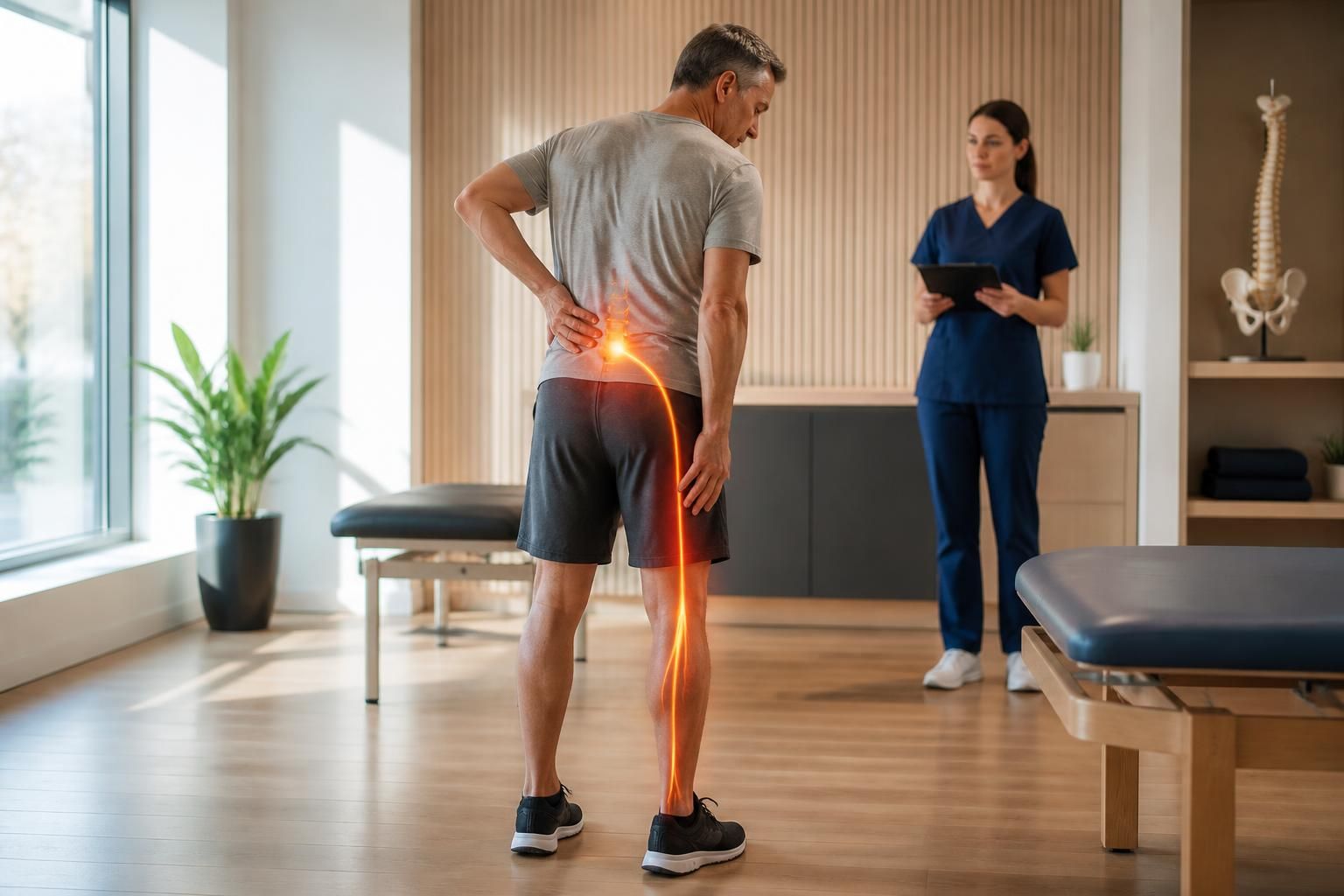
Sciatica is pain that follows the path of the sciatic nerve and may radiate from the lower back down to the leg, passing through the buttock and thigh. In the borough of Outremont, as elsewhere in Montréal, this pain is often felt as burning, an electric shock sensation, or numbness. This condition particularly affects people between 40 and 60 years of age and presents with several characteristic symptoms that warrant understanding their cause to better manage the pain.
It is essential to interpret the signs experienced while taking individual context into account, including the possible cause, the precise location, changes over time, and daily activities in Outremont. Certain symptoms, such as tingling or muscle weakness associated with pain radiating into the leg, require particular attention and an appropriate clinical assessment.


Key signs for recognizing sciatic pain in Outremont
How does sciatica present, and what are its main causes?
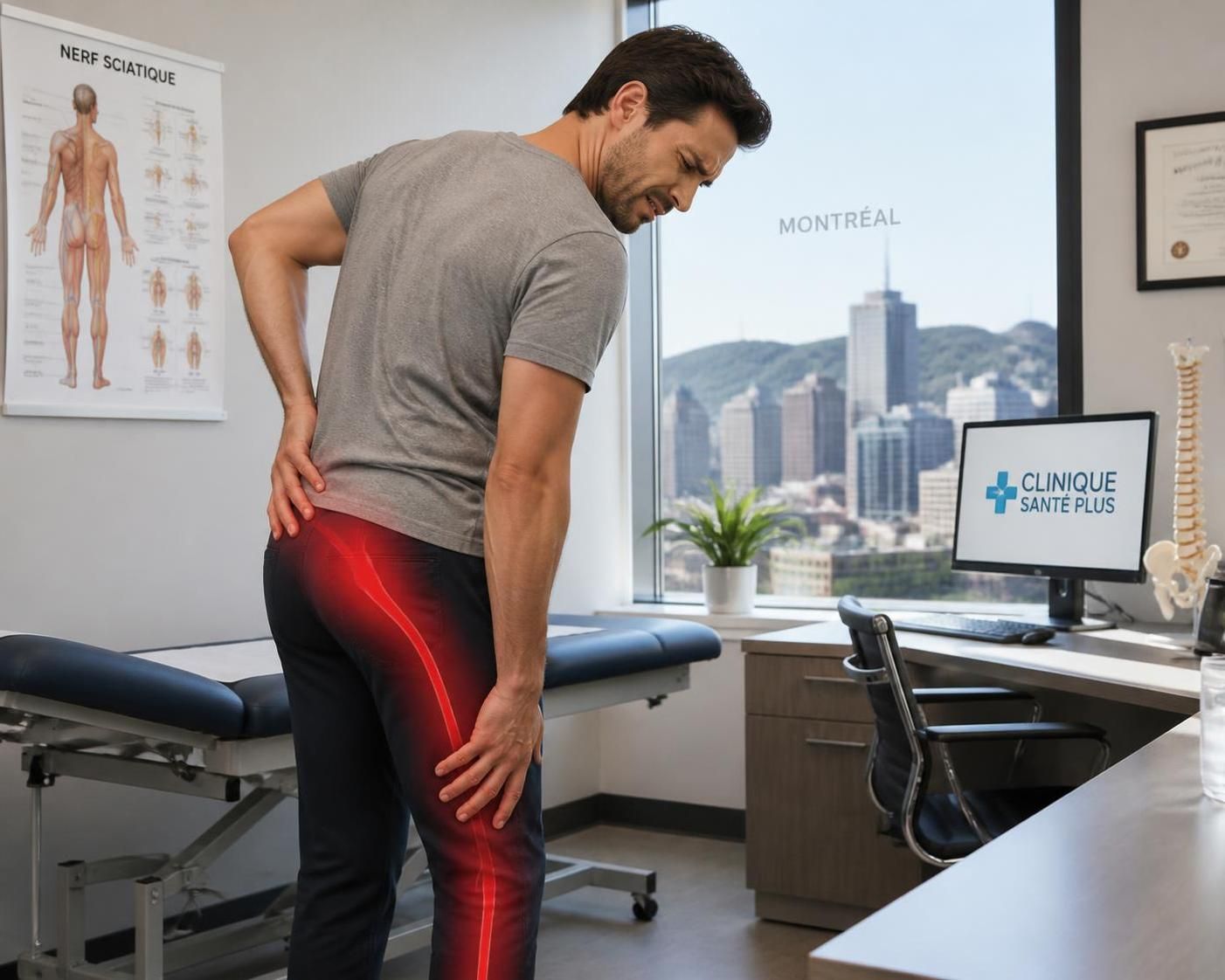
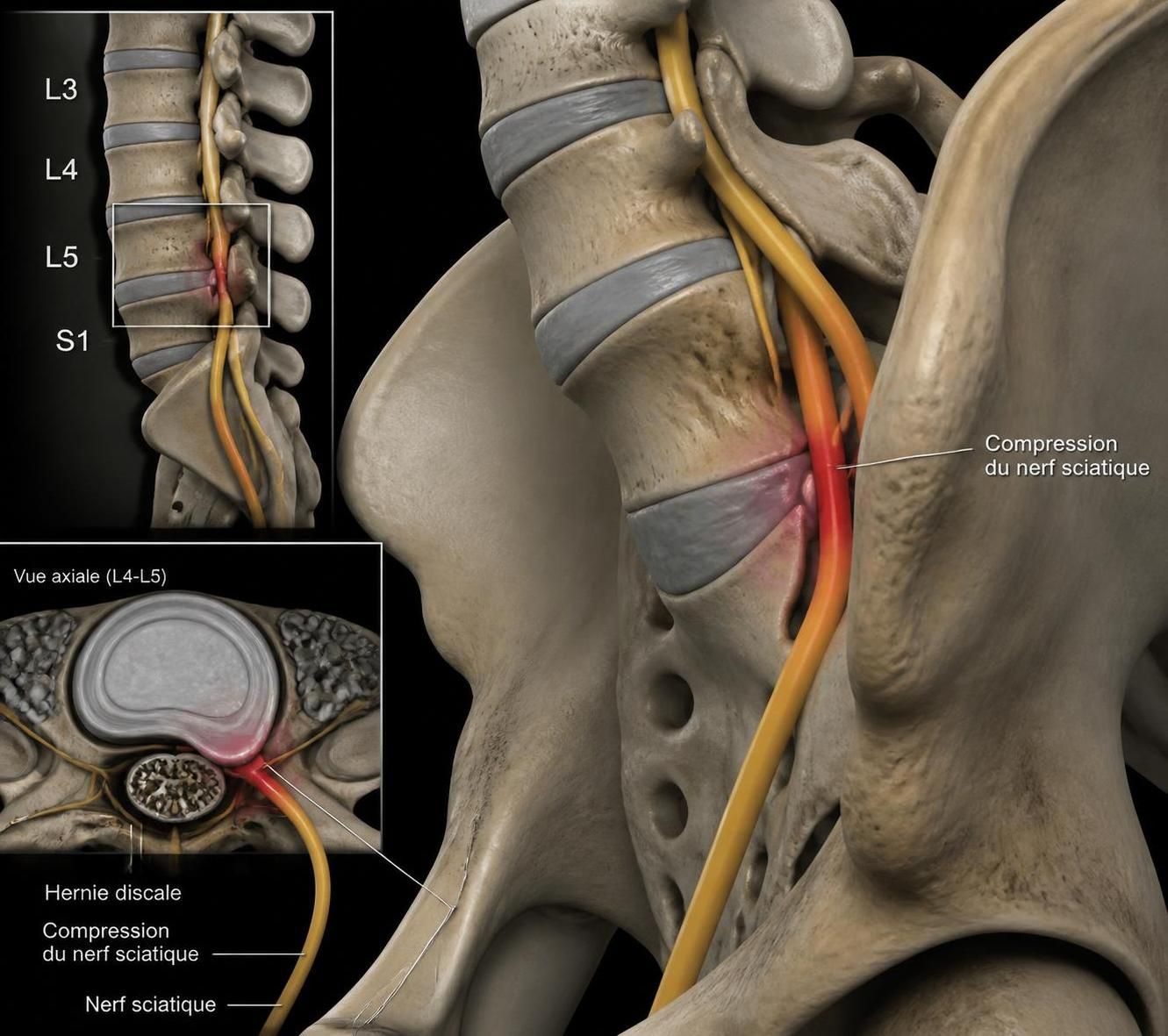
Sciatica in Outremont mainly results from irritation or compression of a lumbar nerve root, usually L5 or S1, which forms part of the sciatic nerve. This compression causes characteristic radicular pain, as well as associated symptoms such as numbness or muscle weakness.
The most common cause remains a lumbar disc herniation, observed in approximately 85% of cases. It occurs when the intervertebral disc between two vertebrae develops a tear, allowing some of its gel-like material to escape and press on the corresponding nerve root. This phenomenon is often triggered by physical exertion, an awkward movement, or even a cough.
Lumbar spinal stenosis or foraminal stenosis is another common cause, especially among older people. This gradual reduction in the space available for nerve roots causes pain that worsens particularly with walking and improves in a flexed position.
Finally, spondylolisthesis, which refers to one vertebra slipping over another, can also cause nerve compression responsible for sciatica.
In certain rare cases, other factors such as piriformis syndrome or pregnancy-related sciatica may be the source of the pain. The latter, which is common in the third trimester, can be temporarily disabling because of postural and hormonal changes.
For further information, it is helpful to understand the possible causes of sciatica according to the latest medical data.
Understanding the mechanisms of intense radicular pain in Outremont
Sciatic pain is described as radicular because it follows the precise path of the compressed or irritated nerve root. This pain can vary in intensity and type, ranging from diffuse burning to a highly localized electric shock sensation.
The sciatic nerve, the longest nerve in the human body, extends from the lumbar spine, passes through the buttock, and then travels down the back of the thigh and leg. Depending on the nerve root affected, the path and location of the pain differ:
- L5 root: pain radiating toward the posterolateral aspect of the thigh, the lateral calf, and as far as the big toe, often associated with difficulty lifting the foot (foot drop).
- S1 root: pain travelling down the buttock and the back of the leg to the heel and smaller toes, with possible weakness of the calf muscles and a reduced Achilles reflex.
Inflammation caused by compression irritates the nerve, leading to paraesthesia such as tingling and numbness. This nerve-related phenomenon can also cause muscle weakness when nerve transmission is impaired.
However, the intensity and spread of the pain are not enough to establish a definitive diagnosis. A clinical assessment and examinations, such as an MRI, are needed to confirm the origin of symptoms, as detailed in the resources available on sciatic pain and its mechanisms.
Everyday factors that worsen or relieve sciatica symptoms in Outremont
Several activities and postures influence the perception of sciatic pain. In Outremont, a neighbourhood characterized by urban life mixed with office and residential spaces, everyday movements can alter the intensity of symptoms.
For example, prolonged sitting, common with remote work in Montréal, can notably increase pressure on the lumbar spine and worsen inflammation of the sciatic nerve, thereby intensifying pain and sensations of numbness.
Forward-bending movements of the trunk, such as bending over to pick up an object, often exacerbate symptoms. Conversely, some people find relief by adopting slightly forward-leaning positions, which open the lumbar canal and decompress the nerve roots.
Gentle walking is generally recommended because it stimulates circulation and promotes mobility without worsening pain. On the other hand, stairs or activities requiring substantial muscular effort can trigger or intensify radicular pain.
It is important to monitor for the onset or worsening of symptoms such as increasing numbness, tingling, or weakness that limits walking, and to seek reassessment if these signs change.
A comparison table summarizes these factors to better understand their role in the everyday experience of pain:
| Factors | Effect on symptoms | Outremont-specific example |
|---|---|---|
| Prolonged sitting | Worsens pain and inflammation | Office work, remote work in Outremont condos |
| Moderate physical activity | Promotes circulation and recovery | Walking in Outremont Park or light activities |
| Trunk flexion | May worsen radicular pain | Picking up objects from the floor, gardening |
| Forward-leaning positions | May provide temporary relief | Postures adopted while walking or leaning on a table |
When and why to seek care for persistent sciatic pain in Outremont
Certain situations warrant a specialized consultation to assess sciatica, particularly when pain persists despite 6 to 8 weeks of conservative treatment or if associated symptoms appear. This process helps refine the diagnosis, identify underlying causes, and suggest appropriate management options.
Signs requiring a clinical assessment: sciatic pain extending below the knee, persistent numbness or tingling, muscle weakness that limits walking, sleep disturbance related to pain.
Warning signs requiring urgent medical attention: urinary or bowel problems, saddle anaesthesia (loss of perineal sensation), rapid or significant weakness in the legs, fever associated with low back pain, a history of cancer, or recent trauma.
When these signs are present, it is important not to delay consulting a health-care professional, who may order additional tests such as a lumbar MRI and direct you toward appropriate treatments. In Outremont, specialized health services are accessible and can see patients for a focused assessment.
To learn more about the signs indicating when to seek care for sciatic nerve pain, it is recommended to refer to reliable educational resources.
Local and advanced treatment options for sciatica in Outremont
The treatment of sciatica, particularly in the borough of Outremont, follows a progressive and personalized approach. The first step is to maintain an appropriate level of activity while avoiding prolonged bed rest, which can delay recovery.
Conservative care often includes pain relievers and anti-inflammatory medications prescribed on the advice of a health-care professional. Physiotherapy or manual care, such as osteopathy, may help relieve pain and improve muscle function. These interventions should always be recommended following a thorough assessment.
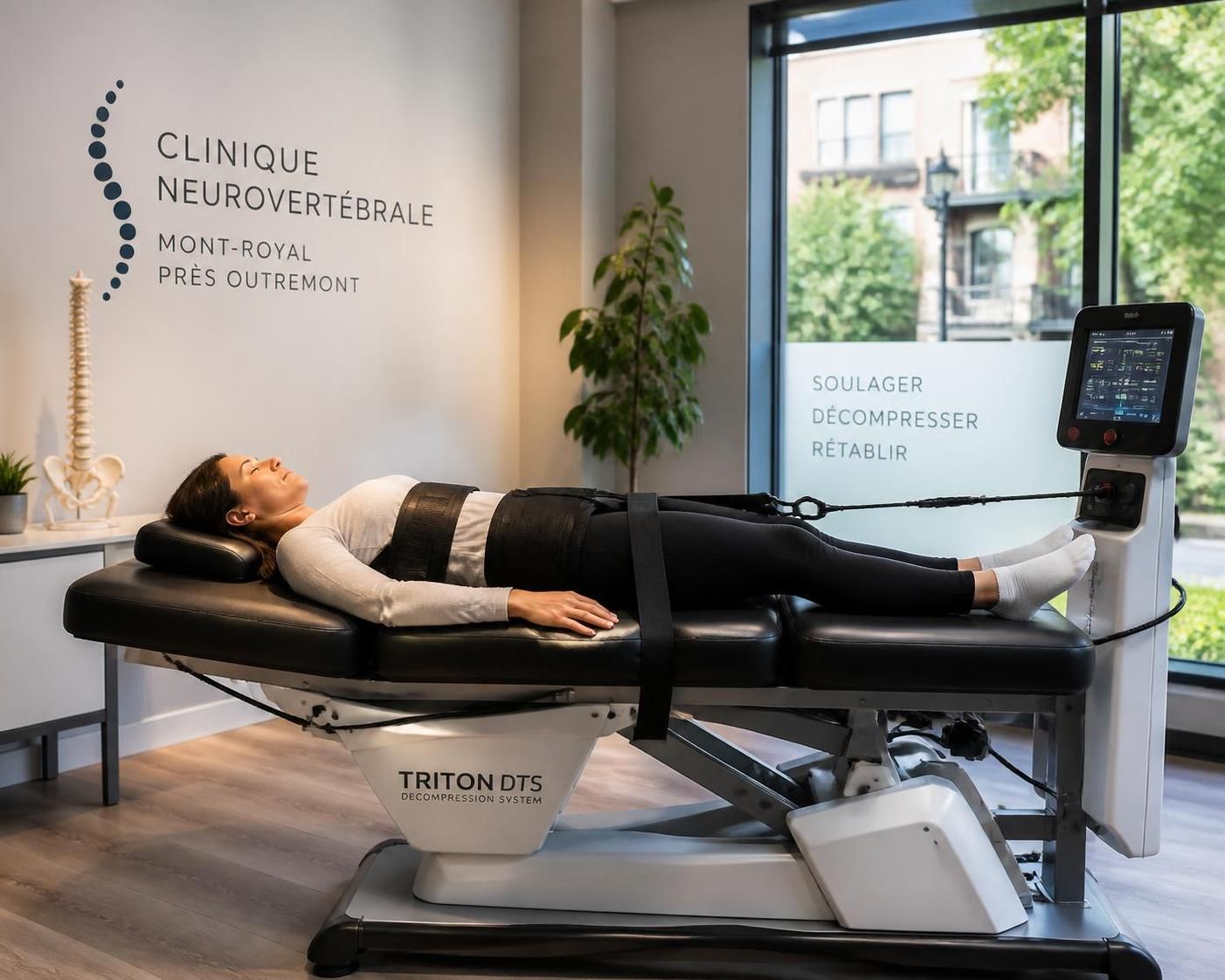
Motorized neurovertebral decompression, available in certain centres near Outremont, is a specific technique involving controlled, gradual traction applied to the lumbar spine. This method aims to reduce pressure on nerve roots, particularly in cases compatible with a disc herniation, disc protrusion, or foraminal stenosis.
It is crucial to emphasize that this decompression is not a universal solution and requires a prior medical assessment. Results vary from one patient to another, and this approach does not replace urgent care when warning signs are present.
In some situations, if pain persists or worsens despite conservative treatments, corticosteroid injections or surgery may be offered, depending on symptom severity and specialized assessment.
To better understand the sciatica treatment options in Montréal, including neurovertebral decompression, it is relevant to consult resources suited to the region.
What are the typical symptoms of sciatica?
Sciatica generally presents as pain radiating from the lower back toward the buttock and thigh, and sometimes as far as the foot, accompanied by tingling, numbness, and sometimes muscle weakness.
When should urgent care be sought for sciatic pain?
Urgent consultation is necessary in the presence of urinary or bowel problems, saddle anaesthesia, significant progressive weakness in the legs, or fever associated with low back pain.
Is neurovertebral decompression suitable for everyone?
This technique may be considered for certain patients after a focused assessment, primarily in cases of disc herniation or foraminal stenosis. It is not suitable for everyone and does not replace surgery when surgery is indicated.
Can sciatica recurrences be prevented?
Maintaining regular physical activity, good posture at work, and muscle-strengthening exercises may help prevent recurrences.
How can sciatica be distinguished from simple low back pain?
Sciatica is characterized by pain radiating into the leg, often accompanied by paraesthesia or weakness, whereas low back pain remains localized in the lower back without radiation.
If you experience pain radiating into your leg accompanied by numbness or tingling, a clinical assessment can help clarify the likely cause and guide appropriate conservative management options.
Near Outremont, TAGMED Clinic offers a specialized assessment for sciatica, including, depending on the individual profile, motorized neurovertebral decompression and specific osteopathy.
Comprehensive sciatica assessment in Montréal
Dr. Sylvain Desforges, B.Sc., D.O., N.D., osteopath
This content is educational and does not replace a personalized assessment with a health-care professional.
