





Sciatic pain often presents with complex symptoms, combining pain, numbness, and functional limitations. For Westmount residents, this condition can significantly affect quality of life, especially when it results from nerve compression related to spinal conditions. Neurovertebral decompression is emerging as an accessible treatment option in the Greater Montreal area, offering a non-invasive solution aimed at reducing pressure on the sciatic nerve.
It is essential to understand sciatica through an accurate assessment of symptoms and their cause. Neurovertebral decompression, although promising, is not suitable for every patient profile and should be part of a comprehensive, individualized care plan. In Westmount, where work and lifestyle conditions play a role in spinal health, understanding this approach can help improve day-to-day comfort.
In brief: key points about sciatica and neurovertebral decompression in Westmount
- Sciatica: pain caused by irritation or compression of the sciatic nerve, often due to a herniated disc, protrusion, or foraminal stenosis.
- Neurovertebral decompression: a controlled motorized technique that gently stretches the spine to reduce pressure on the discs and nerve roots.
- Indications: patients with sciatic pain and signs consistent with nerve compression, following a thorough assessment.
- Benefits: a non-invasive method that promotes restoration of mobility and gradual pain reduction without surgery.
- Local considerations: care adapted to the Westmount lifestyle, including the effects of remote work, sedentary habits, or commuting by car.
- Limitations: decompression is not a universal solution and should be integrated into a care plan that may include physiotherapy, ergonomic advice, and, if necessary, medical follow-up.
Understanding sciatica and the mechanisms of nerve compression in the Westmount area
Sciatica is a complex clinical phenomenon resulting from irritation or compression of the sciatic nerve, generally in the lumbar region. In Westmount, where the population is often active and exposed to prolonged postures, particularly with remote work, the prevalence of these disorders occurs within a specific context. This requires a careful analysis of the causes, symptoms, and functional consequences.
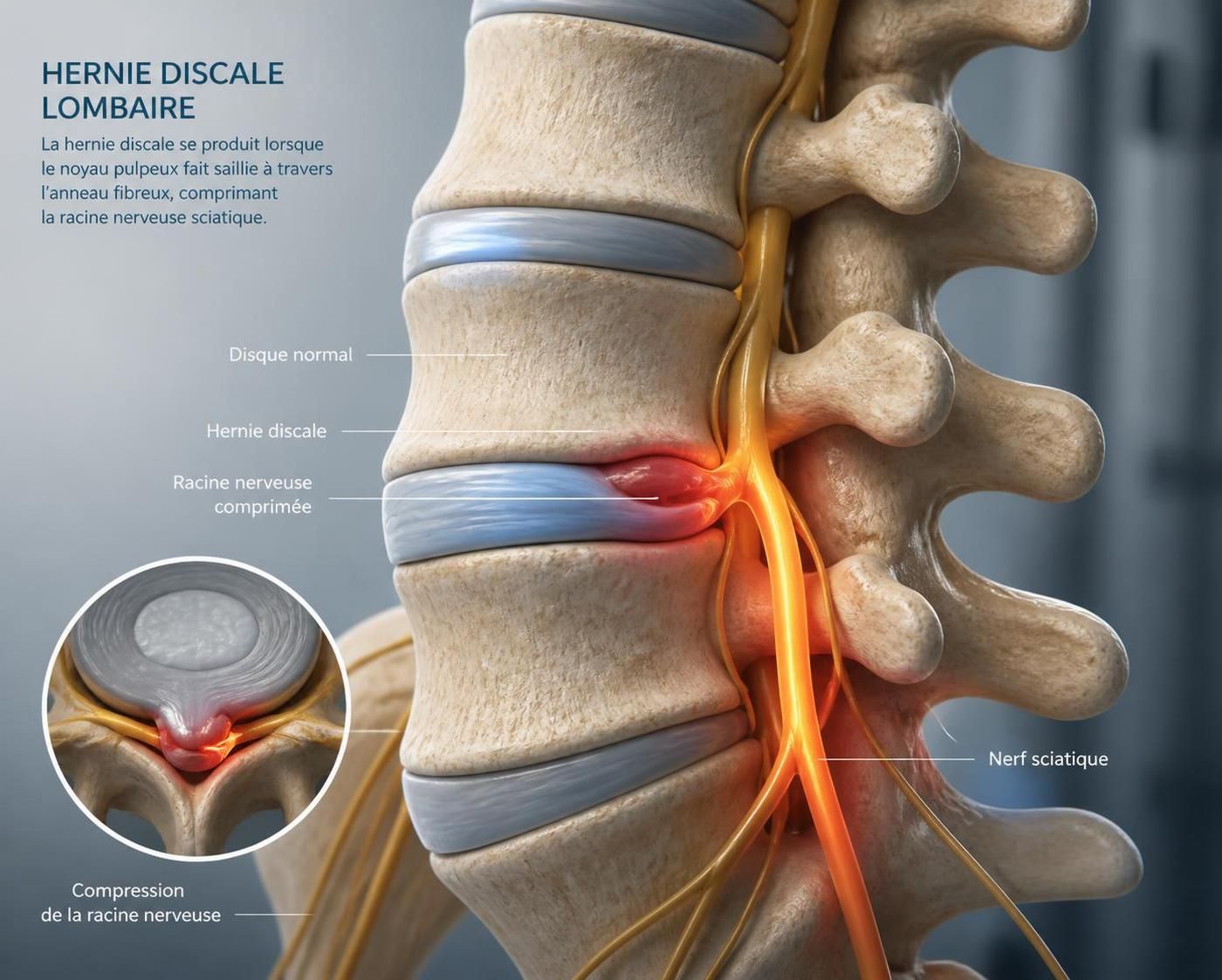
The sciatic nerve arises from nerve roots located between the lumbar and sacral vertebrae. A herniated disc, disc bulge, protrusion, or foraminal stenosis can lead to increased pressure on these roots, causing pain that radiates into the buttock, thigh, leg, and sometimes the foot. This pain may be accompanied by numbness, tingling, or muscle weakness in the affected leg.
It is important to distinguish sciatica from other types of low back pain, such as uncomplicated low back pain or femoral neuralgia, because treatments and prognoses differ. Typical sciatic pain often follows a clearly defined nerve-root distribution, but variations are common. For example, symptoms may occur after exertion, prolonged sitting, or back-bending movements common in everyday life in Westmount.
The contribution of spinal conditions requires an accurate assessment. A herniated disc, in which the nucleus pulposus partly escapes its usual space, can directly irritate the sciatic nerve. Similarly, foraminal stenosis, which is a narrowing of the channel through which the nerve roots pass, increases compression. These conditions can worsen with aging or prolonged mechanical overload.
In the Westmount context, where living conditions include frequent commuting, prolonged sitting, and varied activities, sciatica can quickly affect the ability to maintain normal daily activity. This justifies particular attention to treatment management and adaptation.
Neurovertebral decompression: principle and application in the management of nerve pain in Westmount
Neurovertebral decompression is a non-invasive therapeutic method that involves applying controlled, gradual traction to the lumbar spine. The primary objective is to reduce compression on the intervertebral discs and nerve roots, including the sciatic nerve. This approach is based on validated biomechanical principles that promote local blood circulation, reduced intradiscal pressure, and tissue regeneration.
In a neighbourhood like Westmount, where patients frequently seek alternatives to surgery or prolonged medication treatments, neurovertebral decompression represents a promising option. It is often used in addition to other approaches such as physiotherapy, ergonomic advice, or targeted osteopathy.
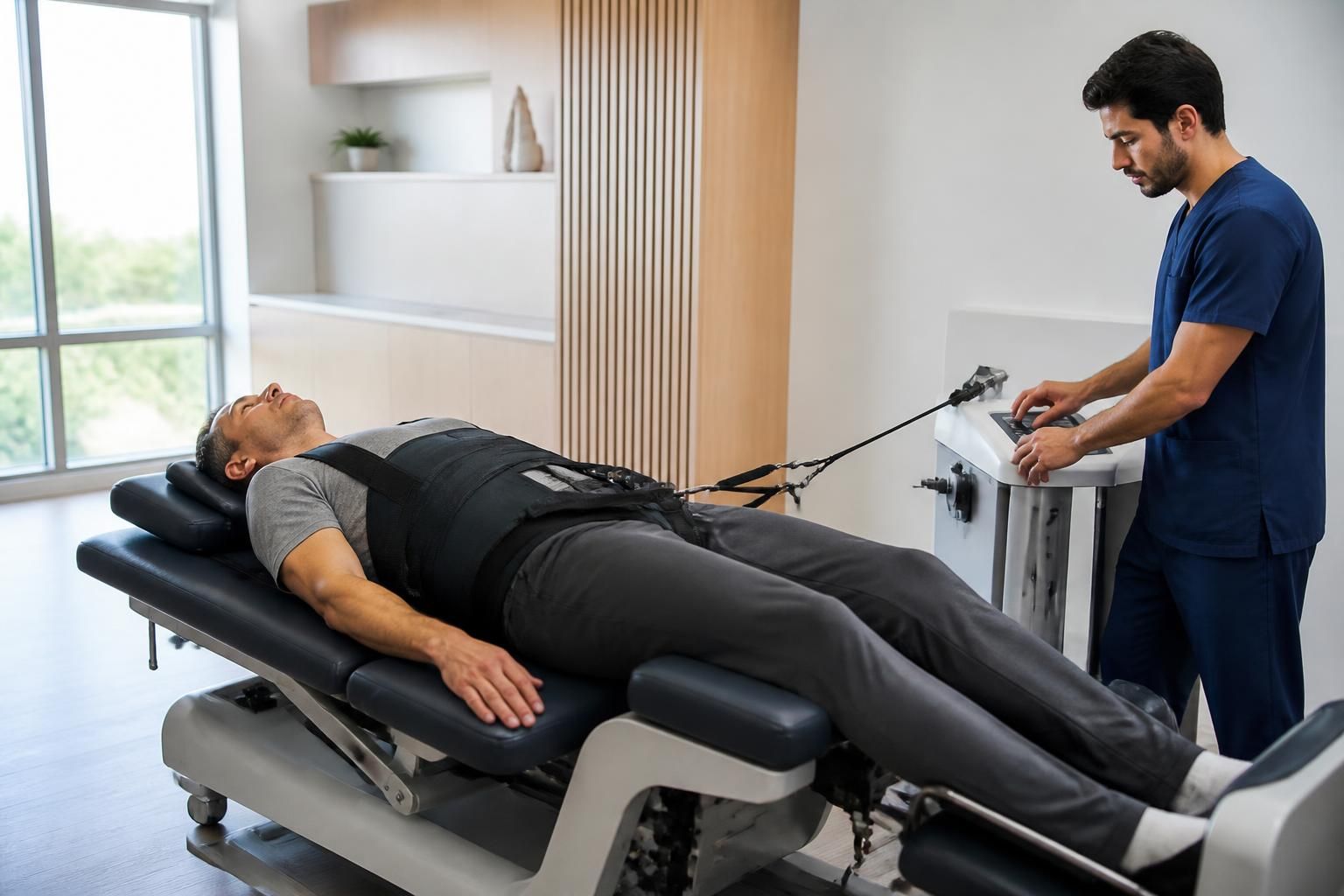
The technique is generally performed on a motorized table fitted with appropriate straps to secure the patient. The spine is gently and controllably stretched, creating space between the vertebrae. This increased space can reduce the pressure placed on the intervertebral disc and nerve roots. Patients frequently describe pain relief over the course of sessions, along with a gradual improvement in mobility.
However, it is crucial to emphasize that neurovertebral decompression is not indicated in all cases. A medical assessment or an assessment performed by a professional specializing in spinal health is necessary to determine whether this approach is appropriate. For example, patients with major neurological signs, an infection, a fracture, or a tumour must be excluded.
Furthermore, in Westmount, where the population is often active, neurovertebral decompression can be integrated into a broader rehabilitation plan adapted to each person’s specific needs. This personalized follow-up makes it possible to recommend targeted exercises, postural modifications, and sometimes complementary interventions such as manual techniques or physiotherapy.
According to available clinical results, approximately 70 to 85% of patients experience a significant improvement in their symptoms after an adapted protocol, generally consisting of about 15 to 20 sessions. If pain is related to a herniated disc or mild to moderate foraminal stenosis, decompression may help delay or even avoid surgery.
For those wishing to learn more about this approach, it may be helpful to consult dedicated resources explaining how neurovertebral decompression works and its specific indications.
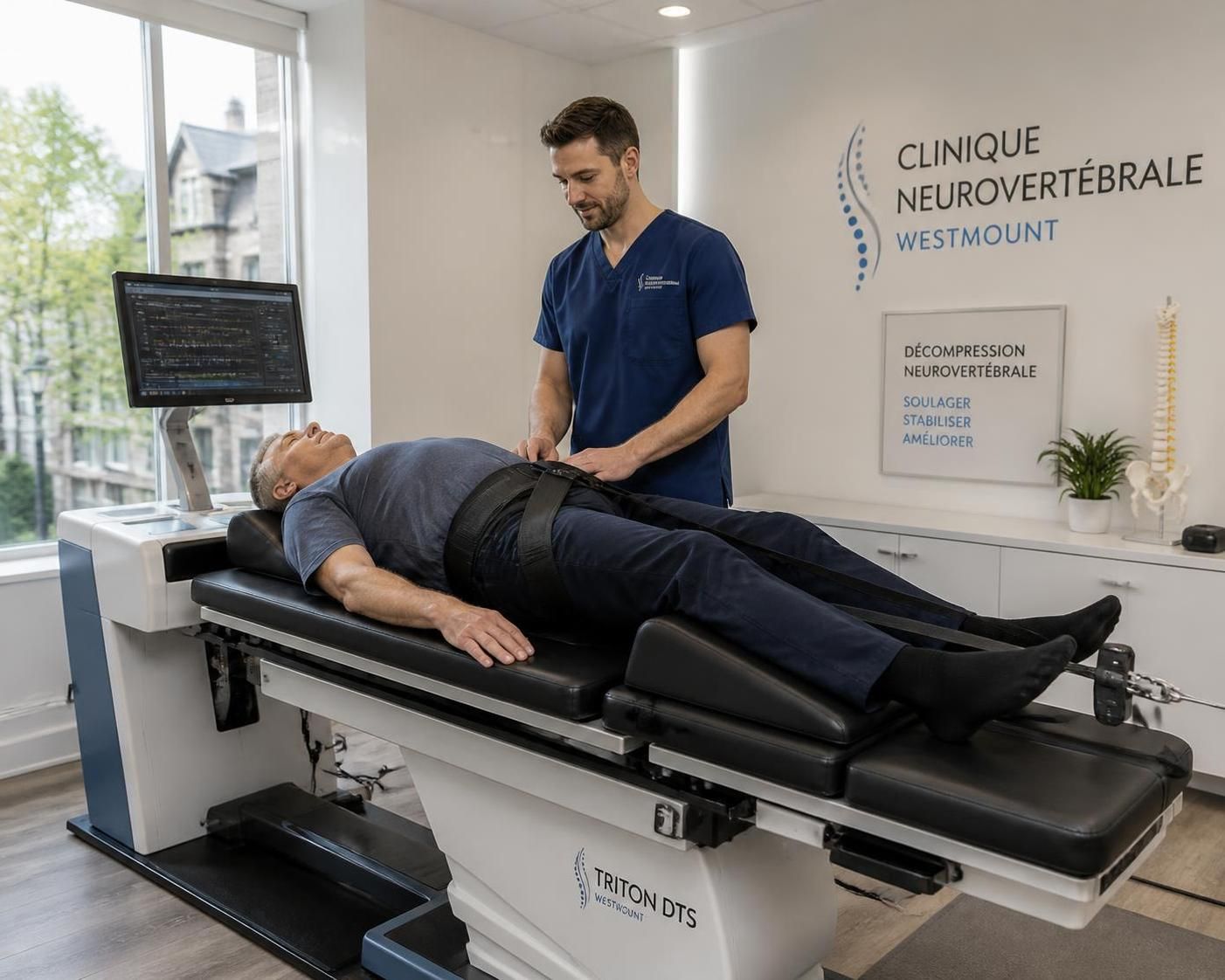
Factors influencing pain and response to neurovertebral treatment among Westmount residents
Sciatic pain and sensitivity to neurovertebral decompression depend on multiple factors specific to each individual. It is essential to consider these factors in order to optimize care and adjust treatment.
The Westmount lifestyle, which often combines sedentary occupations and active leisure, exposes patients to multiple constraints. Prolonged sitting, typical of remote work or office work, can worsen nerve compression by promoting unfavourable postures. Conversely, adapted physical activity can improve muscle function and posture, helping to limit strain on the spine.
Common movements—such as lumbar flexion or extension—have a variable impact depending on the underlying condition. For example, in some patients, excessive flexion can exacerbate pain caused by a disc protrusion, whereas in others, it may be less irritating. Sleep, driving posture, or public transit use are other significant modifying factors, particularly in an urban area such as Westmount.
Response to neurovertebral treatment may also be influenced by symptom duration, the severity of nerve compression, and the condition of the intervertebral disc. Appropriate care should therefore include ongoing monitoring of clinical signs and flexibility in the therapeutic protocol.
Collaboration with physiotherapy often promotes a better outcome through appropriate exercises aimed at muscle strengthening, improved flexibility, and postural correction. If symptoms such as progressive numbness or muscle weakness appear or worsen, medical reassessment is imperative.
- Changes in pain according to position (sitting, standing, lying down)
- Impact of the duration and intensity of physical activity
- Effect of posture at work and at home
- Influence of associated issues (stress, fatigue, sleep)
This complexity should be integrated into every treatment plan to ensure safe and effective support, particularly in a region with demanding economic and social living conditions such as Westmount.
When should you consider a consultation for sciatic pain in Westmount?
When experiencing pain that may suggest sciatica, it is crucial to know when to seek care. Most low back pain with radiating symptoms may improve with conservative treatment, but certain signs require a specialized assessment.
Consult a health-care professional if you experience:
- Persistent or recurrent pain below the knee
- Numbness, tingling, or progressive weakness in the leg
- Significant limitation in walking or daily activities
- Pain disrupting sleep
Medical emergency requiring immediate attention:
- Loss of bladder or bowel control
- Saddle anaesthesia (perineal area)
- Rapid and marked muscle weakness
- Fever associated with spinal pain or a decline in general health
- Major spinal trauma
An early consultation in Westmount, whether at a specialized clinic or with a medical professional, promotes appropriate care and the prompt identification of potential complications. When in doubt, local resources and clinics such as Clinique TAGMED offer specialized assessments to determine the precise cause and most appropriate treatment.
Editorial treatment options for sciatica, including neurovertebral decompression, in Westmount
The treatment of sciatica is based on a stepped approach adapted to the cause, symptom severity, and the patient’s lifestyle. For Westmount residents, integrating neurovertebral decompression into a comprehensive plan may be beneficial, but it is one step among others.
The first phase prioritizes maintaining or gradually resuming activity, provided it does not worsen symptoms. Appropriate workplace ergonomics, especially for seated or office-based activities, is essential.
Specific exercises and physiotherapy play a fundamental role in rehabilitation. They help with muscle strengthening, postural correction, and functional restoration. Certain complementary manual approaches, such as osteopathy, are often recommended to optimize results.
Motorized neurovertebral decompression works by reducing mechanical pressure on the discs and nerve roots. This treatment is often indicated in mild to moderate cases of herniated disc or protrusion with associated radicular pain. The protocol, which usually includes 15 to 25 sessions lasting 15 to 30 minutes, is individualized and monitored.
Medications may be used in certain cases to relieve pain, but their use should be assessed by an authorized professional, who will consider the patient’s profile and the nature of the symptoms. Injections are options to consider only when pain is severe and persistent.
Surgery is intended for serious conditions involving neurological deficits or significant compression that has not improved with conservative treatments. In these situations, referral to a specialist is necessary.
| Treatment option | Indications | Benefits | Limitations |
|---|---|---|---|
| Adapted physical activity | Mild to moderate pain without neurological deficit | Helps maintain function and reduces sedentary behaviour | May be limited by pain |
| Physiotherapy and exercises | Rehabilitation phase and prevention of recurrence | Improves posture, strengthens muscles, and reduces pain | Requires commitment and regular follow-up |
| Neurovertebral decompression | Radicular pain related to herniated disc or moderate stenosis | Non-invasively reduces pressure on nerves | Contraindications and variability in results |
| Medications and injections | Persistent severe pain | Rapid relief may be possible | Possible side effects and limited use |
| Surgery | Severe neurological deficit or failure of conservative treatments | Direct correction of nerve compression | Invasive procedure with associated risks |
To better understand the different alternatives, including neurovertebral decompression, also consult the resources provided by experts in non-surgical management of sciatica in Montreal.


What is neurovertebral decompression?
It is a non-invasive technique that uses controlled traction to relieve pressure on the discs and nerve roots, thereby reducing pain related to sciatica.
Who can benefit from neurovertebral decompression?
Patients with sciatic pain caused by herniated discs, protrusions, or mild to moderate foraminal stenosis, following a specialized assessment.
How many sessions are usually needed?
A protocol usually includes 15 to 25 sessions, adapted to the severity of the condition and the patient’s individual response.
Can neurovertebral decompression replace surgery?
It may be a non-surgical alternative, but it does not replace surgery in severe cases or when significant neurological deficits are present.
What signs require urgent consultation?
Any loss of bladder or bowel control, saddle anaesthesia, rapid leg weakness, or fever associated with spinal pain warrants immediate medical assessment.
Living with pain consistent with sciatica can be disabling on a daily basis, especially in an active community such as Westmount. A professional assessment helps to better understand the likely cause of your symptoms, the signs requiring particular attention, and whether treatment based on neurovertebral decompression or other conservative approaches is appropriate.
For personalized support near Westmount, you can consult the specialized services offered by Clinique TAGMED, which provide appropriate and safe care for sciatica.
Schedule a personalized assessment
Dr. Sylvain Desforges, B.Sc., D.O., N.D., osteopath
This content is provided for educational purposes and does not replace a personalized assessment by a health-care professional.
