




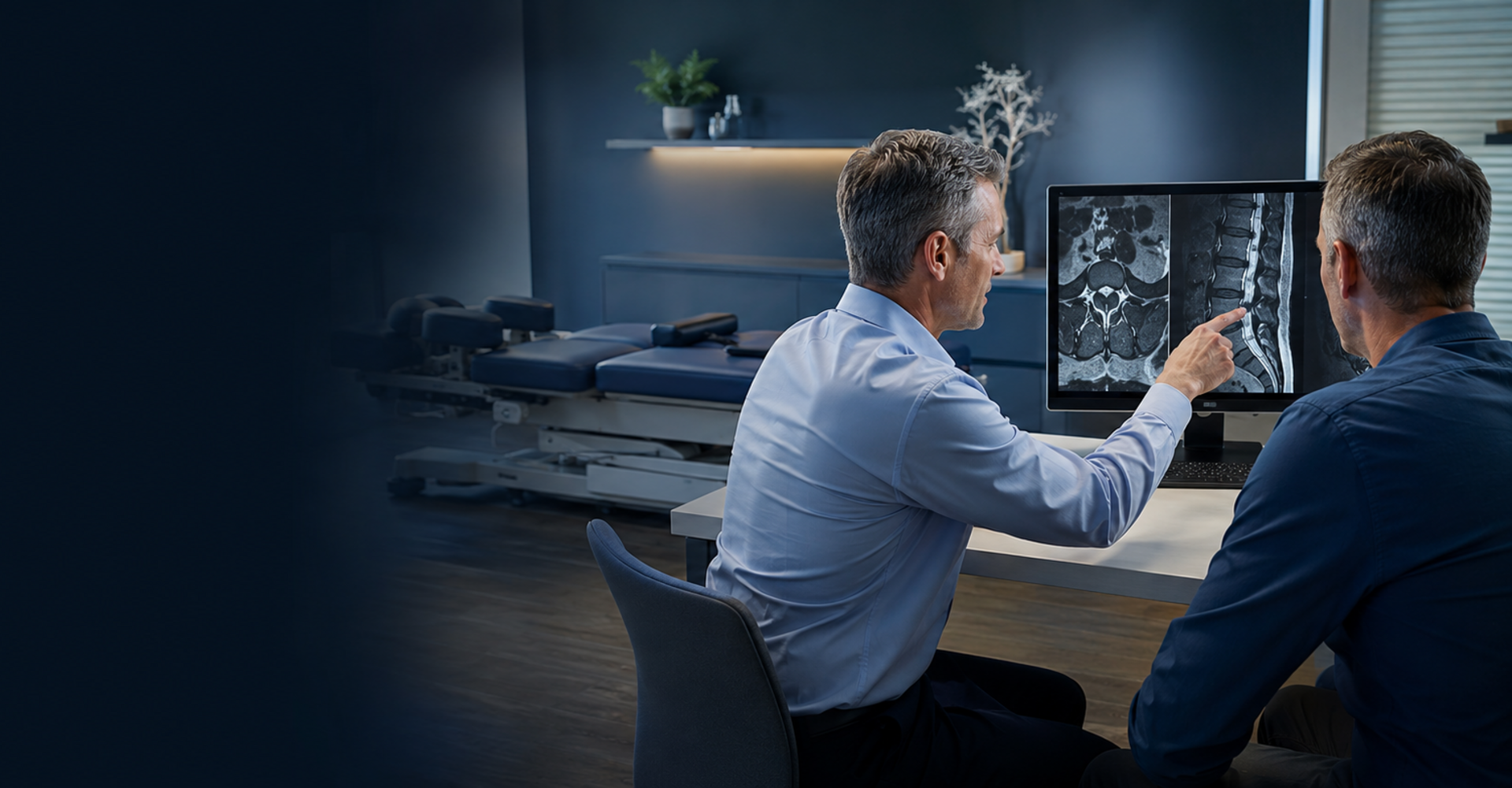
Persistent spinal pain syndrome type 2: pain that continues after spine surgery
Persistent spinal pain syndrome type 2 describes chronic axial or limb pain that continues or develops after spine surgery. The term replaces the stigmatizing expression “failed back surgery syndrome” and does not imply that the surgeon or patient failed.
Persistent pain after surgery is a syndrome, not one diagnosis. Possible contributors include residual or recurrent compression, adjacent-level disease, instability, scar tissue, nerve injury, sacroiliac or hip disease, muscular deconditioning, sleep disturbance, mood, sensitization and medication-related factors. Several mechanisms commonly coexist.
Assessment and differential diagnosis
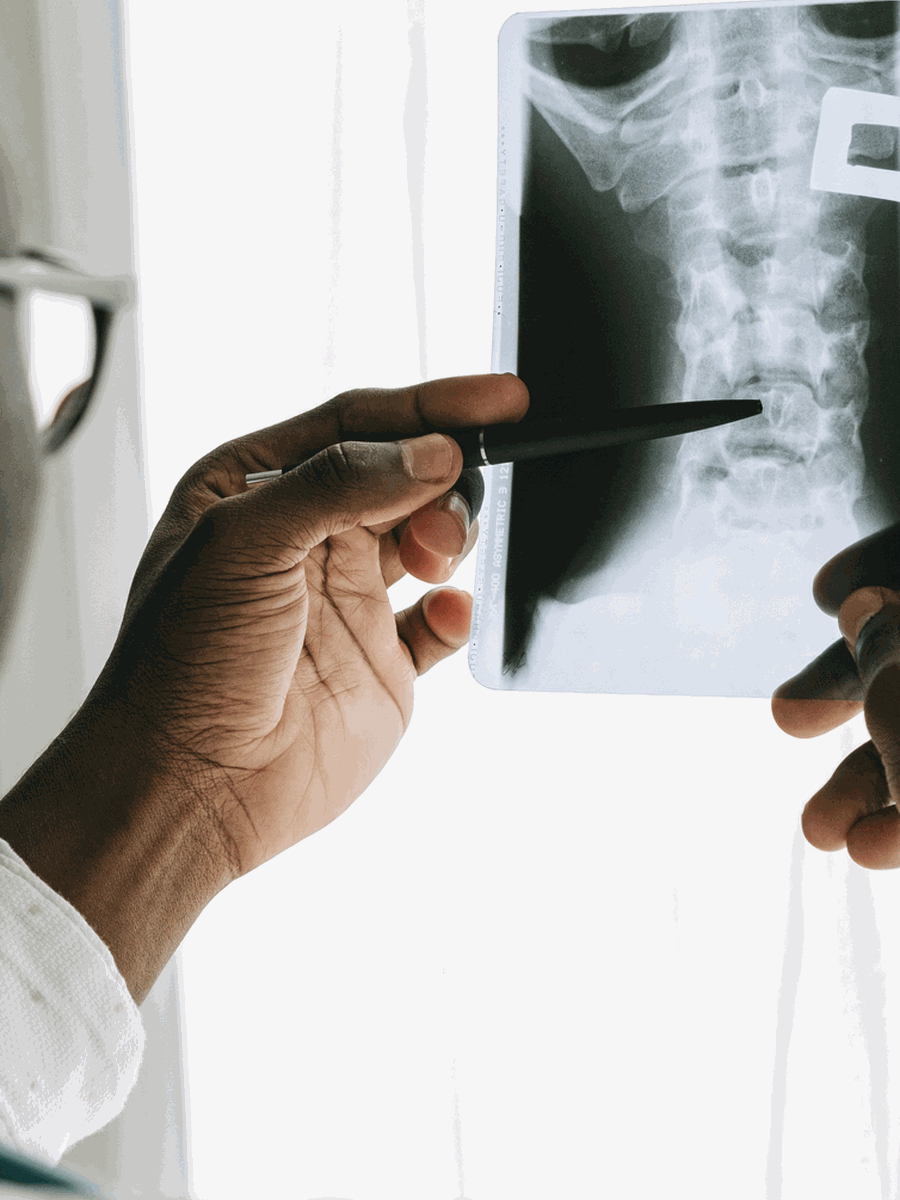
Evaluation reconstructs the timeline before and after surgery, the original diagnosis, operative report, symptom-free interval, current neurological function and treatment history. Imaging is selected to answer a specific question: recurrent compression, infection, instability, hardware problem or adjacent disease. Electrodiagnostic testing, diagnostic injections and multidisciplinary pain assessment may be used selectively.
| Clinical pattern | Possible interpretation | Why it matters |
|---|---|---|
| Correctable recurrent compression with concordant deficit | Surgical re-evaluation | A structural target may justify revision. |
| Predominantly neuropathic limb pain without surgical target | Multimodal pain and rehabilitation pathway | Medication, psychological care and neuromodulation may be considered. |
| Predominantly axial pain with unclear generator | Avoid repeated untargeted procedures | Reassess function, sleep, conditioning and alternative sources. |
| New fever, wound concern or rapid deficit | Urgent assessment | Infection or compressive complication must be excluded. |
Treatment and decision-making
A coordinated plan may include education, graded rehabilitation, sleep and mental-health care, medication optimization, treatment of a confirmed structural lesion and selected interventional pain procedures. Spinal cord stimulation or other neuromodulation may be considered for selected persistent neuropathic pain after multidisciplinary assessment. A procedure should have a defined target, measurable goal and stopping rule.
Questions before choosing care
What is the leading diagnosis?
Ask which findings support it and which alternatives remain.
What test would change care?
Avoid testing that cannot alter the next step.
What result matters?
Track function, neurological safety and meaningful activity.
When should the plan change?
Define referral, stopping and escalation criteria.
Relevant specialized resources
Some resources may share ownership or editorial direction; this relationship is disclosed and the links are included for contextual relevance.
SOS Sciatique
Specialized information about persistent and recurrent leg symptoms.
Frequently asked questions
Why replace the term failed back surgery syndrome?
The old term is imprecise and can imply blame.
Does persistent pain mean the operation was unnecessary?
No. Pain can persist despite technically appropriate surgery.
Can recurrent disc herniation be one cause?
Yes.
Can scar tissue be the only explanation?
Not necessarily.
When is repeat surgery appropriate?
When a correctable structural target matches symptoms and expected benefit outweighs risk.
What is neuropathic pain?
Pain caused by a lesion or disease of the somatosensory nervous system.
Can spinal cord stimulation help?
It may help selected neuropathic presentations after assessment.
Should opioids be continued indefinitely?
Long-term benefit and harm should be reviewed carefully.
Can rehabilitation still help years later?
Function may improve even when pain is longstanding.
Does The Spine Page manage postoperative pain?
No.
Sources consulted
- van de Minkelis et al. — Persistent spinal pain syndrome type 2
- Christelis et al. — Persistent spinal pain syndrome nomenclature
- NICE — Spinal cord stimulation for chronic neuropathic or ischaemic pain
Last editorial review: July 2026. General educational information only.
Dr. Sylvain Desforges, B.Sc., D.O., N.D., osteopath — The Spine Page
Continue exploring spine health
Use the condition and treatment hubs to compare related guides.
The Spine Page — The best treatments for your spinal problems — www.thespinepage.com