


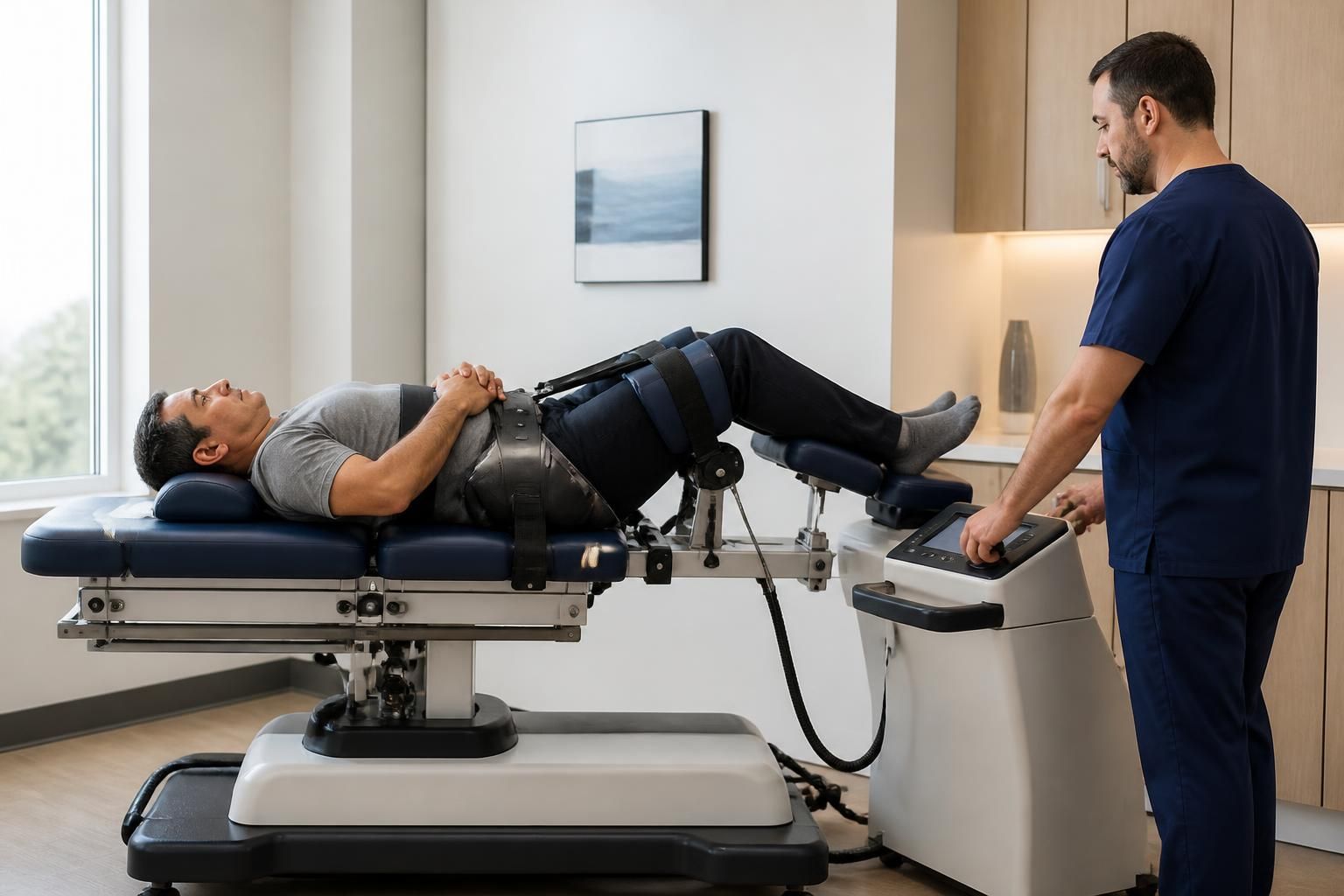
Motorized lumbar decompression represents an interesting advancement in the treatment of lumbar conditions involving compression of nerve roots or intervertebral discs. In Montreal, this approach is increasingly considered for certain patient profiles whose low back pain, often radiating into the leg, appears consistent with a disc herniation, protrusion, or foraminal stenosis. This treatment involves gradually applying controlled mechanical traction to the lumbar spine, allowing temporary relief of irritated nerve structures and a possible improvement in spinal mobility without surgery.
However, not all cases of low back pain or sciatica are suitable for this modality. Rigorous patient selection requires a thorough understanding of the nature of the symptoms, their clinical context, and imaging results. Furthermore, the success of motorized lumbar decompression relies on a comprehensive medical assessment, careful follow-up, and close collaboration with orthopaedic and rehabilitation specialists. Montreal, with its clinical resources and experts, offers a suitable setting for this, particularly through specialized clinics that integrate this technique into a comprehensive approach to lumbar treatment.


Key points for understanding patient selection in Montreal
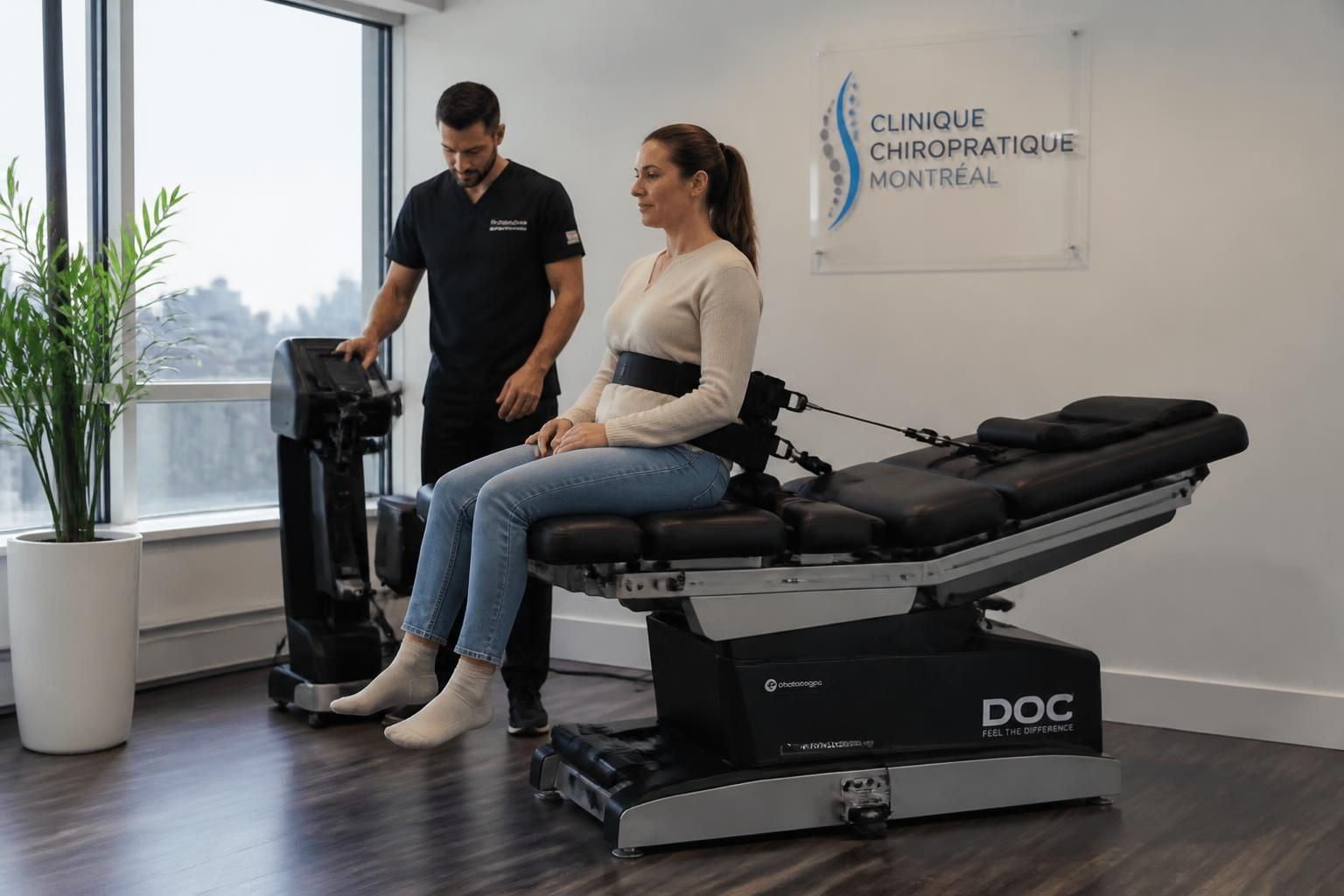
Understanding the mechanism and clinical criteria of motorized lumbar decompression
Motorized lumbar decompression is based on a specific principle: applying gradual, controlled spinal traction to temporarily increase the space between the lumbar vertebrae. This increase is intended to reduce pressure on the intervertebral discs and nerve roots, which are frequent sources of pain radiating into the leg.
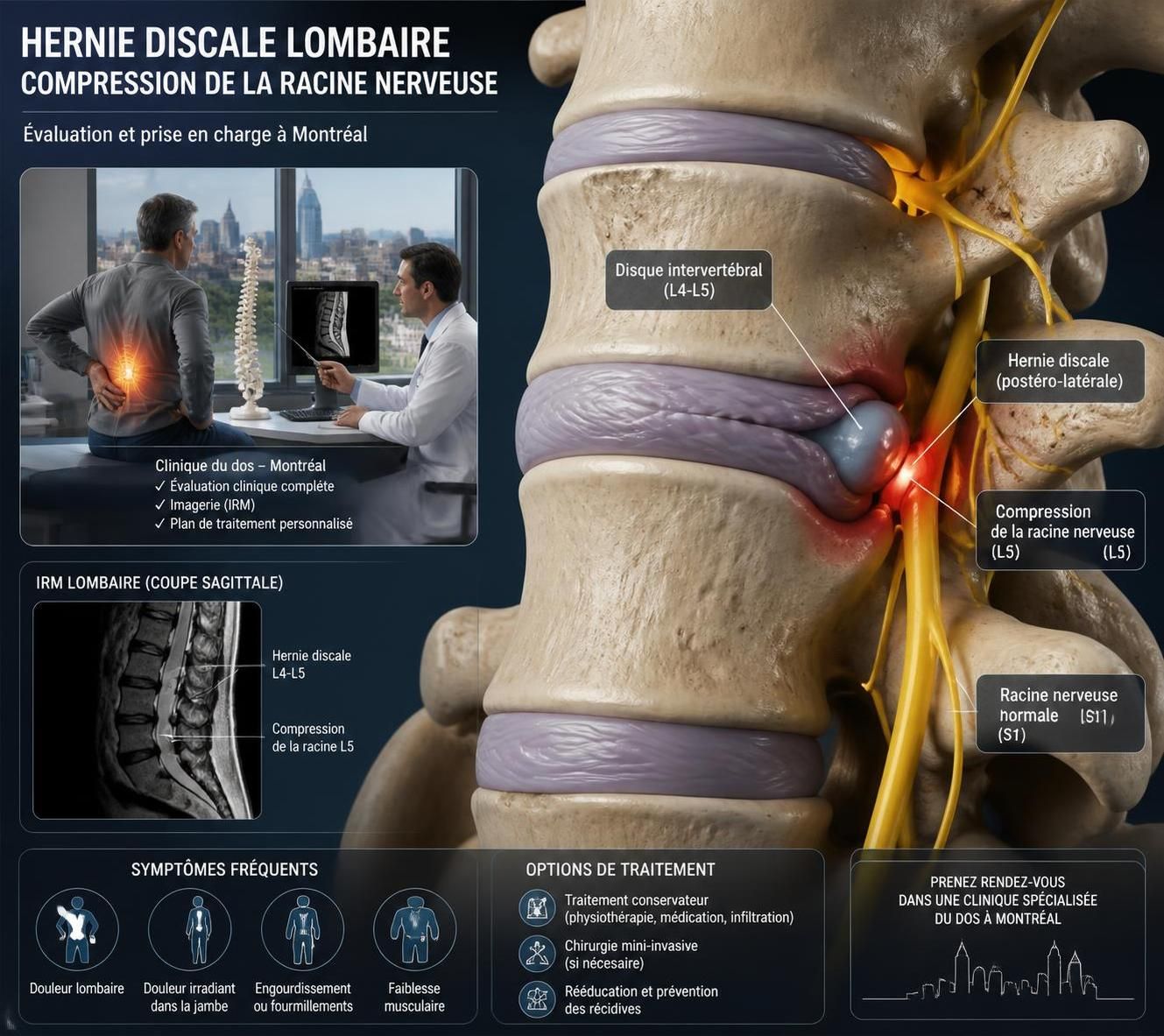
Among Montreal residents with low back pain, several conditions may warrant an assessment for this technique, including disc herniation, disc protrusion, and foraminal stenosis. The sciatic nerve, most often involved, may be compressed or irritated at different levels, affecting the pathway and nature of the pain and associated symptoms.
It is important to understand that radicular pain, characteristic of nerve involvement, differs from more localized or muscular low back pain. Therefore, pain described as “pain that travels down the leg,” accompanied by numbness, tingling, or mild muscle weakness, may suggest sciatic nerve irritation. However, this is not enough to confirm the precise diagnosis or the appropriateness of motorized lumbar decompression.
To determine whether a patient is an appropriate candidate, clinical information, the physical examination, and often imaging results such as MRI must be combined. These investigations make it possible to visualize the condition of the discs, the presence of a herniation, or the severity of stenosis.[…]
In the Montreal context, specialized clinics, such as TAGMED Clinic, offer detailed assessments to guide this selection, particularly for people with recurrent or persistent low back pain associated with moderate functional limitations.
A careful assessment must also exclude patients with emergency warning signs, such as rapidly progressive motor weakness, loss of bladder control, or saddle anaesthesia, which require hospitalization or immediate surgery.
Factors influencing the effectiveness and tolerance of lumbar decompression treatment in Montreal
Various environmental and lifestyle-related factors can affect pain and the response to motorized lumbar decompression. In Montreal, patients who frequently engage in sedentary activities, particularly while working remotely or during prolonged travel on public transit, may experience worsening symptoms due to prolonged sitting and poor posture.
Depending on the patient’s profile, certain movements may worsen pain: repeated bending, lifting efforts, or even poorly adapted sports activities. Conversely, moderate walking, swimming, or supervised rehabilitation exercises may contribute to better management of low back pain.
Sleep is also an important factor: an unsuitable position can worsen radicular symptoms at night. Pain-related insomnia is a frequent reason for consultation in Montreal clinics.
Tolerance of motorized lumbar decompression therefore varies according to age, medical history, the severity of disc involvement, and the therapeutic support received. It is therefore essential to monitor responses to treatment and reassess the situation regularly to adjust management.
- Avoid prolonged flexed positions or sudden movements.
- Encourage active breaks during remote work or driving days.
- Adapt exercises according to tolerance and symptom progression.
- Prioritize personalized follow-up that includes physiotherapy and ergonomic advice.
Key criteria for selecting candidates for neurovertebral decompression in Montreal
The selection of patients suited to motorized neurovertebral decompression is based on several specific clinical criteria. These criteria include:
- Moderate radicular symptoms : pain radiating into the leg with numbness or tingling, without severe neurological involvement.
- Failure of conservative treatments : persistent symptoms despite physiotherapy or ergonomic advice.
- Compatible imaging : documented disc herniation, protrusion, or foraminal stenosis without severe compression or previous surgical treatment.
- Absence of contraindications : exclusion of patients with fracture, infection, tumour, or signs of urgent neurological abnormalities.
Although lumbar decompression results vary, rigorous selection optimizes the chances of functional improvement and pain relief. This approach requires the expertise of a qualified manual medicine professional who will collaborate with orthopaedists or other specialists if the patient’s profile requires it.
| Eligibility criteria | Typical indications | Major contraindications |
|---|---|---|
| Moderate to severe radicular pain | Disc herniation, disc protrusion, mild to moderate foraminal stenosis | Severe nerve compression, signs of cauda equina syndrome |
| No major motor deficits | Persistent pain after conservative treatments | Vertebral fracture, infection, tumour |
| Compatible imaging assessment (MRI, CT scan) | Patients without an indication for immediate surgery | Advanced pregnancy, severe spinal instability |
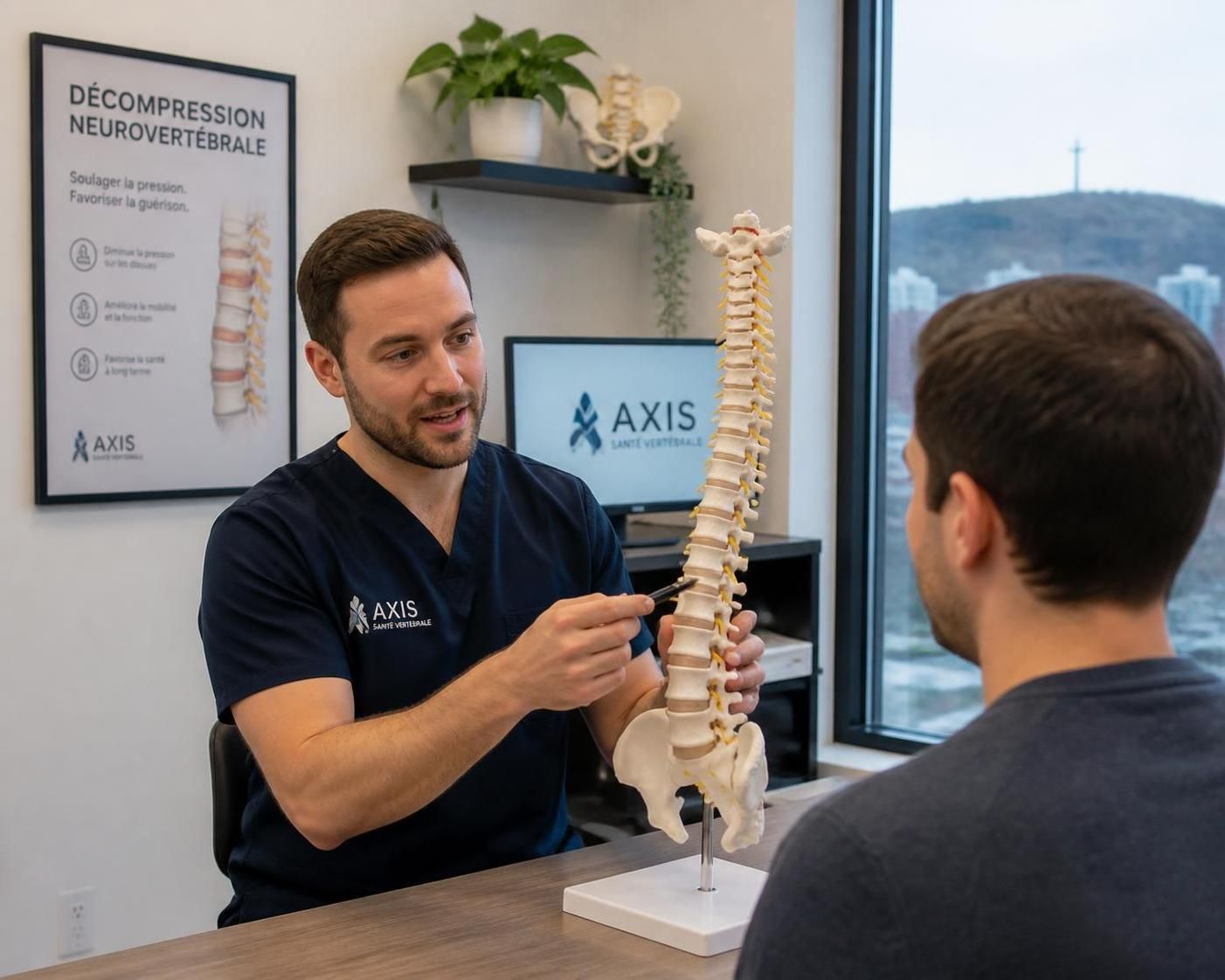
This selection must also be accompanied by clear information about the limitations and objectives of treatment. In Montreal, neurovertebral decompression is offered by several specialized clinics that incorporate this technique into a multidisciplinary approach that sometimes includes osteopathy and physiotherapy.
Key times when consultation becomes necessary for low back pain radiating into the leg in Montreal
It is crucial to seek prompt care in Montreal when certain symptoms appear in connection with pain radiating into the leg.
Clinical follow-up should be considered when pain persists or recurs, especially if it is accompanied by loss of function, worsening numbness, or tingling. Similarly, progressively limited walking ability or sleep disrupted by pain warrant a thorough assessment.
More urgently, certain signs require an emergency medical assessment, including:
- Loss of bladder or bowel control.
- Saddle anaesthesia.
- Rapidly progressive motor weakness.
- Unexplained fever or significant deterioration in general health.
- Recent major trauma or a history of cancer.
In the presence of these symptoms, prompt management in a hospital setting is imperative. These situations fall outside the scope of motorized lumbar decompression and often involve surgery or specialized medical treatment.
Consult a health professional in Montreal if you have low back pain that radiates into your leg and you notice worsening symptoms, significant weakness, or impaired bladder or bowel function.


Dr. Sylvain Desforges, B.Sc., D.O., N.D., osteopath
{“@context”:”https://schema.org”,”@type”:”FAQPage”,”mainEntity”:[{“@type”:”Question”,”name”:”Quels sont les symptu00f4mes qui indiquent une urgence mu00e9dicale en cas de douleur lombaire ?”,”acceptedAnswer”:{“@type”:”Answer”,”text”:”Les signes tels que la perte de contru00f4le urinaire ou intestinal, lu2019anesthu00e9sie en selle, une faiblesse motrice rapidement progressive, la fiu00e8vre inexpliquu00e9e ou un traumatisme majeur requiu00e8rent une consultation mu00e9dicale urgente.”}},{“@type”:”Question”,”name”:”Comment savoir si je suis un bon candidat pour la du00e9compression lombaire motorisu00e9e ?”,”acceptedAnswer”:{“@type”:”Answer”,”text”:”Une u00e9valuation clinique pru00e9cise, souvent combinu00e9e u00e0 un examen du2019imagerie, est nu00e9cessaire pour du00e9terminer lu2019adu00e9quation u00e0 ce traitement selon la nature et la gravitu00e9 des symptu00f4mes.”}},{“@type”:”Question”,”name”:”La du00e9compression lombaire motorisu00e9e remplace-t-elle la chirurgie ?”,”acceptedAnswer”:{“@type”:”Answer”,”text”:”Ce traitement peut soulager certains patients et u00e9viter la chirurgie dans certains cas, mais il ne remplace pas une intervention chirurgicale lorsque celle-ci est mu00e9dicalement indiquu00e9e.”}},{“@type”:”Question”,”name”:”Quelles sont les limites de la du00e9compression neurovertu00e9brale ?”,”acceptedAnswer”:{“@type”:”Answer”,”text”:”Les ru00e9sultats varient selon le patient ; certains ne ressentent pas du2019amu00e9lioration ou ne tolu00e8rent pas le traitement. De plus, ce nu2019est pas une solution adaptu00e9e en pru00e9sence de complications graves ou de pathologies spu00e9cifiques.”}},{“@type”:”Question”,”name”:”Est-ce que la physiothu00e9rapie est toujours nu00e9cessaire apru00e8s la du00e9compression lombaire ?”,”acceptedAnswer”:{“@type”:”Answer”,”text”:”La physiothu00e9rapie et la ru00e9u00e9ducation peuvent accompagner la du00e9compression pour renforcer la musculature, amu00e9liorer la posture et favoriser une meilleure ru00e9cupu00e9ration.”}}]}What symptoms indicate a medical emergency in cases of low back pain?
Signs such as loss of bladder or bowel control, saddle anaesthesia, rapidly progressive motor weakness, unexplained fever, or major trauma require urgent medical consultation.
How do I know whether I am a good candidate for motorized lumbar decompression?
A precise clinical assessment, often combined with imaging, is necessary to determine whether this treatment is appropriate based on the nature and severity of the symptoms.
Does motorized lumbar decompression replace surgery?
This treatment may relieve some patients and help avoid surgery in certain cases, but it does not replace surgery when surgical intervention is medically indicated.
What are the limitations of neurovertebral decompression?
Results vary by patient; some do not experience improvement or cannot tolerate the treatment. In addition, it is not a suitable solution in the presence of serious complications or specific conditions.
Is physiotherapy always necessary after lumbar decompression?
Physiotherapy and rehabilitation may accompany decompression to strengthen muscles, improve posture, and support better recovery.
If you have persistent low back pain radiating into the leg, a professional assessment in Mont-Royal can help you understand the likely cause, signs to monitor, and whether a conservative approach such as motorized lumbar decompression is appropriate for you.
Dr. Sylvain Desforges, B.Sc., D.O., N.D., osteopath
This content is for educational purposes and does not replace a personalized assessment.
