


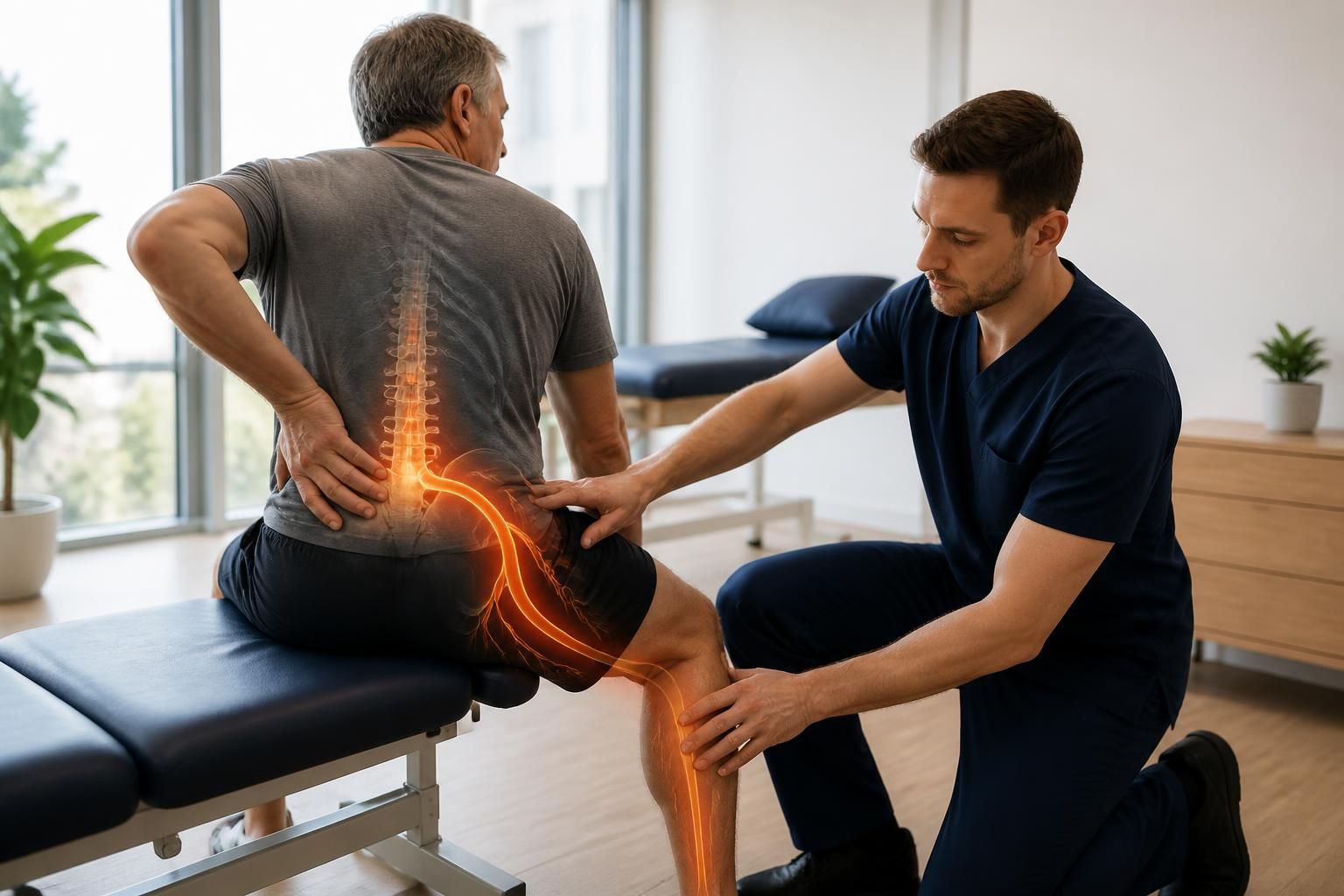
Sciatic pain, often described as a throbbing sensation that radiates from the lower back to the leg, affects several Montreal neighbourhoods with varying prevalence. This geographic disparity can be explained by factors related to lifestyle, the work environment, and the demographic profile of residents. Understanding this distribution makes it possible to tailor prevention and treatment strategies while considering the specific needs of each Montreal community.
Each specialized clinic, particularly in Mont-Royal and the boroughs around Côte-des-Neiges and Outremont, reports variations in the profiles of patients experiencing sciatica, influenced by habits such as working from home, prolonged periods of sitting, and sports activities. The aim is to identify the neighbourhoods where sciatica is more common in order to optimize the availability of appropriate care, including manual treatments and motorized spinal decompression.




In brief: key points on sciatica in Montreal and its most affected neighbourhoods
- Variable prevalence: Some neighbourhoods, such as Villeray and Côte-des-Neiges, show a higher incidence of sciatic pain reported in clinical settings.
- Work-related factors: The increase in working from home and sedentary jobs contributes to sciatica, particularly in densely populated urban areas.
- Diverse mechanisms: Disc herniations, protrusions, foraminal stenosis, and muscle tension are common causes identified in these neighbourhoods.
- Importance of local assessment: Appropriate care requires a personalized analysis of symptoms that takes Montreal’s environment and lifestyle into account.
Geographic distribution of sciatica according to Montreal clinical data
Clinics specializing in back health in Montreal, particularly those located in Mont-Royal near Outremont and Côte-des-Neiges, observe an uneven distribution of sciatica cases. Neighbourhoods where prevalence appears higher often include populations engaged in highly sedentary occupations or with long daily commutes while seated, well-known factors that can contribute to sciatic pain.
For example, Villeray and Le Plateau-Mont-Royal are areas where many patients seek care for radiating pain typical of sciatic nerve involvement, often associated with office work or working from home. Similarly, in Côte-des-Neiges, population diversity and accessibility can sometimes limit the development of infrastructure supporting regular physical activity.
A notable number of patients also come from Saint-Laurent or the South Shore, highlighting that sciatica also affects outlying areas of the metropolitan region. These geographic differences reflect a combination of factors: residents’ average age, availability of care, transportation habits, and work-related demands.
The sciatic nerve can be irritated by various mechanical causes: disc herniations located at L4-L5 or L5-S1, less severe disc protrusions, or foraminal stenosis causing narrowing of the nerve passageway. These conditions are diagnosed through a detailed clinical examination and, if necessary, additional imaging.
It is essential not to confuse sciatica with other forms of low back pain or neuropathies, which is why a precise assessment that considers both symptoms—pain, numbness, weakness—and their correlation with medical imaging is important. Discover sciatica assessment in Montreal to learn more about this approach.
Risk factors specific to Montreal neighbourhoods for sciatic pain
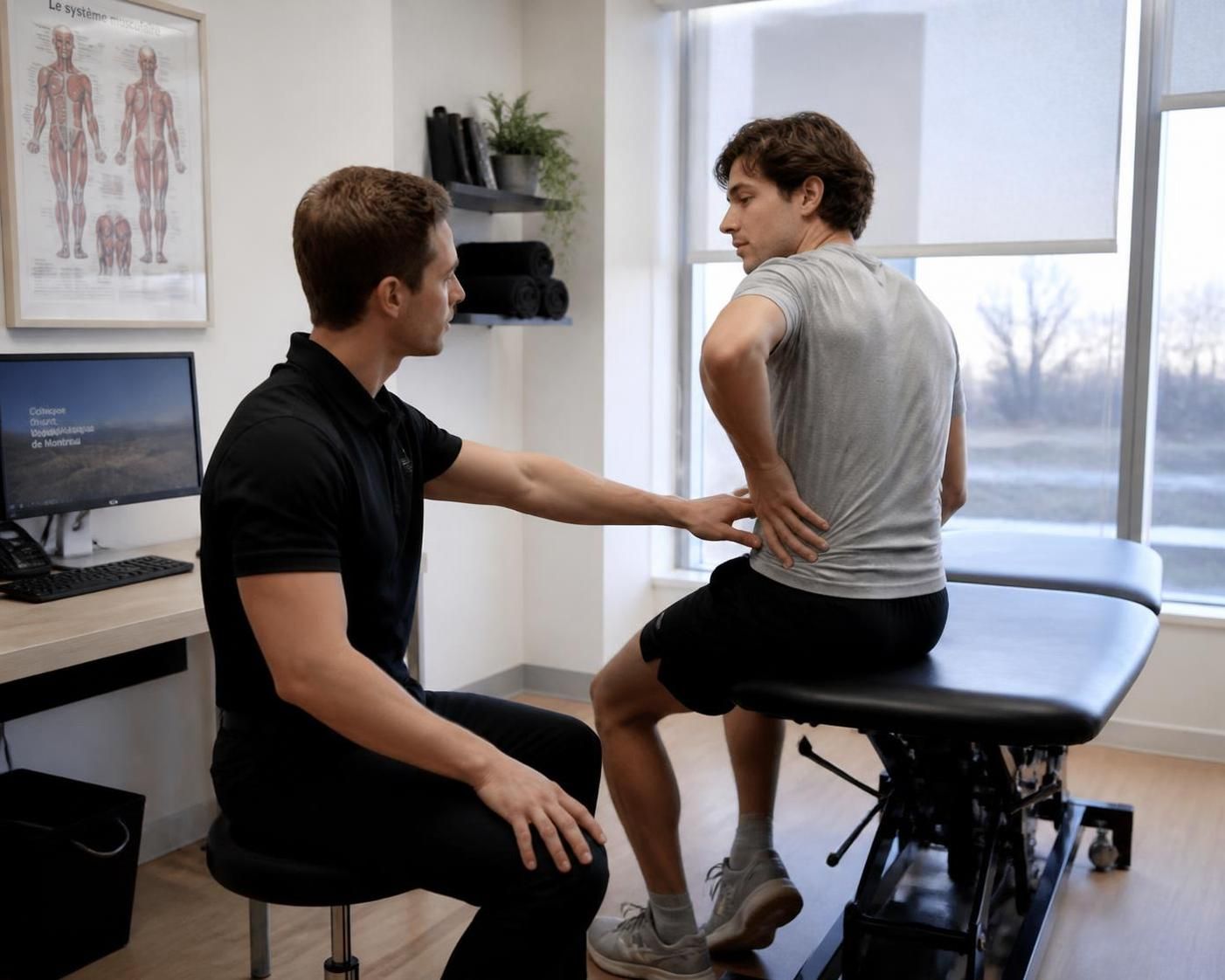
The diversity of lifestyles in Montreal influences how sciatica presents. Profiles vary according to the urban environment, type of employment, and daily habits. For example, boroughs with a high concentration of office work and neighbourhoods where working from home has become widespread, such as Le Plateau-Mont-Royal or Rosemont–La Petite-Patrie, are seeing an increase in cases related to prolonged sitting.
Travelling by public transit or car, often without ergonomically appropriate posture, can worsen symptoms. In addition, a lack of regular physical activity in urban settings is an aggravating factor in neighbourhoods such as Côte-des-Neiges.
Muscle tension, particularly in the piriformis muscle, can mimic or worsen sciatic pain. Urban stress, which can sometimes be more intense in central neighbourhoods, may also exacerbate certain symptoms. Understanding these specific mechanisms therefore provides a necessary foundation for effective treatment.
To tailor care, some professionals recommend personalized routines that avoid universal exercises that are not appropriate for everyone. For example, static postures or inappropriate stretches can worsen nerve irritation, particularly in the case of a disc herniation. Consulting a reputable clinic in Mont-Royal, such as TAGMED Clinic, ensures an approach based on these local considerations.
- Prolonged sitting: frequent worsening with working from home and office work.
- Vehicle travel: increased postural demands in Montreal traffic.
- Sedentary lifestyle: lack of breaks and regular physical activity in dense urban environments.
- Stress: a psycho-emotional factor that can increase muscle tension related to sciatica.

Signs and symptoms to watch for with sciatica in Montreal neighbourhoods
Sciatica can involve a range of symptoms that vary according to the cause and severity. In Montreal clinics, pain radiating from the lower back to the buttock, thigh, calf, and sometimes the foot is a common reason for consultation. This pain may be accompanied by tingling, numbness, and sometimes muscle weakness.
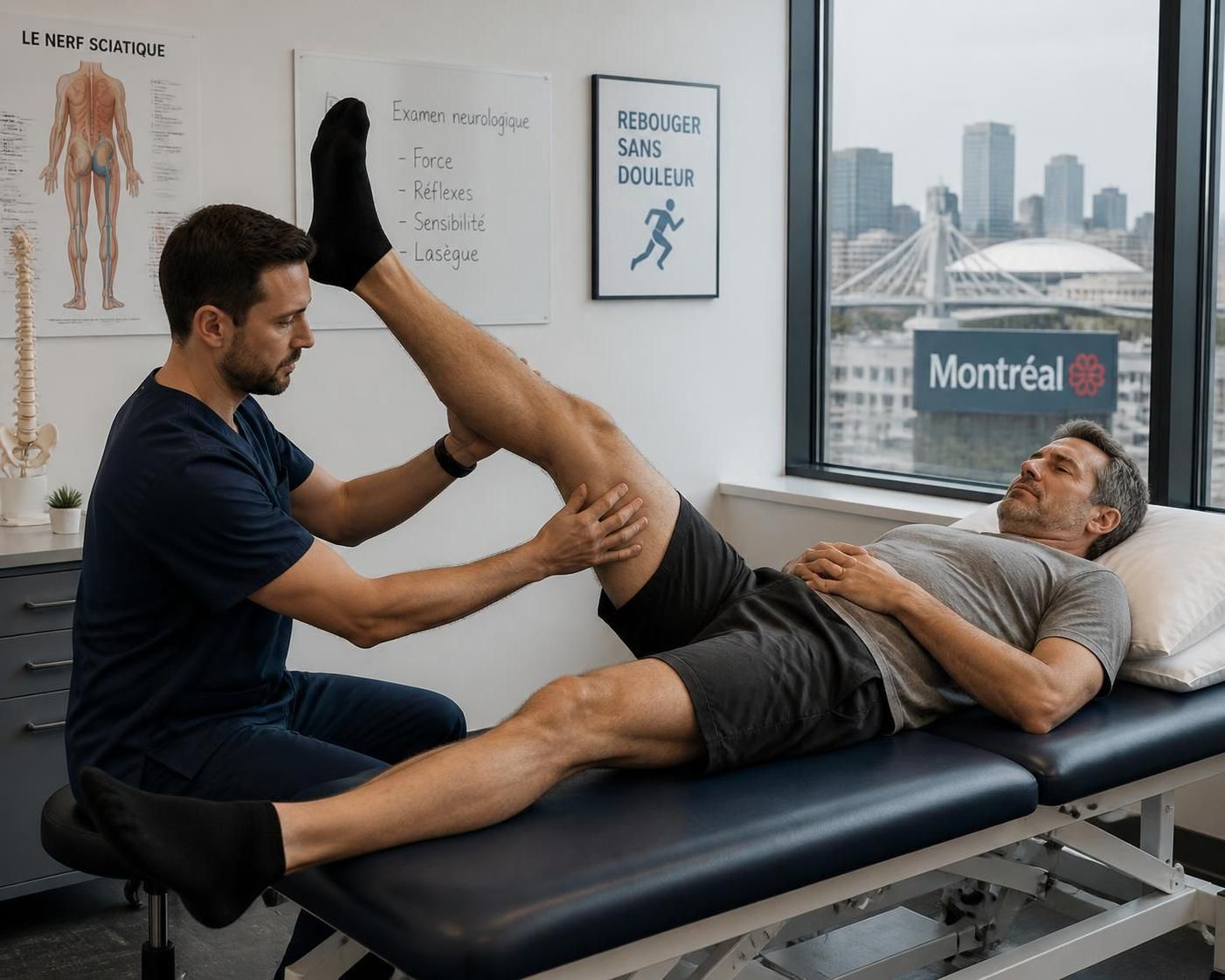
In some patients, these symptoms are accompanied by altered sensation in specific areas related to the L4, L5, or S1 nerve roots. A thorough clinical assessment, including muscle strength and reflex testing, is essential to distinguish sciatica from other conditions.
It is prudent to note that certain signs require urgent attention: rapidly progressive weakness, loss of bladder or bowel control, or numbness in the saddle region require urgent medical care. Although rare, these neurological emergencies are crucial to detect in order to prevent serious complications.
When sciatic pain persists beyond a few weeks or is accompanied by neurological signs, specialized clinics, including TAGMED Clinic, offer an in-depth assessment to tailor treatments and sometimes consider options such as motorized spinal decompression.
| Symptom | Description | Clinical significance |
|---|---|---|
| Pain radiating into the leg | From the lower back to the buttock, thigh, and foot | Consistent with sciatic nerve irritation |
| Tingling or burning | Tingling or burning sensation along the nerve pathway | Possible sensory involvement of the nerve roots |
| Numbness | Partial loss of sensation in the leg or foot | Presence of radicular neuropathy |
| Muscle weakness | Reduced strength in the leg or foot | Possible nerve compression requiring urgent assessment |
Sciatica treatment options in Montreal neighbourhoods
In Montreal, care for sciatica is based on a gradual and personalized approach. Following an assessment that includes both the history of symptoms and a functional examination, several options are offered according to the severity and suspected cause of the pain.
Maintaining or gradually resuming activities is recommended to preserve mobility and prevent chronicity. In clinics, manual techniques such as targeted osteopathy often complement treatment by releasing muscular and joint tension.
Motorized spinal decompression is a specialized option available in some facilities in Mont-Royal. This controlled spinal traction aims to temporarily reduce pressure on the intervertebral discs and decrease nerve compression. It is indicated for some patients with disc herniations, protrusions, or foraminal stenosis who have no contraindications.
However, it should be noted that this therapy is not appropriate for every case and that no specific number of sessions guarantees the same outcome for every patient. Professionals make a careful selection based on clinical assessment and diagnostic imaging.
A comparison table summarizes the main options:
| Option | Indication | Benefits | Limitations |
|---|---|---|---|
| Maintaining activity | Moderate pain, without neurological deficit | Prevention of reduced mobility | May be insufficient in cases of severe compression |
| Osteopathy and physiotherapy | Associated mechanical or muscular pain | Release of tension, improved function | Requires regular follow-up |
| Spinal decompression | Disc herniation, protrusion, non-urgent stenosis | Targeted reduction of nerve compression | Variable results, not suitable for emergencies |
| Medication and injections | Severe inflammatory pain | Rapid relief | Temporary effects and associated risks |
| Surgery | Significant or persistent neurological deficit | Direct mechanical correction | Surgical risks and recovery period |
This diversity of options illustrates the need for an individualized approach that accounts for the specific nature of pain encountered in Montreal’s different neighbourhoods. Changes in local lifestyle habits, access to care, and education in pain management greatly influence the outcomes achieved.
Frequently asked questions about sciatic pain in Montreal
{“@context”:”https://schema.org”,”@type”:”FAQPage”,”mainEntity”:[{“@type”:”Question”,”name”:”Quu2019est-ce qui diffu00e9rencie la sciatique du2019une douleur lombaire classique ?”,”acceptedAnswer”:{“@type”:”Answer”,”text”:”La sciatique se caractu00e9rise par une douleur qui suit le trajet du nerf sciatique, souvent accompagnu00e9e du2019engourdissements ou de faiblesses, alors que les douleurs lombaires classiques restent gu00e9nu00e9ralement localisu00e9es sans irradiation nerveuse.”}},{“@type”:”Question”,”name”:”Pourquoi certains quartiers de Montru00e9al sont-ils plus touchu00e9s par la sciatique ?”,”acceptedAnswer”:{“@type”:”Answer”,”text”:”Les quartiers avec une forte pru00e9valence de sciatique sont souvent ceux ou00f9 le travail su00e9dentaire, le tu00e9lu00e9travail et la su00e9dentaritu00e9 sont plus fru00e9quents, ce qui aggrave les contraintes sur la colonne lombaire et le nerf sciatique.”}},{“@type”:”Question”,”name”:”Quand faut-il consulter une clinique spu00e9cialisu00e9e pour une sciatique ?”,”acceptedAnswer”:{“@type”:”Answer”,”text”:”Une consultation est recommandu00e9e en cas de douleur persistante, avec des symptu00f4mes tels que lu2019engourdissement, la faiblesse musculaire ou des signes du2019urgence comme la perte de contru00f4le urinaire.”}},{“@type”:”Question”,”name”:”La du00e9compression neurovertu00e9brale peut-elle aider dans tous les cas ?”,”acceptedAnswer”:{“@type”:”Answer”,”text”:”Cette technique est utile pour certains patients su00e9lectionnu00e9s, notamment ceux avec une protrusion ou une stu00e9nose foraminale, mais elle nu00e9cessite une u00e9valuation du00e9taillu00e9e et nu2019est pas adaptu00e9e aux cas urgents ou instabilitu00e9s vertu00e9brales.”}},{“@type”:”Question”,”name”:”Quels sont les effets du tu00e9lu00e9travail sur la sciatique ?”,”acceptedAnswer”:{“@type”:”Answer”,”text”:”Le tu00e9lu00e9travail favorise souvent une posture assise prolongu00e9e et un travail dans des environnements non ergonomiques, ce qui peut aggraver la douleur sciatique chez certains patients.”}}]}What distinguishes sciatica from typical low back pain?
Sciatica is characterized by pain that follows the path of the sciatic nerve, often accompanied by numbness or weakness, whereas typical low back pain generally remains localized without nerve-related radiation.
Why are certain Montreal neighbourhoods more affected by sciatica?
Neighbourhoods with a high prevalence of sciatica are often those where sedentary work, working from home, and physical inactivity are more common, which can increase strain on the lumbar spine and sciatic nerve.
When should you consult a specialized clinic for sciatica?
A consultation is recommended in cases of persistent pain, with symptoms such as numbness, muscle weakness, or urgent signs such as loss of bladder control.
Can spinal decompression help in every case?
This technique can be helpful for certain selected patients, particularly those with a protrusion or foraminal stenosis, but it requires a detailed assessment and is not appropriate for urgent cases or spinal instability.
What are the effects of working from home on sciatica?
Working from home often involves prolonged sitting and work in non-ergonomic environments, which can worsen sciatic pain in some patients.
Are you experiencing pain that may be consistent with sciatica? A personalized assessment can help better understand the likely cause, clarify the signs to watch for, and determine whether a conservative approach suited to your situation may be appropriate. TAGMED Clinic, located in Mont-Royal, is available to support you through this process.
Book an appointment for an assessment
Dr. Sylvain Desforges, B.Sc., D.O., N.D., osteopath
This content is educational and does not replace a personalized consultation with a health professional.
