

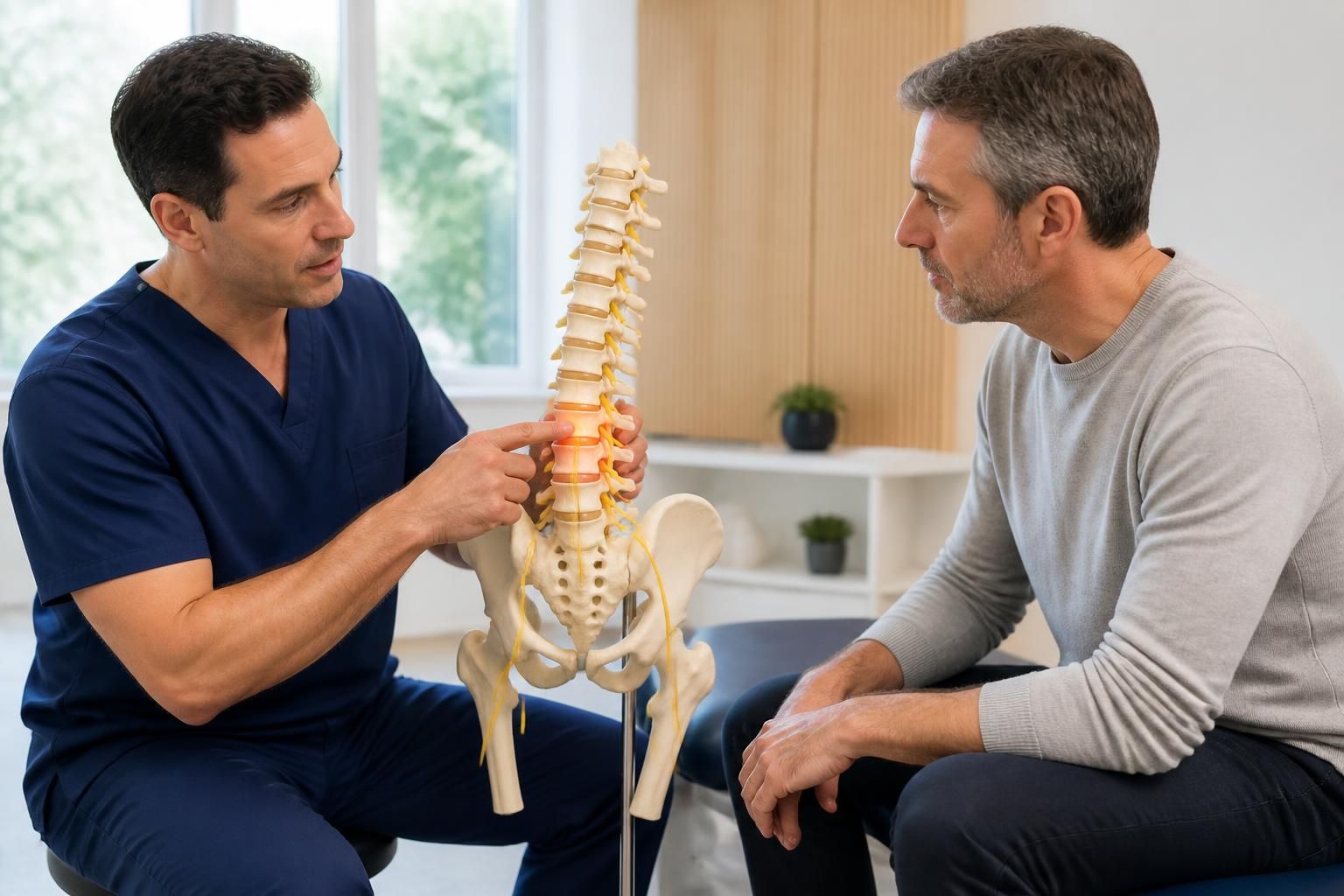
A herniated disc is a common condition responsible for low back pain often described by Montreal patients. It is characterized by the displacement of an intervertebral disc, which may cause compression of the sciatic nerve, resulting in pain along the leg. This complex interaction between anatomical degeneration and nerve irritation largely explains the symptoms attributed to sciatica in the Montreal area.
Understanding how a herniated disc causes sciatica requires careful interpretation of symptoms and a thorough medical diagnosis. The pain experienced varies widely depending on the severity of nerve compression, the structures involved, and how long the symptoms have been present. This approach makes it possible to tailor treatment to each situation, taking into account the characteristics of patients in Montreal and surrounding areas, where lifestyle, particularly in an urban setting, influences the onset and management of pain.
Understanding the mechanism of a herniated disc related to sciatica in Montreal
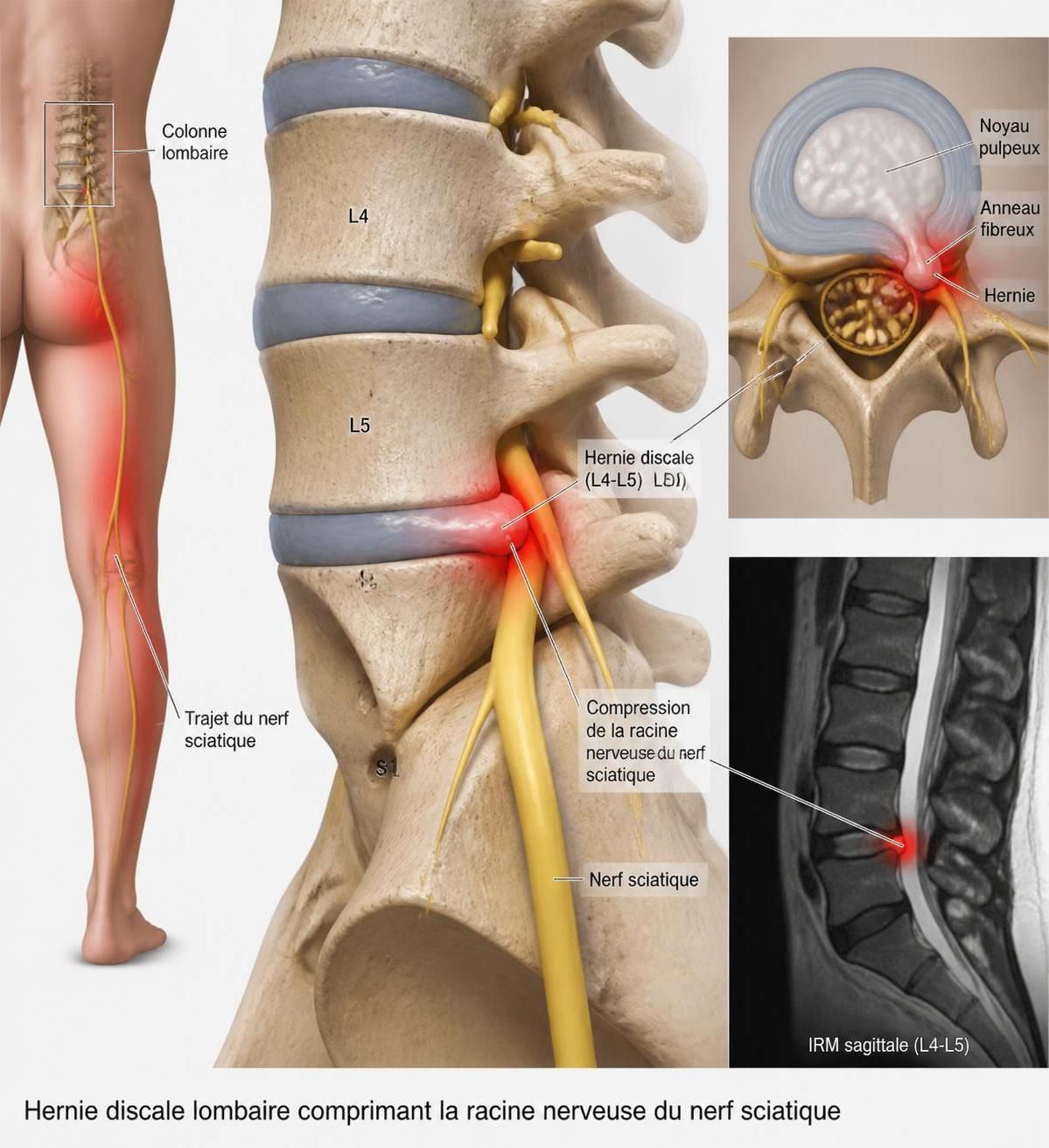
A herniated disc occurs when the inner nucleus pulposus of an intervertebral disc passes through a fissure or tear in the annulus fibrosus surrounding the disc. This displacement, often caused by sudden exertion or gradual wear, may place direct pressure on the nerve roots, particularly those forming the sciatic nerve in the lumbar region.
The sciatic nerve, which descends from the spine through the pelvis to supply the leg, is sensitive to this mechanical compression. This causes radicular pain that follows the nerve pathway, starting in the lower back, passing through the buttock, and potentially extending to the foot.
Furthermore, it is crucial to note that this nerve compression is not limited to physical pressure alone. Local inflammation around the involved nerve root plays a major role, amplifying pain and abnormal sensations such as tingling or numbness.
Aggravating factors such as osteoarthritis, foraminal stenosis (narrowing of nerve passageways), or repeated microtrauma associated with the sedentary lifestyle typical of urban populations such as Montreal’s can worsen this situation by further compromising spinal stability.
The table below summarizes the fundamental differences between a herniated disc and sciatica, which are essential for better understanding the problem:
| Aspect | Herniated disc | Sciatica |
|---|---|---|
| Definition | Abnormal displacement of the disc nucleus from its normal position | Pain radiating along the sciatic nerve and affecting the leg |
| Main cause | Wear, microtrauma, sudden exertion | Compression or irritation of the sciatic nerve, often related to a herniation |
| Location | Lumbar spine, preferentially at L4-L5 and L5-S1 | Nerve pathway from the buttock to the foot |
| Associated symptoms | Local back pain, stiffness | Radiating pain, numbness, muscle weakness |
To explore these fundamental mechanisms further, it is recommended to consult specialized medical resources that offer detailed, illustrated explanations.
Symptoms suggestive of sciatica caused by a herniated disc
The range of symptoms seen with sciatica associated with a herniated disc can vary widely from one patient to another and depends greatly on the severity of nerve compression. Sharp, intense pain, often on one side, is generally the predominant sign, extending from the lower back to the leg.
In addition to pain, several manifestations may accompany it or predominate:
- Numbness or loss of sensation in areas supplied by the sciatic nerve, particularly the back of the leg or the sole of the foot.
- Tingling and burning sensations indicating chronic nerve irritation.
- Muscle weakness, which may result in difficulty lifting the foot (foot drop) or maintaining balance.
- Pain worsened by coughing, bowel movements, or lumbar flexion, indicating nerve compression.
The presence of these symptoms requires prompt medical assessment, particularly if pain becomes severe or is accompanied by neurological signs such as increasing weakness. In Montreal, many specialized clinics, such as TAGMED Clinic, offer recognized expertise in assessing this condition.
Distinguishing between simple low back pain and true sciatica is essential. A comparative study clarifies this distinction, emphasizing the importance of a structured medical diagnosis to guide treatment:
| Criterion | Low back pain | Herniated disc | Sciatica |
|---|---|---|---|
| Location | Lower back without radiation | Low back pain with or without moderate radiation | Pain following the sciatic pathway from the buttock to the foot |
| Nature of the pain | Back-related, dull, or mechanical | May be mechanical or neuropathic | Neurogenic, sharp, and associated with sensory signs |
| Presence of neurological signs | Absent | Possible | Common (numbness, weakness, loss of reflexes) |
In addition, further tests such as MRI may be needed to determine the source of pain precisely and tailor management. These tests are often ordered when radicular pain persists for more than six weeks or is accompanied by neurological symptoms.
Factors influencing the presentation and progression of sciatica in the Montreal context
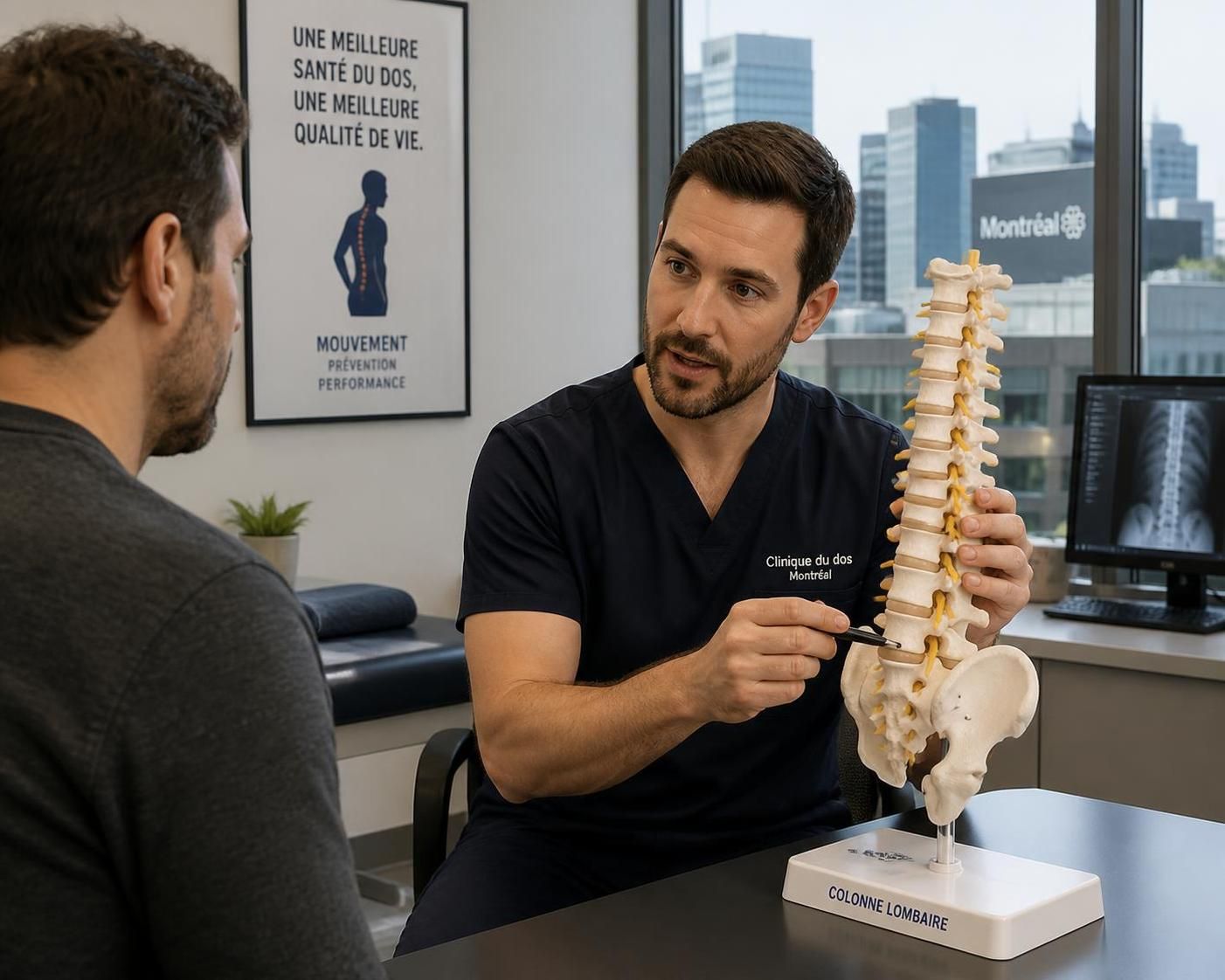
Several factors can alter sciatic pain related to a herniated disc, both in intensity and location. Understanding these factors is important for better managing the condition, particularly in a large metropolitan area such as Montreal, where lifestyle can influence its progression.
Prolonged sitting, common among office workers or during travel on public transit, often contributes to worsening symptoms by increasing pressure on the lumbar spine. Conversely, walking or moderate physical activity may sometimes ease pain by promoting better lumbar mobility.
Movements involving excessive bending of the back may increase compression of the nerve roots, as can coughing or straining during bowel movements, which increase intra-abdominal and spinal pressure. In some cases, nighttime pain disrupts sleep, affecting patients’ quality of life.
Individual variations in response to these factors explain why treatments must be tailored to the individual. Specific exercises recommended by professionals can help improve functional status and strengthen spinal support structures. However, this should be done under medical supervision to avoid worsening symptoms.
Managing radicular pain involves a combination of adapted lifestyle measures, physical therapies, and targeted treatments, taking into account the characteristics of Montreal’s urban setting and the patient’s profile. Learn more about managing these symptoms through locally accessible, tailored programs.
In summary, a better understanding of the factors that modify the situation helps coordinate a safe approach, avoiding certain aggravating movements or positions while encouraging sustained, gradual activity.
Recognizing signs that indicate when to seek care in Montreal for sciatica related to a herniated disc
It is essential to identify signs that require specialized medical consultation for suspected disc-related sciatica. Some symptoms may indicate worsening or a medical complication that should not be ignored.
Signs warranting prompt clinical assessment:
- Persistent or recurrent pain despite initial treatments.
- Pain radiating below the knee.
- Increasing limitation in walking or daily activities.
- Numbness, tingling, or progressive weakness in the affected leg.
- Sleep disruption due to sciatic pain.
Emergency signs requiring immediate medical assessment:
- Loss of bladder or bowel control (incontinence).
- Saddle anaesthesia (perineal areas).
- Very significant or rapidly progressive weakness in the lower limbs.
- High fever or impaired general condition.
- Significant back trauma followed by severe pain.
- Rapid onset of pain in the context of cancer or infection.
These criteria must be taken seriously and should lead to consultation without delay in order to assess the situation and adopt a safe treatment strategy. To better understand these signs, the website offers explanations adapted to the Montreal context.
Treatment options for herniated discs and sciatica in Montreal
Treatment for sciatica caused by a herniated disc is based on a stepwise approach, combining several modalities according to symptom intensity and the patient’s response. In Montreal, services such as those offered by TAGMED Clinic include multidisciplinary expertise tailored to each patient profile.
Initially, maintaining or gradually resuming activities is encouraged when safe, in order to preserve muscle function and mobility. Anti-inflammatory medications or pain relievers may be prescribed based on the health-care professional’s advice, with attention to potential side effects.
Physiotherapy plays a key role by providing targeted exercises that strengthen the back and improve flexibility. Manual care, including specific osteopathy, may be incorporated to relieve pressure on nerve structures. These options aim to reduce inflammation and improve tolerance to movement.
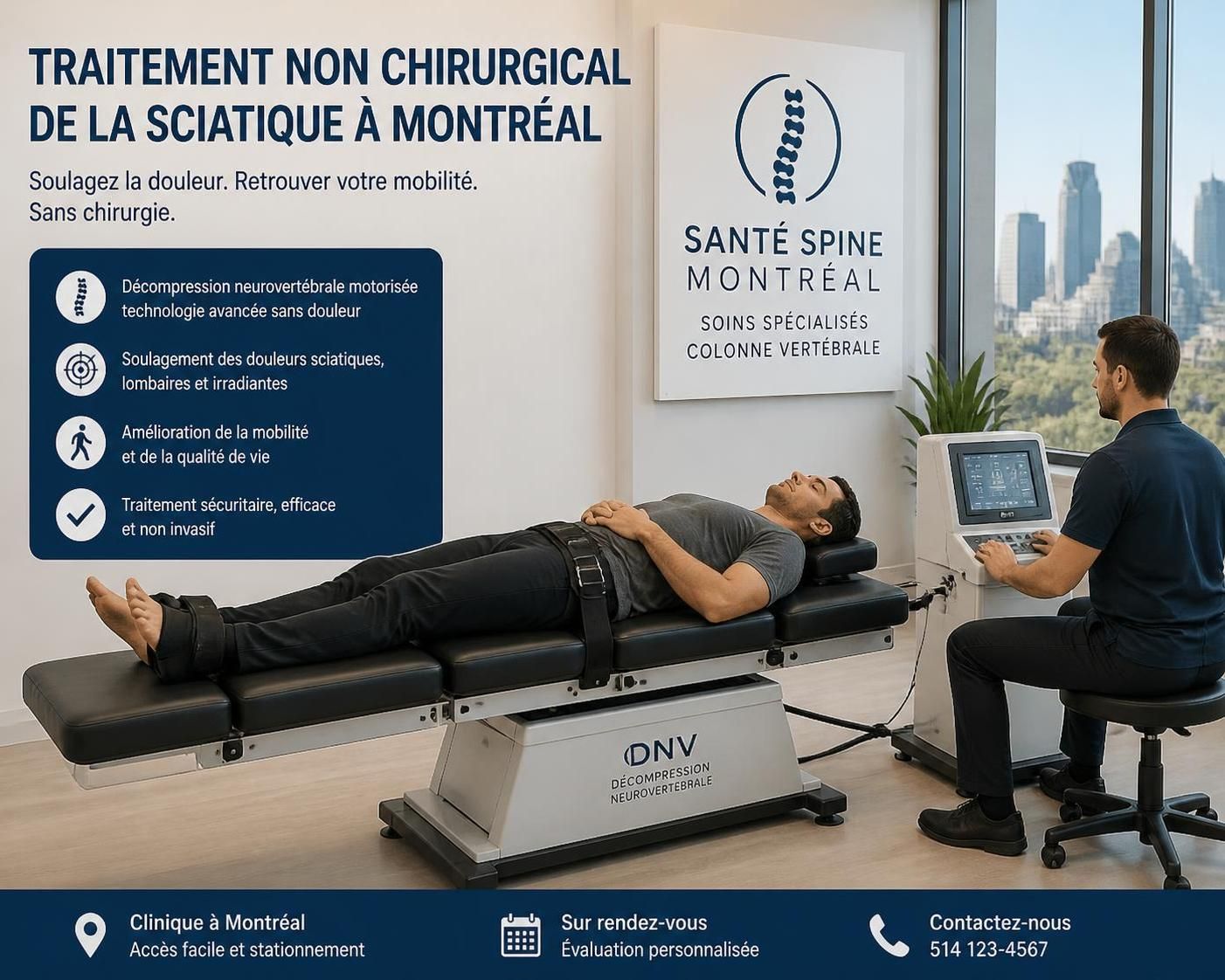
One modality to consider in certain cases is motorized neurovertebral decompression, offered in some clinics in Montreal. This technique involves gradual, controlled traction of the spine to temporarily reduce compression on the nerve roots. It is particularly considered for patients with a herniated disc, protrusion, or foraminal stenosis compatible with this approach.
However, it is important to emphasize that neurovertebral decompression is not suitable for every case and does not replace a thorough medical assessment. Results vary from one patient to another, and a specific number of sessions cannot be universally recommended. It should be integrated into a comprehensive approach and combined with other conservative treatments.
In situations where symptoms persist or worsen, more invasive interventions such as injections or surgery may be discussed depending on progression and clinical severity. These options are generally reserved for resistant cases or those involving a major neurological risk.
- Gradual maintenance of physical activity under medical supervision.
- Physiotherapy and osteopathy to strengthen and relax the lumbar spine.
- Appropriate medication according to pain and contraindications.
- Motorized neurovertebral decompression for certain specific cases.
- Invasive interventions such as epidural injections or surgery as a last resort.
What is the difference between a herniated disc and sciatica?
A herniated disc is an abnormal displacement of the intervertebral disc, whereas sciatica refers to pain that follows the sciatic nerve pathway, often caused by compression from the herniation.
How can you tell whether leg pain is sciatica?
Sciatic pain generally presents as one-sided radiation from the buttock to the foot, often accompanied by numbness, tingling, or muscle weakness.
When should you seek care for a herniated disc in Montreal?
It is recommended to seek care if pain persists, weakness in the leg progresses, or sensory disturbances occur, especially if pain intensifies or disrupts sleep.
Is neurovertebral decompression effective for treating sciatica?
This motorized technique may help certain patients with a herniated disc or foraminal stenosis, but it is not indicated for everyone and should be decided upon after a thorough assessment.
What aggravating factors influence sciatic pain?
Prolonged sitting, certain lumbar flexion movements, coughing, and intense exertion can worsen pain related to nerve compression.
If you have sciatic pain or suspect a herniated disc in Montreal, a personalized assessment can help clarify the nature of your pain, the signs to monitor, and the appropriate treatment approach.
Book an appointment for an assessment in Mont-Royal
Dr. Sylvain Desforges, B.Sc., D.O., N.D., osteopath
This content is provided for educational purposes and does not replace an individual clinical assessment.