

Neural circuit connecting a receptor, afferent pathway, integration center and efferent pathway to an effector to produce a reflex response.
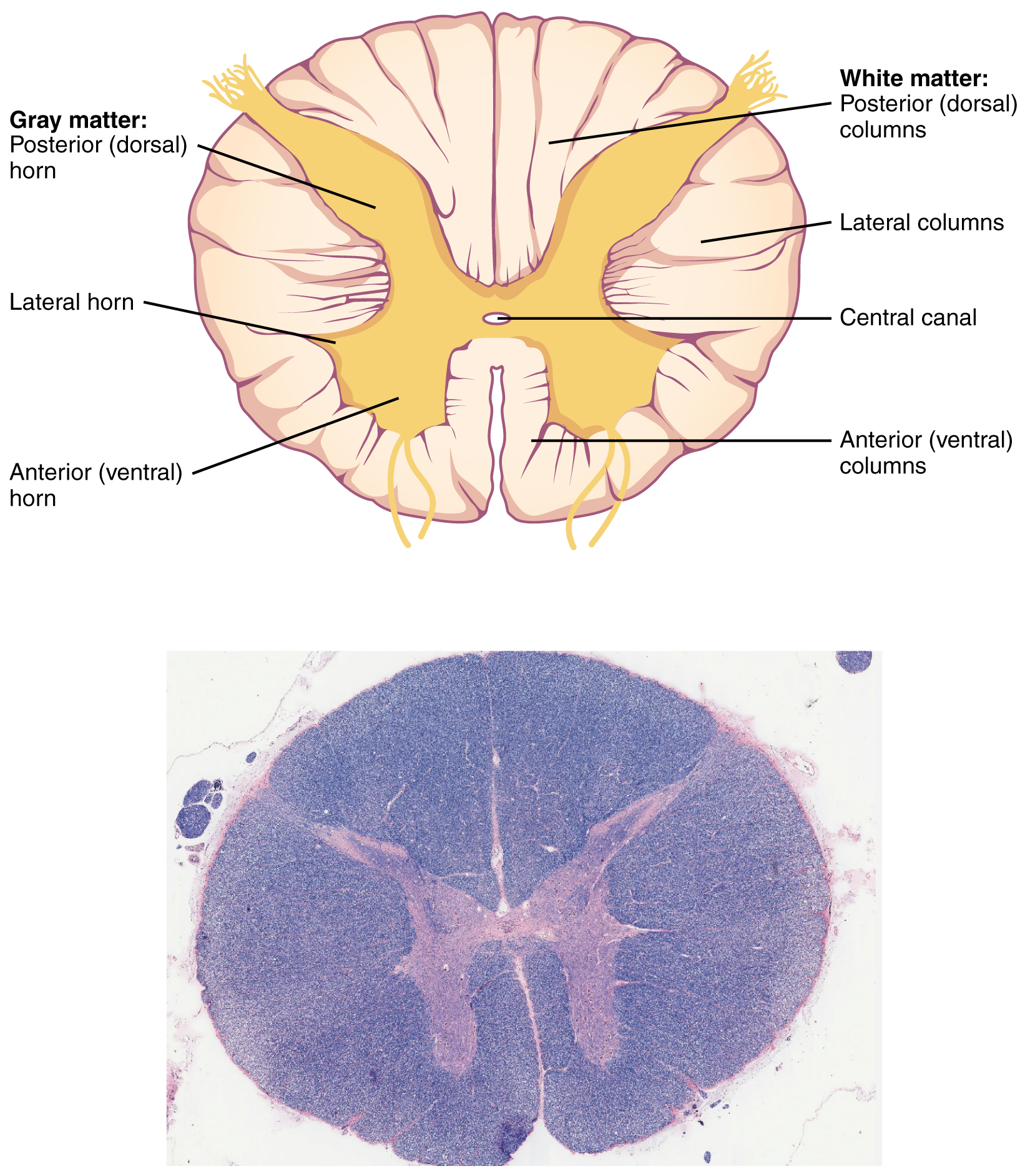
OpenStax — CC BY 4.0. Image source.

Physiology
Mechanism and function
Integration may occur in the spinal cord without an initial voluntary command. Descending influences still modify reflex expression, explaining its value in neurological assessment.
Assessment and clinical implications
A reduced or increased reflex must be assessed alongside other findings, symmetry and examination conditions. It does not always localize a lesion by itself.
Points to consider
Movement integrates sensory input, spinal circuits and central commands. Balance and coordination also depend on vision, vestibular function and attention. Difficulty with one task therefore cannot isolate a single mechanism without assessment.
Role of TAGMED care
At TAGMED, assessment aims to understand symptoms, history and functional limitations. Manual care and osteopathy, motorized spinal decompression, laser and shockwave have different indications. The term described in this entry is not enough to select any of these modalities. Their relevance, limitations and possible contraindications should be discussed in relation to diagnosis and individual goals.
Related concepts and distinctions
These concepts belong to the same field, but are not synonyms.
- Stretch reflex — Reflex contraction of a muscle in response to stretching, involving muscle spindles and their spinal connections.
- Reciprocal inhibition — Spinal mechanism that helps reduce activity in some antagonist muscles when a muscle group is activated during movement or a reflex.
- Muscle spindle — Sensory receptor within a muscle that informs the nervous system about muscle length and changes in length.
Conceptual guide: Reflex arc. Blocks summarize useful relationships; they are not an individual anatomical image.
Medical references
- OpenStax, Rice University. Anatomy and Physiology 2e — Motor Responses.
- OpenStax, Rice University. Anatomy and Physiology 2e — The Peripheral Nervous System.
References document the topic; their inclusion does not imply endorsement of TAGMED services by those organizations.
Educational information from The Spine Page. This entry does not replace an individual assessment. Documentary version: October 13, 2026. Sylvain Desforges, B.Sc., D.O., N.D., osteopath and naturopath.
TAGMED clinic contact details
For non-urgent consultations and information about available services.
Clinique TAGMED — Terrebonne
1150, rue Lévis, Suite 200
Terrebonne (Québec) J6W 5S6
450‑704‑4447
Clinique TAGMED — Montréal
1140, avenue Beaumont
Mont-Royal (Québec) H3P 3E5
1‑877‑672‑9060