

Device-controlled spinal traction intended to alter mechanical loading temporarily. It is distinct from surgical decompression.
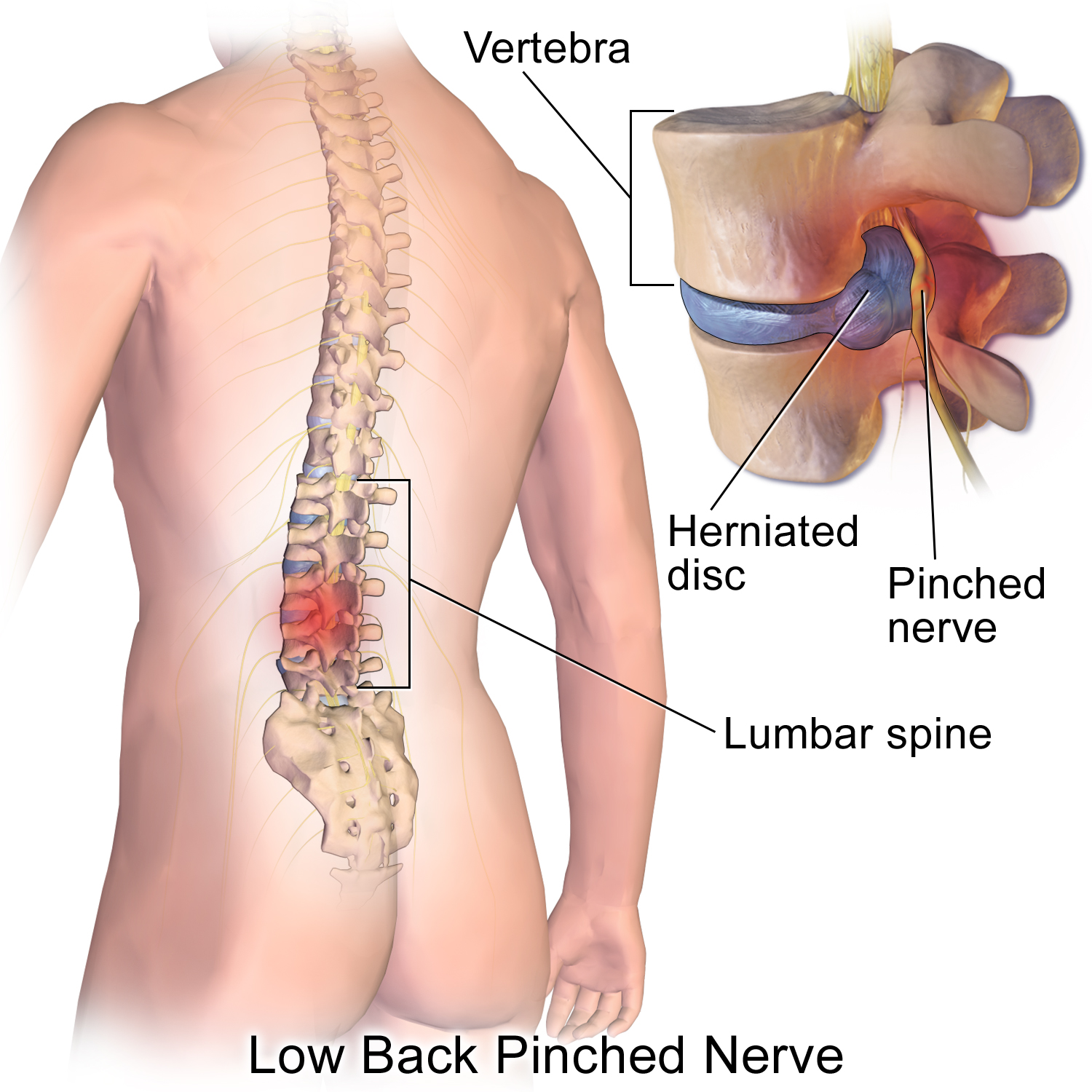
Blausen.com staff (2014), Medical gallery of Blausen Medical 2014, WikiJournal of Medicine 1(2), DOI: 10.15347/wjm/2014.010 — CC BY 3.0. Image source.

Understanding the approach
Nonsurgical motorized spinal decompression is a form of traction in which a device controls forces applied to the spine. It aims to temporarily change mechanical loading and sometimes symptoms. It is different from surgery that removes disc material or bone compressing a nerve.
Indications and assessment
At TAGMED, this modality concerns selected patients following assessment of pain, radiating symptoms and neurological status. An existing MRI report may contribute, but a disc herniation on imaging does not establish suitability. Examination must also consider instability, bone fragility and other explanations for symptoms.
Benefits, limitations and precautions
Evidence is heterogeneous and does not support guarantees of disc repair or avoiding surgery. A comparative trial did not establish superiority of the studied device over conventional traction. NICE recommends against offering traction for low back pain with or without sciatica; this recommendation should be explained.
Place in the care pathway
If an individualized trial is chosen, it needs defined goals, monitoring and stopping criteria. Fracture, infection, tumour, important instability or progressive deficit requires another pathway. Increasing radiating symptoms calls for reassessment rather than automatically increasing the traction force.
Goals should be practical: walking farther, returning to a chosen activity or reducing symptoms that interfere with sleep. Improvement immediately after a session does not establish lasting benefit. Follow-up compares function with the starting point, records adverse effects and considers progress between appointments. An inadequate response should prompt a review of the clinical explanation or proposed approach, rather than an automatic extension of the same treatment.
Before starting, describe the outcome you want, treatments already tried and difficulties encountered. Ask how the response will be measured and when another option would be preferable. Available reports complement the discussion without replacing your current experience, priorities or preferences.
Frequently asked questions
Is this an operation?
No. It is external traction applied using a motorized table.
Must the disc move back into place?
No. Relief does not prove a lasting anatomical change.
Does every case of sciatica respond?
No. Causes, severity and natural recovery vary substantially.
Should exercise be abandoned?
No. Appropriate activities remain relevant within a coordinated programme.
When is urgent care necessary?
Progressive weakness, urinary retention or saddle numbness needs immediate medical evaluation.
Conceptual diagram of clinical reasoning; not an anatomical drawing to scale.
Role of TAGMED care
TAGMED offers motorized spinal decompression, a form of traction. Initial assessment considers whether symptoms, neurological findings and imaging, when indicated, agree. The value of this approach remains uncertain depending on the condition; NICE recommends against offering traction for low back pain with or without sciatica. It does not guarantee disc resorption, disc repair or correction of stenosis. Alternatives, contraindications, functional goals and stopping criteria should be discussed before any trial.
Medical references
- NICE. Low back pain and sciatica in over 16s: assessment and management (NG59).
- Koçak et al. — Turkish Journal of Physical Medicine and Rehabilitation. Comparison of conventional motorized traction with non-surgical spinal decompression: a randomized controlled trial.
- World Health Organization. WHO guideline for non-surgical management of chronic primary low back pain in adults.
References document the topic; their inclusion does not imply endorsement of TAGMED services by those organizations.
Educational information from The Spine Page. This entry does not replace an individual assessment. Documentary version: October 12, 2026. Sylvain Desforges, B.Sc., D.O., N.D., osteopath and naturopath.
TAGMED clinic contact details
For non-urgent consultations and information about available services.
Clinique TAGMED — Terrebonne
1150, rue Lévis, Suite 200
Terrebonne (Québec) J6W 5S6
450‑704‑4447
Clinique TAGMED — Montréal
1140, avenue Beaumont
Mont-Royal (Québec) H3P 3E5
1‑877‑672‑9060