

Intervertebral disc nutrition describes exchanges that supply disc cells with nutrients and remove metabolic waste. The adult disc has limited internal blood supply, particularly centrally. Exchange relies largely on diffusion from neighbouring tissues rather than blood vessels reaching every cell.
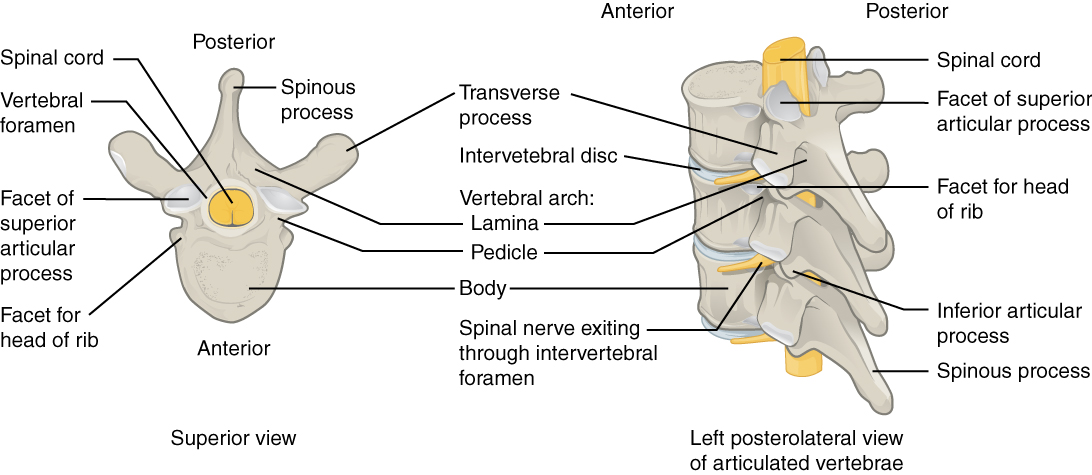
OpenStax College — CC BY 3.0. Image source.

Function and mechanism
Disc cells maintain their matrix despite limited internal vascular supply. Small molecules, including glucose and oxygen, move through neighbouring tissues along concentration gradients. Metabolic products also need removal. Vertebral endplates and the disc's outer region provide important interfaces for these exchanges, whose effectiveness depends on more than the amount of water someone drinks.
Assessment and interpretation
Research indicates that nutrient availability and acidity can affect cells. Much evidence, however, comes from models or cell cultures, including animal material. It cannot diagnose disc nutrient deficiency from a person's back pain. Ordinary MRI does not directly measure glucose delivery to each cell, and a degenerative appearance is not a nutritional prescription.
Role of TAGMED care
At TAGMED, support can encourage suitable activity and general health habits. Fluid movement should not be confused with proof that nutrition has been restored. Motorized decompression has not established that it routinely regenerates discs by drawing nutrients inside them. A biological explanation alone cannot demonstrate that an intervention works.
Follow-up and warning signs
Follow-up focuses on symptoms and function without promising to recharge a disc. Unusual pain with fever, unexplained weight loss or neurological loss requires assessment for the possible underlying cause rather than a presumed deficiency or a trial of supplements.
Frequently asked questions
Does extra water directly repair a dehydrated disc?
Appropriate general hydration is not an established method of repairing disc degeneration.
Should sugar be eaten to feed the disc?
No. Cellular metabolism does not justify that dietary recommendation.
Does a disc contain no blood vessels anywhere?
Vascularity varies with region and age; the adult centre is largely avascular.
Does movement simply pump nutrients inward?
That is an oversimplification; diffusion is central for small nutrient molecules.
Can a supplement rebuild the disc?
An isolated laboratory finding cannot support such a broad clinical promise.
Conceptual exchange diagram, without implying effectiveness of a mechanical treatment or nutritional product.
Medical references
- Spine — Urban, Smith and Fairbank. Nutrition of the intervertebral disc.
- European Spine Journal — Bibby and Urban. Effect of nutrient deprivation on the viability of intervertebral disc cells.
- Journal of the Mechanical Behavior of Biomedical Materials. Axial Creep Loading and Unloaded Recovery of the Human Intervertebral Disc and the Effect of Degeneration.
References document the topic; their inclusion does not imply endorsement of TAGMED services by those organizations.
Educational information from The Spine Page. This entry does not replace an individual assessment. Documentary version: October 12, 2026. Sylvain Desforges, B.Sc., D.O., N.D., osteopath and naturopath.
TAGMED clinic contact details
For non-urgent consultations and information about available services.
Clinique TAGMED — Terrebonne
1150, rue Lévis, Suite 200
Terrebonne (Québec) J6W 5S6
450‑704‑4447
Clinique TAGMED — Montréal
1140, avenue Beaumont
Mont-Royal (Québec) H3P 3E5
1‑877‑672‑9060