





Motorized spinal decompression contraindications and reasons to stop treatment
Contraindications depend on the region, device, position, force and medical condition. Safe care begins with diagnosis, neurological examination, fracture and instability risk, systemic disease and previous surgery.
Published lists vary, so this page is a screening framework rather than a replacement for manufacturer instructions and individualized professional judgment.
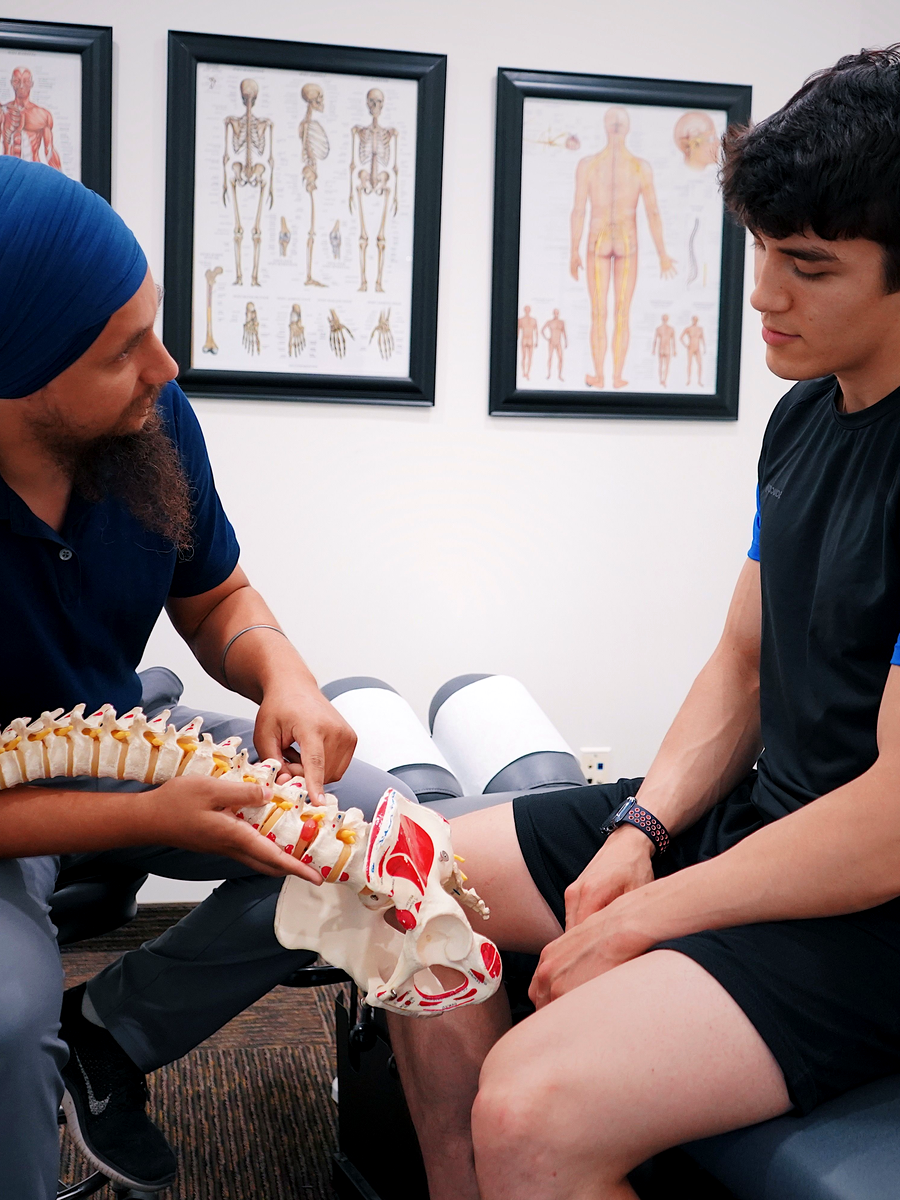
Examples requiring exclusion or caution
Screening distinguishes absolute contraindications from precautions. Classification depends on severity and device instructions.
Pregnancy, vascular disease, recent surgery, implants, anticoagulation and severe cardiopulmonary disease may require additional judgment.
| Category | Concern | Typical response |
|---|---|---|
| Structural fragility | Fracture, severe osteoporosis or destructive lesion. | Avoid or obtain specialist clearance. |
| Neurological emergency | Rapid weakness or cauda equina symptoms. | Urgent medical or surgical pathway. |
| Medical or tolerance risk | Position intolerance, abdominal or vascular concern. | Modify, defer or choose an alternative. |

Pre-treatment screening
History documents trauma, bone health, cancer, infection, surgery, implants, pregnancy, medication and vascular or cardiopulmonary conditions.
Examination reviews strength, sensation, reflexes, gait and red flags. Imaging is reviewed when stability or a specific target must be established.
Manufacturer instructions
Use the contraindications for the exact device.
Regional differences
Cervical care requires attention to myelopathy and instability.
Baseline documentation
Record neurological findings before treatment.

Reasons to stop and reassess
Stop when symptoms become less safe: new weakness, spreading numbness, gait change or bladder and bowel symptoms.
Persistent peripheralization, severe dizziness, faintness, chest or abdominal symptoms or a marked change also requires reassessment.
- Stop if pain travels farther and does not settle.
- Stop for any new motor or bladder change.
- Do not continue only because sessions were prepaid.
- Document the event and decide whether referral is needed.
Screen, modify or avoid
Not every precaution means permanent exclusion, but uncertainty should be resolved before repeated force exposure.
Neurological or systemic change is different from ordinary transient soreness.
| Status | Example | Decision |
|---|---|---|
| Likely avoid | Acute fracture, infection or neurological emergency. | Do not begin; refer. |
| Requires specialist judgment | Prior fusion, severe osteoporosis or uncertain instability. | Review imaging and instructions. |
| May modify | Position intolerance without neurological change. | Reduce force, alter position or choose another treatment. |

Questions to ask before choosing care
Before beginning care for motorized spinal decompression contraindications and reasons to stop treatment, ask the provider to explain the working diagnosis and the findings that support it. The discussion should distinguish a structural description from the clinical syndrome, clarify whether neurological function is stable and identify the specific outcome the treatment is intended to improve.
A high-quality plan also explains the expected timeline, reasonable alternatives, possible harms, cost and the criteria for changing course. No treatment should continue indefinitely because it produced a brief change in pain. The decision should be reviewed against measurable function and safety.
What is the target?
Ask which structure, mechanism or functional limitation the treatment is intended to address.
What result is realistic?
Clarify the expected change in pain distribution, walking, sleep, work or daily activity.
What are the alternatives?
Compare education, exercise, medication, procedures, technology-assisted care and surgery when relevant.
When will the plan be reviewed?
Set an early review point and define the findings that would stop, modify or escalate care.
How to monitor progress
Progress should be tracked with more than a pain score. Useful measures include how far symptoms travel, strength, sensation, walking tolerance, sleep, medication use and the ability to perform meaningful activities. Neurological change should always be documented separately from pain relief.
Temporary fluctuations are common. The important question is whether the overall trajectory is safer and more functional. New weakness, expanding numbness, altered bladder or bowel function or a substantial loss of walking ability should trigger reassessment rather than automatic continuation of the same treatment.
Continue with specialized resources
The Spine Page is an educational blog. The links below lead to independent specialized websites.
Clinique TAGMED — spinal decompression
Service-specific information about motorized spinal decompression and disc-related conditions.
SOS Sciatique — nerve-root symptoms
Focused guides about sciatica, warning signs and treatment questions.
Frequently asked questions
Is osteoporosis a contraindication?
Severe osteoporosis may be.
Can it be used after fusion?
It depends on surgery, healing, hardware and device instructions.
Is pregnancy a contraindication?
Often an important precaution.
What about spondylolisthesis?
Stability must be assessed.
Can treatment continue if leg pain increases?
Persistent worsening should prompt reassessment.
Is temporary soreness normal?
Mild soreness can occur.
Can someone with cancer receive it?
Spinal malignancy requires medical assessment.
What if dizziness occurs?
Stop and assess.
Do all devices have the same contraindications?
No.
Can The Spine Page confirm safety?
No.
Sources consulted
- NICE — Low back pain and sciatica in over 16s
- World Health Organization — Guideline for non-surgical management of chronic primary low back pain
- Cochrane — Traction for low-back pain with or without sciatica
- American College of Radiology — Appropriateness Criteria: Low Back Pain
Last editorial review: July 2026. This page provides general education and does not replace individualized medical assessment.
Editorial review : Dr. Sylvain Desforges, B.Sc., D.O., N.D., osteopath — The Spine Page
Screen candidacy before treatment
Review candidate selection and the comparison with traction.
The Spine Page — The best treatments for your spinal problems — www.thespinepage.com