


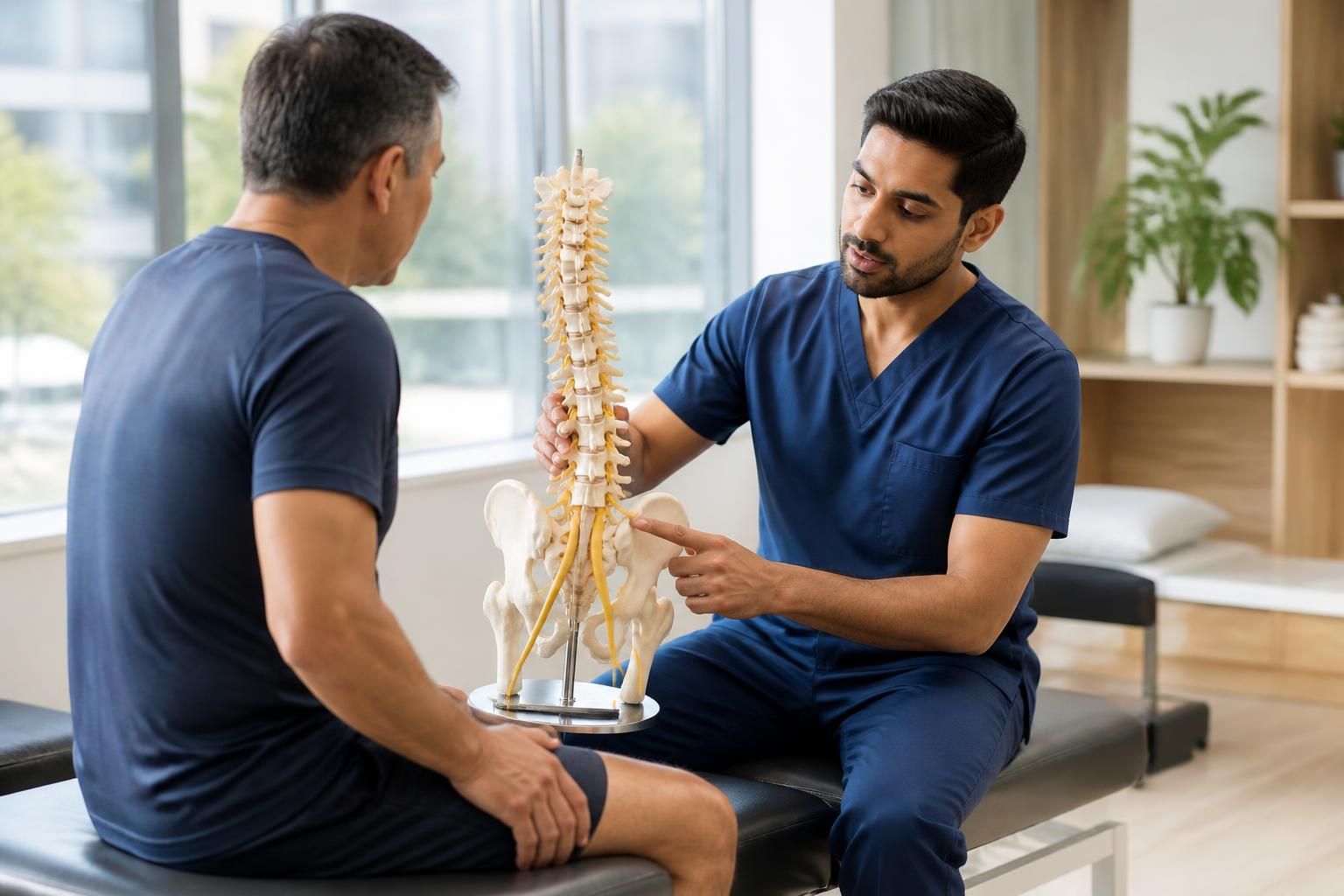


Low back pain and sciatica are among the most common reasons for medical consultations in Montreal, affecting a significant proportion of the population at least once in their lifetime. Knowing how to distinguish between these two types of pain is essential to guide an accurate diagnosis and choose appropriate treatment, prevent complications, and reduce impacts on mobility and quality of life.
While low back pain most often presents as localized, mechanical pain in the lower back, sciatica is characterized by pain that radiates along the sciatic nerve, affecting the buttock, thigh, and sometimes the leg down to the foot. These distinctions help Montreal patients understand their symptoms and seek appropriate care at specialized clinics such as TAGMED Clinic in Mont-Royal.
In brief: key points for distinguishing low back pain and sciatica
- Low back pain: localized pain in the lower back, often related to a muscular or joint-related origin.
- Sciatica: nerve pain that follows the path of the sciatic nerve, radiating from the buttock to the leg, sometimes accompanied by numbness or weakness.
- Clinical examination: essential for establishing a diagnosis before any imaging, to avoid unnecessary or premature tests.
- Common cause of sciatica: a herniated disc or lumbar osteoarthritis causing nerve compression.
- Appropriate treatments: prioritize rehabilitation, manual care and, for some patients, motorized neurovertebral decompression.
- When to seek care: persistent pain, associated neurological signs (weakness, numbness), or urgent symptoms such as loss of urinary control.
Understanding low back pain and sciatica: mechanisms and clinical differences
In Montreal, as elsewhere, low back pain is defined as pain mainly localized in the lumbar region, meaning the lower back. This pain often has a mechanical component, resulting from strain, overuse, or injury to the paraspinal muscles, ligaments, and lumbar joints. It generally occurs after exertion, a sudden movement, or a prolonged position, and is frequently accompanied by stiffness and limited movements such as rotation or flexion of the trunk.
In contrast, sciatica refers to pain that typically follows the path of the sciatic nerve, a major nerve structure arising from nerve roots in the lumbar region (mainly L4, L5, and S1) and travelling through the buttock, the back of the thigh, the leg, and sometimes to the foot. This radicular pain is often described as burning, an electric shock, or tingling, and may be accompanied by numbness and muscle weakness, signs of nerve involvement.
In many cases in Montreal, the underlying cause of sciatica is a herniated disc compressing a nerve root, facet joint osteoarthritis, or foraminal stenosis, meaning narrowing of the canal through which the nerve exits the spine. Although low back pain and sciatica may coexist, the clinical distinction is crucial for tailoring treatment and avoiding inappropriate interventions.
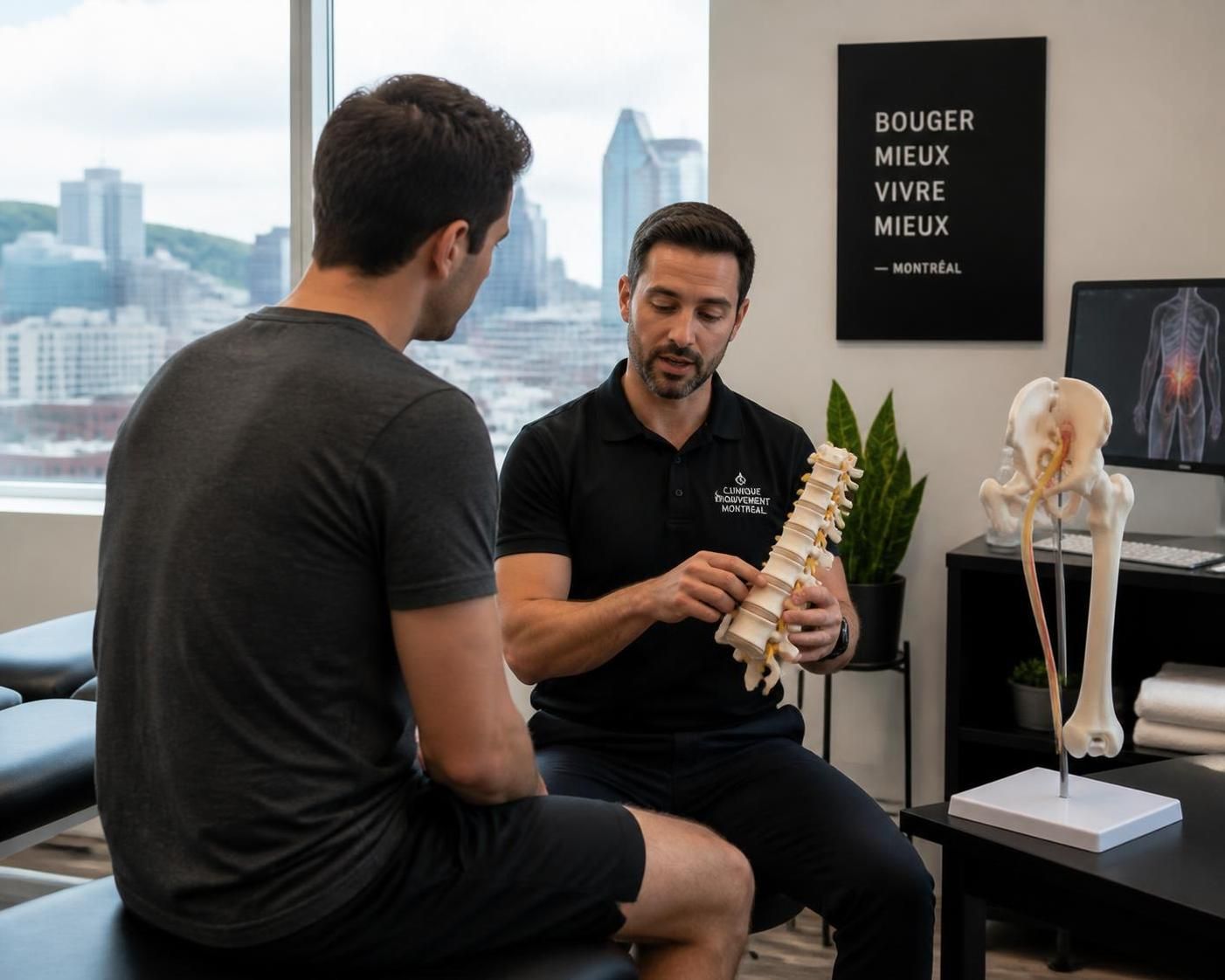
Distinctive signs and symptoms to guide diagnosis in Montreal
The differential diagnosis between low back pain and sciatica is based mainly on observing symptoms and on the clinical examination. Here are the elements to consider:
- Pain location: Low back pain presents as pain centred in the lower back without significant radiation. Sciatica follows the path of the sciatic nerve, travelling down the buttock and thigh, sometimes to the foot.
- Type of pain: Low back pain is often described as dull, heavy, and worsened by flexion or certain postures. Sciatica is more typically electric, shooting, or burning, with tingling sensations.
- Triggering factors: A sudden movement or physical exertion often causes lumbago, whereas sciatica is worsened by prolonged sitting, coughing, or abdominal straining.
- Associated neurological signs: Sciatica may be accompanied by paresthesia, numbness, reduced reflexes, or muscle weakness, which are absent in most cases of low back pain.
The following table summarizes these differences:
| Characteristic | Low back pain | Sciatica |
|---|---|---|
| Location | Pain in the lower back | Pain radiating from the buttock to the leg |
| Type of pain | Heavy, dull, mechanical | Burning, electric, radicular |
| Aggravating factors | Sudden movements, exertion | Sitting, coughing, prolonged flexion |
| Neurological manifestations | Absent or rare | Numbness, weakness, loss of reflexes |
| Mobility | Often limited, with stiffness | Variable, possible pain when moving |
| Additional tests | Often unnecessary | MRI or radiology if nerve signs are present or symptoms persist |
These distinctions are essential for appropriate care. For additional information, specialists in spine health in Montreal can be consulted, including at TAGMED Clinic, which also offers motorized neurovertebral decompression as a non-surgical treatment option.
Symptom progression and factors influencing pain among Montrealers
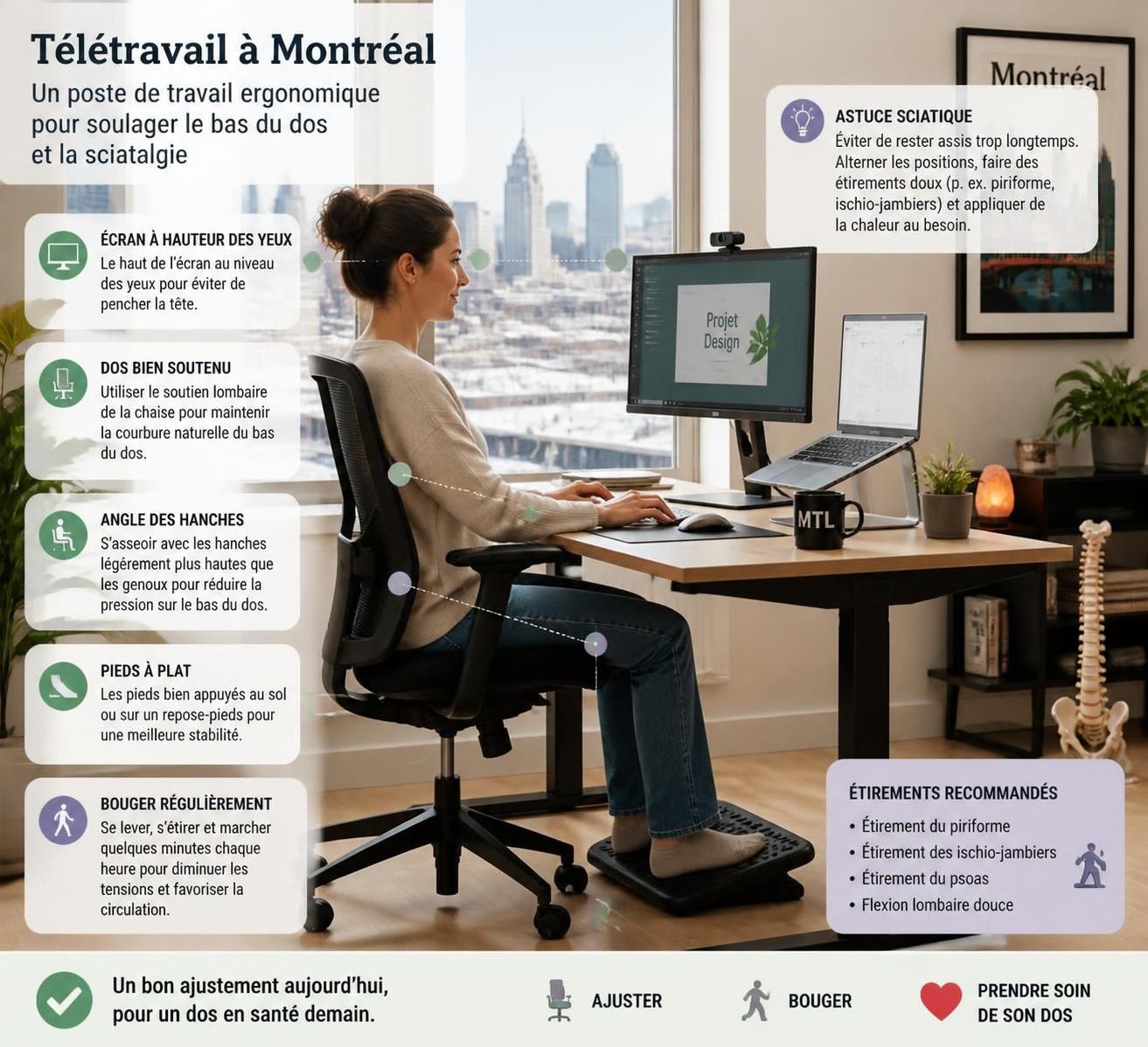
Low back pain and sciatica can progress differently depending on lifestyle, work-related, and daily habit factors. For example, remote work, which has been widespread in Montreal for several years, can promote prolonged sitting, particularly worsening sciatic pain.
Similarly, daily commuting by public transit or car, carrying heavy loads in certain occupations or sports activities, and overall fitness level play a notable role in worsening or relieving symptoms.
Specific changes in symptoms may occur depending on:
- Prolonged sitting, which tends to place more pressure on the sciatic nerve, intensifying radicular pain.
- Significant physical exertion or sudden movements, often causing acute lumbago in many active Montrealers.
- Extension or flexion movements of the trunk, which may either relieve or worsen pain depending on the type of condition.
- The duration of the painful episode; acute low back pain tends to improve within a few days with appropriate care, whereas sciatica may persist and make activities more difficult for several weeks.
In practice, it is recommended to maintain adapted, regular physical activity as much as possible, while avoiding restrictive postures and improving workstation ergonomics. In Montreal, several resources are available to support patients in these efforts, including through educational and preventive consultations.
When should you seek care for low back pain or sciatica in Montreal?
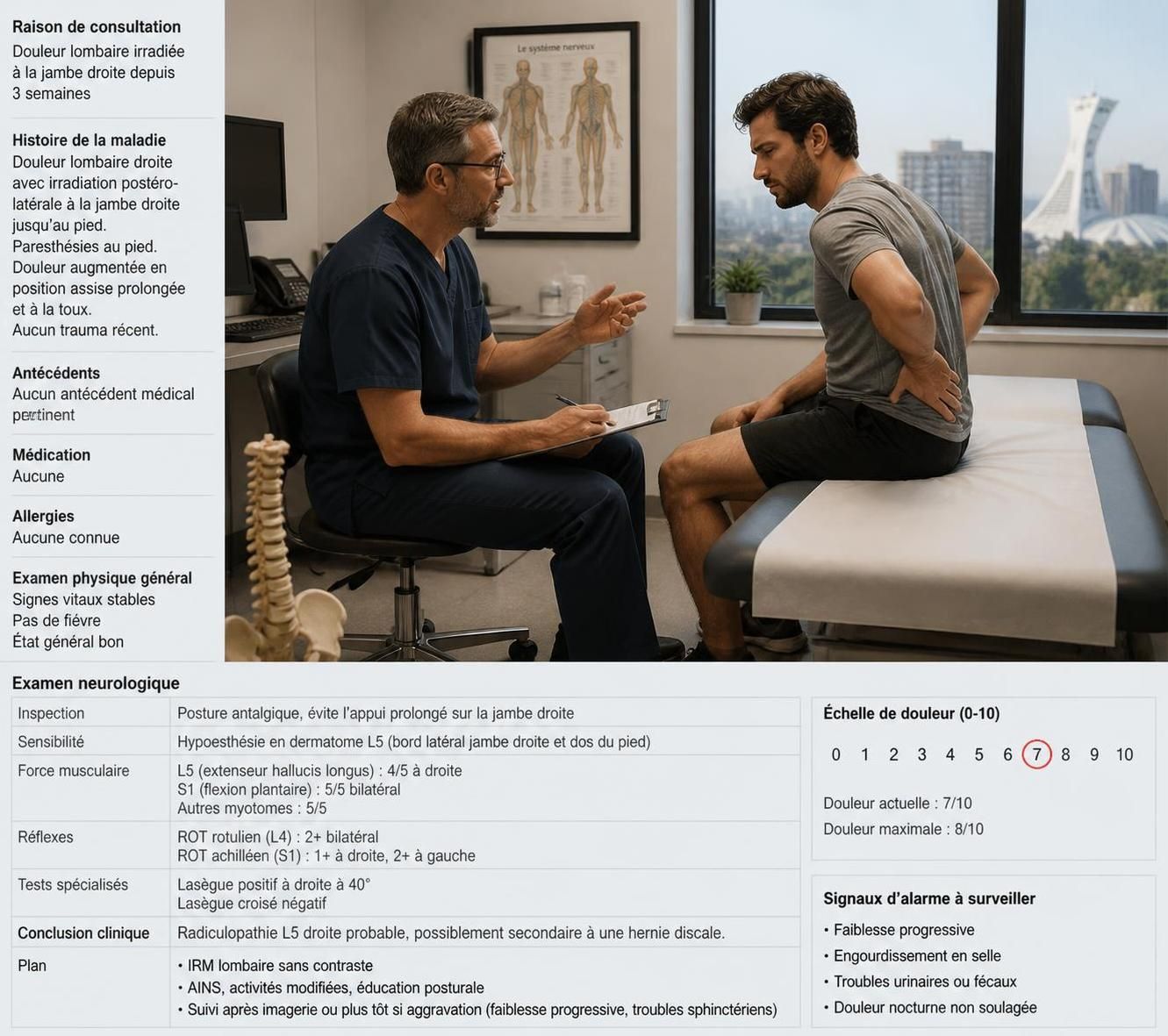
It is important to recognize signs that warrant a specialized professional assessment, particularly for Montrealers concerned about avoiding complications:
- Persistent low back pain or sciatica lasting more than 6 weeks without notable improvement despite conservative measures.
- Pain radiating below the knee accompanied by numbness, tingling, or loss of muscle strength in the leg.
- Significant limitation in walking or sleep disruption related to pain.
- A marked or progressive feeling of weakness, especially when walking or lifting the foot (foot drop).
- Urgent signs requiring prompt medical consultation: numbness in the perineal (saddle) area, impaired urinary or bowel control, fever associated with back pain, recent major trauma, or a history of cancer.
These warning signs mainly concern the diagnosis of cauda equina syndrome or serious infections, rare situations that require prompt care. If in doubt, an assessment at TAGMED Clinic or through SOS Sciatica resources can help guide next steps so necessary care is not delayed.
Non-surgical treatment options for low back pain and sciatica in Montreal
In most cases, treatment for low back and sciatic pain is based on a personalized conservative approach that takes into account the specific symptoms and the patient’s clinical context. This approach prioritizes restoring function, reducing pain, and preventing recurrence.
Here are the most common options used in specialized clinics in Montreal:
- Maintaining or gradually resuming activity: gradually engaging in gentle movements without overexertion, to avoid prolonged inactivity, which often worsens both conditions.
- Postural and ergonomic advice: adjustments to the workstation, during remote work or driving, to reduce lumbar and nerve strain.
- Targeted exercises: adapted stretching and muscle strengthening exercises to improve lumbar stability and posture, while remaining attentive to tolerance and not pushing through pain.
- Manual care and specific osteopathy: gentle manipulation and techniques aimed at reducing muscle tension and optimizing spinal mechanics, often offered at TAGMED Clinic.
- Symptom-relieving medication: cautious use of analgesics and anti-inflammatory medications under medical supervision.
- Motorized neurovertebral decompression: an option to consider for certain patients with a herniated disc or disc protrusion, aimed at reducing pressure on nerve roots through controlled traction. This method is offered after a thorough assessment and is not suitable for all cases.
The table below summarizes the main options, their objectives, and their limitations:
| Treatment option | Objective | Limitations |
|---|---|---|
| Gradual activity | Preserve mobility and avoid inactivity | Requires follow-up to avoid overexertion |
| Ergonomic advice | Reduce lumbar and nerve strain | Must be adapted to the professional and personal context |
| Personalized exercises | Muscle strengthening and flexibility | Not suitable in cases of severe acute pain or severe neurological signs |
| Manual care and osteopathy | Reduce tension and improve mobility | Effects vary depending on the case and practitioner’s expertise |
| Medications | Symptom relief | Does not treat the underlying cause; possible side effects |
| Motorized neurovertebral decompression | Reduce nerve pressure in cases of disc protrusion or herniated disc | Not suitable for everyone; requires specialized assessment and follow-up |
This integrated therapeutic offering makes it possible to tailor each treatment according to the Montreal patient’s profile, emphasizing prevention and long-term symptom management. To learn more about managing sciatic and low back pain in Montreal, it is advisable to consult a qualified professional.
{“@context”:”https://schema.org”,”@type”:”FAQPage”,”mainEntity”:[{“@type”:”Question”,”name”:”Comment diffu00e9rencier rapidement une lombalgie du2019une sciatique ?”,”acceptedAnswer”:{“@type”:”Answer”,”text”:”La lombalgie se manifeste par une douleur localisu00e9e au bas du dos sans irradiation majeure, souvent mu00e9canique et due u00e0 une tension musculaire. La sciatique pru00e9sente une douleur irradiant le long du nerf sciatique, associu00e9e u00e0 des sensations de bru00fblure ou du2019engourdissement et parfois u00e0 une faiblesse. Un examen clinique est essentiel pour confirmer.”}},{“@type”:”Question”,”name”:”Quand faut-il consulter un spu00e9cialiste u00e0 Montru00e9al ?”,”acceptedAnswer”:{“@type”:”Answer”,”text”:”Il est recommandu00e9 de consulter en cas de douleur persistante au-delu00e0 de six semaines, du2019apparition du2019engourdissements, de faiblesse musculaire, ou si des signes urgents tels que perte de contru00f4le urinaire ou anesthu00e9sie pu00e9rinu00e9ale apparaissent. Une u00e9valuation spu00e9cialisu00e9e permet du2019adapter le traitement.”}},{“@type”:”Question”,”name”:”Quels sont les facteurs de risque courants de lombalgie chez les Montru00e9alais ?”,”acceptedAnswer”:{“@type”:”Answer”,”text”:”La su00e9dentaritu00e9, les mouvements brusques, une posture inadaptu00e9e au travail, notamment le tu00e9lu00e9travail, le stress et le surpoids sont des facteurs fru00e9quemment associu00e9s u00e0 la lombalgie. Adapter son mode de vie et son environnement de travail peut pru00e9venir ces douleurs.”}},{“@type”:”Question”,”name”:”En quoi consiste la du00e9compression neurovertu00e9brale motorisu00e9e ?”,”acceptedAnswer”:{“@type”:”Answer”,”text”:”Cu2019est une forme de traction lombaire contru00f4lu00e9e et progressive visant u00e0 ru00e9duire la pression sur les disques intervertu00e9braux et les racines nerveuses. Elle est proposu00e9e u00e0 certains patients apru00e8s une u00e9valuation clinique approfondie mais nu2019est pas un traitement universel.”}},{“@type”:”Question”,”name”:”Est-ce que lu2019imagerie est toujours nu00e9cessaire pour la sciatique ?”,”acceptedAnswer”:{“@type”:”Answer”,”text”:”Lu2019imagerie, souvent une IRM, est indiquu00e9e en pru00e9sence de signes neurologiques importants, du2019aggravation ou de persistance de la douleur apru00e8s 6 u00e0 8 semaines. Elle permet de confirmer une hernie discale ou autre compression nerveuse mais nu2019est pas systu00e9matique du00e8s le du00e9but.”}}]}How can you quickly distinguish low back pain from sciatica?
Low back pain presents as localized pain in the lower back without major radiation, often mechanical and due to muscle tension. Sciatica involves pain radiating along the sciatic nerve, associated with burning or numbness and sometimes weakness. A clinical examination is essential for confirmation.
When should you consult a specialist in Montreal?
It is recommended to seek care if pain persists beyond six weeks, numbness or muscle weakness develops, or urgent signs such as loss of urinary control or perineal numbness appear. A specialized assessment helps tailor treatment.
What are common risk factors for low back pain among Montrealers?
Physical inactivity, sudden movements, poor posture at work, particularly during remote work, stress, and excess weight are factors frequently associated with low back pain. Adapting one’s lifestyle and work environment may help prevent this pain.
What does motorized neurovertebral decompression involve?
It is a form of controlled, progressive lumbar traction intended to reduce pressure on the intervertebral discs and nerve roots. It is offered to certain patients after a thorough clinical assessment but is not a universal treatment.
Is imaging always necessary for sciatica?
Imaging, often an MRI, is indicated when significant neurological signs are present, pain worsens, or pain persists after 6 to 8 weeks. It can confirm a herniated disc or other nerve compression but is not routinely required at the outset.
Are you experiencing low back pain or pain radiating into the leg in Montreal? A personalized assessment can help better understand the likely cause, the signs to watch for, and tailor a safe and effective treatment plan. Consult an expert for appropriate support.
Schedule an assessment in Montreal
Dr. Sylvain Desforges, B.Sc., D.O., N.D., osteopath
This content is educational in nature and does not replace a personalized assessment by a health-care professional.
