





Decompression, injection or surgery for sciatica in Terrebonne?
Motorized decompression, epidural injection and surgery are not three versions of the same treatment: their goals, invasiveness, evidence and indications differ.
The choice begins with diagnosis, neurological severity, duration, function and previous trials. A useful comparison avoids absolute promises and defines success, stopping and escalation criteria.

Compare according to the problem to solve
If the goal is gradual improvement in tolerance and function without an invasive procedure, structured conservative management may be appropriate when neurological status is stable.
If pain prevents rehabilitation, an injection may be discussed. If concordant compression is accompanied by progressive deficit or major persistent limitation, a surgical opinion carries more weight.
| Option | Main objective | Important limitation |
|---|---|---|
| Motorized decompression | Non-invasive trial for a selected profile | Heterogeneous evidence and no guarantee |
| Injection | Temporarily reduce radicular pain | Does not permanently correct anatomy |
| Surgery | Directly decompress a concordant structure | Operative risks and recovery |

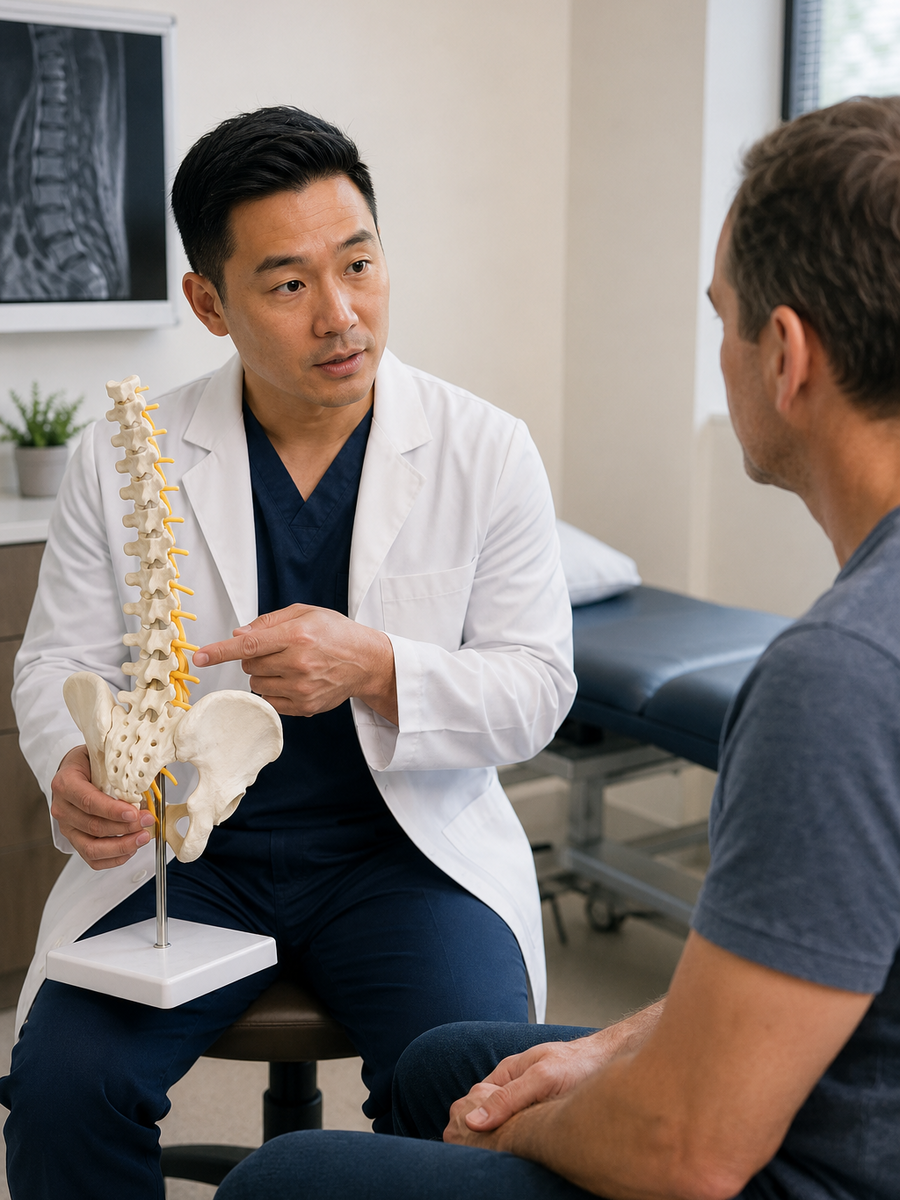
Motorized decompression: selection and reassessment
Decompression differs from simple traction through motor control and protocol. Use should follow examination, contraindication screening and definition of functional objectives.
A temporary response does not automatically justify a prolonged series. The plan should change if walking, sleep, strength or symptom distribution does not progress.
Injection and surgery: when are they discussed?
An epidural injection may provide short-term relief for selected people with concordant radicular pain. It should serve a clear objective such as resuming activity or enabling rehabilitation.
Surgery is urgent for certain neurological syndromes and elective for other persistent cases. An elective decision compares natural history, severity, imaging, previous treatment, risks and preferences.
- Confirm diagnosis and affected level.
- Measure strength, sensation and function.
- Define the specific objective of each option.
- Compare expected benefit with invasiveness.
- Plan what follows an insufficient response.
- Never delay a neurological emergency.
Track progress and revise the plan at the right time
A credible plan defines the expected changes and the time for review before care begins. Pain intensity alone is not enough. Symptom distribution, strength, sensation, walking, sleep, positional tolerance and participation in meaningful activities provide a more complete picture.
Temporary relief after a session does not automatically confirm the proposed cause. Conversely, one more painful day does not necessarily mean that the condition is worsening. The trend over several days, function and neurological status should be interpreted together.
Establish a baseline
Record walking distance, sitting time, sleep, strength and one important activity before starting.
Set a review point
Decide when results will be compared so an ineffective approach is not continued automatically.
Monitor neurological status
New weakness, spreading numbness or a gait change matters even when pain decreases.
Compare pain and function
A person may hurt less without recovering capacity, or function better while some pain remains.
Reconsider other causes
The hip, sacroiliac region, a peripheral nerve or a systemic cause can sometimes mimic sciatica.
Escalate proportionately
Imaging, referral or a procedure is discussed when risk, persistence or functional loss warrants it.
Common errors to avoid
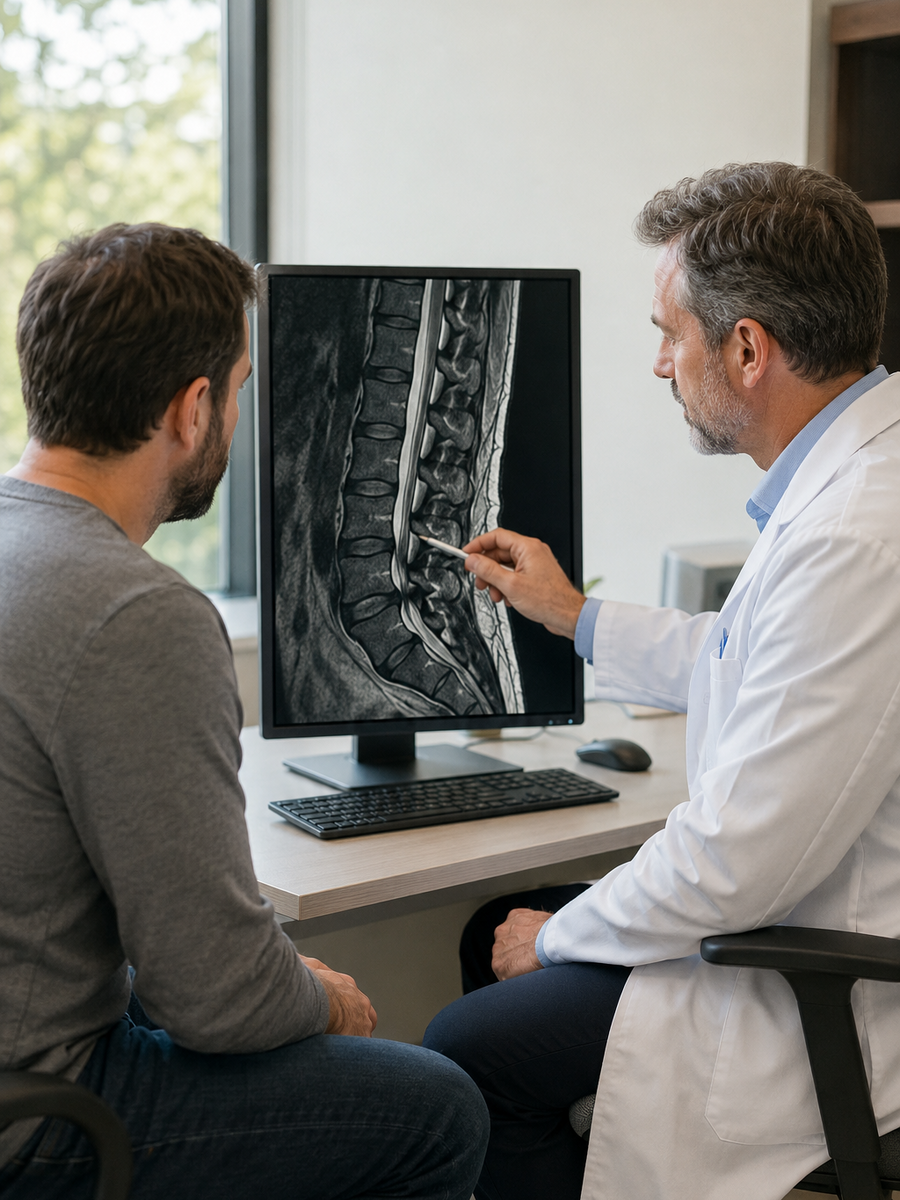
- Treating an MRI image alone without checking whether it matches the side, symptom distribution and examination.
- Promising a fixed number of visits before establishing a working diagnosis and baseline measures.
- Confusing short-lived relief with neurological or functional recovery.
- Repeating passive care despite no measurable progress in important activities.
- Ignoring progressive weakness because pain fluctuates or seems temporarily less intense.
- Delaying urgent assessment in order to complete a predetermined conservative program.
Shared decision-making is stronger when uncertainty is stated clearly. Readers should know what is confirmed, what remains probable, which alternatives remain possible and which changes would require a different plan.
Shared-decision questions
Which problem does this option target?
Pain, function and compression are not synonyms.
What benefit is realistic?
Ask about magnitude, timing and expected duration.
What are the risks and alternatives?
Compare with observation and active care.
What happens if it fails?
The next threshold should be known in advance.
Related Terrebonne silo guides
Sciatica assessment in Terrebonne
Distribution, strength, sensation, reflexes and decisions.
Specialized local resource
For readers who want to verify the local clinical offering, the following resource separately describes available services. This link does not replace comparing options or an individual assessment.
Clinique TAGMED – Terrebonne
Information about assessment and non-surgical care offered at Clinique TAGMED in Terrebonne.
Frequently asked questions
Does decompression always avoid surgery?
No. It may be tried for selected patients without guaranteeing that an operation will be avoided.
Does an injection heal a disc herniation?
No. It mainly targets pain and inflammation and does not directly repair the disc.
Is surgery always a last resort?
It may be urgent for certain deficits or elective after appropriate care has failed.
Which option works fastest?
Timing varies. An injection may relieve some people quickly, but speed alone does not determine the best choice.
Is MRI required before injection or surgery?
Concordant imaging is generally important when a targeted procedure or surgery is considered.
What are the risks of an injection?
Risks depend on technique and the patient and should be discussed with the physician performing it.
What are the risks of surgery?
They vary with procedure, general health and anatomy; the surgeon should explain benefits, complications and recovery.
Can conservative care resume after an injection?
Yes. Temporary relief may sometimes facilitate active progression.
When should I seek a second opinion?
When options differ, diagnosis remains uncertain or an invasive procedure is proposed.
When is emergency care needed?
With cauda equina syndrome or major rapidly progressive motor deficit.
Main clinical sources
- NICE – Low back pain and sciatica in over 16s
- North American Spine Society – Lumbar Disc Herniation with Radiculopathy
- North American Spine Society – Degenerative Lumbar Spinal Stenosis
Last editorial review: July 2026. General educational information only.
Dr. Sylvain Desforges, B.Sc., D.O., N.D., osteopath – The Spine Page
Continue your sciatica research
Compare related guides and use the pillar page to return to an overview of sciatica treatment in Terrebonne.
The Spine Page – The best treatments for your spinal problems – www.thespinepage.com