


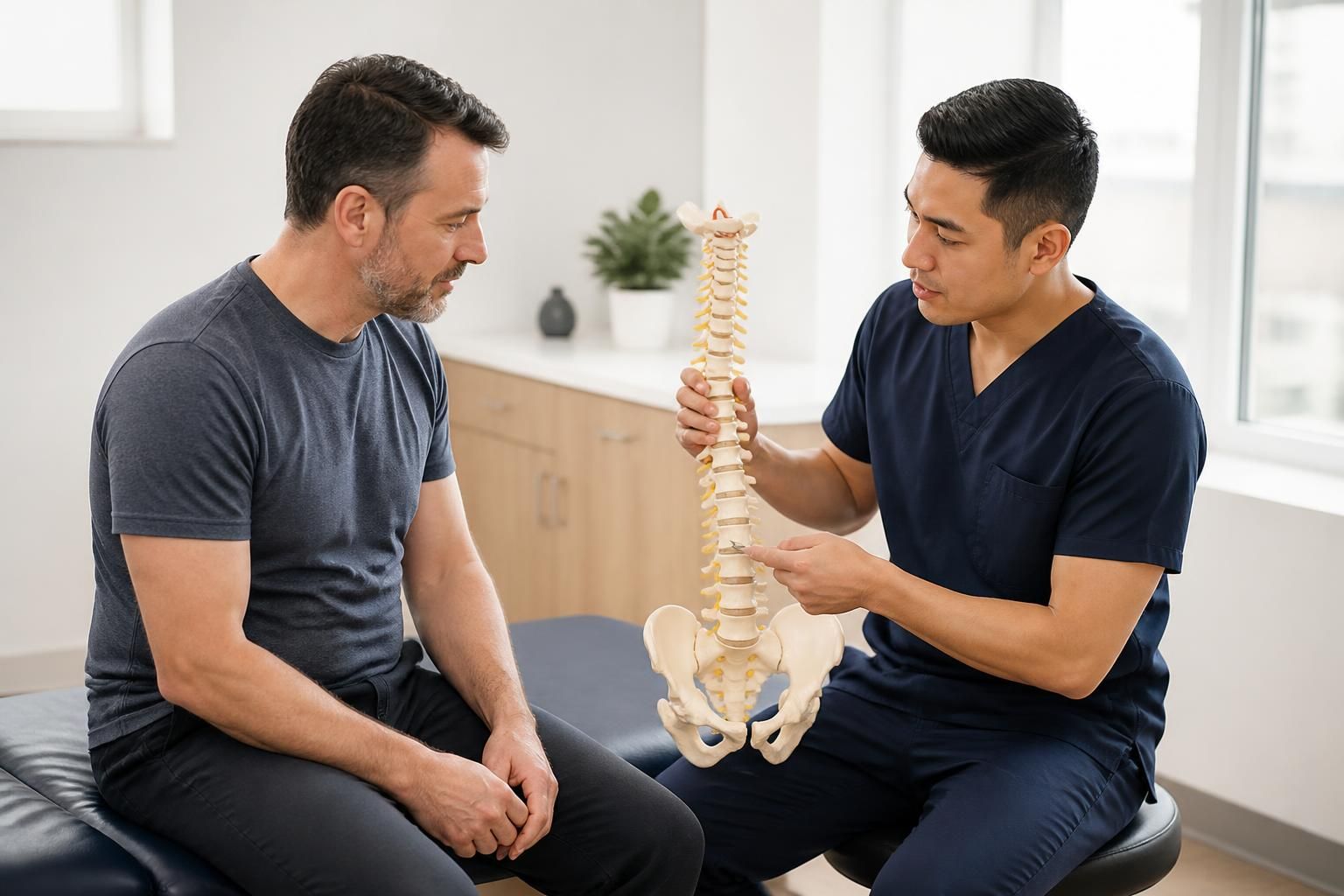


Clinical assessment of sciatica in the Mont-Royal neighbourhood aims to identify possible causes of low back pain radiating into the leg. This process is based on a detailed analysis of symptoms and a targeted physical examination to distinguish true involvement of the sciatic nerve from other potential causes of pain in the lower back and lower limbs.
For many Mont-Royal residents, sciatica may be associated with a herniated disc, osteoarthritis, or foraminal stenosis, but above all it requires an appropriate assessment to determine the relevance of individualized sciatica treatment. Considering local factors, such as the impact of office work or travel by public transit, enhances this clinical assessment.
In brief: key points on clinical assessment of sciatica in Mont-Royal
How clinical assessment clarifies the nature of sciatic nerve-related pain in the Mont-Royal neighbourhood
Low back pain radiating into the leg is not always synonymous with sciatica. Clinical assessment helps distinguish true sciatic pain, caused by irritation or compression of the sciatic nerve, from other low back pain described as referred or mechanical.
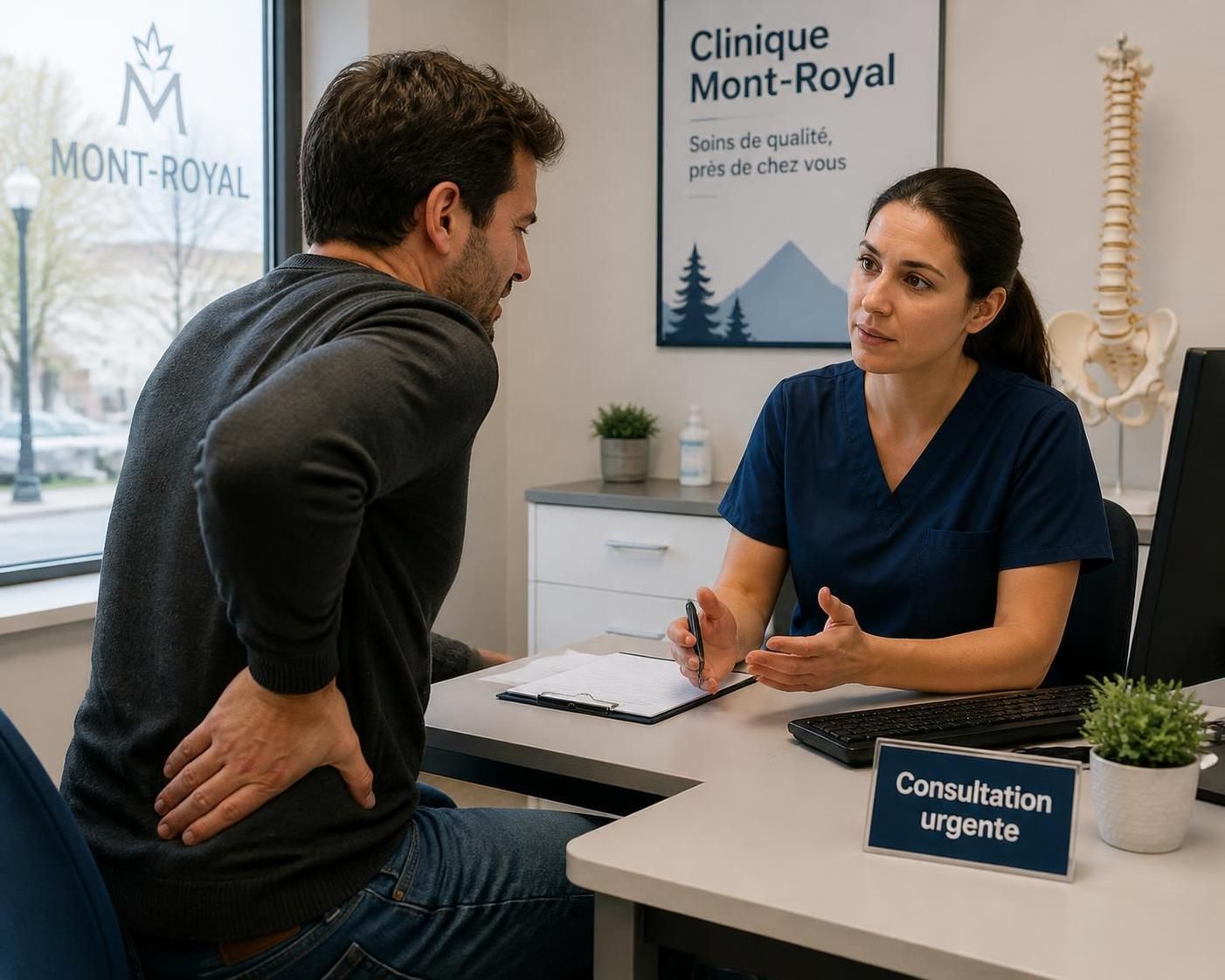
For Mont-Royal residents, the initial appointment often takes the form of a consultation during which the history of symptoms is carefully gathered. It is essential to clarify when the pain began, its exact location, its path along the leg, and any presence of numbness or muscle weakness. This process helps direct the physical examination toward specific tests to determine whether the sciatic nerve is involved.
The physical examination includes assessments of muscle strength, reflexes, and sensation in the area supplied by the sciatic nerve. For example, weakness in foot or toe movement, a reflex deficit at the Achilles tendon, or loss of sensation in an area corresponding to the L5 or S1 nerve roots may suggest nerve involvement.
The Mont-Royal sciatica clinic, close to neighbourhoods such as Outremont and Côte-des-Neiges, stands out for this rigorous approach. In addition, the assessment considers potential causes. Sciatica may result from a lumbar disc herniation, which compresses the nerve roots, or be associated with foraminal stenosis due to spinal osteoarthritis. Facet joint dysfunction may also cause pain that can resemble sciatica, but without true nerve compression.
In some rarer but important cases to consider, radicular pain may conceal a more serious spinal condition, such as cauda equina syndrome, infections, cancer, or inflammatory rheumatic diseases. These conditions require prompt referral to other specialists.
These nuances are essential to avoid misunderstanding the nature of the diagnosis and to guide toward an accurate diagnosis, based on symptoms, physical examination, and, if appropriate, suitable additional imaging.
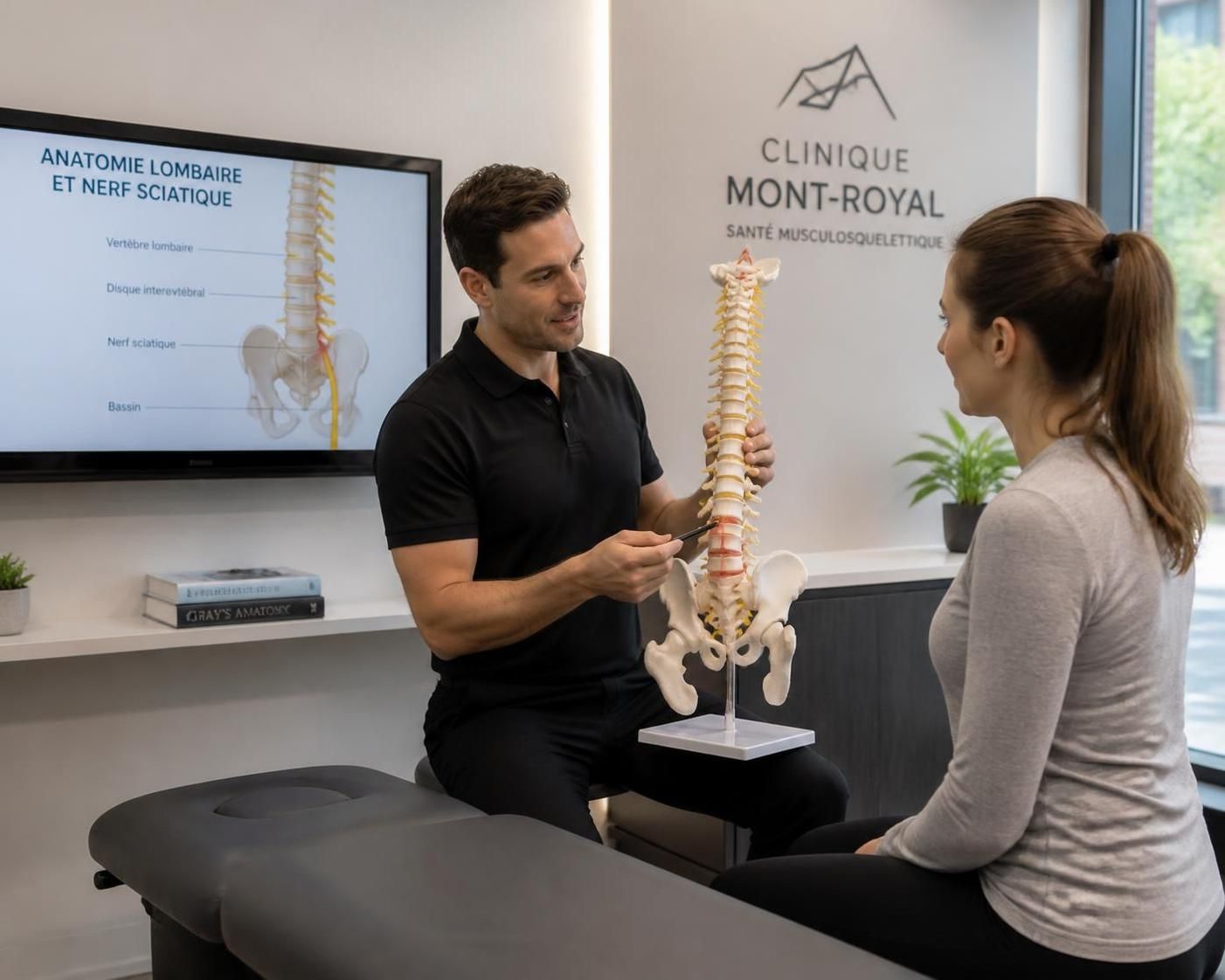
Local factors influencing sciatic pain and its assessment in Mont-Royal
The Mont-Royal neighbourhood has several characteristics that may influence the presentation and intensity of sciatic symptoms. For example, the prevalence of sedentary occupations and remote work promotes prolonged sitting, which may worsen nerve pain by increasing pressure on the intervertebral disc or in the neural foramen through which the sciatic nerve passes.
Daily commuting, often by public transit, may also present a challenge because of vibrations, prolonged sitting, or the demands of driving, which can increase low back and radicular discomfort.
Pain may be altered by certain movements: lumbar extension, for example, may aggravate foraminal stenosis, whereas flexion may temporarily relieve nerve pressure. Similarly, climbing stairs, prolonged walking, or sustained physical exertion require particular attention during clinical assessment in order to adapt advice and treatment options.
However, it is important to emphasize that each person responds differently based on their physical profile, age, and how the pain progresses. The goal is not to offer a universal protocol, but rather to personalize the approach according to tolerance and observed clinical signs.
The complexity of this interaction highlights the value of a personalized assessment offered by specialized clinics, particularly in areas such as Mont-Royal or Plateau-Mont-Royal, where the population benefits from easier access to experts in sciatica treatment.
List of factors that may alter sciatic symptoms in Mont-Royal:
- Prolonged sitting, particularly related to remote work
- Activities involving repeated flexion and extension of the lumbar spine
- Travel by public transit or car involving vibrations and postural demands
- Mechanical stress on the intervertebral disc and neural foramen
- Physical, sports, or daily activity adapted to tolerance
- Duration of symptoms and possible flare-up phases
Clinical signs requiring a prompt consultation in the Mont-Royal neighbourhood
When experiencing pain that may suggest sciatica, it is crucial to identify signs indicating the need for a clinical assessment, especially in a Montréal context where specialized resources are accessible. Certain symptoms warrant a prompt appointment to avoid worsening and loss of function.
Signs that warrant a clinical consultation include:
- Persistent or recurring pain that significantly affects mobility and quality of life
- Pain that clearly extends below the knee, with numbness or tingling
- Muscle weakness felt in the leg or foot
- Difficulty walking or carrying out usual daily activities
- Sleep disturbances caused by radicular pain
In addition, certain clinical signs are considered urgent and require immediate medical care:
- Loss of bladder or bowel control
- Saddle anaesthesia, meaning loss of sensation around the pelvic organs
- Rapid and significant weakness in one or more lower limbs
- High fever accompanied by low back pain
- Major trauma to the lumbar spine
- Unexplained weight loss or a history of cancer or serious infection
If these signs are present, emergency medical assessment should not be delayed, particularly in a city like Montréal, where access to specialized centres is easier, including near Mont-Royal and Outremont.
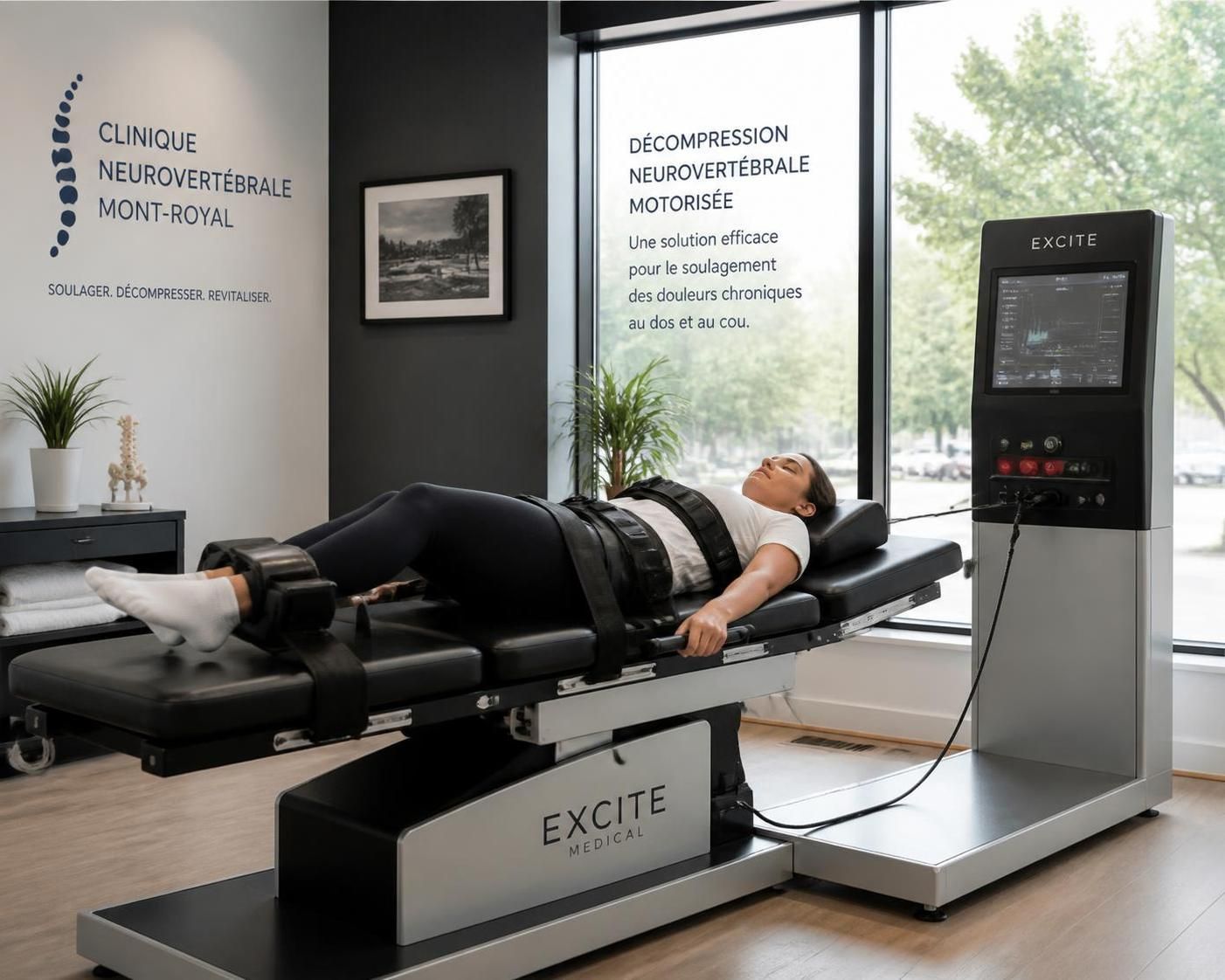
Available options for sciatica treatment in a specialized clinic in Mont-Royal
Management of sciatica that begins with a thorough clinical assessment may vary according to the identified cause and the patient’s profile. In Mont-Royal, several options are available, ranging from conservative treatment to more specialized approaches.
Maintaining or gradually resuming activities, as tolerated, is generally recommended as soon as possible to avoid physical deconditioning. Appropriate advice and targeted physiotherapy exercises may help reduce pain and improve mobility.
Among the specific approaches, motorized neurovertebral decompression may be of interest for certain preselected patients. This method involves gradual, controlled spinal traction intended to temporarily alter mechanical stress on the intervertebral discs and nerve roots. It is often considered in cases of disc herniation, disc protrusion, or nerve impingement. However, this technique is not suitable for everyone and does not replace emergency medical assessment or other treatments.
In parallel, osteopathic manual care or care using a precision percussor may complement treatment by helping improve mobility and relieve muscle tension. It is important to avoid rigid protocols and to favour a personalized approach that takes the progression of sciatica into account.
Patients are generally informed of the limitations of each option, recognizing that medications, injections, or surgical procedures should always be considered after discussion with a health-care professional, especially in cases of neurological deficit or severe compression.
The proximity of TAGMED Clinic in the Mont-Royal neighbourhood provides preferred access to these tailored treatments, with recognized expertise in sciatica treatment options that respect current medical criteria and patient preferences.
| Treatment option | Possible indications | Limitations and precautions |
|---|---|---|
| Maintaining/resuming activity | Moderate pain, no neurological deficit | Adapt according to tolerance; avoid excessive exertion |
| Physiotherapy and exercises | Mechanical sciatica without urgency, functional improvement | Do not push through pain; adjust according to progression |
| Motorized neurovertebral decompression | Disc herniation, foraminal stenosis, selected nerve impingement | Contraindicated in cases of spinal instability or infection |
| Osteopathic manual care | Associated muscle tension, improved mobility | Personalized practice; immediate relief is not guaranteed |
| Medications/injections | Moderate to severe pain, nerve inflammation | Use under medical supervision; possible side effects |
| Surgical procedure | Severe neurological deficit or major compression | Last resort, according to specialist advice |
What symptoms suggest sciatica requiring assessment in Mont-Royal?
Low back pain radiating into the leg, especially if it travels below the knee and is accompanied by numbness, tingling, or muscle weakness, requires a specialized consultation.
How is a clinical assessment of sciatica conducted?
The assessment includes taking a clinical history, a targeted physical examination of reflexes, strength, and sensation, as well as an analysis of aggravating factors to guide the diagnosis.
When should you seek urgent care for sciatica?
If signs such as loss of sphincter control, saddle anaesthesia, or rapidly developing neuromuscular weakness are present, urgent medical consultation is required.
What treatments are available for sciatica in Mont-Royal?
Various options are available, including personalized exercises, physiotherapy, motorized neurovertebral decompression, osteopathic care, medications, and, in some cases, surgery.
Is neurovertebral decompression suitable for all cases of sciatica?
No, it is reserved for certain profiles after assessment, particularly cases involving disc herniation or stenosis, but it is not appropriate for every situation.
If you experience low back pain radiating into the leg, an assessment by specialists near Mont-Royal may help clarify the likely cause, identify signs to monitor, and determine appropriate conservative treatment options.
Book an appointment for an assessment in Mont-Royal
Dr. Sylvain Desforges, B.Sc., D.O., N.D., osteopath
This content is for educational purposes and does not replace a personalized assessment by a health-care professional.
