


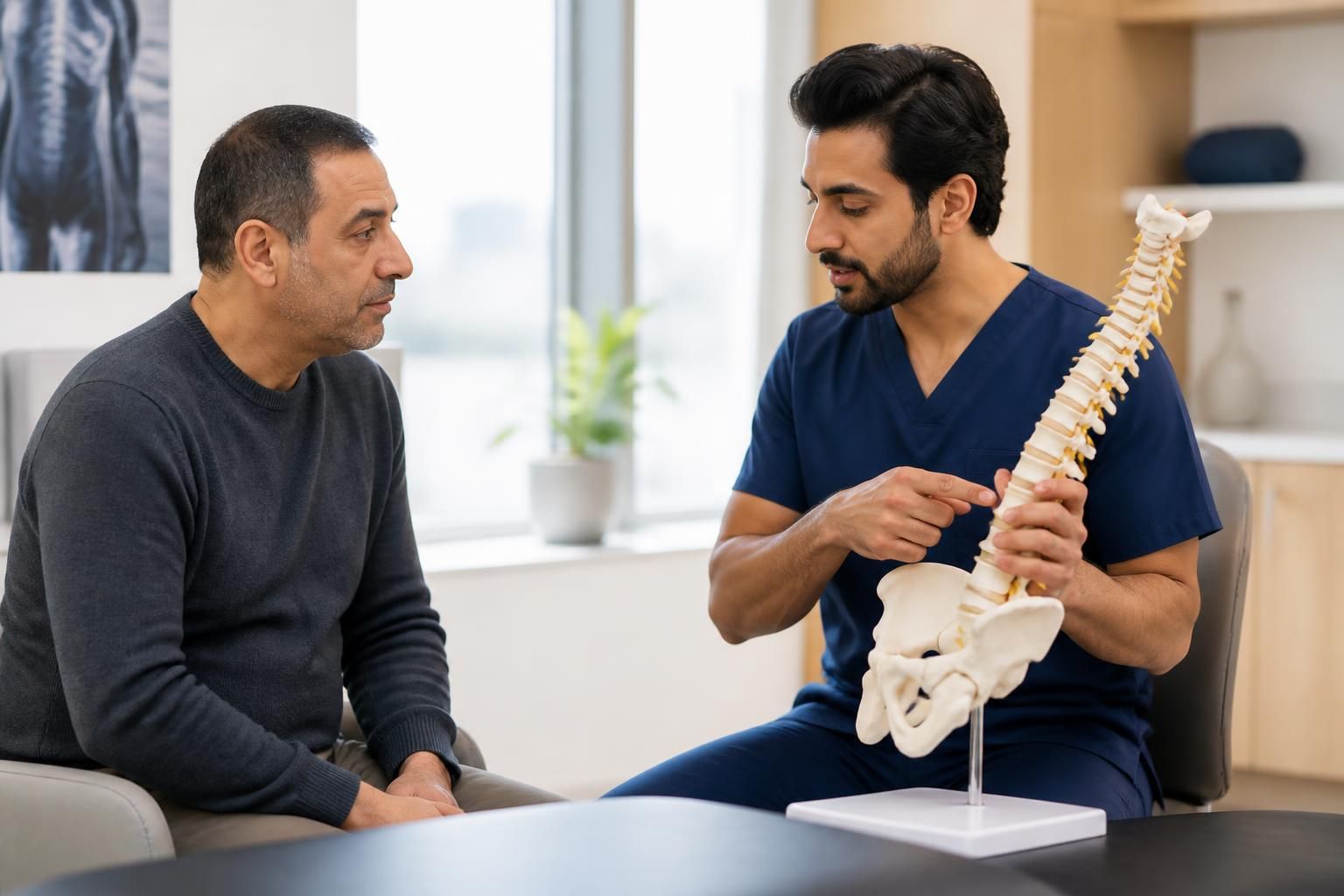
Chronic sciatica often presents as a dull or shooting pain that radiates from the lower back down to the leg, affecting quality of life on a daily basis. In Montréal, many people experience this persistent nerve pain without always knowing when it is necessary to see a specialist. An accurate diagnosis and appropriate care can help prevent symptoms from worsening and better manage the challenges associated with this pain.
It is essential to interpret the signs of chronic sciatica according to the intensity and progression of pain, as well as any associated neurological symptoms such as numbness or weakness. Montréal, with access to various specialized clinics, offers a range of options for personalized sciatica treatment, including modern approaches such as motorized neurovertebral decompression, a promising non-surgical method.




In brief: key points for recognizing when to seek care in Montréal
- Pain extends below the knee, associated with numbness or weakness
- Loss of bladder or bowel control: an emergency sign requiring immediate consultation
- Pain persisting beyond a few weeks or disrupting sleep
- Significant limitation of daily activities, particularly walking or prolonged sitting
- Neuromuscular assessment to distinguish chronic sciatica from other types of low back pain
- Appropriate care at specialized clinics offering options such as physiotherapy or neurovertebral decompression
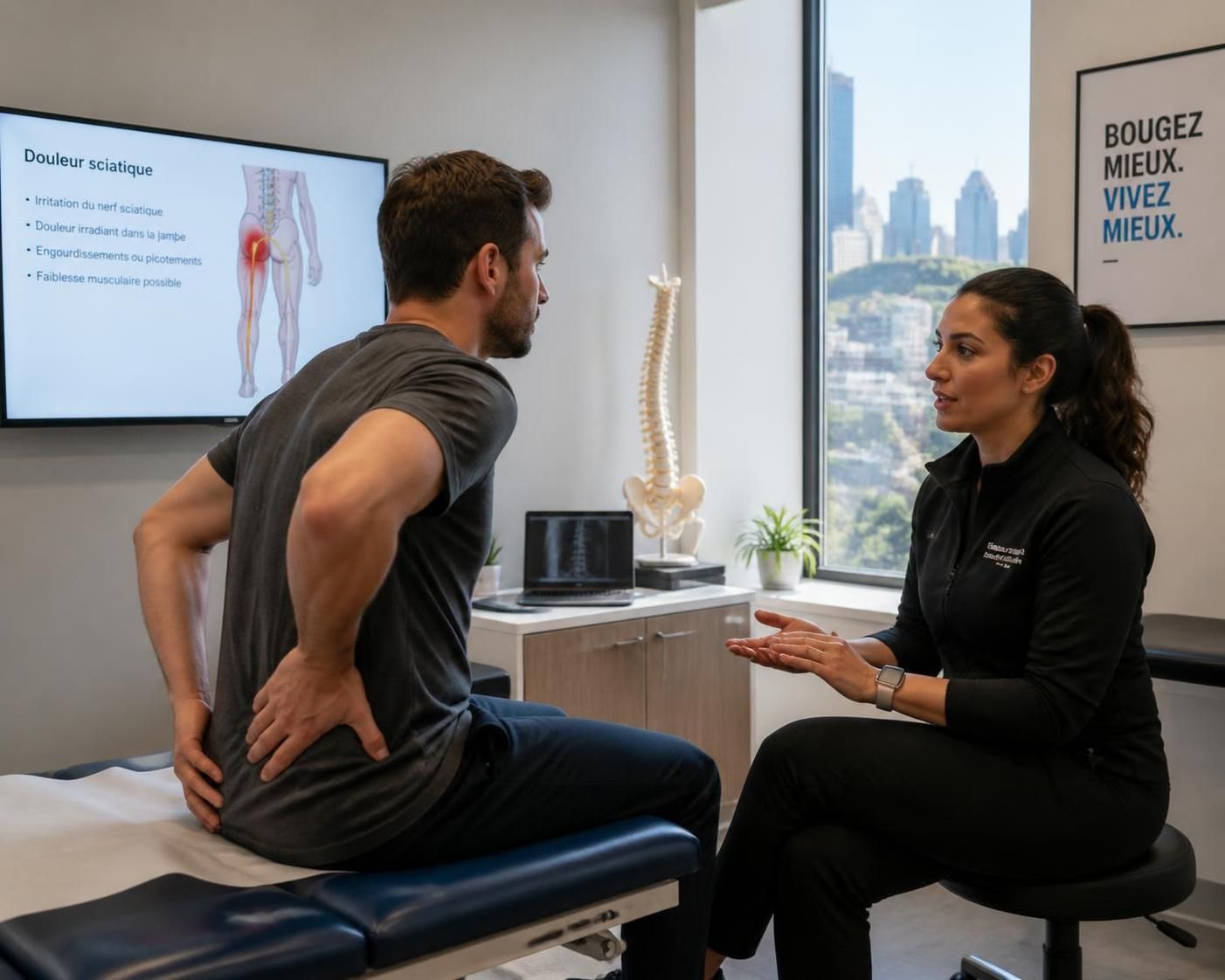
Understanding the mechanisms and manifestations of chronic sciatica
Chronic sciatica is pain that often results from prolonged irritation or compression of the sciatic nerve, which originates in the lumbar region and travels through the buttock and thigh to the calf and foot. Common causes include a herniated disc, disc protrusion, or foraminal stenosis, in which the passage through which the nerve travels is narrowed.
It is important to distinguish chronic sciatica from simple low back pain that does not spread along the nerve pathway. Radicular pain (which follows the nerve root) may be accompanied by numbness, tingling, or muscle weakness. For example, irritation of the L5 root can cause pain radiating to the top of the foot, whereas the S1 root affects the outer calf and heel more often.
In Montréal, the complexity of clinical presentations requires a thorough assessment, particularly to rule out conditions such as femoral neuralgia or piriformis syndrome, which may have similar symptoms but different mechanisms. The assessment is based on medical history, a neurological examination, and sometimes imaging to confirm the presence of nerve compression and guide the treatment plan.
The chronic progression of pain requires particular attention because the prolonged presence of nerve pain can lead to functional changes, such as reduced mobility or changes in gait, which can worsen the condition. A specialized consultation in Montréal will help assess these factors and develop an appropriate strategy.
Warning signs and criteria for seeing a sciatica specialist in Montréal
It is crucial to recognize situations in which consultation becomes imperative. Certain symptoms require urgent care, including:
- Loss of bladder or bowel control, along with saddle anaesthesia (the perineal area), which may suggest cauda equina syndrome.
- Significant muscle weakness or a rapid decline in strength in one leg.
- Severe pain that does not respond to usual measures, sometimes accompanied by fever or signs of infection.
- Recent history of low back trauma with worsening symptoms.
In the absence of these emergency signs, pain that extends below the knee, with numbness or other progressive sensory disturbances, warrants prompt assessment. This consultation aims to confirm the source of the pain, often disc-related or associated with stenosis, and establish appropriate care.
Finally, when sciatic pain persists for several weeks, limiting the ability to walk, drive, or sleep, it is also recommended to see a specialist. In Montréal, such an assessment provides access to an accurate diagnosis and helps guide the patient toward personalized treatment options.
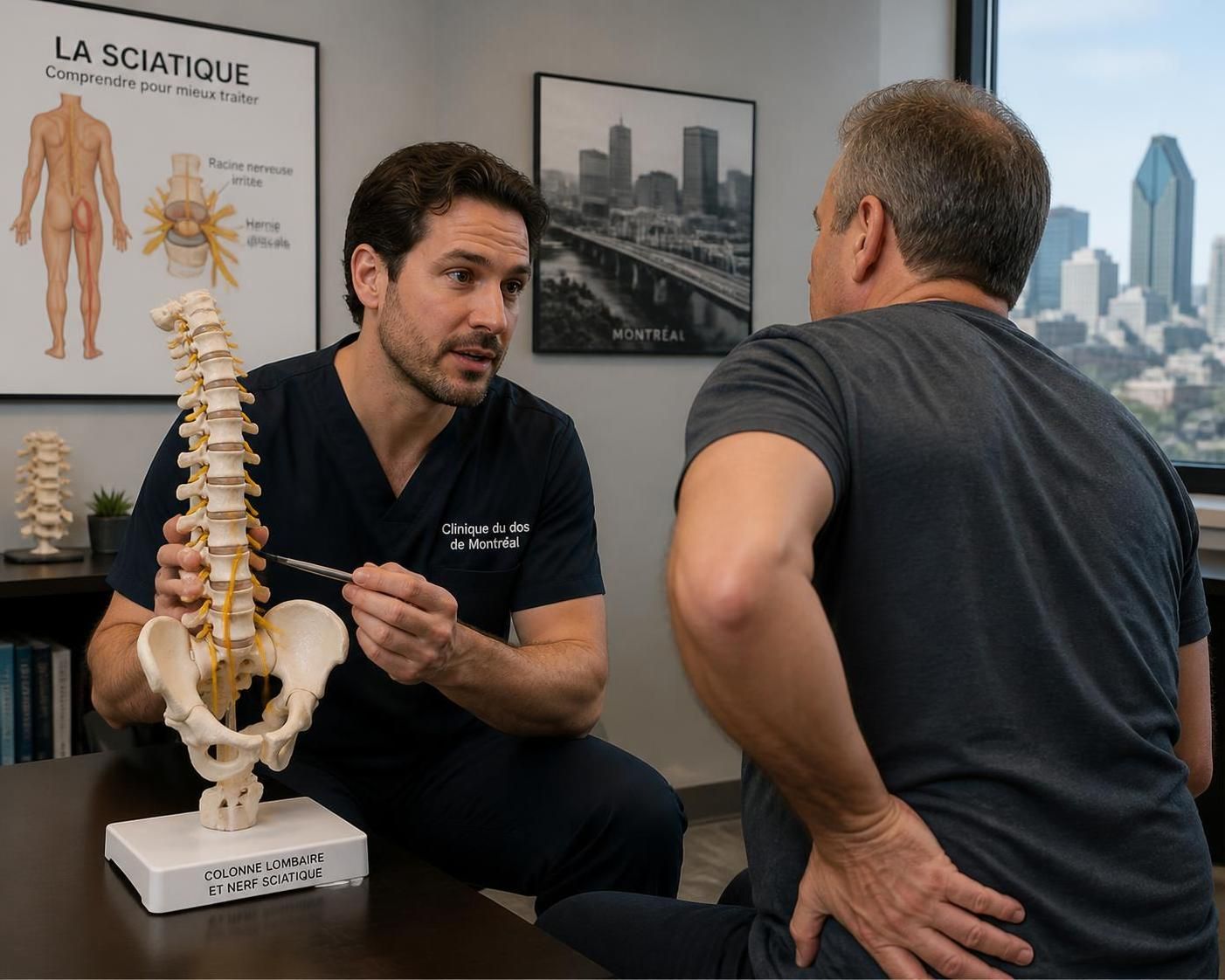
Factors influencing chronic sciatic pain in daily life
Daily life in Montréal, often involving remote work, long periods of sitting in front of a computer, or commuting by public transit, can play an important role in the intensity and management of nerve pain.
Prolonged flexed postures, poor workplace ergonomics, and lack of physical activity are frequently associated with worsening symptoms. For example, a Plateau-Mont-Royal resident working remotely at an unsuitable workstation may notice an increase in sciatic pain due to increased pressure on the lumbar discs.
Conversely, certain activities, such as gentle walking or targeted exercises within a physiotherapy setting, can improve pain tolerance and contribute to functional rehabilitation. However, it is essential to adapt these efforts to each person’s actual abilities, without pushing through or ignoring signs of worsening.
Another important factor concerns the duration and progression of symptoms: pain that remains stable over time may warrant careful monitoring, but any progression, particularly the onset of numbness or muscle weakness, requires prompt reassessment. Professionals in Montréal who specialize in sciatica treatment also offer individualized follow-up to adjust interventions according to clinical progression.
Modern and alternative approaches to chronic sciatica treatment in Montréal
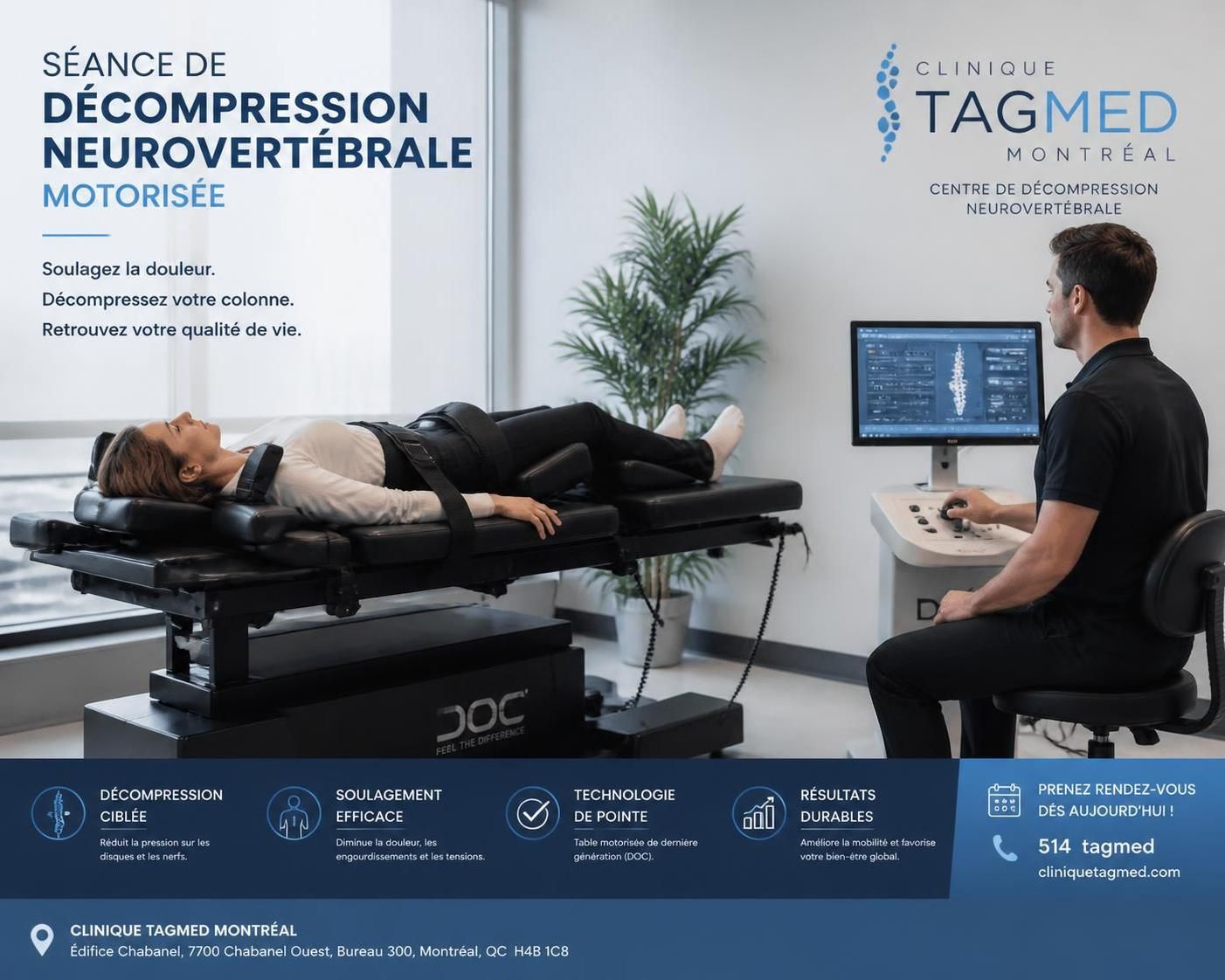
The management of chronic sciatica involves different non-surgical approaches that may be combined to optimize symptom relief and function. Among these, motorized neurovertebral decompression at TAGMED Clinic in Mont-Royal is a gradual, controlled therapy intended to reduce pressure on the sciatic nerve. This technique uses targeted mechanical traction on the lumbar spine to modulate stresses on the discs and nerve roots.
Decompression is not suitable for everyone. It is indicated following a detailed clinical assessment, particularly for patients with a herniated disc, protrusion, or foraminal stenosis. Results vary, and no universal protocol applies. It is also important to consider that this treatment does not replace urgent medical care in the event of complications.
In Montréal, other complementary options, such as specific osteopathy and the use of a precision percussor, often complement the treatment plan by improving joint mobility and relieving associated muscle tension.
Specialized consultations also include tailored education on activity management and progressively adapted exercises, in physiotherapy or kinesitherapy, to strengthen and stabilize the lumbar spine while respecting pain tolerance. Certain medications may be prescribed by an authorized health professional for symptomatic relief, always as part of an overall plan.
In more severe cases or when conservative management remains ineffective, a consultation with a neurologist or surgical specialist may be considered to discuss other options. However, in Montréal, most patients find relief through these non-invasive approaches tailored to their condition.
| Approach | Objective | Indication | Limitation |
|---|---|---|---|
| Motorized neurovertebral decompression | Reduce pressure on the nerve, improve mobility | Herniated disc, protrusion, foraminal stenosis | Not suitable for emergencies or rapidly progressing weakness |
| Specific osteopathy | Improve joint mobility, reduce muscle tension | Chronic pain, functional limitations | Must be tailored to the clinical situation |
| Kinesitherapy and physiotherapy | Muscle strengthening, rehabilitation | Persistent pain, following assessment | Requires follow-up and adjustment |
| Symptomatic medications | Reduce pain and inflammation | Moderate to severe pain | To be used according to medical advice |
| Surgery (as a last resort) | Definitive nerve decompression | Major neurological deficit, failure of conservative treatment | Surgical and post-operative risks |
To learn more about these treatments, explore the sciatica treatment options in Montréal and deepen your understanding of the signs and when to seek care through a personalized assessment for sciatic pain.
What are the first signs that warrant urgent consultation?
Loss of bladder or bowel control, saddle anaesthesia, and rapidly progressive muscle weakness require immediate consultation to rule out serious complications.
Can physiotherapy be effective for chronic sciatica?
Yes, tailored physiotherapy aims to strengthen the muscles supporting the lower back, improve posture, and reduce pain; however, it must be personalized and monitored regularly.
When should motorized neurovertebral decompression be considered?
This approach is recommended for patients with an identified disc-related or foraminal cause and persistent pain, following a clinical assessment performed by specialists.
Is surgery always necessary for chronic sciatica?
Surgery is generally considered as a last resort, particularly in the presence of a significant neurological deficit or rapid worsening of symptoms despite conservative treatment.
How can you adapt your daily routine to better manage chronic sciatica?
It is advisable to adopt ergonomic postures, avoid long periods of static sitting, and incorporate appropriate gentle exercises to maintain mobility without worsening pain.
If you have chronic sciatica and the pain persists or worsens, a personalized assessment in Montréal can help you better understand your condition and consider appropriate care. This consultation helps identify signs to watch for and develop a non-invasive treatment plan that respects your daily routine.
Dr. Sylvain Desforges, B.Sc., D.O., N.D., Osteopath
Please note that this content is for educational purposes and does not replace a personalized assessment by a qualified professional under any circumstances.
