




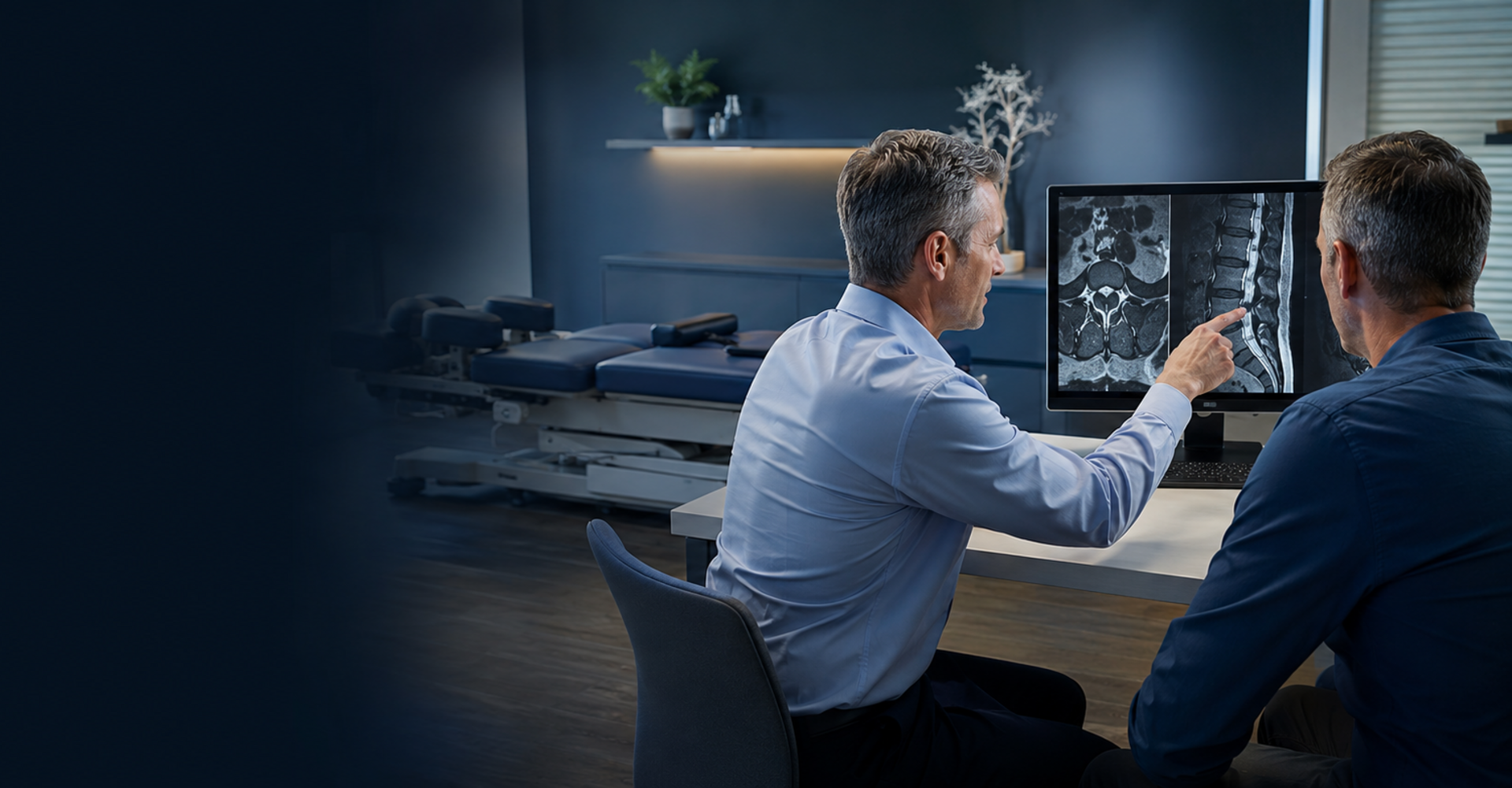
Chiropractic vs osteopathy for spine pain: training, methods and evidence
Chiropractic and osteopathy both use clinical assessment, education and manual techniques, but their training, legal scope, diagnostic responsibilities and treatment emphasis vary by country and practitioner.
The profession name alone does not identify the exact care a person will receive. Some chiropractors emphasize spinal manipulation and exercise; others use broader rehabilitation or technology-assisted care. Osteopathic practice may emphasize mobilization, soft-tissue techniques and whole-person assessment, but the meaning of “osteopath” differs substantially between regulated medical osteopathy and manual osteopathy.
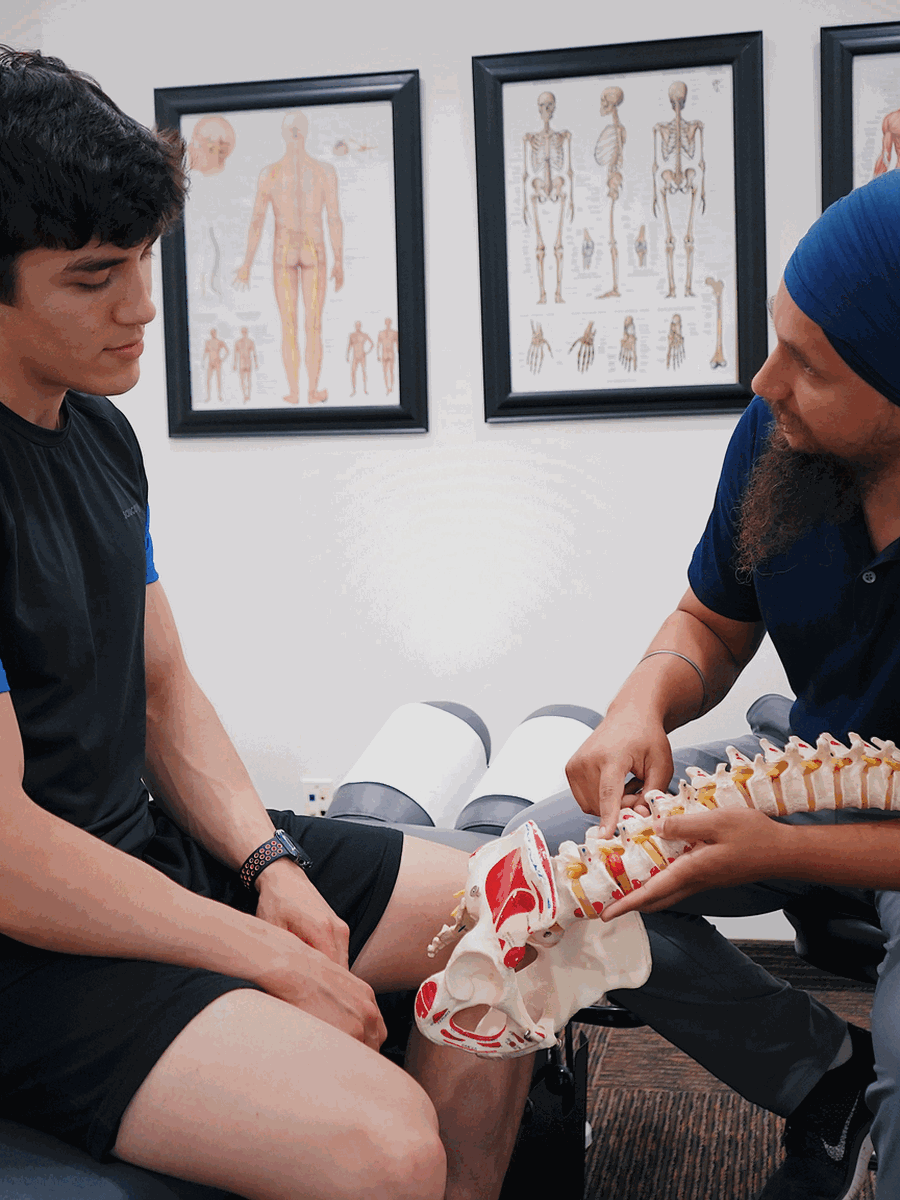
Assessment and decision points
A useful comparison begins with the actual clinician rather than a profession stereotype. Ask about education, regulated status, experience with the specific condition, neurological screening, use of imaging, referral thresholds, treatment plan, expected outcomes and how progress will be measured. A practitioner should recognize when manual care is inappropriate and when medical or surgical assessment is required.
| Clinical situation | Possible next step | Why it matters |
|---|---|---|
| Uncomplicated mechanical spine pain | Either profession may offer conservative care | Provider competence and treatment package matter more than the label. |
| Progressive neurological deficit | Prompt medical or specialist assessment | Manual care should not delay urgent investigation. |
| Persistent pain with psychosocial barriers | Multicomponent care | Exercise, education and psychological support may be more important than repeated passive treatment. |
| Need for diagnosis or restricted acts | Check the jurisdiction and professional scope | Legal authority differs between professions and locations. |
Management and treatment choices
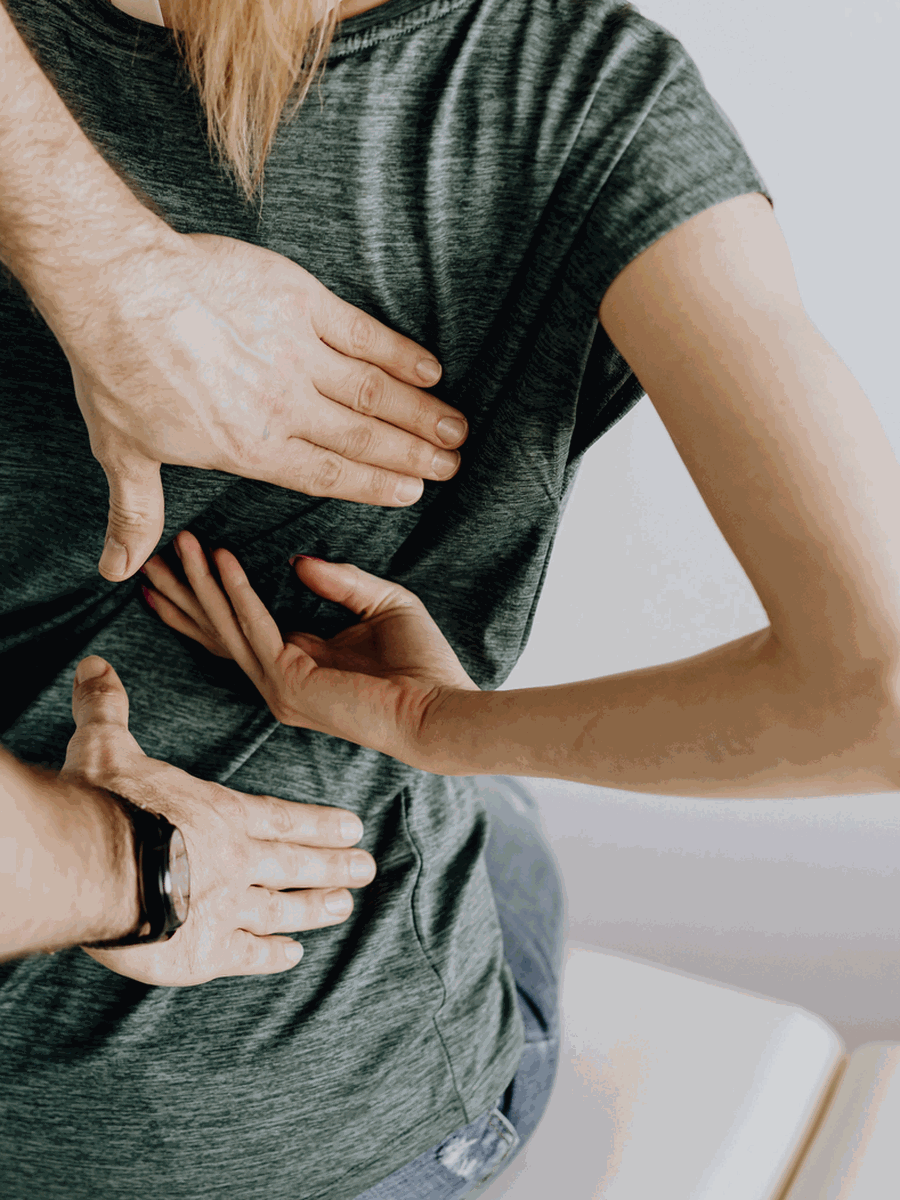
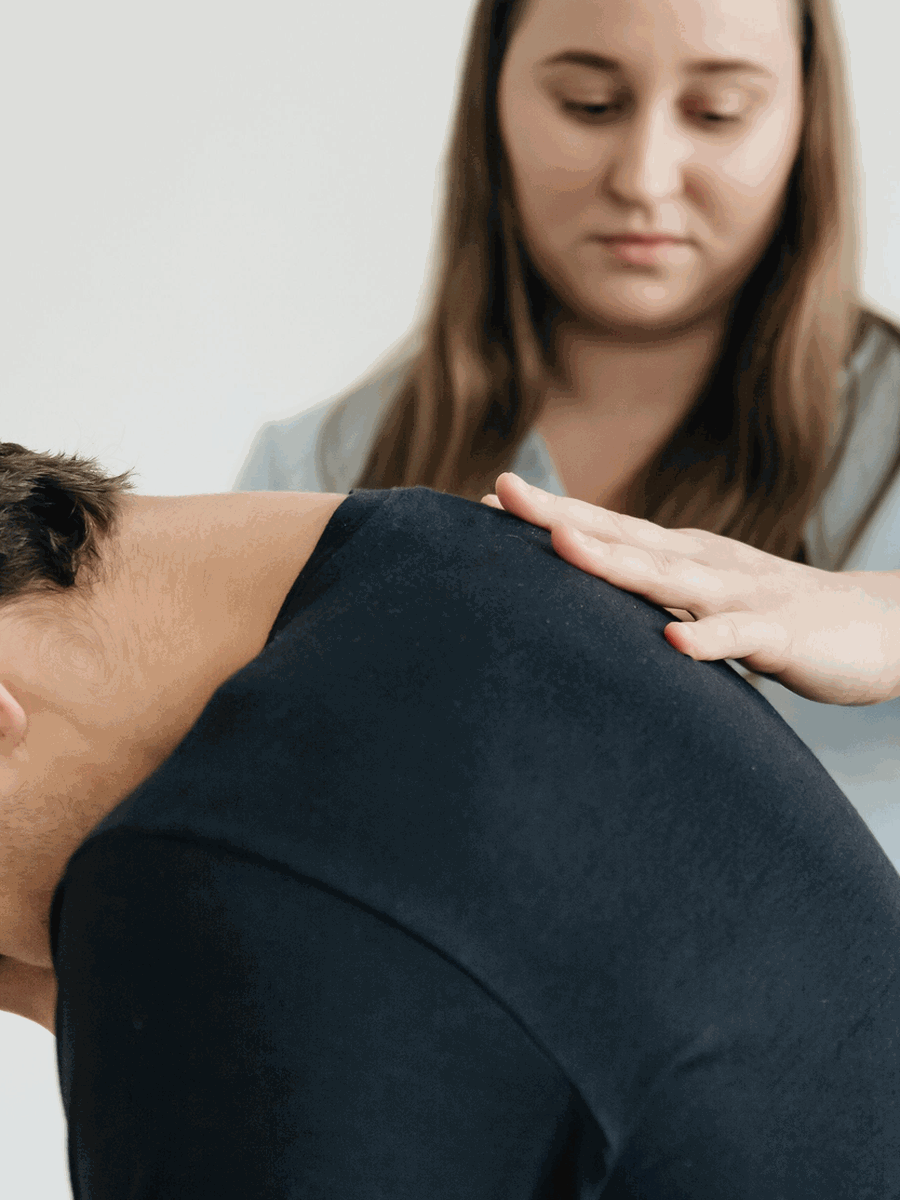
NICE recommends that manual therapy—manipulation, mobilization or soft-tissue techniques—be considered for low back pain only as part of a treatment package that includes exercise, with or without psychological therapy. The WHO guideline is discipline-neutral and includes some spinal manipulative and massage approaches within person-centred care for chronic primary low back pain. These recommendations do not establish that one profession is superior to another.
Questions before choosing care
What exactly is being offered?
Identify the practitioner, product, procedure or treatment package.
What evidence applies?
Check whether the studies match the condition and intervention.
What are the alternatives?
Compare active care, observation, procedures and surgery when relevant.
What would change the plan?
Define review, stopping and referral criteria.
How the professions may differ in practice
Professional labels are only a starting point. The actual visit depends on the jurisdiction, the clinician’s education and the services offered in the practice. A chiropractor working in a regulated diagnostic profession may have responsibilities that differ from those of a manual osteopath practising under an unregulated or differently regulated title. Conversely, an osteopathic physician in the United States has medical training and a scope that is not comparable with manual osteopathy in Canada or Europe.
| Comparison point | Chiropractic | Osteopathy or manual osteopathy |
|---|---|---|
| Professional status | Often a regulated health profession with protected title and defined diagnostic authority, depending on the jurisdiction. | May be a regulated medical profession, a regulated non-medical profession or an unregulated manual-care occupation, depending on the country. |
| Common techniques | Spinal manipulation, mobilization, exercise, education and other conservative approaches. | Mobilization, soft-tissue methods, muscle-energy techniques, exercise and, in some settings, manipulation. |
| Clinical emphasis | Frequently emphasizes neuromusculoskeletal diagnosis, spinal function and conservative management. | Frequently emphasizes regional mechanics, tissue relationships and a broader whole-person manual assessment. |
| Imaging and referral | Authority to order imaging or refer directly depends on local law. | Authority varies greatly and should never be assumed from the title alone. |
What a safe and credible manual-care plan should include
Clinical screening
The clinician should ask about trauma, fever, cancer history, neurological change, osteoporosis, medications and other findings that may alter treatment.
Working diagnosis
The explanation should connect symptoms, examination and function rather than rely on vague claims of universal misalignment or blocked energy.
Active component
Education, tolerable activity and exercise should support independence when appropriate.
Measurable goals
Progress may be followed through walking, sleep, work, lifting tolerance, symptom distribution and neurological stability.
Review point
The plan should state when care will be reassessed and what lack of progress means.
Referral threshold
The clinician should explain which findings require imaging, medical consultation or surgical assessment.
Questions to ask a prospective provider
- Is your professional title regulated in this province or country?
- What training do you have for my specific spinal condition?
- Which parts of the examination evaluate neurological function?
- What is the expected benefit of each manual technique?
- What role will exercise and self-management have?
- How many visits are proposed before a formal review?
- Which findings would make you stop treatment or refer me elsewhere?
- How are adverse effects documented and managed?
Professional identity can influence style, but good care shares common features: accurate screening, informed consent, realistic expectations, active rehabilitation, outcome monitoring and timely referral. A person should be cautious when any practitioner claims that one technique can correct every spinal problem, permanently restore alignment or make other forms of assessment unnecessary.
Frequently asked questions
Is chiropractic better than osteopathy for back pain?
Current evidence does not establish universal superiority of one profession.
Do both professions use manipulation?
Some practitioners in both professions do, although frequency and technique vary.
Is osteopathy the same everywhere?
No. The title, training and legal scope differ greatly by country.
Can a chiropractor diagnose a spinal condition?
This depends on the jurisdiction and professional regulation.
Can an osteopath order imaging?
This also depends on the jurisdiction and type of osteopathic practitioner.
Should exercise be part of care?
Guidelines commonly recommend active care and self-management.
Are repeated passive treatments enough?
Not usually when meaningful functional progress is absent.
How should I choose a provider?
Review regulated status, training, experience, safety screening, communication and outcome monitoring.
When should manual treatment stop?
When symptoms worsen neurologically, red flags appear or meaningful progress is absent.
Does The Spine Page recommend one profession?
No. The page supports informed comparison rather than professional promotion.
Sources consulted
- WHO — Guideline for non-surgical management of chronic primary low back pain
- NICE — Low back pain and sciatica recommendations
- BMJ — Benefits and harms of spinal manipulative therapy for chronic low back pain
- Ceballos-Laita et al. — Osteopathic manipulative treatment vs sham or placebo
- Trager et al. — Chiropractic and spinal manipulation evidence review
Last editorial review: July 2026. General educational information only.
Dr. Sylvain Desforges, B.Sc., D.O., N.D., osteopath — The Spine Page
Continue exploring spine health
Use the condition and treatment hubs to compare related guides.
The Spine Page — The best treatments for your spinal problems — www.thespinepage.com