





Herniated disc: symptoms, evaluation and treatment options
Understand when a disc finding is clinically meaningful, how nerve-root involvement is assessed and when conservative care, decompression or surgery may be considered.
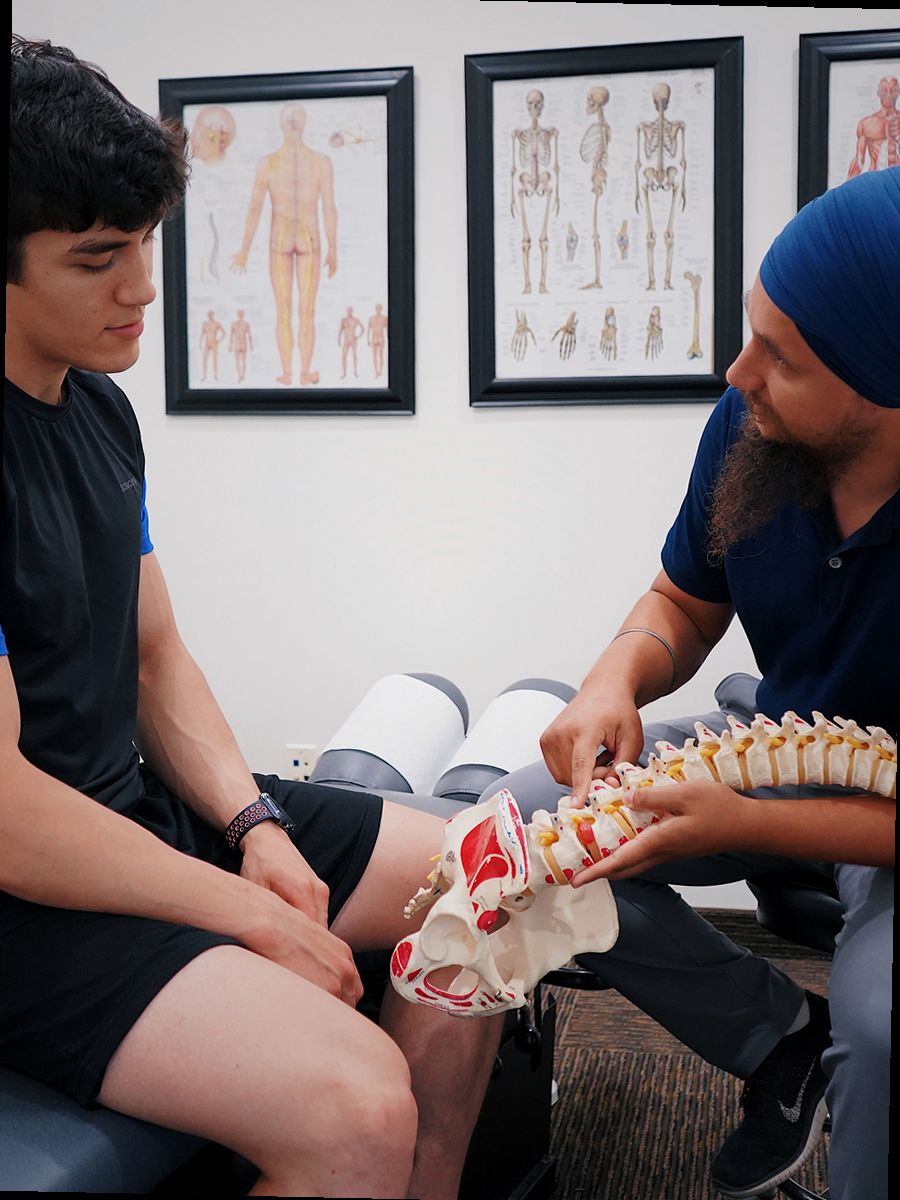
What a herniated disc means
A disc herniation describes displaced disc material beyond the normal disc space. The term does not automatically indicate severity or explain symptoms. Clinical significance increases when the location of the herniation corresponds with nerve-root pain, sensory change, weakness or reflex changes.
Local back pain
Pain may remain in the back and be influenced by loading, bending or prolonged positions.
Radicular pain
Inflammation or compression of a nerve root may produce pain that travels into a leg or arm.
Neurological deficit
Weakness, sensory loss or altered reflexes changes the urgency and treatment pathway.
How it is evaluated
History and examination assess the pain distribution, strength, sensation, reflexes, gait and response to movement. MRI may be appropriate when symptoms are severe or persistent, a deficit is present, an invasive treatment is being considered or a serious cause must be excluded.

Non-surgical treatment
Many disc herniations improve without surgery. Care may include education, activity modification, graded exercise, medication when appropriate and selected physical therapies. The plan should monitor neurological status and define when escalation is needed.
When surgery is considered
Surgery may be discussed for cauda equina syndrome, major or progressive weakness, severe persistent radicular symptoms that match a treatable lesion or functional loss that remains unacceptable despite appropriate care.
Where motorized decompression fits
Motorized decompression is offered by some clinics for selected disc-related presentations. Candidate selection, contraindications, protocol parameters and measurable review points matter. It should not delay urgent assessment or necessary surgery.
Frequently asked questions
Does every herniated disc cause pain?
No. Herniations may be present without symptoms.
Can a herniation heal or shrink?
Disc material can regress over time, although symptoms and imaging do not always change together.
Is bed rest recommended?
Prolonged bed rest is generally discouraged.
When is MRI useful?
When findings may change management, especially with deficits, persistent symptoms or planned intervention.
Does numbness mean permanent nerve damage?
Not necessarily, but persistent or progressive sensory loss should be assessed.
Is surgery always required for weakness?
Not always, but new or progressive weakness increases urgency.
Can injections help?
They may be discussed for selected radicular symptoms; benefits and risks vary.
Can decompression replace surgery?
Not in emergencies or when surgery is clearly indicated.
How is progress measured?
Pain distribution, strength, sensation, walking, sleep and function are more useful than pain alone.
When is it an emergency?
Bladder or bowel changes, saddle numbness or major rapidly progressive weakness require urgent care.
Primary sources and clinical guidance
- World Health Organization — Guideline for non-surgical management of chronic primary low back pain
- NICE — Low back pain and sciatica in over 16s
- American College of Physicians — Noninvasive treatments for low back pain
- PubMed — Lumbar disc herniation and timing of surgery
Last editorial review : July 2026. This page provides general educational information and does not replace diagnosis or individualized care.
Compare non-surgical treatment options
Review conservative care and motorized spinal decompression in their proper context.
The Spine Page — www.thespinepage.com
Topic index: Herniated disc
Explore this topic cluster by search intent. Each link leads to a distinct guide directly related to the subject.