


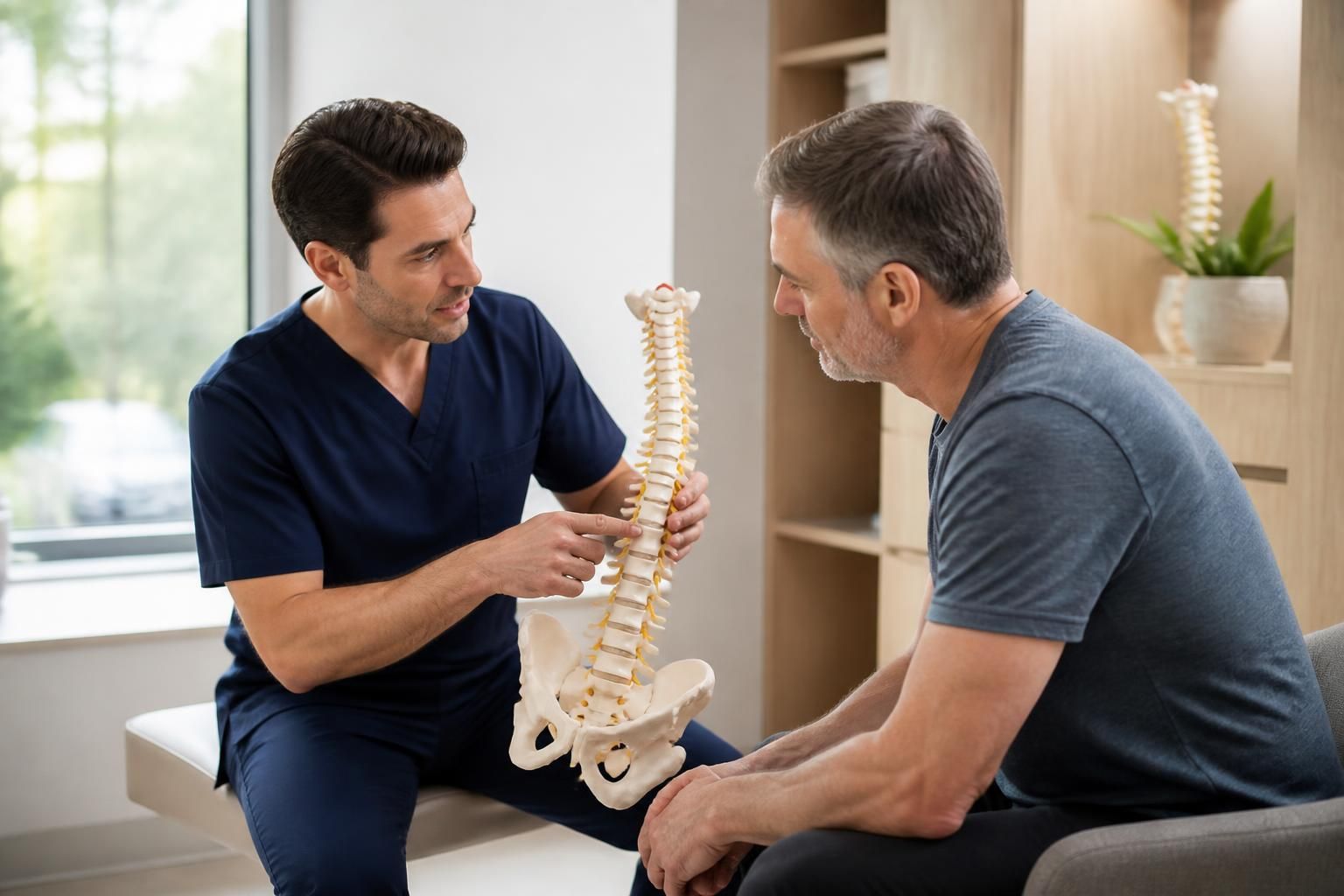


Managing sciatica in Mercier–Hochelaga-Maisonneuve is generating growing interest, particularly among people seeking alternatives to surgery. While surgical traction remains an option in certain urgent cases, many patients prefer less invasive approaches that may reduce pain and improve mobility without the risks and recovery time associated with an operation. Several conservative methods, often combined, therefore offer solutions suited to a diverse population, taking into account the socioeconomic and occupational diversity characteristic of this dynamic Montréal neighbourhood.
However, this search for alternatives must be based on the specific symptoms, the suspected underlying cause, and the clinical course. Not every pain radiating from the low back to the leg necessarily corresponds to sciatica that requires surgery. Caution and medical follow-up are essential to determine whether a conservative care plan is appropriate or whether a specialist opinion is needed. A clear understanding of options, such as physiotherapy, injections, or motorized décompression neurovertébrale, enables patients to make informed, personalized decisions.
In brief: key points on alternatives to surgery for sciatica in Mercier–Hochelaga-Maisonneuve
The mechanisms underlying sciatic pain and their treatment implications in Mercier–Hochelaga-Maisonneuve
Sciatica reflects irritation or compression of the sciatic nerve, often caused by a lumbar disc herniation, disc protrusion, or foraminal stenosis. In this diverse community, where work may sometimes require physical exertion or prolonged sitting, these spinal conditions are common.
Nerve irritation can cause pain radiating from the low back to the leg, along with numbness, tingling, and sometimes muscle weakness. However, the pain pattern alone is not enough to identify the affected nerve root or the exact nature of the lesion. Pain may also be referred or related to muscular or joint factors without direct nerve involvement.
A comprehensive clinical assessment, supplemented by diagnostic imaging such as MRI, is essential to distinguish sciatica from simple low back pain, piriformis syndrome, or even femoral neuralgia. This distinction guides the treatment strategy, whether toward conservative care or the potential need for a surgical plan.
For example, access to advanced imaging technologies in Mercier–Hochelaga-Maisonneuve makes it possible to precisely identify prominent disc herniations and their effect on nerve roots. This precision is what allows motorized neurovertebral decompression to have a place in a targeted treatment plan as part of a multidisciplinary approach.
Factors influencing the effectiveness of non-surgical treatments for sciatica in the neighbourhood
Follow-up and the success of conservative treatment in Mercier–Hochelaga-Maisonneuve vary according to several individual factors. Pain worsening or easing may depend on the type of activity, posture, duration of pain, and the patient’s involvement in rehabilitation.
For example, prolonged sitting, a common practice among office workers, can worsen symptoms, whereas measured mobility promotes blood circulation and reduces muscle stiffness. Walking, swimming, or specific stretching and muscle-strengthening exercises can help maintain optimal spinal function.
It is essential to adopt a gradual approach: pushing through pain, especially when it is severe, can be counterproductive. Conversely, gradual exposure to certain movements with the support of a physiotherapy professional can increase tolerance for daily activities.
For some patients, lumbar corticosteroid injections provide temporary relief, creating a favourable window for resuming exercise and manual care. In all cases, close collaboration with experienced clinicians, such as those at Clinique TAGMED, is recommended to adjust the approaches based on progress.
Comparison of non-surgical treatment options in Mercier–Hochelaga-Maisonneuve
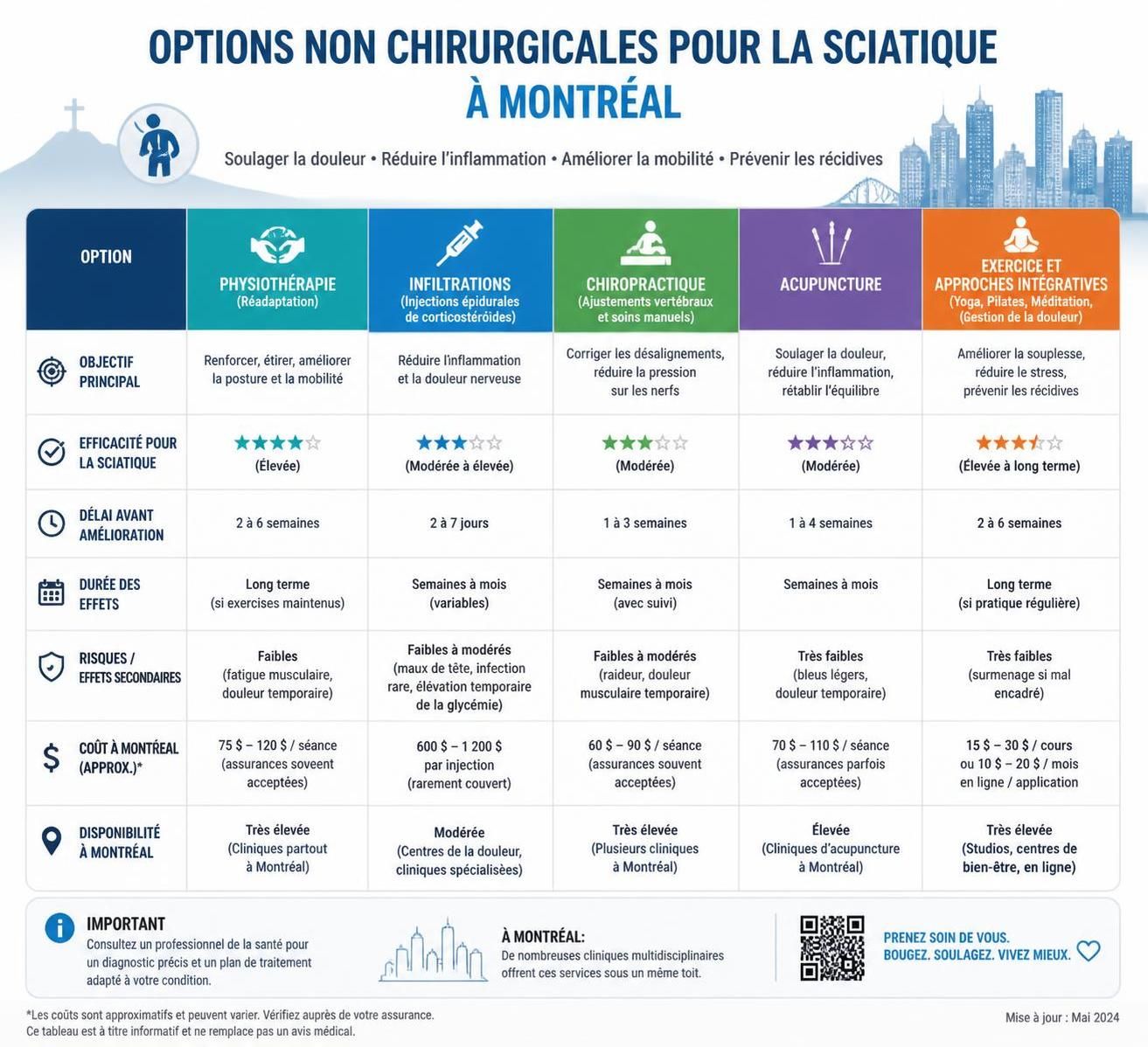
The wide range of possible treatments requires a precise analysis of their specific benefits and limitations. The table below summarizes these aspects for methods commonly offered to patients in Mercier–Hochelaga-Maisonneuve.
| Treatment | Invasiveness | Estimated duration | Main risks | Key benefits | Limitations |
|---|---|---|---|---|---|
| Conservative medical treatment (pain relievers, anti-inflammatory medications) | Non-invasive | 6 to 8 weeks | Medication side effects (gastrointestinal effects, dependence) | Accessibility, gradual symptom relief | Slow effects, sometimes insufficient for severe cases |
| Physiotherapy and rehabilitation exercises | Non-invasive | Variable (several weeks) | Minimal risk, possible muscle fatigue | Improved function, prevention of recurrences | Requires regular commitment and professional follow-up |
| Corticosteroid injections | Minimally invasive | Rapid, short-term effect | Injection risks (infection, local reactions) | Targeted reduction of inflammation, facilitates rehabilitation | Temporary effects that vary among patients |
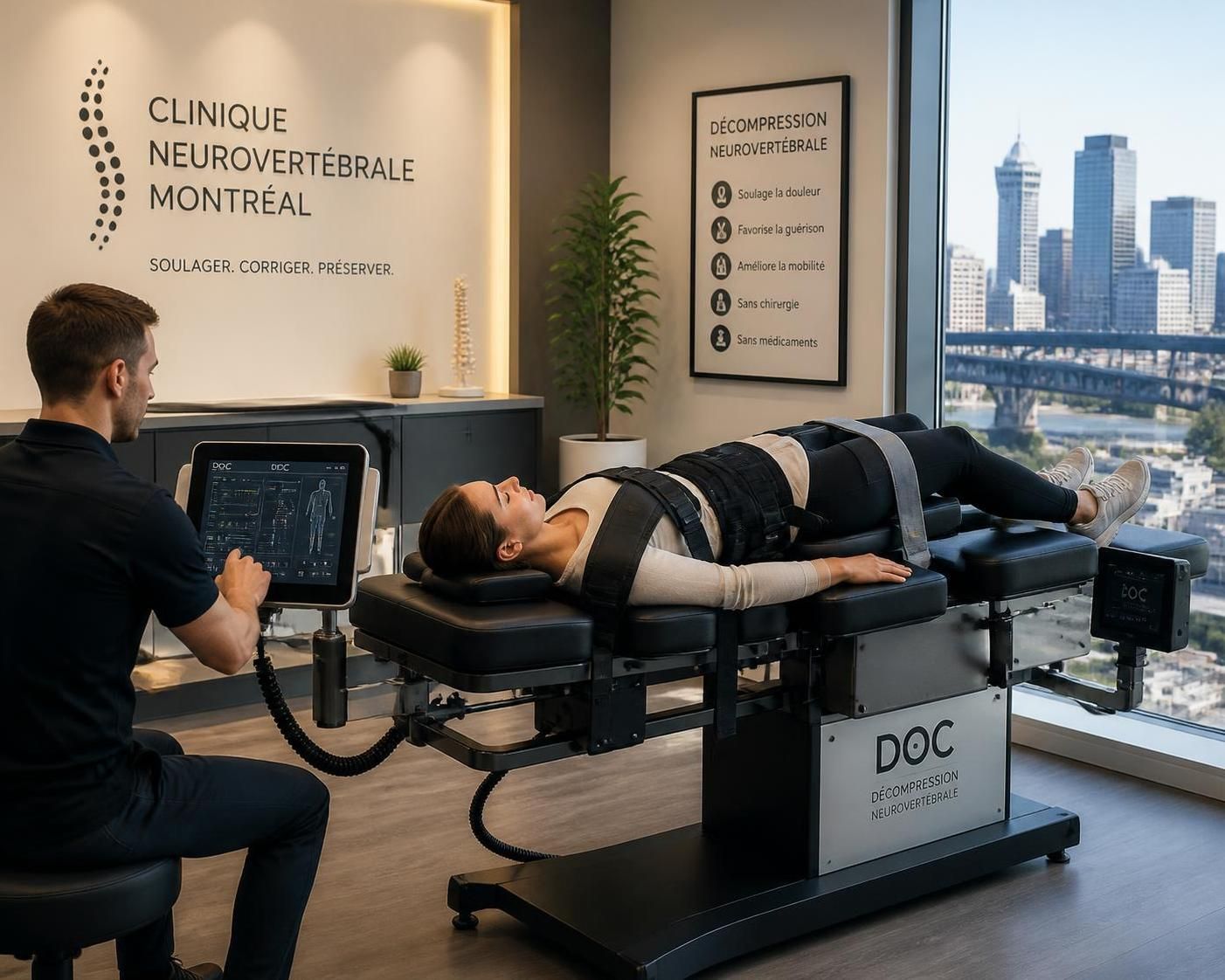
| Motorized neurovertebral decompression | Non-invasive | 8 to 12 sessions (1–2 months) | Mild muscle soreness, temporary fatigue | Reduced nerve pressure, improved function | Individual response varies, requires prior assessment |
This comparison suggests that motorized decompression, although requiring access to specialized equipment available locally, offers a consistent alternative that is compatible with other conservative methods. Its integration into a comprehensive plan, including physiotherapy and tailored advice, may maximize quality-of-life benefits without exposure to the morbidity inherent in conventional surgical procedures.
Signs that warrant an urgent or specialist consultation in Mercier–Hochelaga-Maisonneuve
When faced with sciatic pain, certain clinical signs require immediate medical attention. It is important to distinguish standard outpatient management from a potentially serious or progressive situation.
A clinical consultation is recommended if:
- Radicular pain persists beyond 6 weeks or recurs frequently.
- The pain clearly travels below the knee and interferes with walking.
- Numbness, tingling, or muscle weakness develops progressively.
- Sleep is seriously disrupted by pain.
Urgent medical consultation is needed if:
- Rapid onset of significant weakness in the lower limbs.
- Loss of bladder or bowel control, or perineal numbness (“saddle anaesthesia”).
- Fever associated with pain or a general decline in health.
- Severe spinal trauma.
- Unusual pain in the context of known cancer or infection.
In Mercier–Hochelaga-Maisonneuve, where timely access to specialized clinical services is essential, recognizing these signs can help prevent serious complications. Assessment by a health-care professional, whether in family medicine, ostéopathie or at a specialized clinic such as Clinique TAGMED, remains the cornerstone for guiding care.
Integrating neurovertebral decompression into conservative management in Mercier–Hochelaga-Maisonneuve
Motorized neurovertebral decompression represents a notable development in the non-surgical therapeutic options for sciatica. It is particularly indicated for patients with disc herniation, disc protrusion, disc narrowing, or foraminal stenosis, following a comprehensive assessment that includes imaging and a clinical examination.
The method consists of progressive, controlled mechanical traction of the lumbar spine using specialized equipment. This traction creates negative pressure within the intervertebral discs, thereby promoting partial retraction of the herniation and reducing compression on the nerve roots. Local patients typically receive sessions lasting 30 to 45 minutes, scheduled as a protocol of 8 to 12 sessions, with individualized adjustments based on tolerance.
This technique is generally well tolerated, with side effects limited to mild muscle soreness or temporary fatigue. Its use in a multidisciplinary setting that includes osteopathy, physiotherapy, and naturopathy may optimize outcomes and help limit the risk of recurrence. Clinique TAGMED, located in Mont-Royal, is an ideal referral centre for residents of Mercier–Hochelaga-Maisonneuve wishing to incorporate this option into their treatment journey.
It is essential to clarify that decompression is not suitable for everyone: a thorough assessment is necessary to identify contraindications or clinical situations requiring referral for surgery. In addition, results vary from one patient to another, and no universal protocol guarantees immediate success.
The appropriate integration of neurovertebral decompression into overall management also relies on clear patient information and ongoing monitoring. Those concerned should be encouraged to continue suitable physical activity, adopt protective posture, and recognize signs indicating the need to adjust treatment.
- Identify pain consistent with sciatica through a professional in Mercier–Hochelaga-Maisonneuve.
- Prioritize initial conservative treatment, including pain medication, physiotherapy, and gradual exercises.
- Consider neurovertebral decompression for well-identified cases, in addition to osteopathic and naturopathic approaches.
- Monitor for warning signs to avoid delaying urgent medical consultation.
- Maintain moderate physical activity to improve mobility and reduce recurrences.
What are the main symptoms that may suggest sciatica?
Sciatica mainly presents as low back pain radiating into the leg, often accompanied by numbness, tingling, or localized muscle weakness.
Is neurovertebral decompression suitable for all patients?
No, it requires prior medical assessment and is not suitable in the presence of certain contraindications or complications requiring surgery.
How many decompression sessions are generally needed?
A standard protocol includes 8 to 12 sessions, with improvements often observed as early as the third or fourth session.
When should urgent consultation be sought for sciatica?
If there is significant weakness, loss of bladder control, or severe pain that is not relieved, urgent medical consultation is necessary.
Can sciatica be relieved without surgery?
Yes, most sciatic pain improves with conservative treatments including medication, physiotherapy, injections, and neurovertebral decompression.
Are you experiencing radicular pain that may suggest sciatica and looking for care suited to Mercier–Hochelaga-Maisonneuve? A professional assessment can help clarify the likely cause of your symptoms, identify any sign requiring urgent intervention, and consider non-surgical treatments such as neurovertebral decompression.
To explore treatment options for sciatica in Montréal in a specialized, personalized setting, please contact Clinique TAGMED.
Book an appointment in Mont-Royal
Dr. Sylvain Desforges, B.Sc., D.O., N.D., osteopath
This content is educational and does not replace a personalized medical assessment.
