


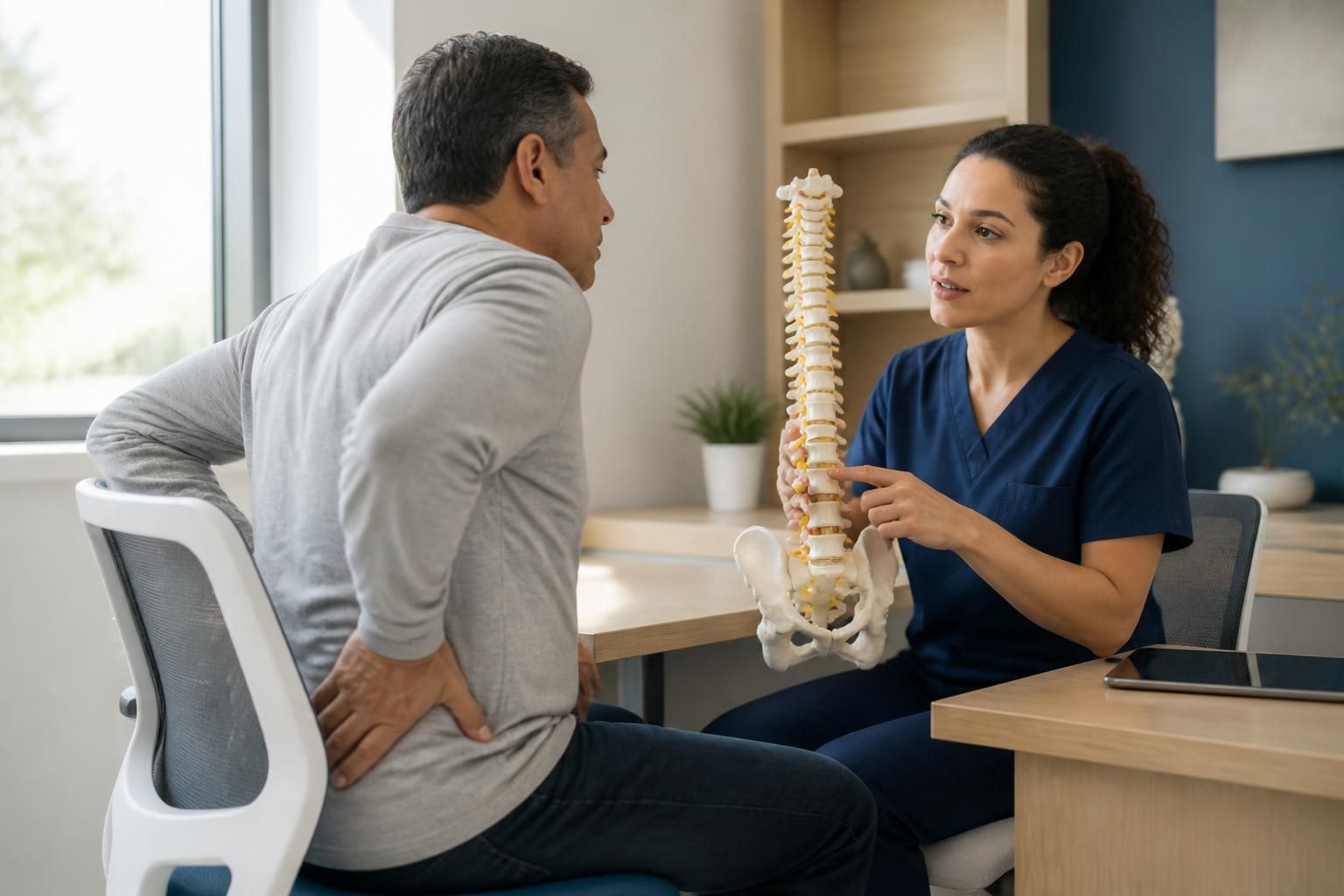


Remote work has become a lasting organizational model for a large proportion of workers, including Verdun residents, a dynamic Montréal borough where living and working spaces often overlap at home. This shift influences musculoskeletal health, notably by contributing to the onset or worsening of low back pain and symptoms related to sciatica. Several factors, including posture, ergonomics, prolonged sitting, and reduced mobility, must be considered to better understand these impacts.
However, sciatica in this context cannot be addressed independently of individual variations, specific remote-work conditions, and personal adjustments. Increased sedentary behaviour, the quality of the home work environment, and symptom monitoring are all essential elements in assessing and managing sciatic pain. Verdun residents experiencing pain radiating into the lower limb should ensure that they adapt their home work environment and consult available resources for an accurate assessment, including those offered nearby, such as at Clinique TAGMED in Mont-Royal.
In brief: key points about remote work and sciatica in Verdun
- Remote work generally increases time spent sitting, a factor associated with increased low back pain and sciatica.
- The ergonomics of the home workstation are an important determinant in limiting the risk of nerve and muscle tension that may trigger or worsen sciatica.
- Mobility and active breaks remain essential to lessen the adverse effects of sedentary behaviour related to remote work.
- Sciatica may present as pain radiating from the low back into the leg, often accompanied by numbness or tingling.
- A professional assessment is recommended for persistent or worsening symptoms to optimize appropriate care.
The effects of remote work on musculoskeletal health and sciatica among Verdun residents
Since the COVID-19 pandemic, remote work has become widespread, profoundly changing lifestyle and work habits, particularly in Montréal neighbourhoods such as Verdun. Although this arrangement offers certain benefits, such as reduced commuting time, it also shifts exposure to physical and psychosocial constraints.
Sciatica, radiating pain caused by irritation or compression of the sciatic nerve, is particularly sensitive to prolonged postures and seating quality. In a remote-work setting, several studies, including those compiled by Anses or the INSPQ, indicate a moderate increase in sedentary behaviours along with reduced physical activity, which may worsen back and radicular pain. In Verdun, where many residents alternate between an active urban lifestyle and working from home, risks related to sedentary behaviour may be problematic for people susceptible to a disc protrusion or other mechanical causes of sciatica.
The position adopted in front of a computer, often informal at home, can lead to postural imbalance, increasing pressure on the lumbar vertebrae and nerve roots. A lack of ergonomics, such as using an unsuitable chair or an inappropriate screen height, may contribute to low back pain that can subsequently cause irritation of the sciatic nerve.
Although scientific literature does not yet allow definitive conclusions regarding a direct causal relationship between remote work and sciatica, particularly because of a lack of precise data on the exact conditions of remote work, its impacts on back pain are documented. Regular consultation with experts, particularly in the Greater Montréal area, enables appropriate management of sciatic pain related to these factors, often combined with broader musculoskeletal disorders.
Adapting the workstation at home therefore becomes a major consideration for limiting biomechanical constraints that may affect the sciatic nerve. In addition to an ergonomic setup, promoting frequent movement between work periods is crucial to maintaining lumbar health and preventing pain from becoming chronic.
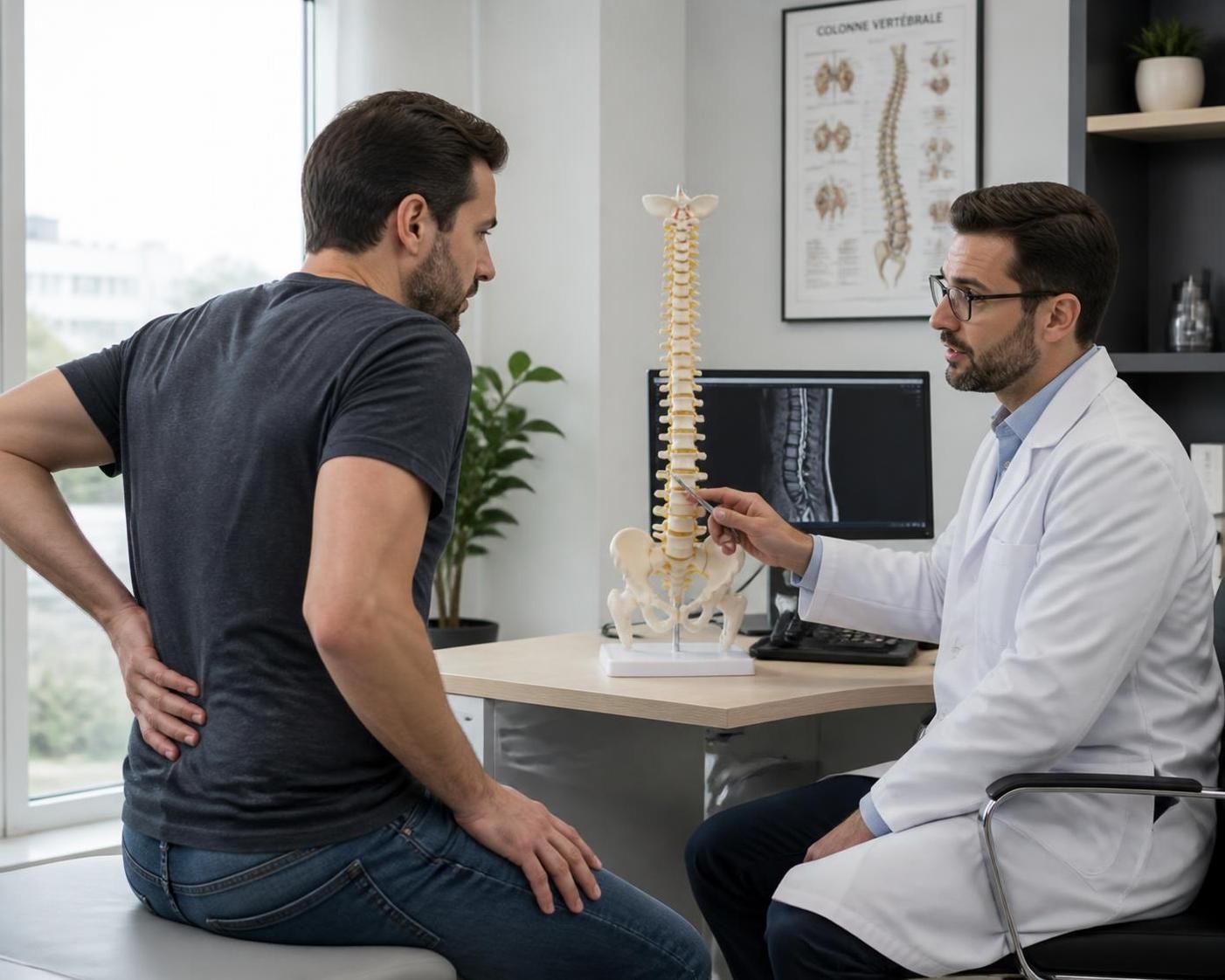
Posture, ergonomics, and mobility: essential measures to reduce sciatica in a remote-work setting
Inadequate sitting posture is among the main factors that can worsen low back and sciatic pain observed in people working from home. The absence of appropriate ergonomic equipment, combined with long hours without breaks, promotes excessive compression of the intervertebral discs and worsening of radicular symptoms.
Among Verdun residents who work remotely, it is common to see improvised spaces used, such as the kitchen table or an unsuitable armchair, which makes maintaining good lumbar posture difficult. This reality underscores the importance of investing in an office chair with good lumbar support, a footrest, and a workstation layout that allows body alignment consistent with spinal physiology.
At the same time, simple but essential measures should be incorporated into the daily routine, such as:
- Getting up regularly to walk or stretch, ideally every 30 to 45 minutes.
- Alternating positions (sitting, standing when possible) with an adjustable desk.
- Performing targeted exercises to strengthen core muscles and improve flexibility.
- Ensuring the screen height and keyboard position are appropriate to avoid secondary neck or back strain.
It is also advisable to limit carrying heavy loads and to remain attentive to any pain that increases with exertion or poor posture. Poor posture management can prolong or worsen radicular pain related to a herniated disc or foraminal stenosis, two common causes of sciatica. Localized pressure on the nerve root may therefore be worsened by prolonged sitting without movement.
Some people also report numbness and tingling in the leg, which may indicate nerve irritation. Early detection and workstation adjustment are therefore essential to prevent worsening. If these symptoms persist or intensify, consulting a local health professional, such as the Clinique TAGMED in Mont-Royal, may help assess the situation and consider targeted treatments, including motorized spinal decompression.
Personal and environmental factors influencing sciatic pain during remote work in Verdun
Beyond purely biomechanical aspects, individual circumstances and environmental conditions play a determining role in the onset and progression of sciatic pain related to remote work. Stress, prior physical activity level, lifestyle habits, and social interactions all contribute to symptom modulation.
For example, for some Verdun residents, the combination of an insufficiently private work area, frequent interruptions, and managing a family working or learning remotely may increase stress levels. Stress is known to intensify muscle tension, thereby indirectly worsening low back and radicular pain. These psychosocial factors therefore have a meaningful influence on the intensity of sciatica.
Furthermore, overall physical activity levels tend to decrease in a prolonged remote-work context, particularly if daily travel no longer offsets sedentary behaviour. Reduced mobility promotes muscle stiffness and loss of tone in the low back and legs, making the lumbar nerves more sensitive to mechanical irritation.
Certain factors to monitor specifically in the context of remote work include:
- The total amount of time spent sitting each day.
- Sleep quality, which is often disrupted by irregular schedules or increased stress.
- Dietary balance, which may sometimes change negatively in a prolonged home environment.
- Time and stress management, which can trigger or worsen musculoskeletal pain.
These complex interactions between physical and personal factors make remote work a multidimensional issue in Verdun. The appropriate care approach must therefore take these elements into account to optimize management of sciatica in this particular context, combining ergonomic advice and personalized interventions.

When to seek care for sciatic pain in a remote-work setting: guidance for Verdun residents
Pain that starts in the low back and travels down the leg may suggest sciatica, but it is important to assess its intensity and other associated symptoms. Some situations warrant promptly consulting a health professional to ensure appropriate care.
Signs that should prompt you to seek care without delay include:
- Persistent pain that does not improve with rest or ergonomic adjustments.
- Pain radiating below the knee, often more characteristic of “true” sciatica.
- Numbness, tingling, or loss of sensation in the affected leg.
- Visible or perceived muscle weakness in the leg, which may affect walking or stability.
- Sphincter dysfunction, such as difficulty controlling urine or bowel movements, requiring emergency medical care.
In these cases, a health professional can carry out a comprehensive assessment, including a physical examination and, if needed, diagnostic imaging. This is particularly relevant for Verdun residents working from home, who may benefit from suitable local follow-up, including therapeutic options such as a specialized consultation for sciatica.
It is recommended not to wait until pain becomes chronic before seeking care, as early treatment can often limit an unfavourable progression.
Treatment approaches for remote-work-related sciatica in Verdun: advice and care options
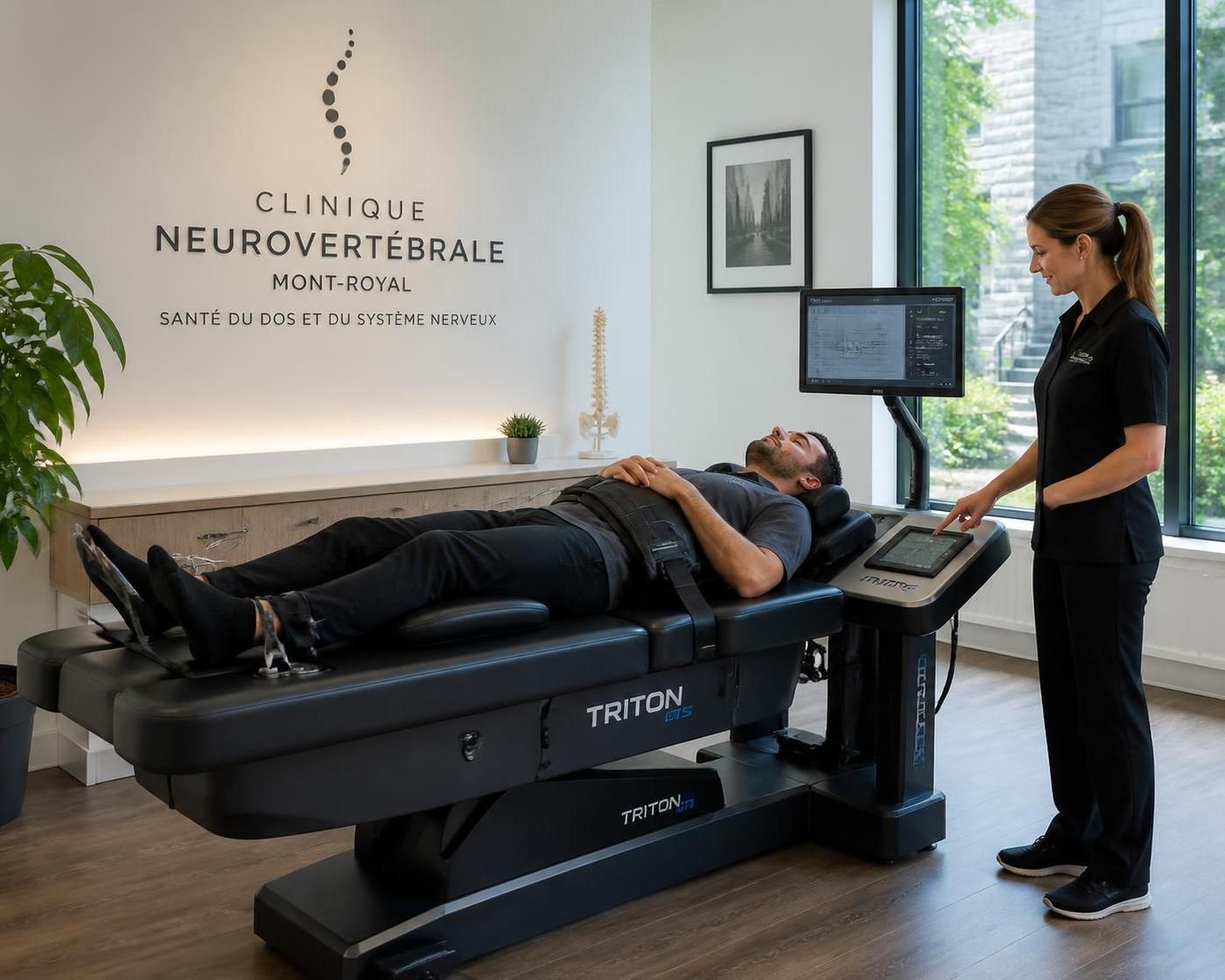
Treatment for sciatica in a remote-work context is based on a combination of workstation adaptations, exercises, manual care, and, for some people, specific techniques such as motorized spinal decompression. The latter is a modern method used in particular at Clinique TAGMED for patients who are compatible with a targeted profile, such as those with a herniated disc, disc protrusion, or foraminal stenosis.
Motorized spinal decompression involves controlled, gradual traction intended to temporarily reduce mechanical pressure on nerve roots, improving movement tolerance and reducing radicular pain. This treatment is offered following a comprehensive assessment to ensure its indication and limitations.
It is not a miracle cure or an automatic way to avoid surgery, but it complements other interventions such as:
- Postural rehabilitation and appropriate exercises to maintain mobility.
- Specific osteopathic care or precision percussive therapy to reduce muscle tension.
- Advice on stress management and improving lifestyle habits.
For Verdun residents, access to these treatments often requires coordination with qualified local professionals to ensure comprehensive, personalized care.
It remains essential to remember that treatments must be tailored to the patient’s needs, that results vary from person to person, and that no method replaces an urgent medical assessment when warning signs are present.




List: practical recommendations for preventing sciatica while working remotely
- Set up an ergonomic workstation with a suitable chair and lumbar support.
- Take active breaks to get up, walk, and stretch regularly.
- Vary your postures, particularly by alternating between sitting and standing.
- Strengthen the lumbar muscles through targeted exercises under professional supervision.
- Maintain good hydration and a balanced diet to support recovery.
- Seek care promptly in the event of persistent pain, numbness, or weakness in the leg.
| Factors | Impact of remote work on sciatica | Specific recommendations |
|---|---|---|
| Prolonged sitting posture | Increases disc pressure and the potential for nerve irritation | Use an ergonomic chair, adjust desk height, and take regular breaks |
| Lack of mobility | Muscle stiffness, reduced blood circulation, worsening of pain | Include stretching and frequent position changes |
| Stress and fatigue | Increased muscle tension, possible worsening of symptoms | Manage stress, ensure good sleep, and take mental breaks |
| Unsuitable equipment | Poor posture, increased tension in the low back | Set up a workstation that meets ergonomic standards |
The effects of remote work on health are still being studied, particularly in Québec’s public and private sectors and in Montréal. To learn more about the impacts on workers’ health, it is recommended to regularly consult reliable resources such as those available through the INSPQ or other expert organizations in the field, as these platforms offer up-to-date analyses tailored to the realities of the Montérégie region on the health impacts of remote work.
How can remote work worsen sciatica?
Remote work may promote sedentary behaviour and prolonged, often non-ergonomic sitting positions, which increase pressure on the low back and may irritate the sciatic nerve, triggering or worsening pain.
What signs require prompt consultation for sciatic pain?
Pain that travels below the knee, accompanied by numbness, muscle weakness, or loss of bladder or bowel control, requires urgent medical assessment.
Is spinal decompression suitable for all patients working remotely?
No, this method is reserved for selected patients after assessment, particularly those with herniated discs or disc protrusions that are compatible with this type of controlled traction.
How can you improve your home workstation to prevent sciatica?
By using an ergonomic chair with lumbar support, adjusting desk and screen height, taking frequent breaks, and including regular stretching.
What is the role of mobility in managing sciatica?
Mobility helps reduce muscle stiffness, improves blood circulation, and decreases pressure on the discs, helping to lessen sciatic pain related to sedentary behaviour.
Are you experiencing pain that travels down your leg and would like to understand the possible causes and options for living better with sciatica in a remote-work setting? A professional assessment can help clarify your situation, identify signs to watch for, and determine whether appropriate conservative care suited to your home work environment may be beneficial. For personalized follow-up near Verdun, do not hesitate to consult the services offered at Clinique TAGMED in Mont-Royal.
Dr. Sylvain Desforges, B.Sc., D.O., N.D., osteopath
This content is provided for educational purposes and does not replace a personalized assessment by a health professional.
