


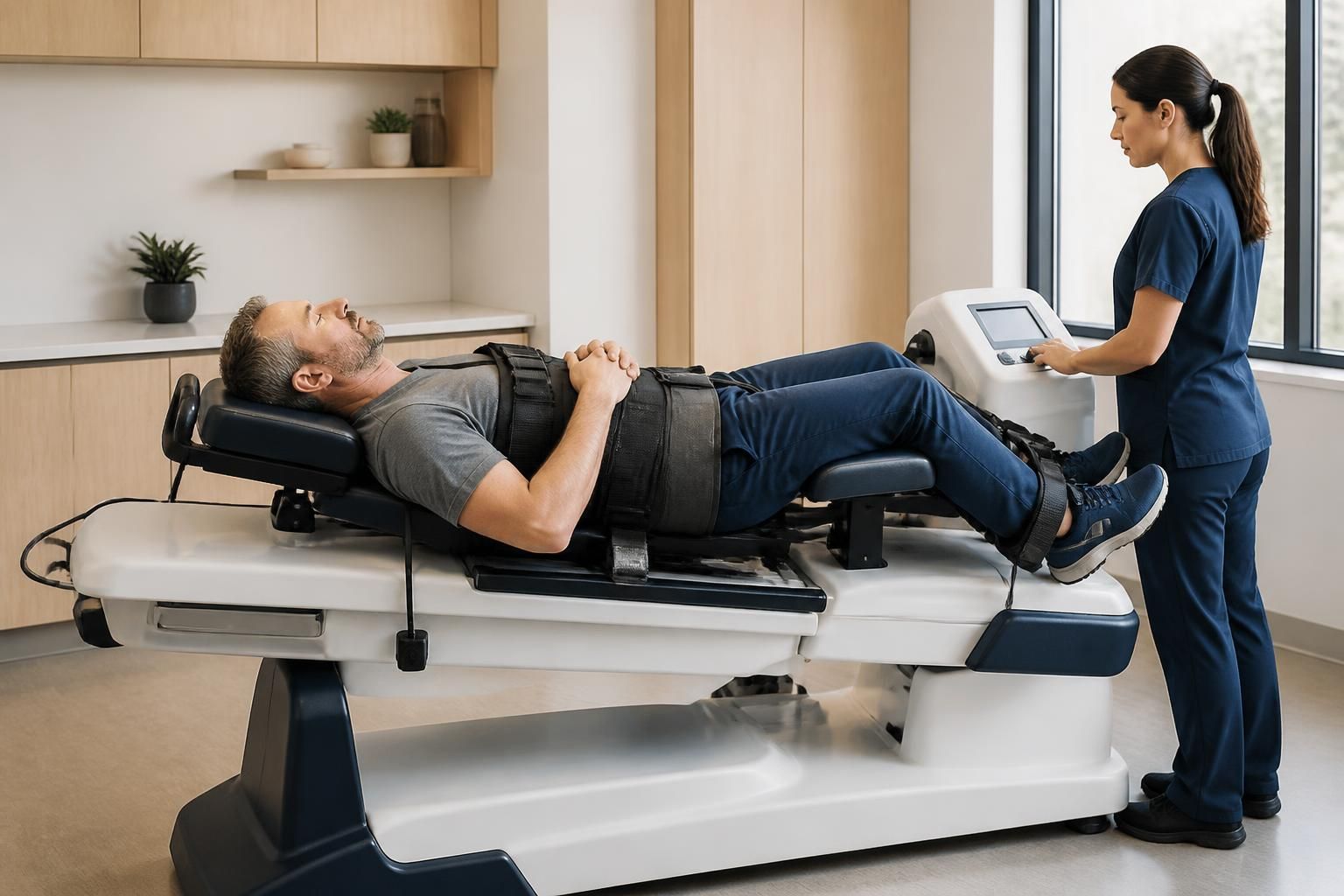


Spinal decompression in Verdun is presented as a promising non-invasive method for effectively relieving various types of back pain, particularly pain related to herniated discs. This treatment is intended both for patients seeking an alternative to prolonged medication use and for those wishing to avoid, or delay, surgery. In Verdun, a vibrant community in southwest Montréal, several specialized clinics incorporate this approach into comprehensive care tailored to each patient’s specific needs.
More than simply a technical session, spinal decompression involves a well-supervised protocol intended to reduce pressure on the intervertebral discs and nerve roots. Every stage, from preparation before the session to post-treatment reassessment, is designed to ensure an optimal balance between effectiveness and safety while promoting the patient’s mobility and comfort. Beyond its mechanical effect, this treatment is often part of multidisciplinary follow-up that includes physiotherapy and osteopathy, supporting recovery and the prevention of recurrences.
In brief: key points about a spinal decompression session in Verdun
- Non-invasive treatment: use of controlled motorized traction to relieve pressure on the spine.
- Session duration: generally between 30 and 45 minutes, including rest periods and adjustments.
- Essential preparation: hydration, comfortable clothing, and avoiding intense physical exertion before the session.
- Personalized protocols: settings tailored to the individual condition, with regular follow-up and reassessment.
- Multidisciplinary integration: often combined with physiotherapy and osteopathy to optimize results.
- Target population: patients with pain related to herniated discs, disc narrowing, or foraminal stenosis.
Specific features and goals of spinal decompression in Verdun
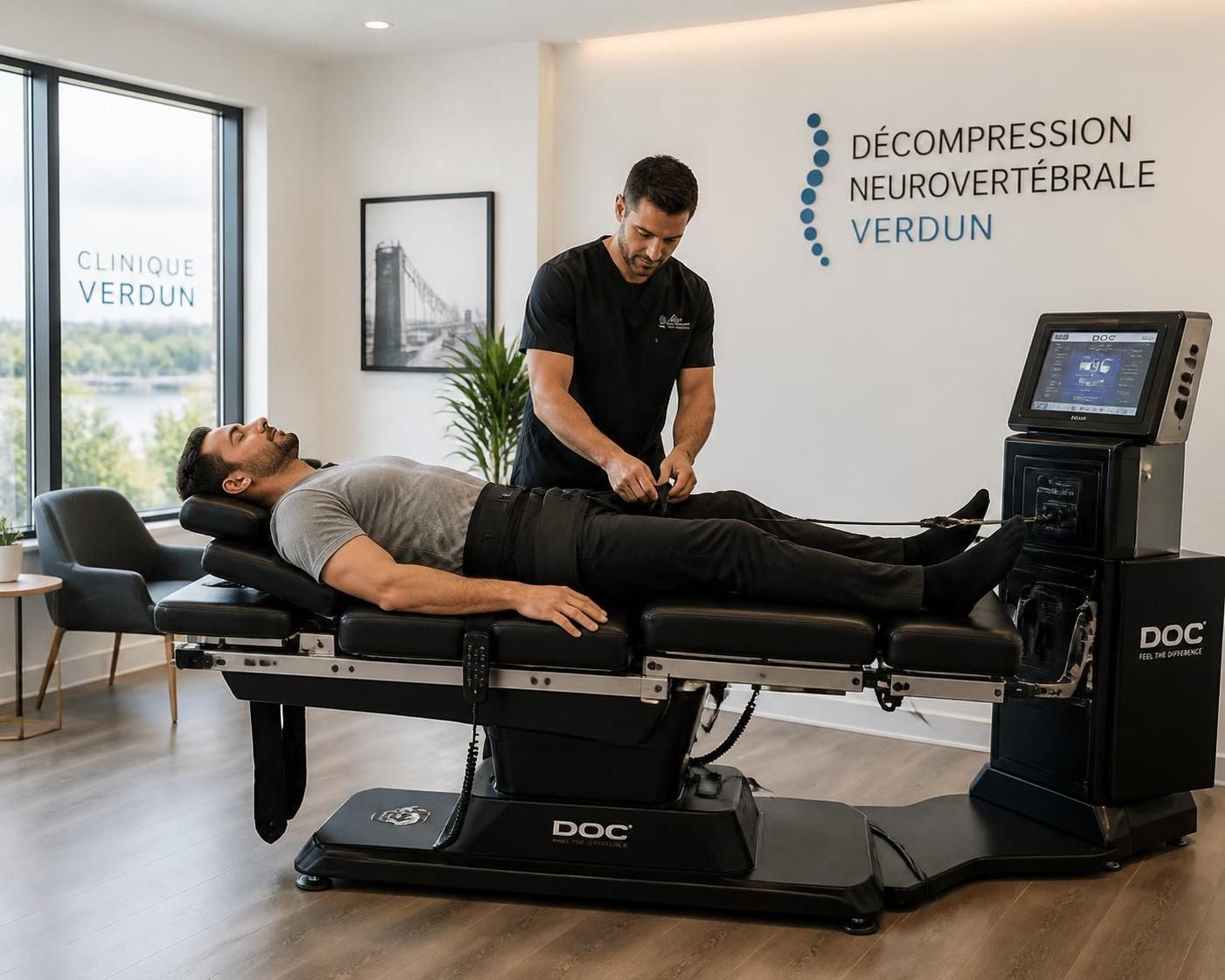
Spinal decompression is a method intended to alter spinal mechanics by applying targeted, controlled traction to the spine. In Verdun, where active populations are often exposed to repeated physical demands, this technique can reduce pressure on the intervertebral discs and nerve roots, which are frequent sources of pain.
This treatment is particularly intended for people with a symptomatic herniated disc, a disc protrusion, or foraminal stenosis, conditions that cause mechanical compression and irritation of the sciatic nerve. This compression can cause pain radiating into the leg, numbness, tingling, or muscle weakness, all symptoms that may be compatible with radicular pain.
The main goal is therefore to reduce intradiscal pressure through progressive traction, promoting a mechanical reduction in the protrusion while improving local blood circulation and nerve tissue tolerance. This approach aims to support the natural repair of the intervertebral discs and restore better spinal mobility, without using a surgical technique.
In Verdun, this treatment is offered in a safe setting adapted to clinical profiles assessed in advance, as described in detail in the medical protocol followed at the clinic to understand exactly what a session involves. Individualized traction adjustments provide greater comfort during the session and limit the risk of irritation or excessive discomfort.
Distinguishing spinal decompression from other approaches
This motorized method differs from conventional traction in its ability to apply controlled, cyclical force tailored to the patient’s tolerance. Unlike manual manipulation or osteopathy, which focus on one-time and global adjustments, spinal decompression acts mechanically on a targeted area of the spine.
Patients thus benefit from progressive decompression, which is generally better tolerated over the long term than more forceful techniques. In addition, gentle manual treatments or adapted physiotherapy help strengthen the muscles and correct posture, supporting comprehensive care as is often practised in the Greater Montréal area, including the Verdun area with experienced specialists.
This video illustrates how a patient is positioned on the motorized decompression table, the different possible settings, and the sensations reported.
Preparation and typical course of a session in Verdun
Before the first session, a complete assessment is essential. It includes a clinical evaluation, a review of medical history, and often imaging tests such as an MRI to confirm the presence of a herniated disc or disc protrusion. This information also helps rule out contraindications to decompression, such as vertebral fractures or infections.
In direct preparation for the session, several recommendations are important to improve the comfort and effectiveness of treatment.
- Adequate hydration: good hydration enhances the potential for rehydration of the intervertebral discs during traction.
- Clothing choice: choose loose, comfortable clothing that facilitates positioning on the table.
- Physical rest: avoid intense physical activity for at least 24 hours before the session to limit inflammation.
- Clear information: tell the practitioner about any unusual pain, medication use, or particular condition so the protocol can be adapted.
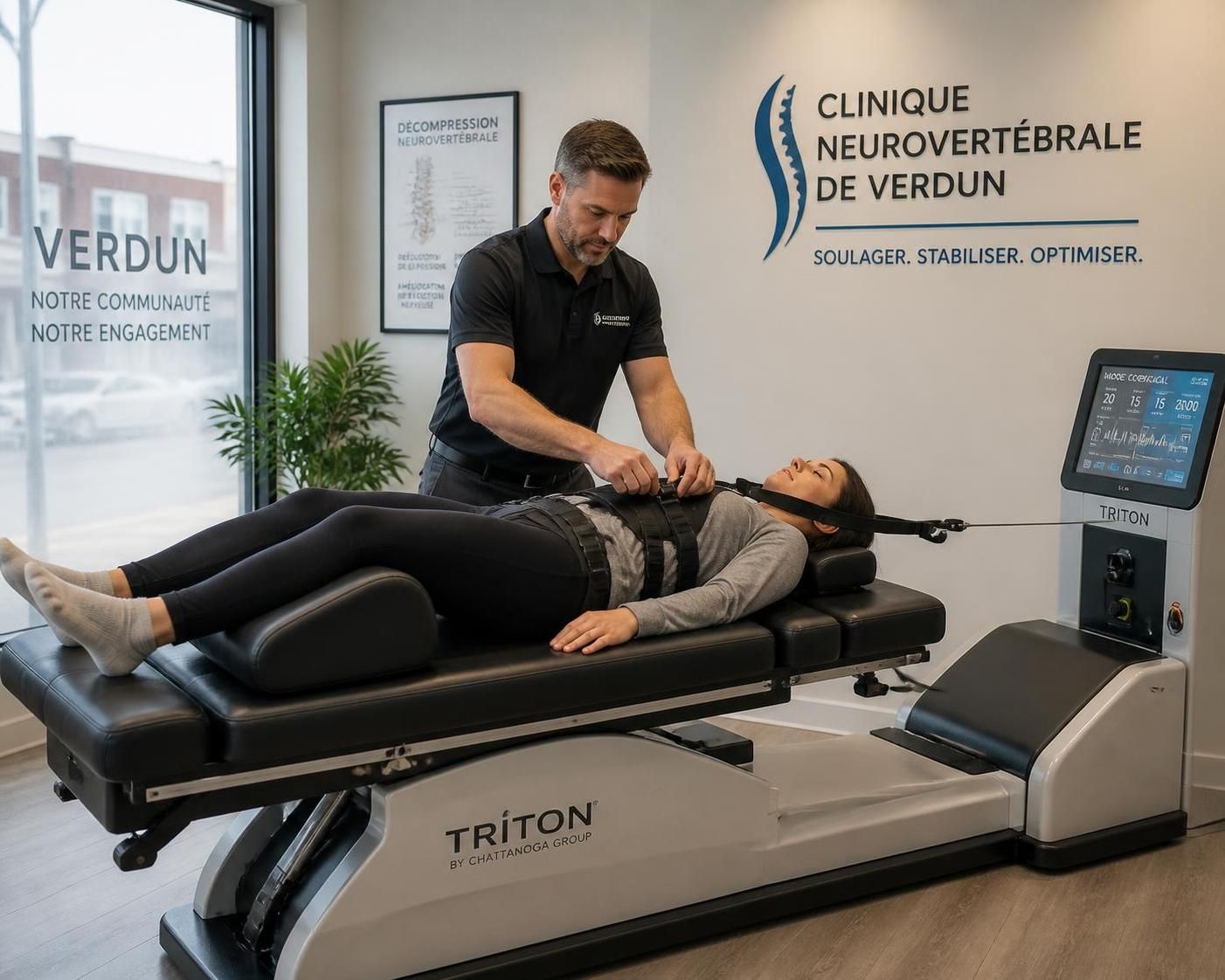
During the session, the patient lies down, generally on their back, with a harness positioned around the pelvis. This harness is connected to the motorized table, which applies gentle traction in cycles, alternating between traction and release. The total duration varies between 30 and 45 minutes, including rest phases that allow the muscles to relax.
The practitioner continuously adjusts the settings according to patient feedback, tolerance, and the therapeutic goal. It is important for the patient to remain relaxed and report any significant discomfort. The session takes place in a calm and comfortable space conducive to relaxation and better effectiveness.
Factors that influence treatment effectiveness and safety
Several factors can alter the response to spinal decompression. The nature and severity of the herniated disc, overall physical condition, and muscle recovery capacity play a central role. For example, a patient with a large herniated disc or advanced foraminal stenosis may require a longer protocol or frequent adjustments.
Consistency and adherence to treatment also greatly influence the consolidation of results. Combining it with targeted rehabilitation can improve posture and muscle strength and help prevent recurrences.
However, certain medical conditions contraindicate decompression, including:
- Recent vertebral fractures or major spinal instability.
- Spinal infections or tumours.
- Severe acute inflammatory condition.
- Pregnancy (in certain cases, depending on the assessment).
Good communication between the patient and practitioner is essential to adapt the sessions and avoid side effects such as temporary fatigue or mild muscle soreness, which tend to resolve quickly.
Comparison table: factors influencing the course and outcomes of spinal decompression
| Factor | Impact on treatment |
|---|---|
| Severity of the herniated disc | Determines the intensity and duration of the protocol |
| Overall health and physical condition | Influences recovery and tolerance of treatment |
| Adherence to the protocol | Supports the maintenance of long-term benefits |
| Presence of contraindications | May preclude use or require treatment adjustment |
| Integration into multidisciplinary care | Improves the overall quality of care and prevention of recurrences |
In this segment, the practitioner presents how spinal decompression and physiotherapy complement one another to optimize rehabilitation.
Key stages of a spinal decompression protocol in Verdun
- Initial consultation with a clinical examination and imaging to confirm the indication.
- Identification of potential contraindications and adaptation of treatment.
- Planning of individual sessions, generally 8 to 12, scheduled over several weeks.
- Patient preparation: explanation of the process and hydration and rest recommendations.
- Gentle positioning on the decompression table, with progressive traction adjustment.
- Careful monitoring during the session of sensations and any potential signs.
- Regular reassessment to adjust the protocol, with possible integration of physiotherapy or osteopathy.
- Post-treatment follow-up to prevent recurrence and encourage adapted physical activity.
Local resources for follow-up and continuity of care in Verdun
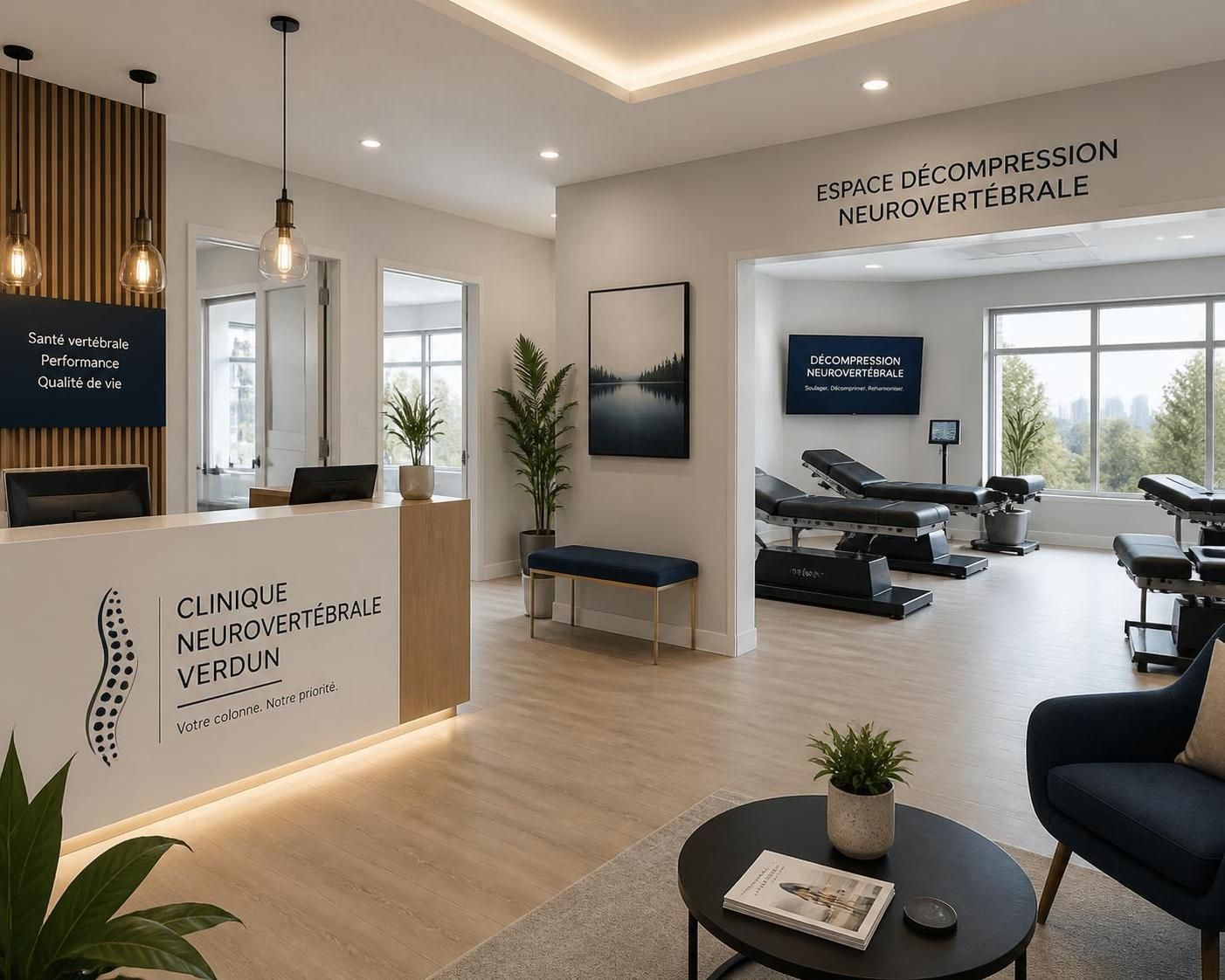
Verdun residents benefit from easier access to specialized clinics equipped with modern spinal decompression technologies, including TAGMED Clinic, which offers comprehensive follow-up integrating physiotherapy and osteopathy. This holistic approach ensures safe, individualized care.
Proximity to Montréal and neighbouring municipalities such as LaSalle and Saint-Laurent also facilitates referrals to experts based on the complexity of cases. This integrated network helps support effective rehabilitation and pragmatic management of chronic pain related to disc conditions.
Additional resources that help people better understand the indications and limitations of spinal decompression are also available on recognized educational websites, helping patients form a clear understanding before beginning their treatment journey.
What tests are needed before spinal decompression?
An MRI or X-ray is generally essential to assess the condition of the intervertebral discs and confirm the presence of a herniated disc, so treatment can be adapted safely.
How many sessions are generally recommended?
Most patients benefit from a series of 8 to 12 sessions, spread over several weeks, to achieve lasting and significant relief.
What types of pain can be relieved by this treatment?
Spinal decompression can help alleviate low back pain, neck pain, and radicular pain such as sciatica and femoral neuralgia.
Are there common side effects?
Side effects are rare and often minor, such as mild fatigue or muscle soreness that resolves quickly after the session.
Does spinal decompression help prevent recurrences?
By promoting better spinal alignment and improving disc health, decompression can help reduce the frequency of recurrent back pain.
If you have back pain that may be related to a herniated disc or nerve compression, a personalized assessment can help determine whether spinal decompression is a suitable option. This process in Verdun, overseen by experienced professionals, includes identifying signs to monitor and establishing a safe treatment plan.
Learn more about treatment options in Mont-Royal
Dr. Sylvain Desforges, B.Sc., D.O., N.D., osteopath
This content is educational and does not replace a personalized assessment by a health-care professional.
