


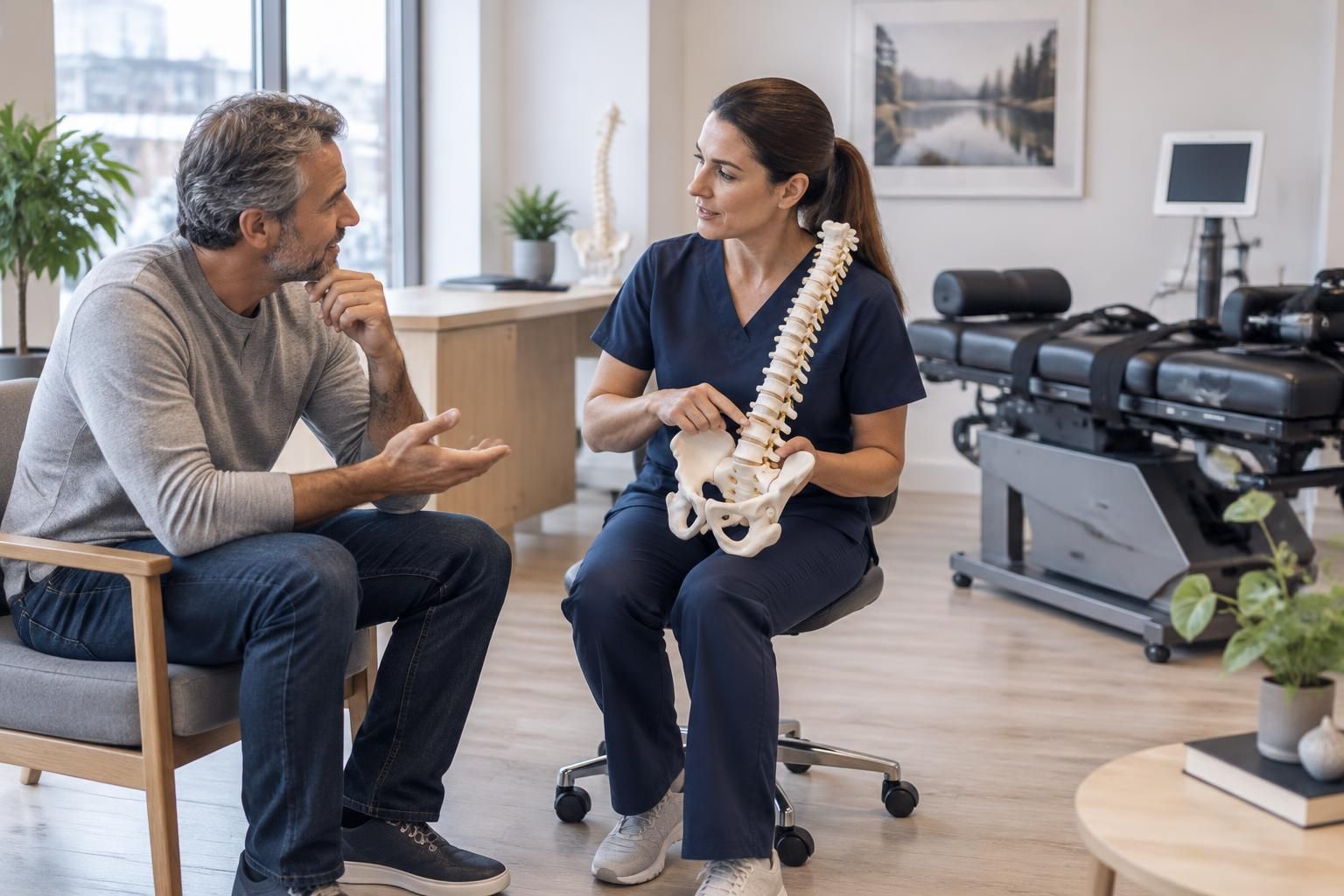
To choose between spinal decompression and a spinal injection when back pain travels down the leg, it is first necessary to clarify what appears to be irritating the lumbar structures and check for neurological signs. These two options do not pursue the same goal: decompression is a motorized traction treatment that may be considered for certain patients, while an injection involves administering medication to a targeted area and is performed by an authorized medical professional.
In Villeray, pain that makes travelling by public transit, driving, or spending hours seated at work difficult deserves an appropriate assessment rather than a choice based solely on the name of a treatment. Sciatica may be related to a herniated disc, but the path of the pain alone cannot confirm the cause or determine the appropriate option.
In brief: comparing options for sciatica in Villeray
Decompression: controlled motorized traction, considered for selected individuals after an assessment. Results vary, and no number of sessions is appropriate for everyone.
Injection: a targeted injection, generally considered by a physician in certain situations. Its indication depends in particular on symptoms and medical assessment.
The right choice: depends on the examination, progression, medical history, and functional goals, not solely on an image showing a changed disc.
Safety priority: worsening weakness, saddle anaesthesia, or loss of bladder or bowel control requires urgent medical assessment.
A discussion about choosing a spinal treatment benefits from distinguishing the relief being sought, the limitations of each approach, and other possible options. Back care in Villeray can begin by clarifying these elements with an appropriate professional, without assuming that one method will suit everyone.
Spinal decompression and injection: two distinct approaches
Spinal decompression refers to a form of progressive, controlled motorized spinal traction. Depending on the device and settings used, the session applies varying forces to the spine; the goal is to temporarily alter certain mechanical stresses, particularly around the discs and nerve roots. It does not put a disc “back into place” and does not guarantee pain resolution or avoidance of surgery.
A spinal injection, for its part, involves administering medication to a specified area, for example near a nerve root, according to the medical indication. It may be considered in certain contexts to reduce inflammation and help manage symptoms, but the effect is not the same for everyone and may be temporary. The assessment of benefits, risks, and alternatives is the responsibility of the professional who proposes it.
Radicular pain may cause pain, tingling, or reduced sensation in the buttock and leg. A herniated disc or foraminal narrowing may be among the possible causes, but referred pain from other structures can sometimes resemble it; the clinical examination and imaging, when indicated, must therefore be interpreted together. To compare the two options in the context of sciatica, see this overview of the differences between decompression and injection.
| Reference point | Spinal decompression | Spinal injection |
|---|---|---|
| Nature | Motorized, controlled traction | Targeted medical injection |
| Who assesses the indication | A qualified professional after an examination and review of contraindications | An authorized physician, according to the clinical presentation |
| Essential limitation | An approach not suitable for all causes or all patients | Variable effect; a procedure involving risks that should be discussed |
| What it does not replace | Urgent assessment or indicated medical care | Comprehensive follow-up and functional management |
What factors guide the choice of spinal treatment?
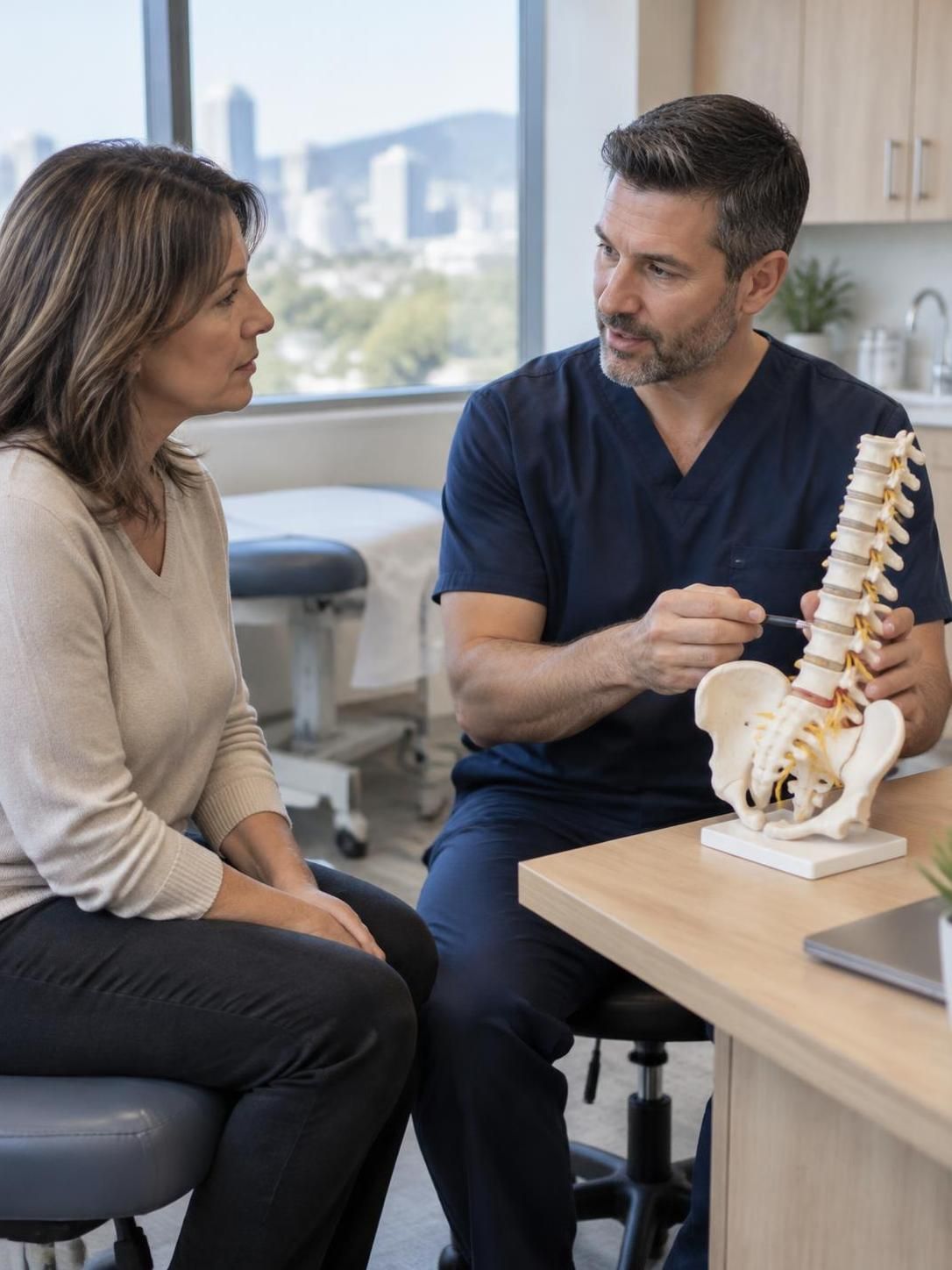
The professional will seek to understand, among other things, how long the symptoms have been present, what makes them worse, and whether they are accompanied by numbness or weakness. Prolonged sitting, driving, or certain movements can change the pain, but these responses do not automatically point to a specific cause. In Villeray, a person who experiences more symptoms after a seated commute can mention it: this information helps establish a functional picture without being sufficient to make a diagnosis.
Medical history, treatments already tried, medications used, and available imaging results also matter. An abnormality visible on imaging does not by itself prove that it explains the symptoms. Conversely, the absence of recent imaging does not always mean it must be requested immediately: the decision depends on the assessment and observed signs.
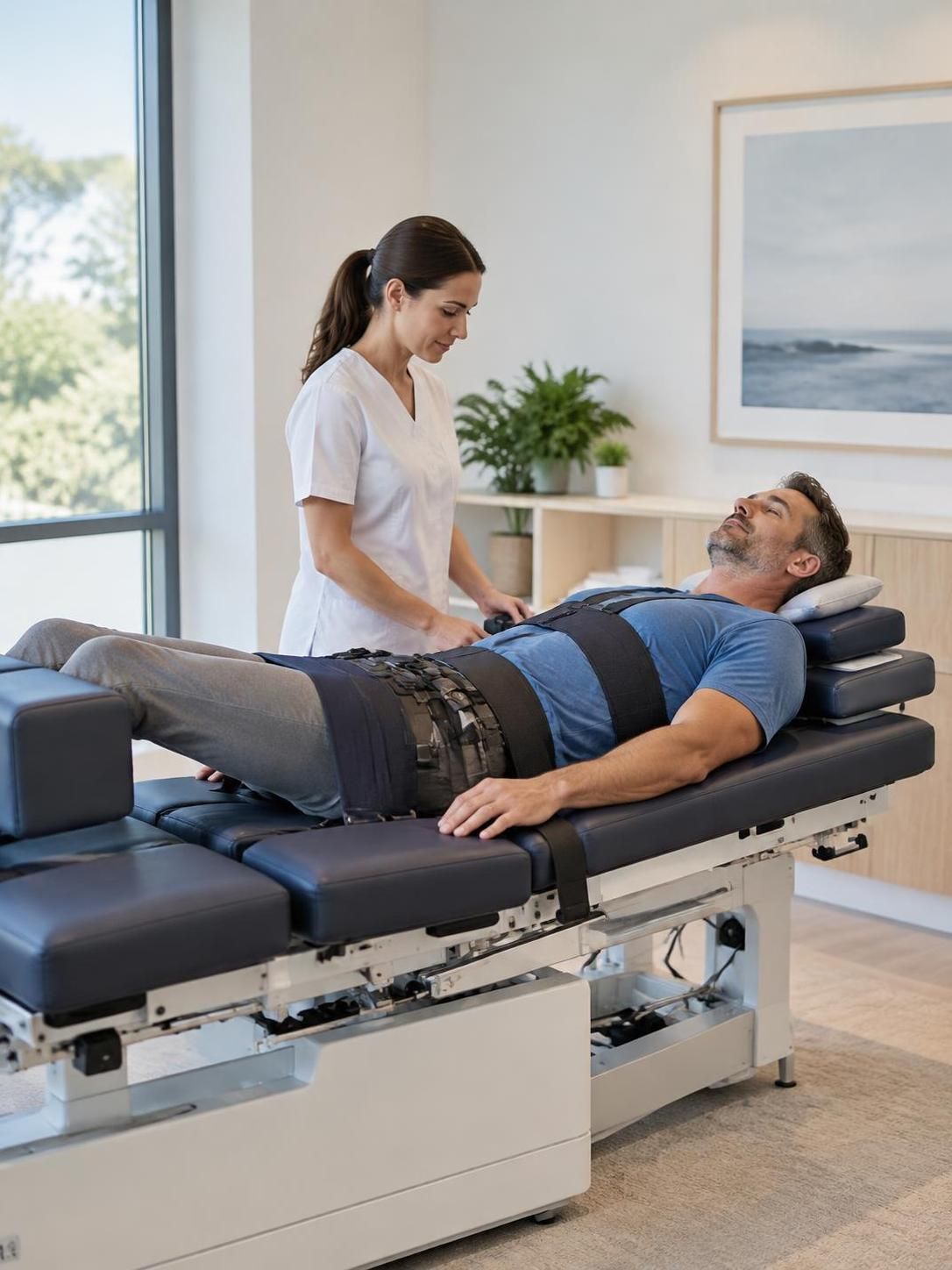
Before considering decompression, it is necessary to verify that the approach is appropriate and that no contraindication or situation requiring medical referral stands in the way. The settings for motorized traction must be adapted and reassessed; there is no universal schedule. A sensation or pain that worsens during sessions should be reported, and new weakness or progressive loss of sensation calls for reassessment rather than automatic continuation of the protocol.
To prepare for a consultation, you can note the following:
- the path of the pain and its progression, including whether it travels below the knee;
- the positions and activities that worsen or relieve symptoms;
- the presence of tingling, numbness, weakness, or walking limitations;
- treatments tried, their effects, and questions to ask about risks and alternatives.
A useful comparison therefore concerns safety and goals as much as the technique itself. The contraindications and precautions to review before decompression should be discussed individually, without assuming that the proximity of a clinic in Villeray changes the clinical criteria.
Complementary options and the role of decompression in Montréal
The choice is not always limited to an injection or decompression. When safe, maintaining or gradually returning to activities, tailored advice, and exercises selected according to symptoms may help preserve function. This does not mean pushing through worsening pain: if symptoms travel farther down the leg, numbness progresses, or weakness appears, the activity in question should be stopped and advice sought.
Medications may be discussed with an authorized professional based on medical history, expected benefits, and possible adverse effects. An injection may be considered in some cases; a specialist consultation or surgery may also be appropriate if warranted by progression, significant compression, or a neurological deficit. None of these options is universally superior.
At Clinique TAGMED, located at 1140 Beaumont Avenue in Mount Royal, near Outremont and Côte-des-Neiges, motorized decompression may be considered for selected patients after an assessment. Specific osteopathy or a precision percussor may also be among the approaches offered depending on the individual profile; this does not mean that the clinic offers injections or medical services. The page devoted to assessment and management options for sciatica may help clarify this distinction.
For people in Villeray, the practical issue is finding an assessment that considers daily life, symptoms, and goals, rather than choosing an intervention solely because it is non-surgical. Information about identifying possible causes and assessing sciatica also provides useful educational guidance.
An explanatory video may facilitate understanding of the mechanism, but it does not replace an examination for persistent back pain. Results observed with decompression vary, and available data do not support making it an automatic response to every case of sciatica or herniated disc.
When should you seek care for pain that travels down the leg?
A clinical assessment is indicated if pain persists or returns, travels below the knee, limits walking, disrupts sleep, or is accompanied by numbness, loss of sensation, weakness, or reduced function. The goal is to clarify the situation and determine the appropriate next steps.
Urgent medical assessment is necessary in the event of loss of bladder or bowel control, numbness in the saddle area, significant or rapidly progressing weakness, fever or feeling generally unwell, significant trauma, or pain in the context of cancer or infection. Rapid worsening must also be taken seriously; no remote advice can replace this assessment.
When urgent signs are present, do not wait for a decompression session or an injection to see whether the situation improves. For other persistent symptoms, a professional can determine whether a conservative approach, medical consultation, or testing is needed.
Frequently asked questions about injections and decompression
Is spinal decompression an alternative to an injection?
Not automatically: the two interventions have different mechanisms and indications. The choice depends on the assessment, symptoms, medical history, and risks specific to each option.
Is a herniated disc visible on imaging enough to choose decompression?
No. The image must be considered in relation to symptoms and the clinical examination, since a disc abnormality alone does not prove the source of the pain. An assessment is needed before deciding whether this approach is appropriate.
How many decompression sessions should be planned?
No number is suitable for everyone, and a fixed schedule cannot be inferred from the presumed diagnosis alone. The appropriateness of continuing should be reassessed according to tolerance, progression, and functional goals.
When does sciatic pain warrant a consultation?
Seek care if it persists, recurs, travels below the knee, limits your activities, or is accompanied by numbness or weakness. Loss of bladder or bowel control, saddle anaesthesia, or rapidly progressive weakness requires urgent assessment.
If lower back pain travels down your leg and you are hesitating between an injection and decompression, an assessment can help clarify the likely cause, signs to watch for, and the relevance of a conservative approach. Clinique TAGMED sees patients in Mount Royal; options are discussed according to each person’s situation, with no guarantee of results.
Sylvain Desforges, B.Sc., D.O., N.D., Doctor of Osteopathy
This content is educational and does not replace a personalized assessment or medical advice.
