


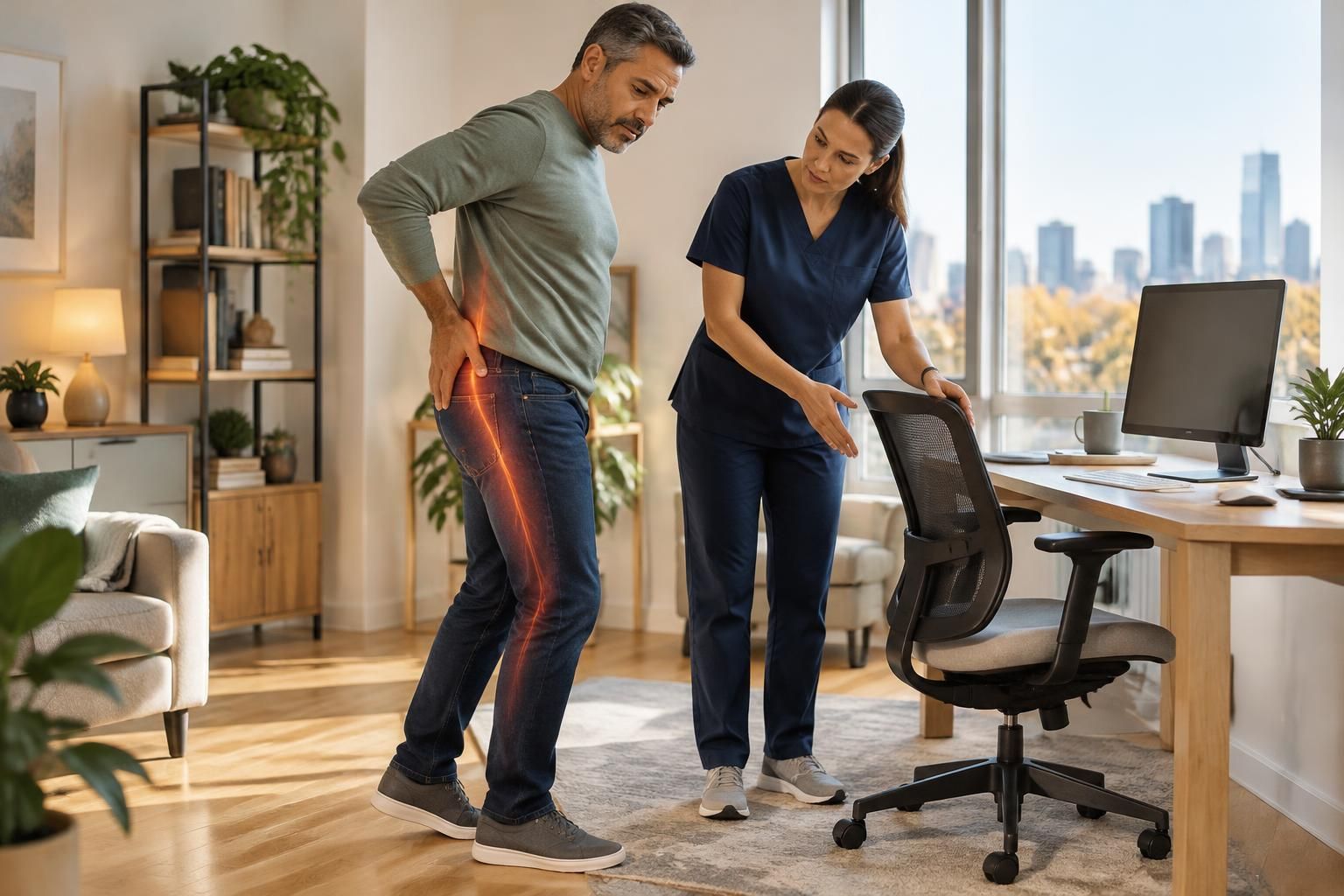
When sciatica occurs while working remotely, sitting for long periods can make the pain more difficult to tolerate, but a chair or posture alone cannot explain all symptoms. In Notre-Dame-de-Grâce, where a day at home may also involve travel by car or public transit, the goal is to adapt the workstation and vary positions without straining the painful leg.
Low back pain that travels into the buttock or leg can have several causes; the path of the pain alone cannot establish a diagnosis. Active breaks and an ergonomic posture may improve comfort for some people, while persistent pain, numbness, or weakness warrant an appropriate assessment.
In brief: remote work and sciatica in Notre-Dame-de-Grâce
Alternate positions. There is no single perfect posture to maintain all day. Regular movement and changing positions matter more than rigid stillness.
Adjust your workstation. A stable office chair, a well-positioned screen, and supported feet can make work more comfortable without necessarily treating the cause of sciatica.
Monitor changes. Pain that travels farther down the leg, progressing numbness, or new weakness are reasons to seek professional advice.
Adapt care to your situation. Exercises, physiotherapy, and other options depend on the symptoms, their duration, and the clinical assessment.




Why can sitting worsen sciatic pain?
Sciatica generally refers to pain associated with irritation of a nerve root in the lower back, with symptoms that may radiate into the buttock and leg. It may be accompanied by tingling, a sensation of numbness, or, in some cases, weakness. A herniated disc is one possible cause, but other low back problems or referred pain can produce similar symptoms.
Prolonged sitting can be uncomfortable because it keeps the body in a less varied posture and can sometimes make transitions difficult. Some people notice worsening after a long meeting or car ride; others tolerate sitting better and experience more symptoms when standing or walking. This difference is a reminder that advice that is helpful for one person may not be suitable for another.
At home, the sofa or kitchen table is often used as an improvised workstation. These can place the screen too low, round the back, or leave the feet unsupported. An ergonomic posture mainly aims to reduce avoidable strain and make position changes easier; it does not guarantee that pain will go away.
A guide dedicated to working remotely when sciatica occurs can offer additional workstation setup ideas. To understand possible causes and the role of assessment, also see the key points on the causes and diagnosis of sciatica.
Setting up an office chair and organizing active breaks
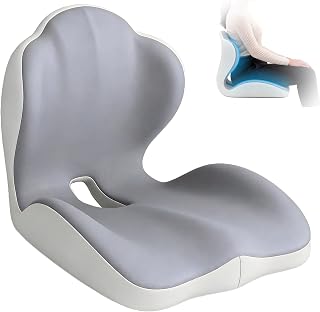
Start by adjusting the office chair so that your feet rest on the floor or on a stable support. The backrest can support the lower back without forcing you to arch excessively; shoulders remain relaxed and the screen should be positioned at a height that avoids tilting the head forward. If equipment is limited, a cushion or temporary support may help, provided it does not create uncomfortable pressure.
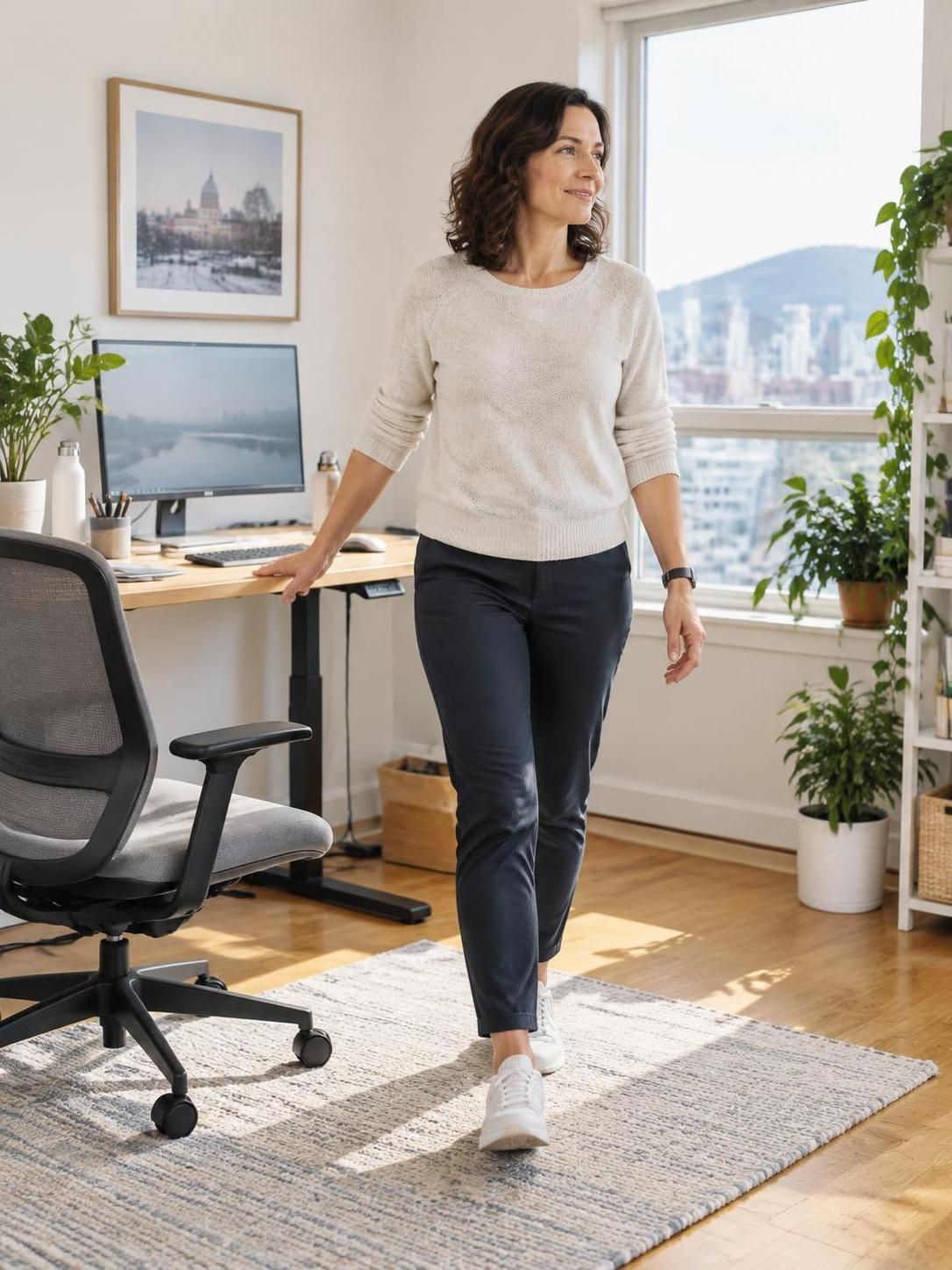
There is no need to seek a perfect, motionless position. Instead, try varying tasks and postures: work while seated, stand for a call, walk for a few minutes, or use a standing desk if this position is well tolerated. A discreet alarm can be a reminder to move, but the frequency should remain realistic and compatible with the workday.
Active breaks do not need to become a workout session. Standing up, walking around the room, changing sides to pick up an object, or doing a few comfortable movements can interrupt a long sitting period. If a movement noticeably increases pain or makes symptoms travel farther down the leg, stop it and return to a tolerable position.
| Workstation situation | Adjustment to try | Cautionary guidance |
|---|---|---|
| Feet do not reach the floor | Add a stable footrest or adjust the chair height. | Avoid prolonged pressure behind the thighs. |
| Screen is too low | Raise it to reduce prolonged bending of the neck and trunk. | A good setup does not replace position changes. |
| Pain occurs after a long meeting | Plan a short walk or a standing transition between meetings. | Adapt the duration to your current level of tolerance. |
| Standing increases symptoms | Alternate with supported sitting or gentle walking, depending on comfort. | Do not maintain a posture that clearly worsens pain. |
Stretching is not automatically beneficial at every stage. A gentle movement may feel pleasant for some people, but a stretch that worsens radiating pain, tingling, or numbness should be stopped. For general advice about working despite sciatica-like pain, this article on balancing work and sciatica provides complementary reading.
Pain prevention: adapting the day without imposing a rigid protocol
Pain prevention relies less on a single posture than on an environment and pace that allow movement. For someone working from home in Notre-Dame-de-Grâce, this may mean placing a water bottle within a reasonable distance, planning a short walk between two tasks, and avoiding scheduling all meetings without breaks. These adjustments are simple, but they should be adapted to pain and work obligations.
Walking is often an activity to consider if it is tolerated, but distance or speed should not be increased abruptly. The same applies to stretching and strengthening exercises: they can be part of a gradual plan when appropriate, without any particular movement being a universal solution. A health-care professional can help select activities that are compatible with symptoms.
Physiotherapy can help assess mobility, guide a gradual return to activities, and adapt exercises. Manual therapies may also be discussed when suitable for the person’s profile, but they do not replace an assessment of neurological signs. If medications are considered, they should be discussed with an authorized professional who takes into account medical history and individual risks.
Remote work does not necessarily require a complete work stoppage, but the ability to continue depends on symptom intensity, their progression, and the tasks to be completed. One person may be able to adjust their hours or meetings; another may need a medical assessment and leave determined by the professional providing their care. An article devoted to sciatica management options outlines the main categories of care without replacing personalized advice.
When should you seek care for sciatica while working remotely?
A clinical assessment is indicated if pain persists or returns, travels below the knee, disrupts sleep, or limits walking and usual activities. Numbness, loss of sensation, weakness, or a new difficulty using the leg also deserve particular attention. These signs alone cannot identify the cause, but they help the professional determine the next steps.
Seek urgent medical assessment if you experience loss of bladder or bowel control, numbness in the saddle area, significant or rapidly progressive weakness, fever, or feeling generally unwell. Pain that occurs after major trauma, in the context of cancer or infection, or that worsens rapidly also requires prompt assessment.
An assessment does not automatically mean that imaging or an intervention will be required. The professional takes into account the history of symptoms and the examination; additional tests are considered when they can guide management.
Motorized neurovertebral decompression is a form of controlled traction that may be considered for certain patients after assessment, particularly when the profile suggests disc or foraminal involvement. It aims to temporarily modify certain mechanical stresses, but it is not appropriate for all cases of sciatica, results vary, and no number of sessions applies to everyone. It does not put a disc back in place, does not guarantee avoiding surgery, and never replaces an urgent assessment.
Contraindications and situations requiring medical advice must be checked before considering this approach. At Clinique TAGMED, sciatica-related options may include, depending on the assessment, motorized decompression, specific osteopathy, or the precision percussor. The Mont-Royal location, at 1140 Beaumont Avenue, is near Outremont and Côte-des-Neiges; Notre-Dame-de-Grâce residents can view information on the approaches offered for sciatica in Montréal.
Frequently asked questions about sciatica and working from home
If pain that travels down the leg complicates your remote workdays in Notre-Dame-de-Grâce, an assessment can help clarify the likely cause, signs to watch for, and whether a conservative approach is appropriate. Options should be selected based on your situation and do not replace an urgent medical consultation when warning signs appear.
View assessment options in Montréal
Dr. Sylvain Desforges, B.Sc., D.O., N.D., osteopath
This content is educational and does not replace a personalized assessment.
