


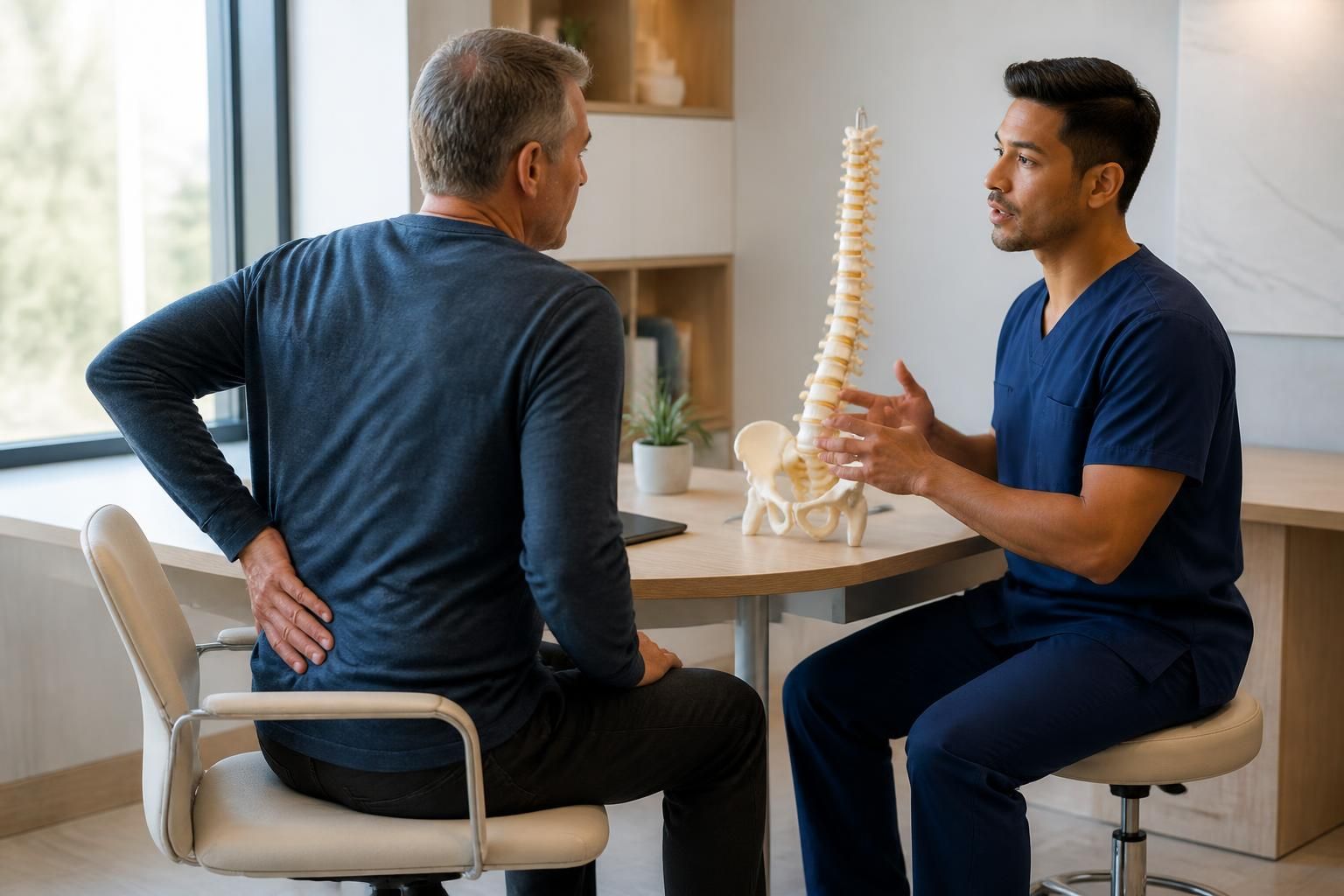
Sciatica is a complex type of pain that can greatly disrupt daily life, especially when you work in an office in Saint-Léonard. Sitting for long hours in front of a screen can worsen tension affecting the sciatic nerve, causing radiating pain from the lower back down to the leg. However, there are practical ways to adapt your work environment and improve your comfort, whether through proper posture, active breaks, or the use of ergonomic equipment.
Understanding the potential causes of this pain and the movements to avoid is essential for managing sciatica in the workplace. For office workers in Saint-Léonard, targeted adjustments to the workstation, combined with practical tips and specific exercises, can help reduce discomfort and support a better quality of working life.


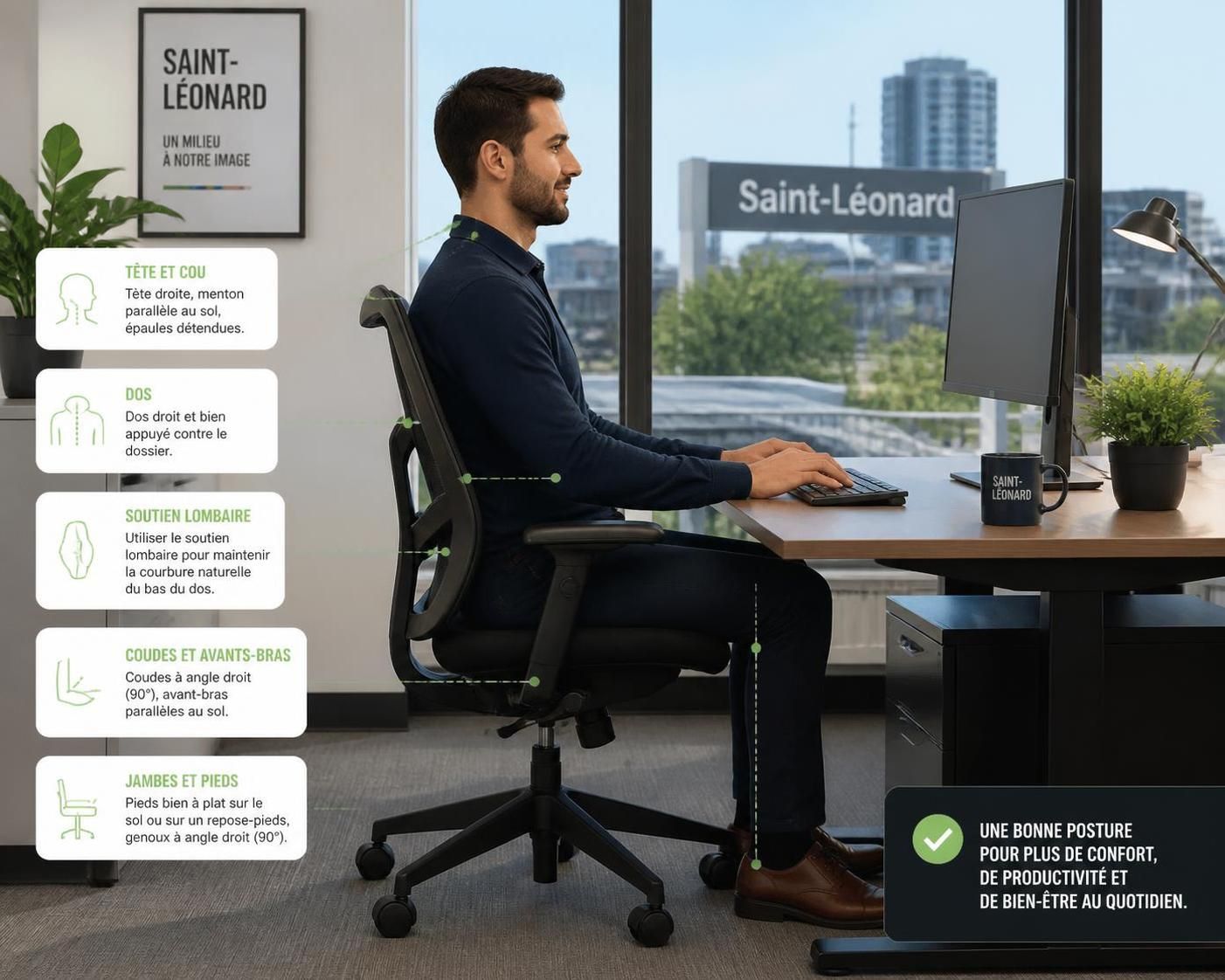
Essential tips to improve posture and reduce sciatic pain while working in an office in Saint-Léonard
Prolonged sitting is one of the main factors contributing to irritation of the sciatic nerve. In Saint-Léonard, as in the rest of Greater Montréal, many workers spend several hours a day in a static posture. This lack of movement directly affects the pressure placed on the lumbar region.
Several mechanisms explain why sciatic pain may worsen while sitting. Compression of the intervertebral discs increases significantly compared with standing, which can worsen a pre-existing disc herniation or protrusion. In addition, poor posture often causes the pelvis to tilt backward, flattening the natural curve of the lower back and placing tension on the sciatic nerve.
To avoid these complications, it is important to modify certain elements of your work environment:
- Proper chair adjustment: make sure your feet rest flat on the floor and that your knees are level with or slightly below your hips to maintain a favourable angle.
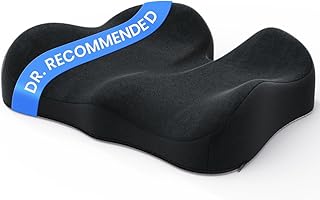
- Lumbar support: built-in lumbar support or an ergonomic cushion can help preserve the natural lumbar curve and prevent postural slouching.
- Screen position: the top of the screen should be at eye level, preventing you from bending your neck, which can affect the postural chain down to the lower back.
- Avoid crossing your legs: poor leg positioning can lead to additional compression of nerve and vascular structures.
- Follow the break rule: every 45 minutes, it is advisable to get up to walk or stretch, thereby limiting the harmful effects of prolonged sitting.
By following these recommendations, you can limit the spread of sciatic pain and improve your daily comfort. To explore this topic further, it is helpful to learn how to adapt your work environment for sciatica.
Relief and prevention of sciatic pain: exercises and stretches suited to office work
Sedentary work often contributes to the onset or worsening of sciatic pain. Introducing a simple exercise routine directly at your workstation may provide significant relief and help prevent painful flare-ups.
Here are exercises that can be done in a limited space, without specialized equipment, ideal for office employees in Saint-Léonard:
- Seated piriformis stretch: cross your right ankle over your left knee and gently lean your torso forward to feel the stretch in your buttock. Hold for 30 seconds and repeat on the other side. This movement relaxes the muscle that can compress the sciatic nerve.
- Seated lumbar rotation: place your hands on your knees and slowly rotate your torso to the right, then to the left, while keeping your pelvis still, to release muscle tension in the lower back.
- Pelvic tilt: while seated on the edge of your chair, alternately arch and flatten your lower back to reactivate the deep stabilizing muscles.
It is important to include the concept of active breaks in these exercises. About every 45 minutes, stopping seated work to walk for a few minutes or perform a series of stretches can help prevent increased pressure on the vertebrae and intervertebral discs.
Health-care professionals also recommend seeking appropriate follow-up, especially if symptoms persist or worsen.
Choosing and properly using an ergonomic cushion to relieve sciatica in the workplace in Saint-Léonard
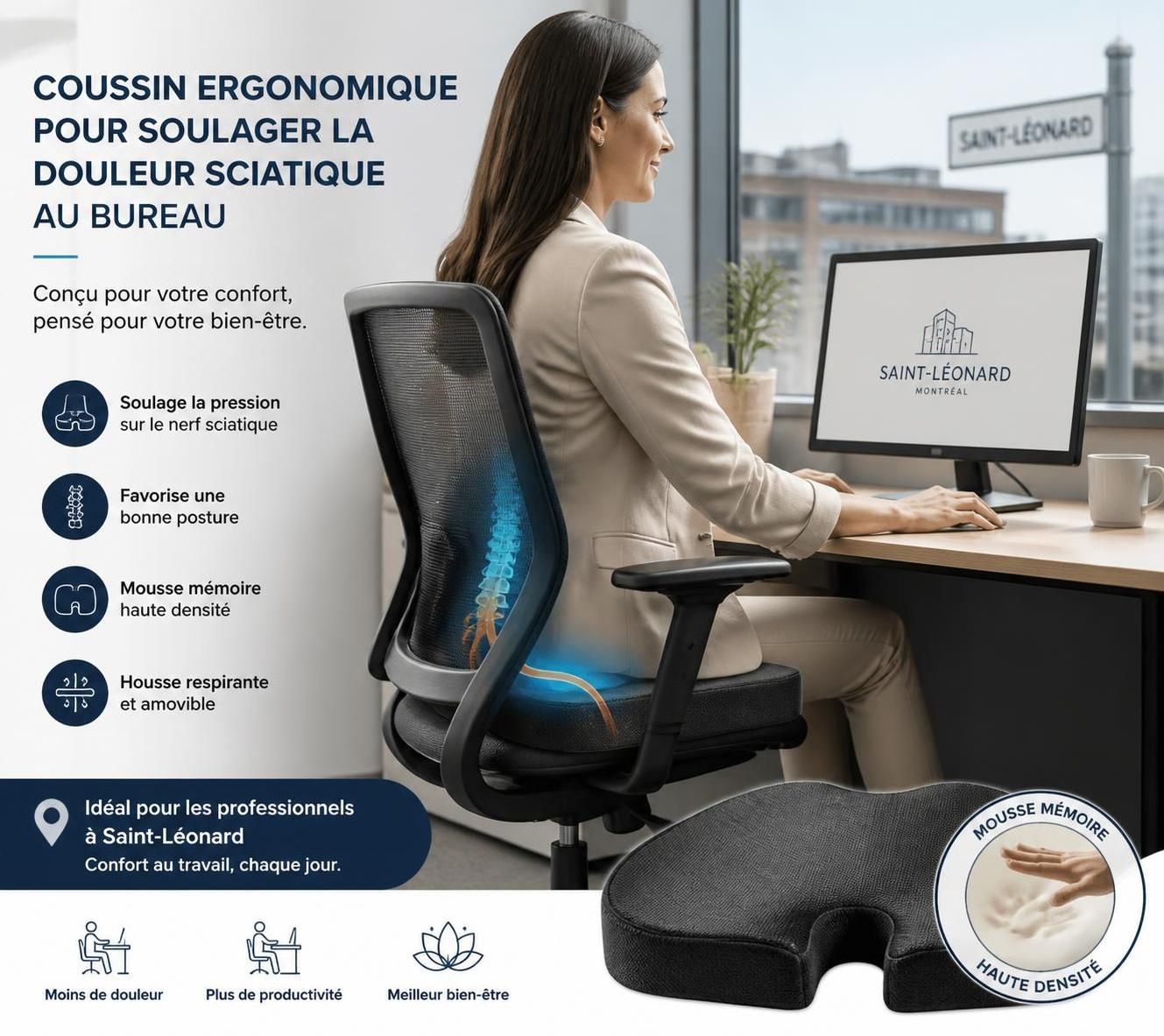
Adding an ergonomic cushion specifically designed for sciatica to the workstation is an increasingly recognized solution. These devices help redistribute pressure on the pelvis and tailbone, reducing irritation of the sciatic nerve.
The SciatiGuard model, for example, features a cut-out designed to relieve the area around the nerve. Using an ergonomic seat cushion helps maintain the natural curve, improves posture, and limits mechanical stress that worsens pain.
For optimal use:
- Place the cushion in the centre of the chair, with the cut-out aligned with the tailbone.
- Adjust your position to keep your back straight with appropriate lumbar support.
- Be sure to take regular breaks, as even with a cushion, prolonged sitting may contribute to pain.
To better understand the value of appropriate support and choose an effective cushion, consult this resource dedicated to cushions for sciatic pain.
Motorized spinal decompression: a complementary option for office work-related sciatica in Saint-Léonard
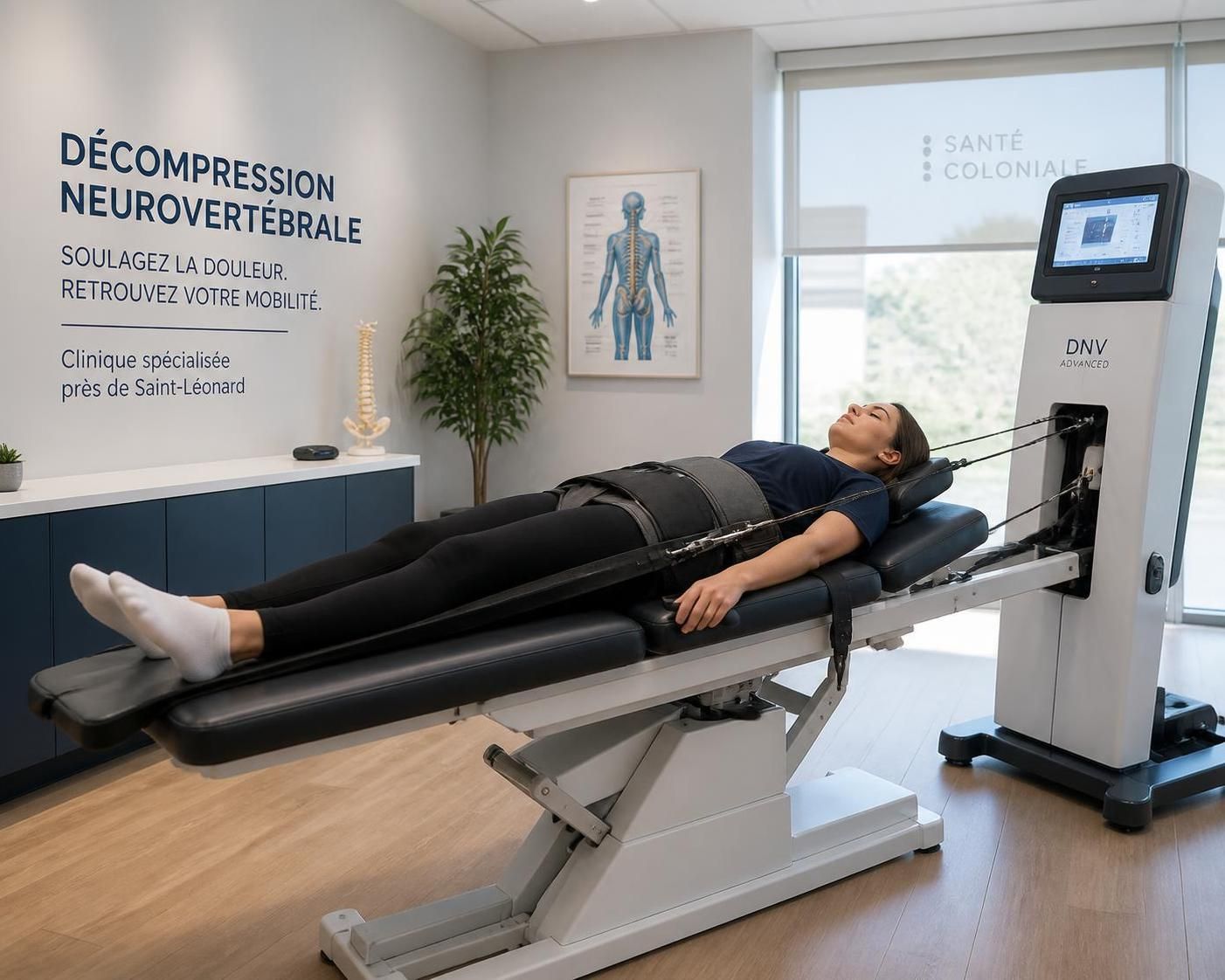
For some patients, sciatica symptoms may be associated with compression or irritation of nerve roots, sometimes related to a disc herniation, protrusion, or foraminal stenosis. Motorized spinal decompression is a non-surgical technique that uses controlled traction on the lumbar spine to reduce local pressure.
This gradual approach aims to temporarily modify certain mechanical stresses on the intervertebral discs and nerve roots, offering potential relief from radiating pain. However, it is important to note that it is not suitable for every profile and requires a thorough assessment by qualified professionals. In Saint-Léonard, patients can find specialized services offering this method, including at TAGMED Clinic located in Mont-Royal, near Outremont and Côte-des-Neiges.
It is important to understand that decompression does not replace an urgent medical consultation when warning signs are present, nor does it guarantee that surgery can be avoided. Results vary according to the degree of compression, the nature of the symptoms, and the planned treatment program. Compared with conventional exercises and physiotherapy, motorized traction may be an interesting complement in certain complex cases of office work-related sciatica.
Prevention and daily management of sciatica at the office: practical tips for workers in Saint-Léonard
Beyond ergonomic adjustments and specific treatments, certain daily habits can help reduce the likelihood of disabling sciatica. It is essential to adopt a comprehensive approach that includes self-care suited to your work context.
Here are some recommendations for office employees in Saint-Léonard:
- Regular hydration: it promotes the flexibility of the intervertebral discs, limiting the risk of worsening disc protrusions.
- Wear comfortable clothing: avoid overly tight belts or restrictive clothing that can increase pressure around the pelvis.
- Stress management: muscle relaxation also depends on good stress management, including through breathing exercises or short relaxation breaks.
- Avoid keeping a wallet in your back pocket: this creates skeletal asymmetry that may increase pressure on the sciatic nerve.
- Plan your active breaks: a timer or app can remind you to stand up and move regularly, interrupting prolonged stress on the spine.
Incorporating these tips into daily life can considerably improve your comfort while limiting recurrence of sciatic pain related to sedentary work. To learn more about preventing and managing sciatica on a daily basis, several local resources are available to workers like you in Saint-Léonard.
Key tips to relieve and prevent sciatica while working in an office
- Adjust your chair: a properly adjusted chair limits lumbar compression.
- Use an appropriate cushion: it redistributes pressure on sensitive areas.
- Change position frequently: alternate between sitting, standing, and light movement.
- Take 5-minute breaks every 45 minutes: this reduces excess pressure on the discs.
- Practise targeted stretches at the office: particularly for the piriformis muscle and lower back.
| Posture/Action | Effect on sciatica | Recommendation for office work |
|---|---|---|
| Chair adjusted too low | Promotes posterior pelvic tilt and increased disc compression | Adjust the height so your feet are flat and your knees are at 90° |
| Without lumbar support | Insufficient support leads to flattening of the lumbar curve | Use a cushion or ergonomic chair with lumbar support |
| Crossed legs | Increased nerve compression and pelvic asymmetry | Keep your legs parallel and feet on the floor |
| Prolonged inactivity | Muscle stiffness and excess disc pressure | Incorporate regular active breaks |
| Incorrect screen height | Neck tension and overall postural imbalance | Position the top of the screen at eye level |
When to seek care for office work-related sciatic pain in Saint-Léonard
Sciatic pain can sometimes indicate a situation requiring a thorough clinical assessment. It is essential to consult a health-care professional when:
- Pain persists or recurs frequently despite workstation adjustments.
- Pain radiates below the knee and is accompanied by numbness or tingling.
- A sensation of muscle weakness or loss of function in the affected leg develops.
- Sleep is disrupted by pain to the point that quality of life is affected.
Seek immediate medical attention if you experience:
- Loss of bladder or bowel control (incontinence).
- Saddle anaesthesia (the area around the genitals).
- Significant and rapidly progressing muscle weakness.
- Fever associated with pain or a decline in general health.
These signs require prompt medical consultation and should not be ignored. For additional information, you can consult resources dedicated to signs that indicate when to seek care for sciatica.
How can you improve your office posture to relieve sciatica?
Adjust your chair height so your feet rest flat, use lumbar support to maintain the curve of your lower back, and position the screen at eye level to avoid bending your neck.
Which exercises can relieve sciatica while working seated?
Targeted stretches such as the piriformis stretch, seated lumbar rotation, and pelvic tilts can help reduce tension on the sciatic nerve.
Is an ergonomic cushion effective for sciatica?
Yes, it may reduce pressure on the sciatic nerve by improving posture and redistributing pressure, but it should be combined with active breaks and exercises.
When should you consult a professional for sciatic pain?
Consult a professional if pain persists, worsens, or is accompanied by neurological symptoms such as numbness, weakness, or urinary problems.
Is spinal decompression suitable for everyone?
No, this technique requires a thorough clinical assessment and is not suitable in every case. Results vary, and it is not a substitute for an urgent medical consultation.
Are you experiencing sciatic pain that makes your workdays in Saint-Léonard more difficult? A professional assessment can help clarify the likely cause of your pain, identify signs requiring particular attention, and determine whether conservative care is appropriate. For tailored, personalized support, do not hesitate to contact TAGMED Clinic in Mont-Royal, close to your workplace.
Book an appointment for an assessment
Dr. Sylvain Desforges, B.Sc., D.O., N.D., osteopath
This content is provided for educational purposes and does not replace a personalized consultation with a health-care professional.
