


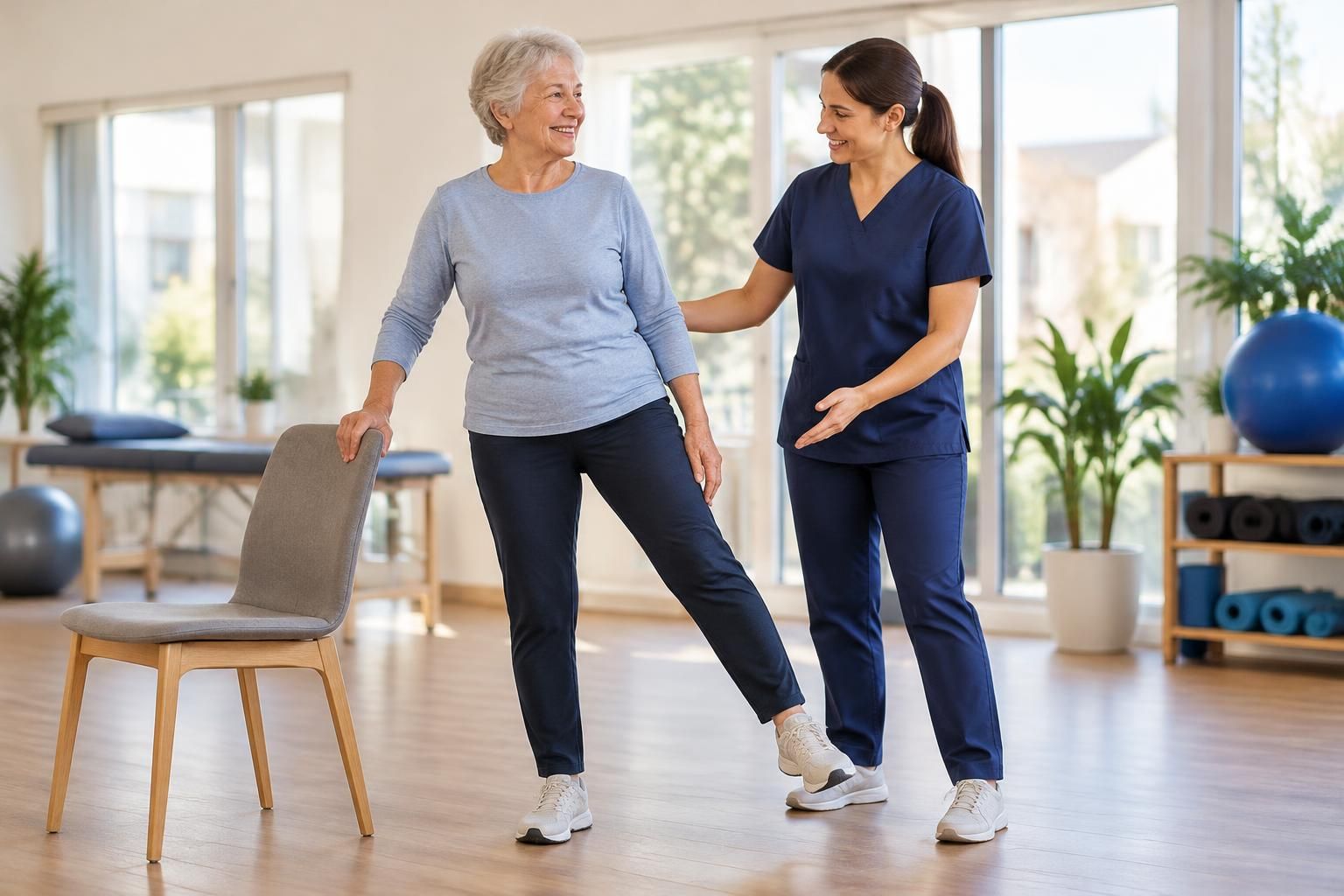
Preventing sciatica in seniors in Hochelaga-Maisonneuve relies less on a single action than on habits tailored to each person’s mobility, balance, and health status. Staying active without overexertion, adapting daily activities, and seeking advice when pain travels down a leg can help preserve independence and back health.
However, pain in the buttock or leg is not automatically sciatica, and several causes can appear similar. Local resources in Hochelaga-Maisonneuve, loved ones, and health professionals can help identify changes and facilitate access to an assessment when symptoms persist.


In brief: preventing low back pain without giving up movement
- Consistency matters more than intensity: short periods of adapted physical activity are often easier to incorporate than substantial, occasional effort.
- Pain radiating into the leg deserves attention: it may suggest nerve irritation, but its path alone is not enough to determine the cause.
- Exercises and stretches are not universal: they must be adapted to the person’s abilities and symptoms.
- Prevention includes social connection: a walk with someone or a neighbourhood activity can support mobility and help counter isolation.
Good prevention does not mean avoiding all movement. Rather, it aims to maintain tolerable activities, reduce obstacles, and recognize signs that require an assessment.
Understanding sciatica and risk factors in seniors
The term “sciatica” generally refers to pain associated with irritation of a nerve root in the lower back. It may spread into the buttock and part of the leg, sometimes as far as the foot, and may be accompanied by tingling, numbness, or, in some cases, weakness.
Low back pain that remains in the back is not the same as radicular pain that travels down the leg. Hip problems, sensitive muscles, or other conditions can also cause similar symptoms. Age alone therefore cannot establish whether sciatica is present or identify its origin.
Over time, some people develop changes in the discs and joints of the spine. These changes are common and do not always cause pain; the history of symptoms and clinical examination are essential to understanding their relevance.
Prolonged inactivity, resuming physical tasks too abruptly, or fear of moving after a painful episode can also gradually reduce exercise tolerance. In Hochelaga-Maisonneuve, trips by public transit, stairs in one’s home, or running errands can become opportunities for movement, provided the pace is adapted and breaks are planned.
To distinguish low back pain from symptoms that travel down the leg, the resource on the differences between low back pain and sciatica provides an educational starting point. It does not replace an individualized assessment.
Physical activity, posture, and mobility: adaptable habits
Walking, getting up regularly, and continuing daily activities at a comfortable pace can help maintain mobility. A person who spends part of the day sitting can try varying positions and taking a few steps at regular intervals, according to their balance and abilities.
Posture does not need to be rigid or “perfect.” The goal is instead to change positions, avoid staying for long periods in a posture that triggers symptoms, and spread out demanding tasks. During an activity such as gardening or tidying up, alternating movements and asking for help with heavy loads may be more realistic than trying to accomplish everything at once.
Adapted exercises may include mobility movements or strengthening, but the choice depends on the individual. An exercise that suits a neighbour may worsen another person’s symptoms; if pain travels further down the leg, numbness progresses, or weakness appears, the exercise should be stopped and advice sought.
Stretching is not mandatory and should not be forced. A mild feeling of tension may be acceptable for some people, but sharp pain, lasting worsening, or loss of function indicates that the activity should be reassessed rather than “pushed through.”
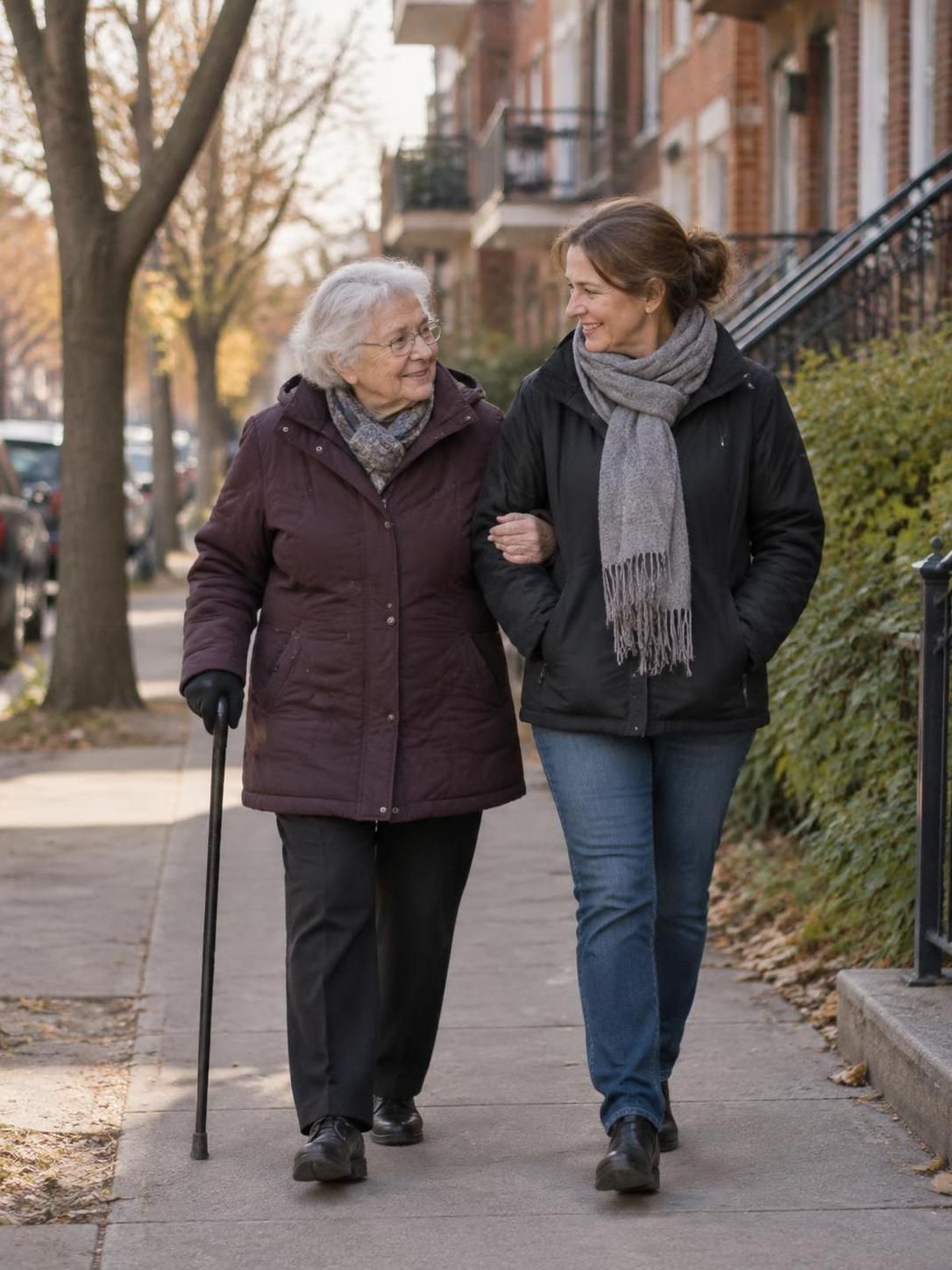
Walks supervised by kinesiologists have been presented in Montréal’s East End as a way to combine physical activity, fall prevention, and social interaction. Details and availability may change; interested individuals can consult the article on these accompanied walks for seniors in the East End and check the arrangements with the organizations concerned.
A walk can be divided into shorter segments, with a familiar route and somewhere to sit if needed. The best routine is one that remains manageable and respects the body’s responses from one day to the next.
Neighbourhood resources and fall prevention in Hochelaga-Maisonneuve
Back health is not limited to muscles and joints. Confidence, access to activities, and social support also influence the ability to remain active. For a person who lives alone or hesitates to go out after a fall, having someone accompany them can make walking more reassuring and regular.
A local brochure brings together about twenty resources for seniors and their loved ones: psychosocial assistance, food support, sociocultural activities, and listening lines, among others. Developed through collaboration among community partners and the East Montréal health network, it aims to make these services easier to find. The directory of resources for seniors in Hochelaga-Maisonneuve may be useful to an individual, loved one, or service provider looking for a point of contact.
RésOlidaire is a neighbourhood centre for services and activities that emphasizes support for seniors’ independence and community participation. Services and activities evolve; it is best to check the information available directly with RésOlidaire in Hochelaga-Maisonneuve.
Fall prevention and sciatica prevention overlap but are not identical. Better balance and an uncluttered environment can make getting around easier, but do not guarantee that nerve pain will not occur. Québec’s fall-prevention framework highlights the value of coordinated actions tailored to people’s needs; it can be consulted in the ministry document on fall prevention in seniors.
At home: keep pathways clear and make sure frequently used items are accessible without significant twisting or reaching.
Outdoors: choose a familiar route, stable footwear, and, when necessary, the presence of a loved one.
In the neighbourhood: ask about nearby activities and services rather than giving up going out alone when mobility becomes more difficult.
The seniors committee of the neighbourhood round table fosters exchanges among organizations and local stakeholders. To identify collective initiatives and resources in the area, consult the information from the Hochelaga-Maisonneuve seniors committee.
Practical guidelines: when to adapt activities and when to seek care
The duration and progression of symptoms matter as much as their intensity. Mild discomfort after a new activity may call for a temporary adjustment; pain that persists, returns frequently, or limits walking and sleep warrants a clinical assessment.
| Observed situation | Cautious guideline |
|---|---|
| Stiffness or mild pain after an activity | Reduce intensity, vary tasks, and monitor changes without prolonged immobilization. |
| Pain that travels below the knee or returns | Make an appointment to have symptoms and function assessed. |
| Numbness, loss of sensation, or limited walking | Seek an assessment, especially if symptoms progress or affect independence. |
| Significant or rapidly progressive weakness, loss of bladder or bowel control, saddle anesthesia | Obtain urgent medical assessment. |
See a health professional if pain persists or recurs, travels below the knee, disrupts sleep, limits walking, or is accompanied by numbness, loss of sensation, weakness, or loss of function.
Urgent medical assessment is necessary if there is loss of bladder or bowel control, saddle anesthesia, significant or rapidly progressive weakness, fever, or a decline in general health. Significant trauma, pain in the context of cancer or infection, or rapid worsening also requires prompt attention; these signs cannot be reliably assessed remotely.
To better understand the signs that warrant seeking care, the page on when to seek care for sciatica can supplement these guidelines. In the event of an emergency sign, an educational resource does not replace urgent medical services.
Management options and the role of neurovertebral decompression
When symptoms occur, management depends on their likely cause, progression, and the person’s general health. Depending on the situation, a professional may suggest maintaining or gradually resuming activities, movement advice, and adapted exercises; medications require the advice of an authorized professional.
Physiotherapy or manual care may be considered depending on needs and accessible services. In some cases, an injection or specialist opinion may be discussed. Surgery may be considered when the clinical situation warrants it, particularly in the presence of significant compression or a neurological deficit; it is neither automatic nor something to rule out without an appropriate assessment.
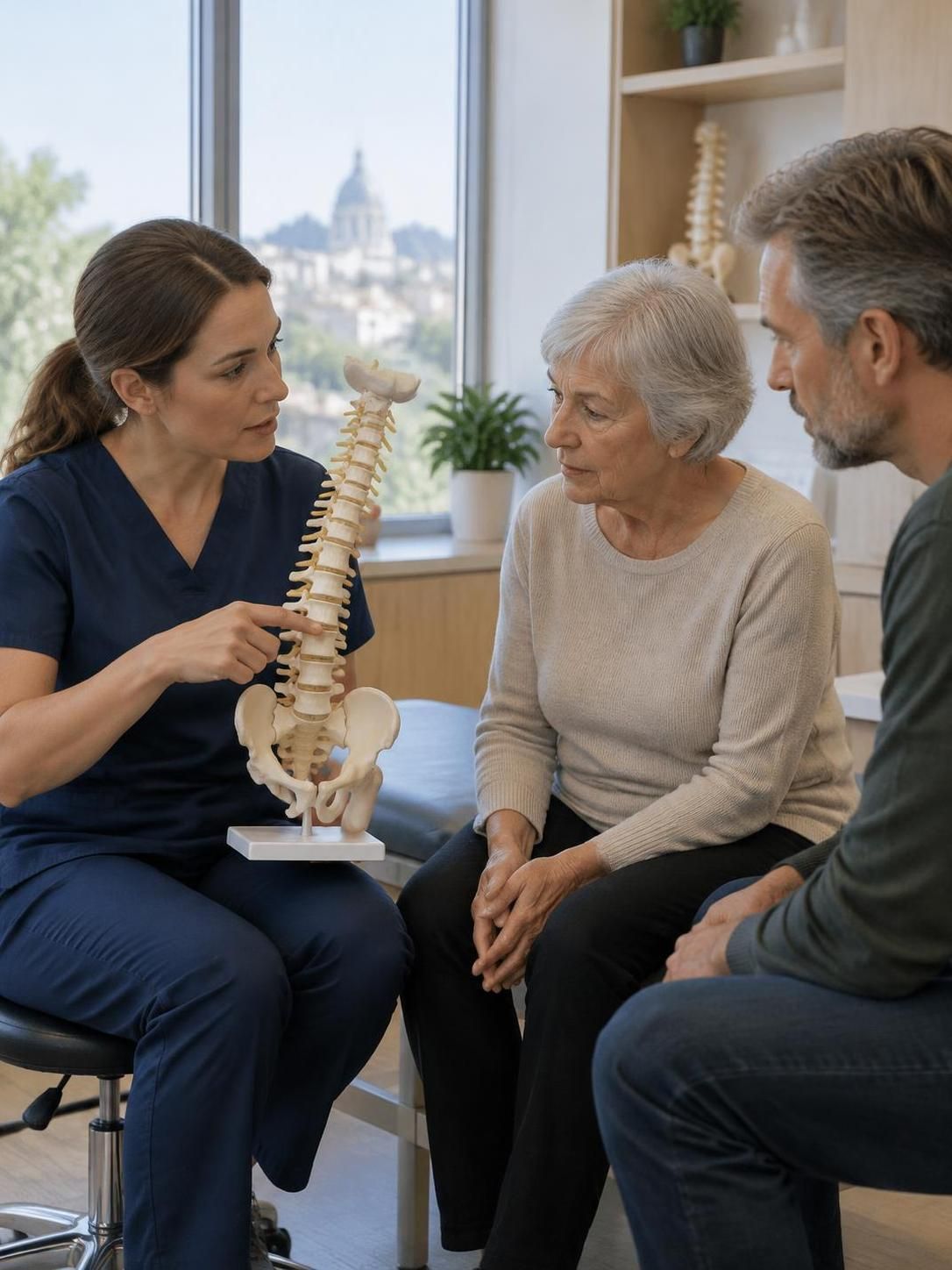
Neurovertebral decompression is a form of controlled motorized traction. For some selected patients, following an assessment, it may be considered to temporarily modify the mechanical stresses applied to the lumbar region and nerve structures. It may be discussed for certain symptom profiles related to a disc or a foraminal opening, but it is not appropriate for all cases of sciatica and results vary.
It does not put a disc back in place, does not replace an urgent assessment, and does not guarantee avoidance of surgery. The number of sessions cannot be set universally; contraindications and situations requiring medical referral must be considered. In Mont-Royal, near Outremont and Côte-des-Neiges, Clinique TAGMED presents its approaches related to sciatica, including motorized decompression, specific osteopathy, or precision percussion therapy, depending on the assessment. The sciatica management options in Montréal should be discussed based on the individual profile.
For people who wish to compare nonsurgical options and their limitations, this resource describes possible approaches before surgery. However, general information cannot determine which option is appropriate for a given person.
Frequently asked questions about preventing sciatica in seniors
{“@context”:”https://schema.org”,”@type”:”FAQPage”,”mainEntity”:[{“@type”:”Question”,”name”:”La marche peut-elle pru00e9venir la sciatique chez les au00eenu00e9s ?”,”acceptedAnswer”:{“@type”:”Answer”,”text”:”La marche ru00e9guliu00e8re peut soutenir la mobilitu00e9 et la condition physique, mais elle ne pru00e9vient pas toutes les causes de sciatique. La duru00e9e et le rythme doivent u00eatre adaptu00e9s; une douleur qui su2019aggrave ou descend davantage dans la jambe justifie une pause et un avis professionnel.”}},{“@type”:”Question”,”name”:”Faut-il faire des u00e9tirements pour u00e9viter une douleur sciatique ?”,”acceptedAnswer”:{“@type”:”Answer”,”text”:”Pas nu00e9cessairement. Les u00e9tirements ne conviennent pas u00e0 tout le monde et ne devraient pas provoquer une douleur vive ou une aggravation persistante. Des exercices adaptu00e9s peuvent u00eatre choisis avec un professionnel selon les capacitu00e9s et les symptu00f4mes.”}},{“@type”:”Question”,”name”:”Quand une douleur dans la jambe devrait-elle u00eatre u00e9valuu00e9e ?”,”acceptedAnswer”:{“@type”:”Answer”,”text”:”Une douleur persistante ou ru00e9currente, une douleur sous le genou, un sommeil perturbu00e9, une limitation de la marche ou des engourdissements mu00e9ritent une u00e9valuation clinique. Une faiblesse rapidement progressive ou une perte de contru00f4le urinaire ou intestinal demande une attention urgente.”}},{“@type”:”Question”,”name”:”Les ressources communautaires peuvent-elles aider u00e0 rester actif ?”,”acceptedAnswer”:{“@type”:”Answer”,”text”:”Elles peuvent faciliter lu2019accu00e8s u00e0 des activitu00e9s, u00e0 du soutien social ou u00e0 de lu2019information locale. Les offres changent; il est donc utile de vu00e9rifier directement les services et leur disponibilitu00e9 aupru00e8s des organismes du quartier.”}}]}Can walking prevent sciatica in seniors?
Regular walking can support mobility and physical fitness, but it does not prevent all causes of sciatica. Duration and pace must be adapted; pain that worsens or travels further down the leg warrants a pause and professional advice.
Should stretches be done to avoid sciatic pain?
Not necessarily. Stretching is not suitable for everyone and should not cause sharp pain or persistent worsening. Adapted exercises can be selected with a professional according to abilities and symptoms.
When should leg pain be assessed?
Persistent or recurrent pain, pain below the knee, disrupted sleep, limited walking, or numbness warrant a clinical assessment. Rapidly progressive weakness or loss of bladder or bowel control requires urgent attention.
Can community resources help people remain active?
They can facilitate access to activities, social support, or local information. Offerings change, so it is useful to check directly with neighbourhood organizations about services and availability.
If lower back or leg pain limits walking, sleep, or daily activities, an assessment can help clarify the likely cause, signs to monitor, and the relevance of a conservative approach. Options can be discussed with Clinique TAGMED in Mont-Royal based on your situation, without presuming a diagnosis or appropriate treatment.
Sylvain Desforges, B.Sc., D.O., N.D., Doctor of Osteopathy
This content is educational and does not replace a personalized assessment or medical advice.
