


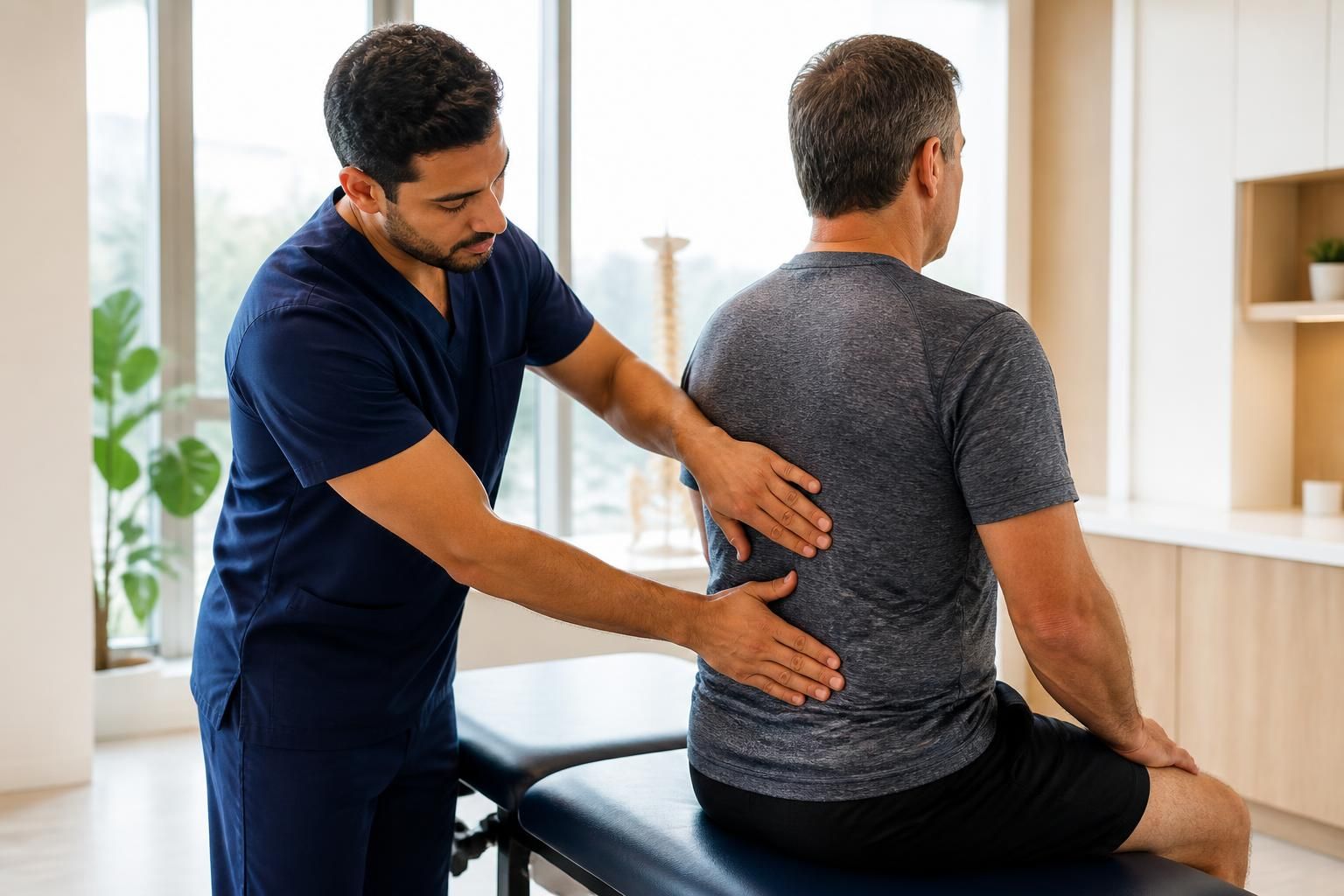




Clinical examination in Rivière-des-Prairies plays a fundamental role in the accurate assessment of localized sciatic pain. In a context where symptoms can vary considerably from one patient to another, this step helps better understand the nature and severity of low back pain that often radiates into the leg.
Beyond providing a reliable medical diagnosis, neurological assessment facilitates greater personalization of sciatica treatment options according to individual needs. This local approach is all the more crucial in the Montréal area, where prompt access to an expert examination directly influences the quality of medical follow-up.
In brief: Key points on clinical examination for sciatica in Rivière-des-Prairies
What clinical examination reveals about localized sciatic pain in Rivière-des-Prairies
Sciatic pain typically presents as a sharp or burning sensation that begins in the lower back and travels down to the buttock, thigh, or even the foot. However, each case in Rivière-des-Prairies may show variations in the path and intensity of symptoms. Therefore, the clinical examination is the first step in mapping the precise pain profile.
During the assessment, the examiner asks the patient about when the pain began, how long it has lasted, factors that worsen or relieve it, and any numbness or weakness in the leg. This crucial information already helps structure the diagnostic hypothesis. For example, pain associated with numbness in the S1 nerve root distribution suggests typical sciatic nerve irritation.
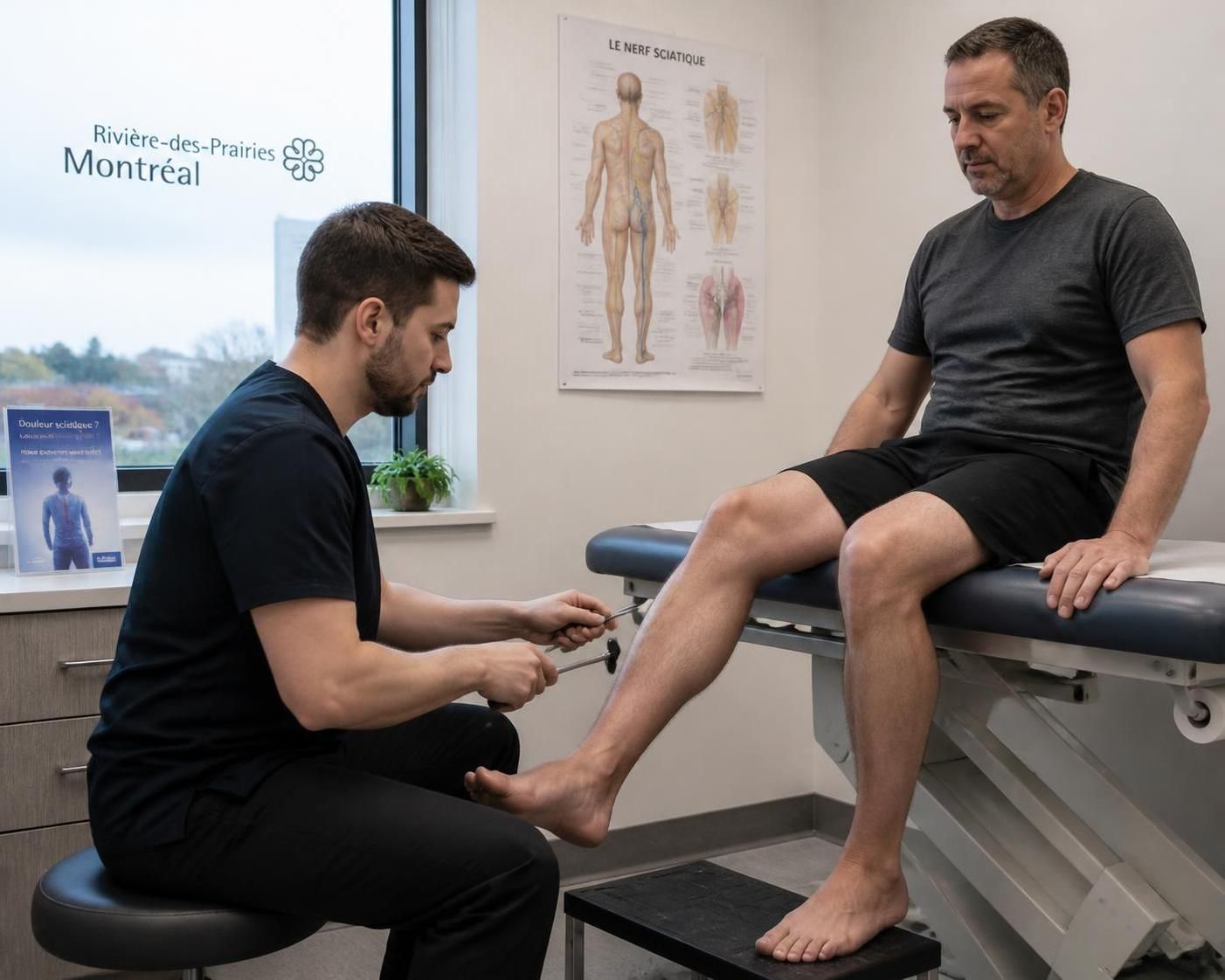
Next, the physical examination assesses lower-limb muscle strength, reflexes (such as the Achilles reflex), and skin sensation. Including certain specific tests, particularly those that place tension on the sciatic nerve—such as the Lasègue test—can help rule out or suggest nerve compression or a herniated disc. The assessment is more reliable when combined with additional tests such as MRI, only if deemed relevant in the clinical context.
One common challenge for practitioners in Rivière-des-Prairies is differentiating sciatica from other non-radicular radiating low back pain, which can also cause discomfort or stiffness. For this reason, differential diagnosis is crucial to avoid both underdiagnosing nerve involvement and inappropriate management.
In this setting, consistency among reported symptoms, signs detected during examination, and any imaging findings is key to guiding a safe and appropriate therapeutic approach. This clinical consistency also helps identify patients most likely to benefit from motorized neurovertebral decompression, as offered at TAGMED Clinic in Mont-Royal, not far from Rivière-des-Prairies.
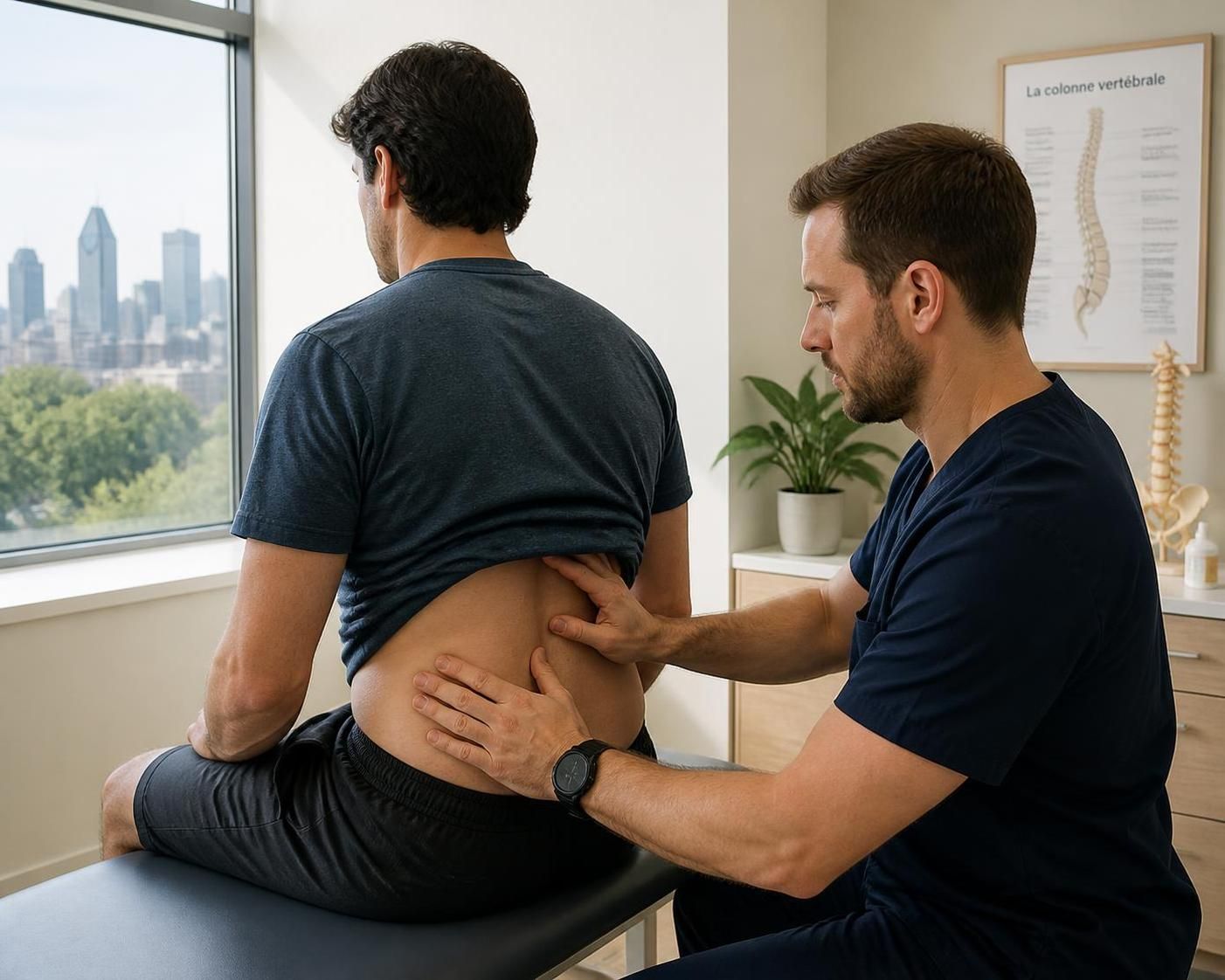
How do local factors influence the presentation and assessment of sciatica in Rivière-des-Prairies?
Living conditions and habits in the Rivière-des-Prairies area can affect how sciatic pain presents and progresses. For example, frequent use of a car or public transit to get to work can worsen pain during prolonged sitting. Similarly, remote work or sedentary jobs, common in some areas of Montréal, often create prolonged pressure on the lower back.
Variations in physical activity also play a role. Walking, climbing stairs, or lumbar flexion and extension movements may either reduce or worsen symptoms depending on the affected nerve or disc structures. This duality explains why clinical examination in Rivière-des-Prairies must take into account these elements specific to the patient’s lived experience.
Some patients also experience changes in sleep related to discomfort caused by sciatic pain. This disruption not only affects overall well-being, but can also complicate recovery. Therefore, during the consultation, the health-care professional evaluates these factors to better tailor recommendations and direct the patient toward appropriate treatments, sometimes including physiotherapy or neurovertebral decompression sessions.
Finally, it is important to note that sciatica symptoms, such as numbness and paresthesia, do not always respond in the same way to a given activity from one patient to another. Regular clinical follow-up in Rivière-des-Prairies is therefore recommended to monitor changes, adjust interventions, and avoid complications.
Why and when should you seek a clinical assessment for sciatic pain in Rivière-des-Prairies?
It is advisable to seek care as soon as pain radiating into the leg appears, especially if it is accompanied by signs such as weakness, numbness, or tingling. The Montréal context, particularly in Rivière-des-Prairies, facilitates access to specialized clinics where a precise diagnosis can be made promptly.
However, certain symptoms should prompt urgent care rather than a routine follow-up appointment: significant progressive weakness, loss of bladder or bowel control, saddle anaesthesia, low back pain following major trauma, fever accompanying symptoms, or a decline in general health. These signs are medical emergencies that require immediate clinical examination and possibly additional investigations.
Health-care staff in Rivière-des-Prairies, particularly at recognized facilities such as Rivière-des-Prairies Medical Clinic, are trained to identify these warning signs. Prompt assessment can prevent serious complications.
In the meantime, it is also recommended to monitor functional changes: ability to walk, sleep quality, and sensations in the leg. Worsening of these elements should prompt timely consultation.
Tailored management options following clinical examination for localized sciatica in Rivière-des-Prairies
After a thorough clinical examination, several options are available to affected patients. Management generally begins with conservative care, including maintaining or gradually resuming daily activities when safe to do so. Ergonomic adjustments, particularly for remote work or office settings, may be essential in Montréal and the surrounding area.
In Rivière-des-Prairies, health-care professionals can provide personalized advice, appropriate exercises, and manual care to improve lumbar function and pain tolerance. In some cases, when the cause is consistent with a herniated disc, protrusion, or foraminal stenosis, motorized neurovertebral decompression may be an option of interest. This technique involves gradual, controlled traction intended to reduce pressure on nerve roots by temporarily modifying mechanical stress on the discs.
This modality is available in particular at TAGMED Clinic in Mont-Royal, near Rivière-des-Prairies. This type of treatment requires a thorough assessment to confirm suitability, potential contraindications, and realistic expectations regarding results, which vary according to each patient’s profile.
For some people, medication management under medical supervision may also be necessary to relieve pain and inflammation. In addition, in more complex situations, referral for specialized medical or surgical care may be considered, particularly in the presence of a significant neurological deficit or symptoms that worsen despite conservative care.
It is important to understand that no treatment is universally effective and that success depends on a complete, individualized clinical assessment. This local approach in Rivière-des-Prairies strengthens the quality of support provided by professionals suited to Montréal’s realities and needs.
The detailed clinical examination, as performed in Rivière-des-Prairies, is essential for differentiating the various causes of low back pain associated with sciatica and directing the patient toward the most appropriate management.
List: Key steps in a comprehensive clinical examination for localized sciatic pain
- Precise symptom history: location, intensity, duration, progression, and modifying factors.
- Comprehensive neurological assessment: testing of muscle strength, touch sensation, tendon reflexes, and neurodynamic tests.
- Observation of gait and any functional limitations.
- Bilateral comparison of symptoms and clinical signs.
- Assessment of red flags and identification of urgent situations requiring expedited care.
- Clinical decision based on the correlation among symptoms, examination findings, and the individual context.
| Component | Objective | Example in Rivière-des-Prairies |
|---|---|---|
| Symptoms | Define the nature and location of sciatic pain | Pain radiating from the lower back into the leg, sometimes with numbness |
| Muscle strength | Detect possible weakness related to nerve involvement | Weakness of the foot dorsiflexors suggesting an L5 nerve root |
| Reflexes | Assess reflex nerve response | Reduced Achilles reflex in cases of S1 involvement |
| Neurodynamic tests | Place the sciatic nerve under tension | Positive Lasègue test indicating nerve irritation |


Appropriate treatment and careful follow-up depend directly on a sound clinical assessment, which is essential to avoid unnecessary or premature imaging or surgery.
{“@context”:”https://schema.org”,”@type”:”FAQPage”,”mainEntity”:[{“@type”:”Question”,”name”:”Un examen clinique seul suffit-il pour diagnostiquer une sciatique ?”,”acceptedAnswer”:{“@type”:”Answer”,”text”:”Le diagnostic repose sur une combinaison de symptu00f4mes, tests cliniques et parfois du2019imagerie. Un examen clinique complet permet cependant de poser une hypothu00e8se solide en premier lieu.”}},{“@type”:”Question”,”name”:”Quels signes doivent inciter u00e0 consulter en urgence ?”,”acceptedAnswer”:{“@type”:”Answer”,”text”:”Faiblesse musculaire rapidement progressive, troubles urinaires ou intestinaux nouveaux, anesthu00e9sie de la ru00e9gion pu00e9rinu00e9ale sont des signaux nu00e9cessitant une u00e9valuation mu00e9dicale urgente.”}},{“@type”:”Question”,”name”:”Quand recommander une du00e9compression neurovertu00e9brale ?”,”acceptedAnswer”:{“@type”:”Answer”,”text”:”Cette approche est envisagu00e9e apru00e8s une u00e9valuation rigoureuse, notamment chez les patients avec une hernie discale ou une stu00e9nose compatible, toujours avec des attentes ru00e9alistes.”}},{“@type”:”Question”,”name”:”Lu2019imagerie est-elle toujours nu00e9cessaire lors du2019une sciatique ?”,”acceptedAnswer”:{“@type”:”Answer”,”text”:”Pas systu00e9matiquement. Lu2019imagerie est recommandu00e9e lorsque le diagnostic nu2019est pas clair ou si des signes neurologiques su00e9vu00e8res apparaissent.”}},{“@type”:”Question”,”name”:”Que faire si les symptu00f4mes u00e9voluent malgru00e9 un traitement ?”,”acceptedAnswer”:{“@type”:”Answer”,”text”:”Une ru00e9u00e9valuation mu00e9dicale est conseillu00e9e pour ajuster la prise en charge ou envisager des investigations complu00e9mentaires.”}}]}Is a clinical examination alone sufficient to diagnose sciatica?
Diagnosis is based on a combination of symptoms, clinical tests, and sometimes imaging. However, a comprehensive clinical examination can first establish a strong diagnostic hypothesis.
What signs should prompt an urgent consultation?
Rapidly progressive muscle weakness, new bladder or bowel problems, and anaesthesia of the perineal area are signs requiring urgent medical assessment.
When is neurovertebral decompression recommended?
This approach is considered after a thorough assessment, particularly for patients with a compatible herniated disc or stenosis, always with realistic expectations.
Is imaging always necessary for sciatica?
Not routinely. Imaging is recommended when the diagnosis is unclear or if severe neurological signs appear.
What should be done if symptoms progress despite treatment?
Medical reassessment is recommended to adjust management or consider additional investigations.
If you are experiencing localized sciatic pain, a visit for a thorough clinical assessment in Mont-Royal or the Rivière-des-Prairies area may help you better understand the likely cause, the signs to watch for, and the relevance of tailored management.
Book an appointment for a personalized assessment
Dr. Sylvain Desforges, B.Sc., D.O., N.D., osteopath
This content is educational and does not replace an individualized clinical assessment.
