

Transverse myelitis is an inflammatory spinal cord syndrome that disrupts motor, sensory or autonomic function below the affected area. It may be associated with autoimmune disease or infection, or remain unexplained despite specialist investigation; the underlying cause determines treatment and follow-up.
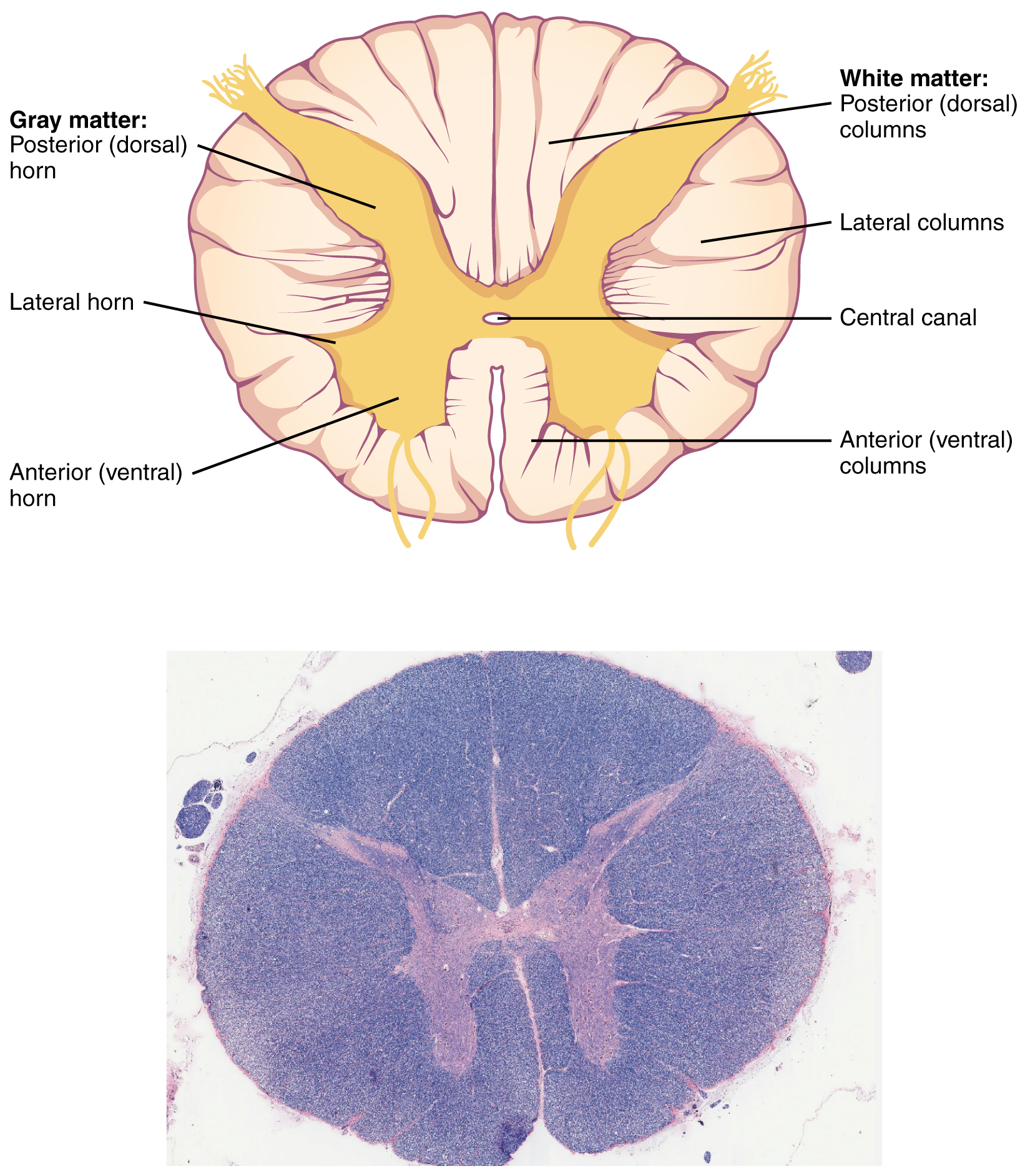
OpenStax — CC BY 4.0. Image source.

One syndrome, several causes
Inflammation damages nervous tissue and sometimes its myelin covering. Transverse describes a clinical syndrome; it does not mean the cord has been physically severed. Multiple sclerosis, AQP4-antibody or MOG-antibody disease, infection and other disorders are among the possible underlying causes.
Manifestations and emergency signs
Leg weakness, a level of numbness across the trunk, band-like pain or urinary dysfunction may emerge over hours or days. New weakness, urinary retention, loss of bladder or bowel control, or breathing difficulty requires immediate emergency assessment, without waiting for every symptom to develop.
Investigations and differential diagnosis
MRI looks for a cord lesion and excludes compression requiring a different treatment. Assessment may include brain MRI, lumbar puncture and targeted infectious or immune blood tests. Spinal cord infarction, an abscess or a tumour can produce a similar presentation and must be considered.
Treatment and outlook
Hospital treatment depends on the cause and may involve intravenous corticosteroids, plasma exchange or treatment of an infection. Some underlying diseases require medication to prevent further attacks. Rehabilitation addresses mobility, pain and bladder function. Recovery varies and may continue over many months rather than following a fixed timetable.
Role of TAGMED care
Neurology directs diagnosis and treatment of the inflammation. TAGMED cannot replace immune treatment or specialist rehabilitation. Once the condition is stable, support for associated musculoskeletal problems may be discussed according to sensation, strength, fatigue and the medical team’s specific restrictions.
Frequently asked questions
Does this always mean multiple sclerosis?
No. Causes vary, and some episodes remain unexplained.
Why obtain MRI promptly?
A treatable emergency compression must be excluded among other possibilities.
Must both legs be equally affected?
No. Neurological involvement can be asymmetric.
Is another episode inevitable?
No. Relapse risk depends on the underlying disease.
Does traction reduce the inflammation?
No. Traction is not a treatment for transverse myelitis.
Conceptual diagram: myelitis is a syndrome whose cause guides management.
Medical references
- NIH — NINDS. Transverse Myelitis.
- Mayo Clinic. Transverse myelitis: diagnosis and treatment.
- American Academy of Neurology. Evidence-based guideline: clinical evaluation and treatment of transverse myelitis.
References document the topic; their inclusion does not imply endorsement of TAGMED services by those organizations.
Educational information from The Spine Page. This entry does not replace an individual assessment. Documentary version: October 12, 2026. Sylvain Desforges, B.Sc., D.O., N.D., osteopath and naturopath.
TAGMED clinic contact details
These contact details do not replace emergency care. For severe or rapidly progressive symptoms, go to an emergency department; call 911 when needed.
Clinique TAGMED — Terrebonne
1150, rue Lévis, Suite 200
Terrebonne (Québec) J6W 5S6
450‑704‑4447
Clinique TAGMED — Montréal
1140, avenue Beaumont
Mont-Royal (Québec) H3P 3E5
1‑877‑672‑9060