

Defect or stress fracture of the pars interarticularis, which may occur with or without vertebral slippage.
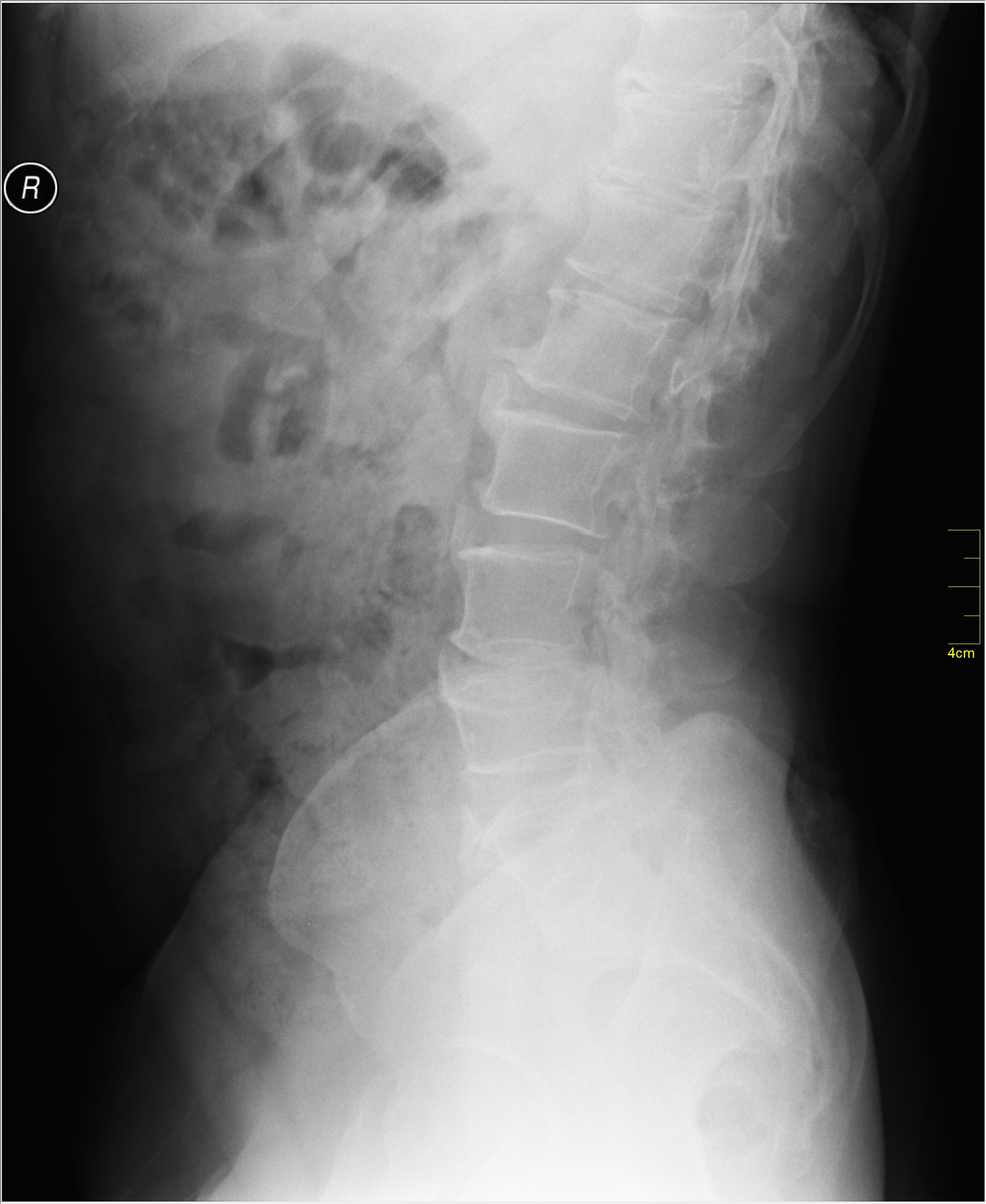
© Nevit Dilmen — CC BY-SA 3.0. Image source.

Understanding the mechanism
Spondylolysis is a bony defect in the pars interarticularis, a small connecting part of a vertebra. In a young athlete it may begin as a stress reaction and develop into a fracture associated with repeated extension and rotation. A longstanding defect is different from an active stress injury. Bilateral defects can sometimes accompany spondylolisthesis.
Symptoms and warning signs
Pain is usually in the lower back and may increase with extension, jumping or particular sporting movements. Examination alone cannot confirm the lesion, and a single-leg extension test is not reliable enough for self-diagnosis. Unusual night pain, fever or neurological loss requires evaluation for another cause or complication rather than automatically attributing everything to a pars defect.
Diagnosis and investigations
Assessment considers growth, sport, recent training load and the symptom pattern. Radiographs may show a defect, while MRI can identify an early stress reaction in selected cases. CT provides detailed bone information when needed but involves radiation. Each investigation should answer a useful question about diagnosis or management instead of simply adding more images.
Treatment and outlook
Management aims to reduce the relevant loading temporarily while avoiding unnecessary overall deconditioning. Progressive rehabilitation develops trunk capacity and prepares a return to sport-specific movements. Bracing may be considered in some situations but is not universal. Return is based on symptoms, function and clinical assessment rather than a fixed date alone, and the initial training error should be addressed.
The role of TAGMED care
At TAGMED, a stable old pars defect must be distinguished from a recent stress fracture before treatment. Traction, forceful manipulation and percussion over the region are not established methods of healing the pars. Any supportive care should respect the medical team's restrictions and monitor tolerance as loads are gradually reintroduced. Increasing symptoms require reassessment rather than simply pushing through exercises.
Practical follow-up
An organized return to sport specifies volume, intensity and the movements being reintroduced. Increasing all of them simultaneously makes recurrent pain harder to interpret. Follow-up helps adjust loading and address factors that contributed to the original stress injury.
Frequently asked questions
Is this a herniated disc?
No. It is a bone lesion and therefore requires different precautions.
Is sport permanently prohibited?
Not necessarily. A graded return is often possible after appropriate assessment and rehabilitation.
Is CT always necessary?
No. Its usefulness must be weighed against radiation and alternative investigations.
Is an old defect inevitably painful?
No. It can be an incidental finding and needs clinical correlation.
Why does growth matter?
It can influence the risk of an associated slip progressing and the surveillance plan.
Conceptual diagram: the steps depend on clinical findings and do not provide an individual diagnosis.
Medical references
- American Academy of Orthopaedic Surgeons. Spondylolysis and Spondylolisthesis.
- American Academy of Orthopaedic Surgeons. Adult Spondylolisthesis of the Low Back.
References document the topic; their inclusion does not imply endorsement of TAGMED services by those organizations.
Educational information from The Spine Page. This entry does not replace an individual assessment. Documentary version: October 12, 2026. Sylvain Desforges, B.Sc., D.O., N.D., osteopath and naturopath.
TAGMED clinic contact details
For non-urgent consultations and information about available services.
Clinique TAGMED — Terrebonne
1150, rue Lévis, Suite 200
Terrebonne (Québec) J6W 5S6
450‑704‑4447
Clinique TAGMED — Montréal
1140, avenue Beaumont
Mont-Royal (Québec) H3P 3E5
1‑877‑672‑9060