

Surgery intended to enlarge a foramen and relieve pressure on a nerve root.
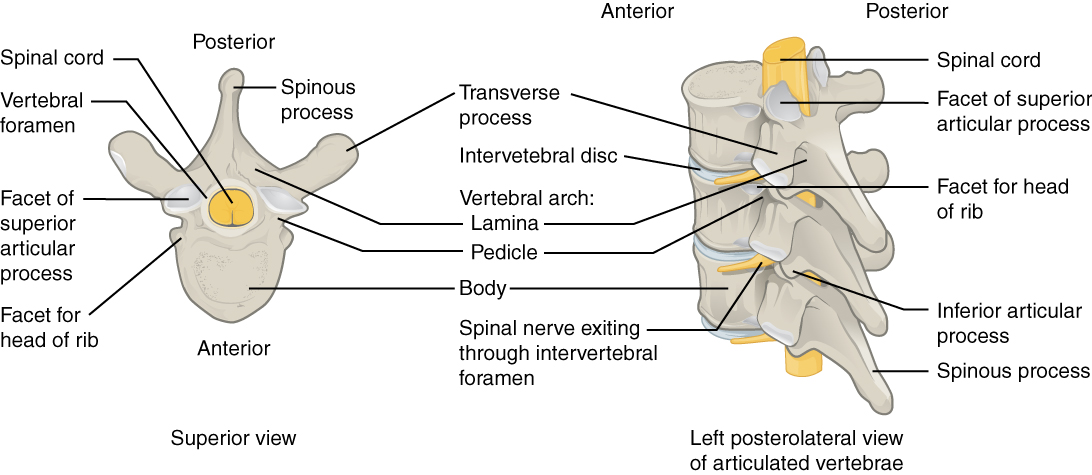
OpenStax College — CC BY 3.0. Image source.

Understanding the approach
Foraminotomy surgically enlarges an intervertebral foramen, the opening through which a nerve root exits. The surgeon removes the structures responsible for narrowing according to the anatomy. Discectomy may be added when disc material contributes to compression.
Indications and assessment
It is considered when limb symptoms and examination findings fit a compressed root. In the neck, selected posterior approaches may preserve movement without fusion. Poorly localized symptoms or several imaging abnormalities require a more detailed analysis before choosing a level and approach.
Benefits, limitations and precautions
Decompression may improve radicular pain, but a chronically injured nerve does not always recover completely. Risks include infection, nerve injury, dural tear and persistent or recurrent narrowing. Excessive removal of joint structures can compromise stability, making the extent of surgery important.
Place in the care pathway
TAGMED does not perform foraminotomy. Conservative care may be appropriate before surgical referral when the situation permits, or after postoperative clearance. Progressive weakness should not wait until the end of a course of passive treatments.
Goals should be practical: walking farther, returning to a chosen activity or reducing symptoms that interfere with sleep. Improvement immediately after an intervention does not establish lasting benefit. Follow-up compares function with the starting point, records adverse effects and considers progress between appointments. An inadequate response should prompt a review of the clinical explanation or proposed approach, rather than an automatic extension of the same treatment.
Before starting, describe the outcome you want, treatments already tried and difficulties encountered. Ask how the response will be measured and when another option would be preferable. Available reports complement the discussion without replacing your current experience, priorities or preferences.
Frequently asked questions
Which space is enlarged?
The lateral exit passage of a nerve root rather than the entire central canal.
Is fusion mandatory?
No, although some situations need additional stabilization.
Can it involve the neck or lower back?
Yes, depending on indication, with different regional techniques and risks.
Does numbness always resolve?
No. Recovery depends partly on the condition of the nerve.
Can MRI alone select the level?
No. Agreement with clinical and neurological findings is essential.
Conceptual diagram of clinical reasoning; not an anatomical drawing to scale.
Role of TAGMED care
This entry describes a medical or specialist option; it does not mean the intervention is performed at TAGMED. The clinic can discuss how its conservative services might fit into coordinated care, considering prescribed treatment, reports and specialist restrictions. Medication should not be stopped or changed on the basis of this page.
Medical references
- AAOS — OrthoInfo. Cervical Radiculopathy: Surgical Treatment Options.
- NHS. Lumbar decompression surgery.
References document the topic; their inclusion does not imply endorsement of TAGMED services by those organizations.
Educational information from The Spine Page. This entry does not replace an individual assessment. Documentary version: October 12, 2026. Sylvain Desforges, B.Sc., D.O., N.D., osteopath and naturopath.
TAGMED clinic contact details
For non-urgent consultations and information about available services.
Clinique TAGMED — Terrebonne
1150, rue Lévis, Suite 200
Terrebonne (Québec) J6W 5S6
450‑704‑4447
Clinique TAGMED — Montréal
1140, avenue Beaumont
Mont-Royal (Québec) H3P 3E5
1‑877‑672‑9060