








Sciatica, often described as intense pain radiating from the lower back down the leg, affects many Anjou residents. Understanding how mobilization and conventional traction may influence this low back pain is essential when considering an appropriate care pathway. These physical therapy techniques are regularly used in the area to relieve sciatic nerve compression, with results varying according to patient profiles.
Mobilization and traction approaches require a thorough assessment of symptoms, including the nature and location of the pain, as well as the possible presence of neurological signs. Distinguishing acute sciatica from a chronic form or other conditions is essential to properly guide patients toward appropriate conservative treatment or a specialized medical consultation.
Understanding mobilization and conventional traction in the management of sciatica in Anjou
Mobilization and conventional traction are two major techniques used in physical therapy to manage pain related to the sciatic nerve. Mobilization involves gentle, gradual movements applied to the spine or surrounding structures to improve joint mobility, reduce muscle tension, and promote better local blood circulation. This technique may also, to some extent, relieve crowding in the foraminal and spinal spaces where the sciatic nerve may be compressed.
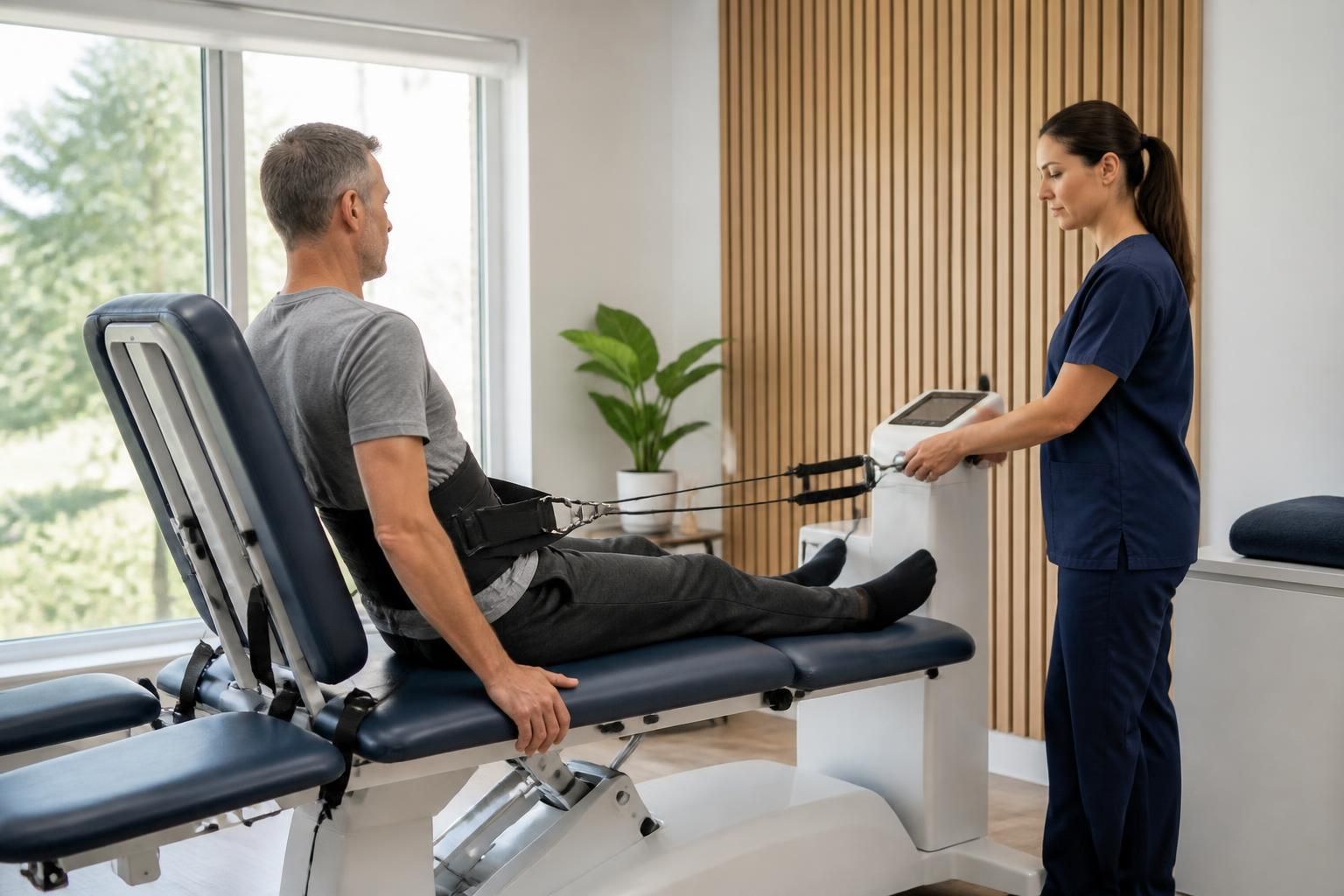
Conventional traction, whether mechanical or manual, aims to stretch the spine in order to reduce pressure on the intervertebral discs and nerve roots. This traction is applied in a controlled manner, with force and duration tailored to the patient, with the goal of providing temporary relief from sciatic nerve compression.
In the physical clinic in Anjou, these methods are regularly incorporated into a personalized rehabilitation program, often combined with postural advice, targeted exercises, and sometimes therapeutic massage to ease pain and relax tissues.
Mobilization may be particularly indicated for patients with spinal stiffness or functional limitations, whereas traction is often offered for symptoms caused by a disc herniation or a small disc protrusion. However, it is essential to tailor the intensity and method according to the clinical assessment, as these approaches are neither universally effective nor recommended in cases of severe sciatica with significant neurological signs.
To better understand the nuances of these techniques, it may be considered that, in Anjou, a medical consultation always precedes treatment with mobilization or traction. This consultation helps identify the mechanisms of sciatica, particularly by distinguishing between radicular pain due to nerve compression and other types of low back pain.
Clinical indicators and the crucial role of medical assessment in mobilization and traction treatment
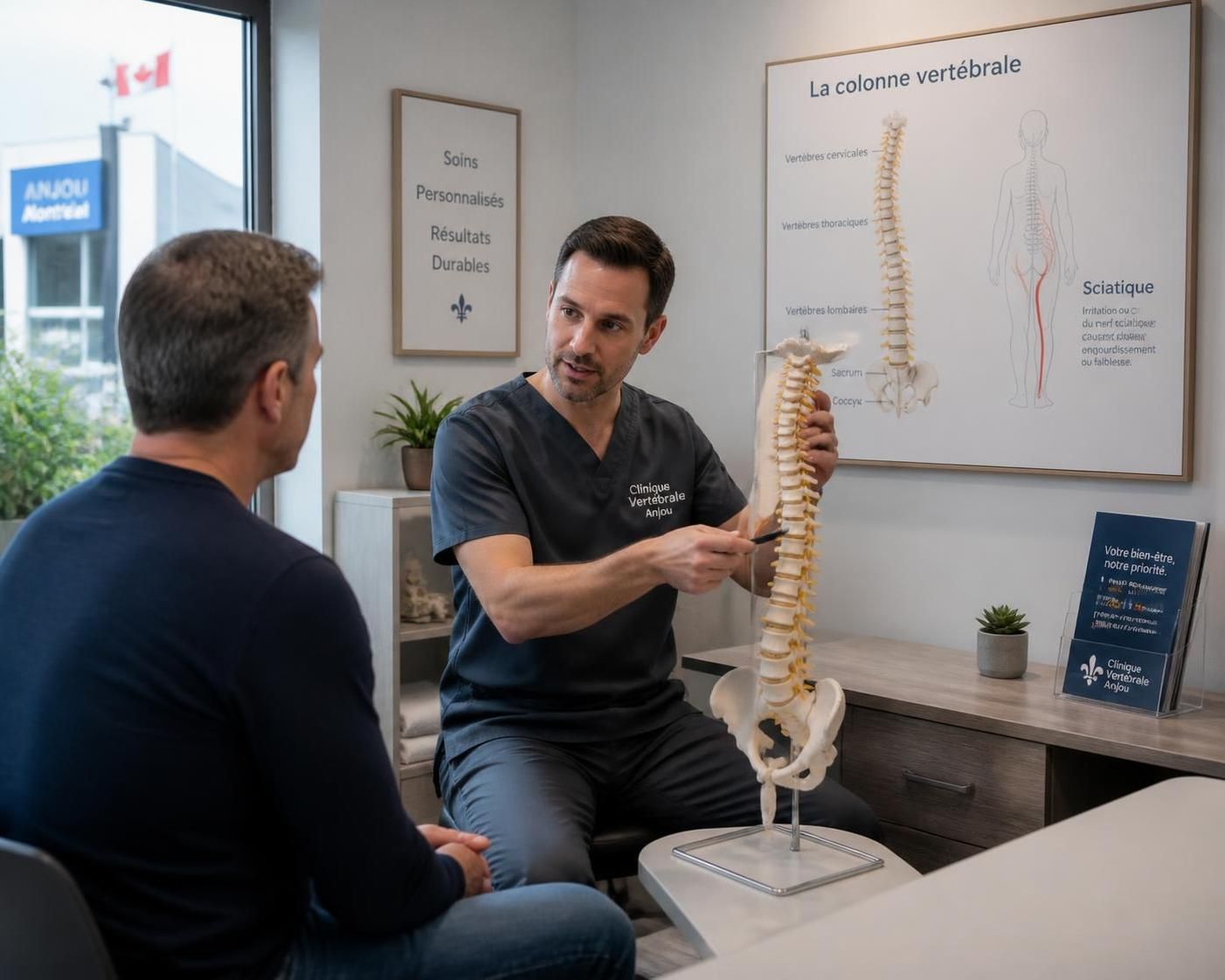
Before considering treatment with mobilization or traction, medical assessment is the first step in ensuring safe care. In Anjou, health professionals emphasize the importance of looking for signs such as numbness, loss of strength, or sphincter dysfunction, which may indicate a more severe nerve compression syndrome.
Patients with a motor deficit, progressive hypoesthesia, or cauda equina syndrome require urgent medical intervention rather than manual therapies. This highlights that mobilization and conventional traction are not routine options for all sciatic pain.
Once these signs have been ruled out, the kinesiologist or physiotherapist can establish an appropriate program. Spinal mobilization, for example, aims to restore the reduced segmental mobility often present in spinal disorders. It is performed using specific techniques, such as passive or active-assisted mobilization, with particular attention to the patient’s tolerance.
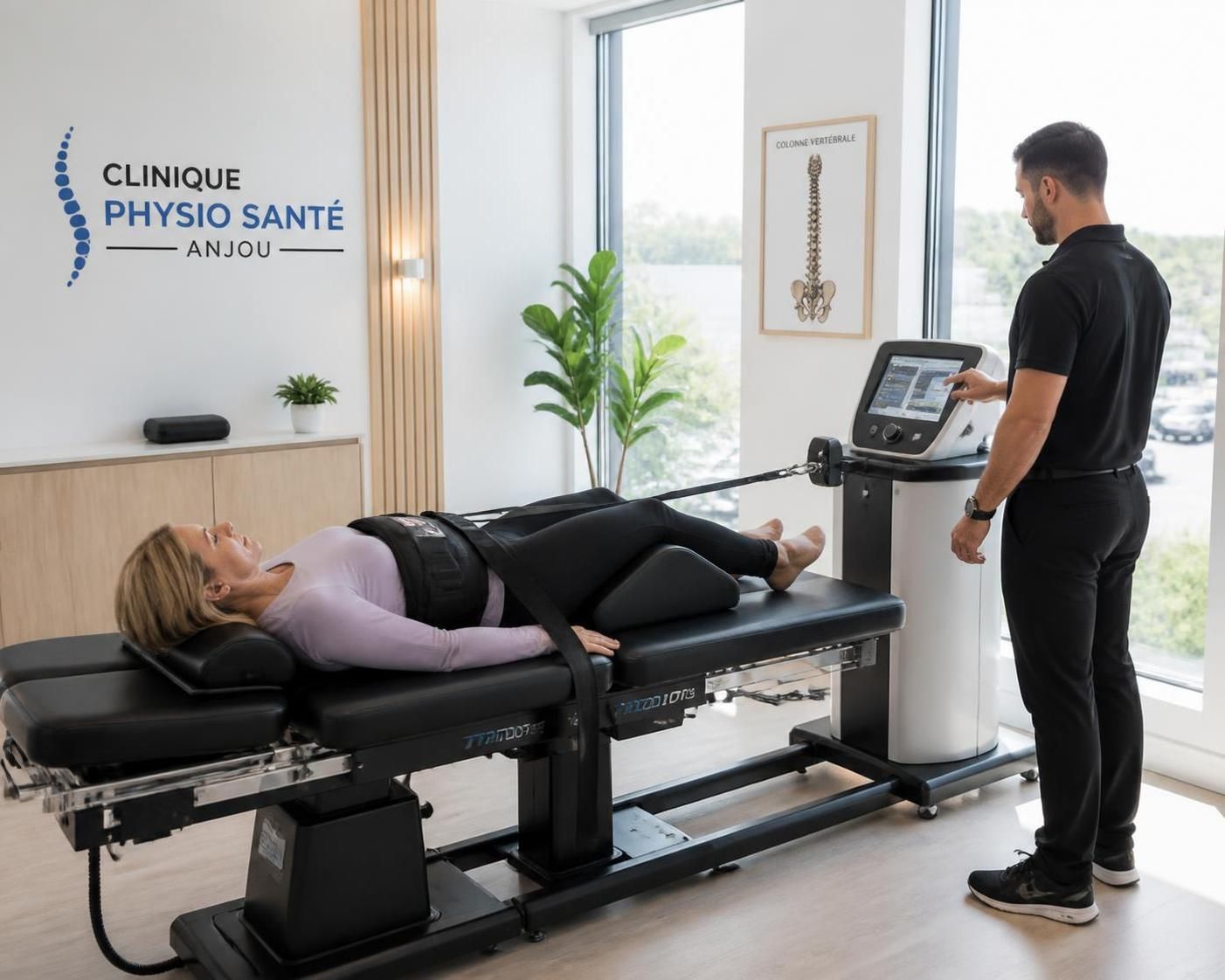
Conventional traction, in turn, is performed with mechanical devices in specialized centres or manually in some cases. It aims to relieve mechanical pressure on the nerve, particularly in cases of disc protrusions or mild to moderate foraminal narrowing. Its duration and intensity vary according to the patient’s tolerance and therapeutic goals, always as part of a comprehensive rehabilitation program.
A key consideration for Anjou patients is progressive follow-up, as responses to these treatments may differ. Some individuals respond favourably to these techniques, while in others, pain may persist or intensify, warranting reassessment and therapeutic adjustment.
Comparison table of the roles and indications of mobilization and conventional traction for sciatica
| Technique | Main objective | Common indications | Limitations / Contraindications |
|---|---|---|---|
| Mobilization | Improved spinal mobility, reduced stiffness | Low back stiffness, functional pain without major neurological signs | Severe acute pain, concerning neurological signs |
| Conventional traction | Reduced mechanical pressure on the sciatic nerve | Disc protrusion, mild to moderate foraminal narrowing | Severe disc herniation, muscle weakness, cauda equina syndrome |
Mobilization and conventional traction as part of a comprehensive rehabilitation program in Anjou
Physical therapy sessions in Anjou often combine mobilization and traction with specific exercises designed to strengthen the lower back muscles, improve posture, and reduce sciatic nerve sensitivity. These individualized programs are essential to prevent recurrences and promote functional recovery.
For example, the kinesiologist may recommend a series of targeted stretches for the lower back muscles, hamstrings, and piriformis muscle, which are often involved in sciatic pain. Incorporating these exercises along with spinal mobilization techniques and traction improves mobility and reduces stiffness.
Therapeutic massage also plays a complementary role in managing local muscle tension, particularly in the lower back and buttock, areas frequently affected by sciatica. Although its effectiveness varies, this massage may provide temporary relief that can support the patient’s return to movement.
At the same time, education on proper workplace posture, particularly for people in Anjou who work in office jobs or remotely, is a fundamental aspect. Appropriate ergonomic advice provides therapeutic support and limits the worsening of symptoms associated with prolonged sitting.
To optimize local care, it is also recommended to regularly assess the sciatic nerve through clinical examinations or imaging, depending on progression. This approach ensures that mobilization and traction remain appropriate and that the rehabilitation program is adapted according to the results.



Local and personal factors influencing the effectiveness of mobilization and traction in Anjou
In Anjou, the diversity of patient profiles and living conditions affects the results observed after mobilization and traction. For example, the type of work, mode of transportation, and household habits can affect the frequency of flare-ups and response to treatment.
People working in environments involving long periods of sitting or prolonged standing, which are common in certain sectors in Anjou, may experience worsening sciatic pain. Traction may be beneficial in temporarily decompressing the spine, but incorporating appropriate exercises appears essential for managing risk factors.
In addition, some patients may have increased nerve sensitivity to mobilization because of local inflammation or nerve irritation. In these cases, a gradual, tailored approach is required to avoid overloading the nervous system and worsening the burning or electric-shock sensations often reported.
Careful follow-up in local Anjou clinics makes it possible to adjust the intensity and frequency of sessions according to responses and symptom progression. This is complemented by the importance of interdisciplinary collaboration, sometimes including a medical consultation to review the diagnosis, adjust prescriptions, or consider complementary treatment options.
Finally, symptom duration also influences the choice of interventions. Acute sciatica, for which the priority is pain control and the gradual return of mobility, is generally distinguished from chronic forms, which often require a more comprehensive approach combining mobilization, traction, osteopathy and active exercises.
List of factors affecting the success of mobilization and conventional traction:
- Duration and intensity of sciatic symptoms
- Presence of neurological signs or loss of function
- Occupation and prolonged postures
- Nerve reactivity or local inflammation
- Adherence to the rehabilitation program
- Regular clinical follow-up and therapeutic adjustments
Intervening safely: when mobilization and conventional traction require urgent medical assessment in Anjou
It is crucial to distinguish situations where mobilization and conventional traction are appropriate from those requiring an urgent medical consultation. In Anjou, health professionals warn about certain signs that should prompt immediate concern:
- Sudden or progressive loss of muscle strength in the leg, particularly if it interferes with walking or balance.
- Numbness or loss of sensation in the perineal area or loss of bowel or bladder control.
- Very intense pain that is not relieved by pain medication, accompanied by fever or poor general health.
- Onset of symptoms after significant trauma or a spinal injury.
The presence of these signs indicates a possible medical emergency, and mobilization or conventional traction cannot be started without a complete diagnosis. A thorough neurological assessment, along with appropriate medical imaging, is then required before any therapeutic approach.
For some patients, severe nerve compression or a disc herniation will require complementary treatments or even surgery, always under strict medical supervision.
To better understand these issues, an appropriate consultation helps define the role of manual therapies in pain management while avoiding potential complications. This point is explained in detail in the resource on signs indicating when to seek care for sciatica.

The active mobilization exercises presented in this video illustrate gentle, gradual movements suited to patients with sciatica, while respecting nerve and muscle tolerance.
A clear presentation of the principles and objectives of conventional spinal traction, explaining how this technique can be incorporated into a comprehensive rehabilitation program.
{“@context”:”https://schema.org”,”@type”:”FAQPage”,”mainEntity”:[{“@type”:”Question”,”name”:”Quand est-il recommandu00e9 de consulter un spu00e9cialiste pour une douleur sciatique ?”,”acceptedAnswer”:{“@type”:”Answer”,”text”:”Il est conseillu00e9 de consulter un professionnel de santu00e9 du00e8s que la douleur lombaire irradiant dans la jambe persiste au-delu00e0 de quelques jours, surtout si elle su2019accompagne du2019un engourdissement, du2019une faiblesse musculaire ou du2019une perte de contru00f4le des sphincters.”}},{“@type”:”Question”,”name”:”La mobilisation est-elle efficace pour toutes les formes de sciatique ?”,”acceptedAnswer”:{“@type”:”Answer”,”text”:”La mobilisation peut amu00e9liorer la mobilitu00e9 et ru00e9duire la douleur dans les cas sans signes neurologiques majeurs, mais elle nu2019est pas indiquu00e9e en pru00e9sence de complications nerveuses su00e9vu00e8res ou d’une hernie discale importante.”}},{“@type”:”Question”,”name”:”Peut-on pratiquer la traction conventionnelle u00e0 la maison ?”,”acceptedAnswer”:{“@type”:”Answer”,”text”:”La traction conventionnelle nu00e9cessite un appareillage spu00e9cifique et un suivi professionnel. Lu2019automu00e9dication par traction sans supervision nu2019est pas recommandu00e9e en raison des risques liu00e9s u00e0 un usage inadu00e9quat.”}},{“@type”:”Question”,”name”:”Le massage thu00e9rapeutique peut-il remplacer la ru00e9u00e9ducation en cas de sciatique ?”,”acceptedAnswer”:{“@type”:”Answer”,”text”:”Le massage peut offrir un soulagement temporaire des tensions musculaires, mais il ne remplace pas la ru00e9u00e9ducation active essentielle pour restaurer la fonction et pru00e9venir les ru00e9cidives.”}},{“@type”:”Question”,”name”:”Quels sont les risques associu00e9s u00e0 une mobilisation ou traction mal adaptu00e9e ?”,”acceptedAnswer”:{“@type”:”Answer”,”text”:”Une mobilisation ou traction non adaptu00e9e peut entrau00eener une aggravation de la douleur, une irritation nerveuse accrue, ou masquer des signes nu00e9cessitant une intervention mu00e9dicale urgente.”}}]}When is it recommended to consult a specialist for sciatic pain?
It is advisable to consult a health professional as soon as low back pain radiating into the leg persists beyond a few days, especially if it is accompanied by numbness, muscle weakness, or loss of bowel or bladder control.
Is mobilization effective for all forms of sciatica?
Mobilization may improve mobility and reduce pain in cases without major neurological signs, but it is not indicated in the presence of severe nerve complications or a significant disc herniation.
Can conventional traction be performed at home?
Conventional traction requires specific equipment and professional monitoring. Self-treatment with traction without supervision is not recommended because of the risks associated with improper use.
Can therapeutic massage replace rehabilitation for sciatica?
Massage may provide temporary relief from muscle tension, but it does not replace active rehabilitation, which is essential to restore function and prevent recurrences.
What are the risks associated with unsuitable mobilization or traction?
Inappropriate mobilization or traction may worsen pain, increase nerve irritation, or mask signs requiring urgent medical intervention.
Are you experiencing low back pain radiating into your leg and wondering whether mobilization or conventional traction is appropriate for your situation? A personalized assessment can clarify the likely cause, identify signs to watch for, and discuss conservative rehabilitation options. For serious, local care, feel free to book an appointment at a clinic in Mont-Royal, near Anjou.
Book an appointment for an assessment
Dr. Sylvain Desforges, B.Sc., D.O., N.D., osteopath
This content is intended for educational purposes and does not replace a personalized consultation with a health professional.
