


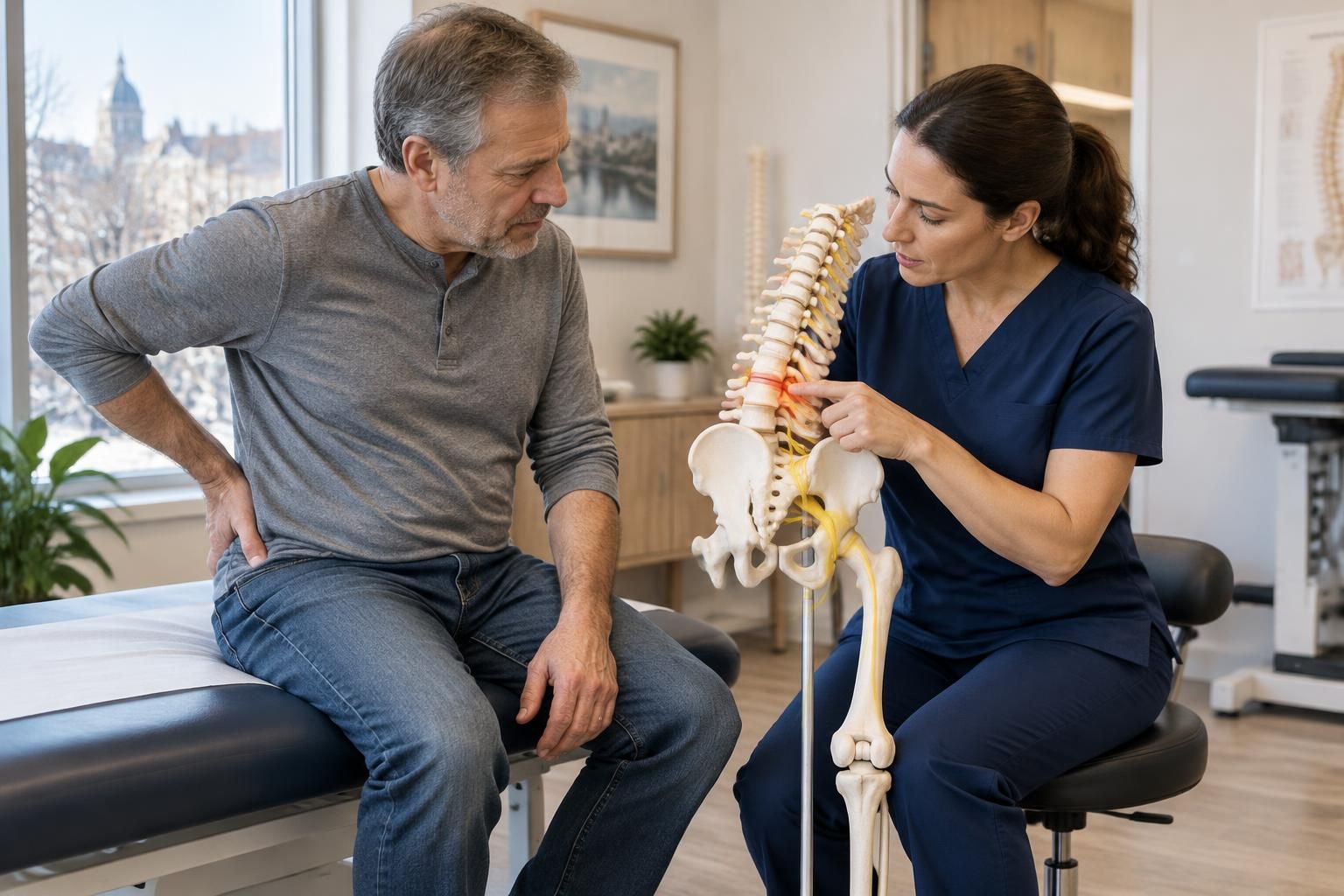
In Villeray–Saint-Michel, pain that starts in the lower back or buttock and travels down the leg may be consistent with sciatica. A herniated disc is one possible cause, but lumbar osteoarthritis, narrowing around the nerves, or pain originating in the buttock muscles can produce similar symptoms.
Travelling by car or public transit, sedentary work, and prolonged periods in front of a screen can make pain more noticeable, without being enough to explain its origin. To understand what is happening, the progression of symptoms, their effect on strength and sensation, and the clinical examination must be considered; imaging alone does not always identify the cause of pain.
In brief: sciatica causes to know about
- A herniated disc can irritate a nerve root in the lower back and cause pain radiating down the leg.
- Lumbar osteoarthritis and spinal stenosis can reduce the space available for nerves, especially in certain presentations and positions.
- Buttock pain, including pain related to piriformis syndrome, can resemble sciatica without arising from lumbar compression.
- Worsening weakness, urinary symptoms, or loss of perineal sensation require urgent medical assessment.
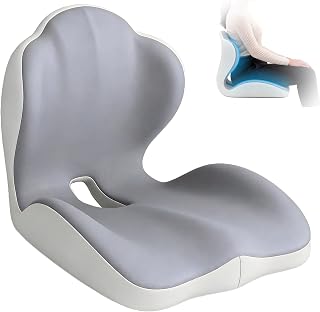
A support cushion can sometimes make a chair more comfortable, but it does not treat the cause of pain radiating down the leg. Any comfort product should be considered an optional accessory, not a treatment or a means of preventing nerve compression.




A resource presenting the possible causes and assessment of sciatica can help clarify the distinctions discussed here. However, this information does not replace an assessment tailored to each person’s symptoms.
Herniated disc and sciatic nerve compression
The term sciatica generally refers to pain related to irritation of a lumbar or sacral nerve root, whose fibres contribute to the sciatic nerve. Pain may travel from the buttock toward the back or side of the thigh, calf, and sometimes the foot; it may be accompanied by tingling, numbness, or weakness.
A herniated disc occurs when part of the disc between two vertebrae bulges or shifts beyond its usual boundaries. If this change irritates a nerve root, it can cause radicular pain; however, a herniation seen on imaging is not necessarily the source of symptoms, since disc abnormalities can also occur without pain.
Pain may increase with coughing, sneezing, or certain movements, but these responses are not enough to confirm a diagnosis. The path of the pain alone also cannot determine with certainty the affected nerve root or the level of a disc problem. An accessible description of the possible causes of sciatica can complement these reference points without replacing an examination.
For example, someone working from home in Villeray may notice sharper pain after sitting for a long period, followed by discomfort when standing up. This context describes what changes the symptoms, but does not prove that the chair or posture caused a herniated disc.
Lumbar osteoarthritis, spinal stenosis, and other spinal causes
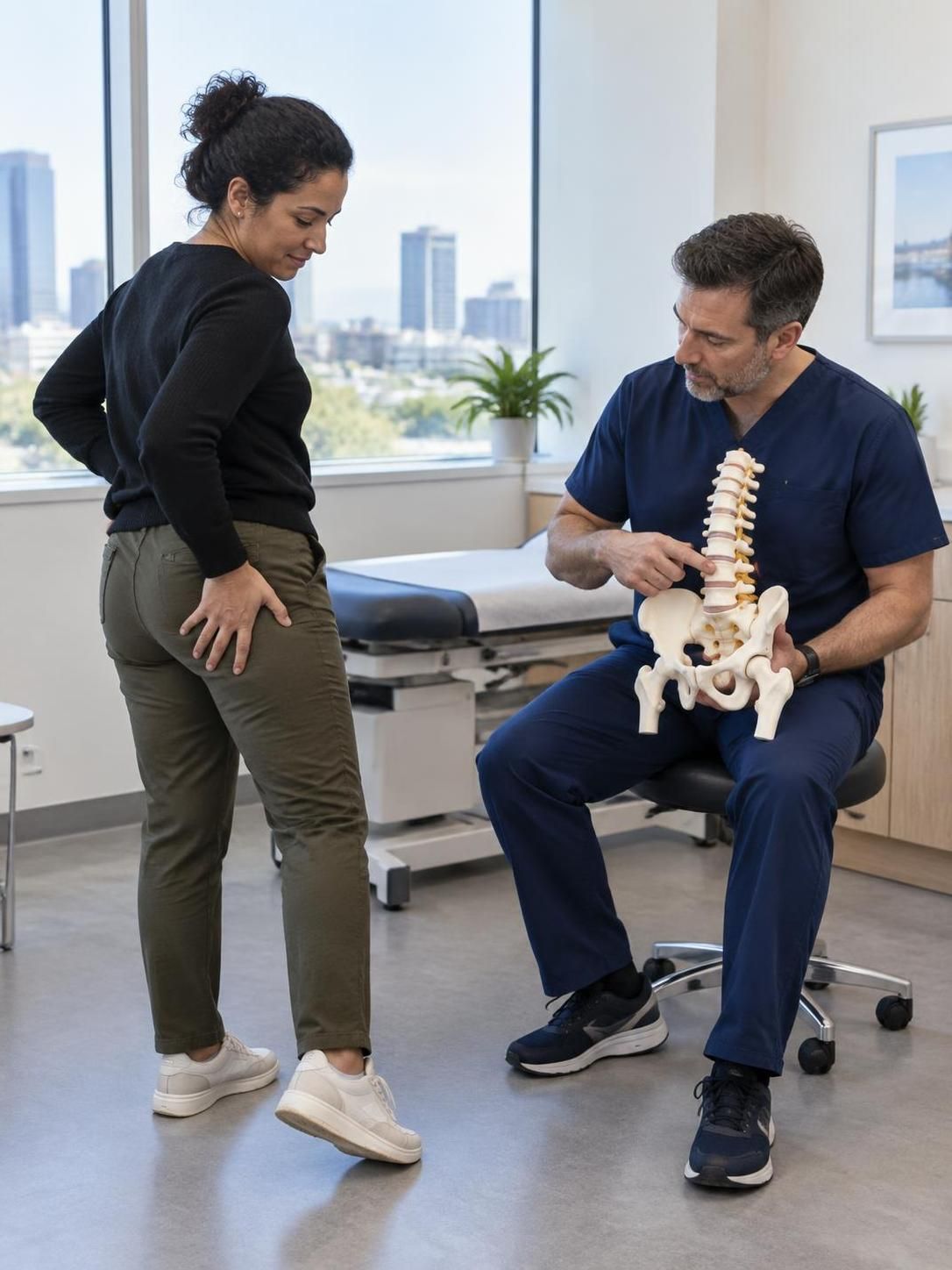
Lumbar osteoarthritis refers to wear-related changes in the joints of the spine. In some people, these changes contribute to reducing the space around the nerves or changing their pathway. Spinal stenosis is a narrowing of the spinal canal; foraminal narrowing instead involves the openings through which nerve roots exit the spine.
Depending on the cause and presentation, symptoms may occur more during walking or standing, then lessen when sitting or leaning slightly forward. These patterns are not universal. They should be interpreted alongside the clinical history and examination rather than taken as automatic proof of stenosis.
A vertebral slip, called spondylolisthesis, can also change the space around a nerve root. A lumbar injury, such as a fall or accident, can cause back pain and sometimes leg symptoms; the severity of the injury and associated signs influence the need for prompt assessment.
Radicular pain may also have less common causes, such as an infection or an inflammatory condition. Spinal tumours are rare, but a history of cancer, fever, poor general health, or unusual persistent pain warrant medical assessment. Imaging is selected based on the context: it is not automatically needed for every recent episode of pain.
| Possible cause | What it may affect | Cautionary point |
|---|---|---|
| Herniated disc | Possible irritation of a lumbar nerve root | An imaging abnormality alone does not establish the source of pain. |
| Osteoarthritis or stenosis | Possible reduction in the space around the nerves | Symptoms vary according to posture, activity, and the individual. |
| Piriformis syndrome or muscular pain | Buttock pain that may radiate into the thigh | An examination helps distinguish this possibility from radicular involvement. |
| Injury or less common cause | Low back pain, sometimes accompanied by neurological or general symptoms | A significant injury or concerning symptoms call for prompt assessment. |
Prolonged posture, sedentary habits, and everyday activities
Prolonged posture and sedentary behaviour are often mentioned when pain develops, but they cannot, on their own, identify its cause. Sitting for a long time can increase discomfort for some people, while others experience symptoms mainly when walking, bending, or standing.
In Villeray–Saint-Michel, a day may combine screen-based work, public transit travel, and running errands on foot. If pain varies with these activities, noting the positions and movements that worsen or relieve it can provide useful information during a consultation. It is best to avoid concluding that one everyday action is solely responsible.
Lifting loads and repetitive movements can strain the back, particularly when they are frequent or poorly tolerated. They may contribute to a painful flare-up, but pain after exertion does not necessarily mean that a disc has shifted or that a serious injury has occurred. Gradually resuming usual activities is often more reasonable than prolonged immobility if no urgent warning signs are present.
Piriformis syndrome is sometimes mentioned when pain is mainly in the buttock and travels down the leg. This possibility may be considered, but several structures can produce similar symptoms; the path of the pain is therefore not enough to distinguish a muscular problem from nerve irritation originating in the back.
To explore other possible causes, a resource devoted to sciatica, its symptoms, and its mechanisms can serve as a complement. General information is best considered alongside the actual progression of pain and functional abilities.
Assessment of causes and signs requiring consultation
An assessment generally begins with questions about when the pain started, its path, intensity, activities that change it, and associated symptoms. The examination may include observing walking, assessing strength and sensation, and movements of the back and leg. No single test answers every question.
Imaging, such as MRI or computed tomography, may be considered when symptoms persist, when a neurological deficit is present, or when the result could change management. Images must be interpreted in relation to clinical signs: a visible abnormality does not necessarily explain a given pain.
A clinical consultation is indicated if pain persists or returns, travels below the knee, disrupts sleep, or limits walking and activities. Numbness, loss of sensation, or weakness also warrant assessment, particularly if the symptom progresses or interferes with function.
Urgent medical assessment is necessary in the event of loss of bladder or bowel control, new difficulty urinating, numbness in the perineal region, or significant or rapidly progressive weakness. Fever or poor general health, significant injury, a history of cancer or infection, or rapid worsening should also be taken seriously. These signs cannot establish a diagnosis remotely, but they justify not waiting for a routine consultation.
An educational video may clarify certain terms, but it does not replace an examination. If pain or weakness changes, general advice found online should not delay appropriate assessment.
Management options based on the likely cause
Management depends on the suspected cause, symptom intensity, and their effect on daily life. In the absence of urgent warning signs, maintaining or gradually resuming tolerable activities may be preferable to prolonged bed rest. Movements or exercises must be adapted: if pain travels further down the leg, numbness increases, or weakness appears, stop the triggering activity and seek advice.
Individualized exercises and rehabilitation care may help restore mobility and confidence in movement. Manual approaches may be considered based on the assessment, but they do not put a disc back into place. Medications, including pain relievers or anti-inflammatory drugs, should be discussed with an authorized health professional, as contraindications and risks vary from person to person.
In some situations, an injection may be discussed with a medical professional, particularly when radicular pain remains significant despite initial measures. Its benefits and limitations depend on the clinical presentation; it is not necessary for every case of sciatica. A specialist opinion or surgery may be considered when significant compression, a neurological deficit, or persistent progression warrants it.
Motorized neurovertebral decompression is a form of controlled traction that may be considered for certain patients after an assessment. It aims to temporarily modify certain mechanical stresses applied to discs and nerve roots; results vary, and no number of sessions is appropriate for everyone. It does not replace urgent medical assessment or other care options and is not indicated for all causes of pain. The description of motorized neurovertebral decompression explains its goals and limitations.
In Montréal, TAGMED Clinic is located at 1140 Beaumont Avenue in Mont-Royal, near Outremont and Côte-des-Neiges. Depending on the assessment, its approaches for sciatica may include motorized neurovertebral decompression, specific osteopathy, or the precision percussor; this does not mean that any one of these options is appropriate for every person.
Frequently asked questions about the causes of sciatica in Villeray–Saint-Michel
Is a herniated disc always responsible for sciatica?
No. A herniated disc can irritate a nerve root, but osteoarthritis, stenosis, or other causes can produce similar symptoms. The presence of a herniation on imaging is not enough to establish that it explains the pain.
Does buttock pain necessarily come from the sciatic nerve?
No. Muscular pain, particularly around the piriformis, can resemble radicular pain. The examination and the full range of symptoms help distinguish these possibilities.
When should you consult for pain that travels down the leg?
A consultation is indicated if pain persists, recurs, disrupts sleep, or limits walking, or if numbness or weakness appears. Rapidly progressive weakness, urinary or bowel symptoms, or loss of perineal sensation require urgent assessment.
Does prolonged sitting cause sciatica?
It can increase discomfort for some people, but it cannot by itself identify the cause. Symptoms may also be influenced by walking, bending, standing, or other factors.
Is neurovertebral decompression appropriate for all cases of sciatica?
No. This approach may be considered for certain patients after an assessment, but results vary and contraindications exist. It should never delay urgent care.
If pain travelling down the leg persists or limits your activities, an assessment can help clarify the likely cause, signs to monitor, and whether a conservative approach is appropriate. Options and their usefulness should be determined according to your situation, without assuming that a specific treatment is suitable for everyone.
Explore sciatica assessment and management options
Dr. Sylvain Desforges, B.Sc., D.O., N.D., osteopath
This content is educational and does not replace a personalized assessment by a health professional.
