


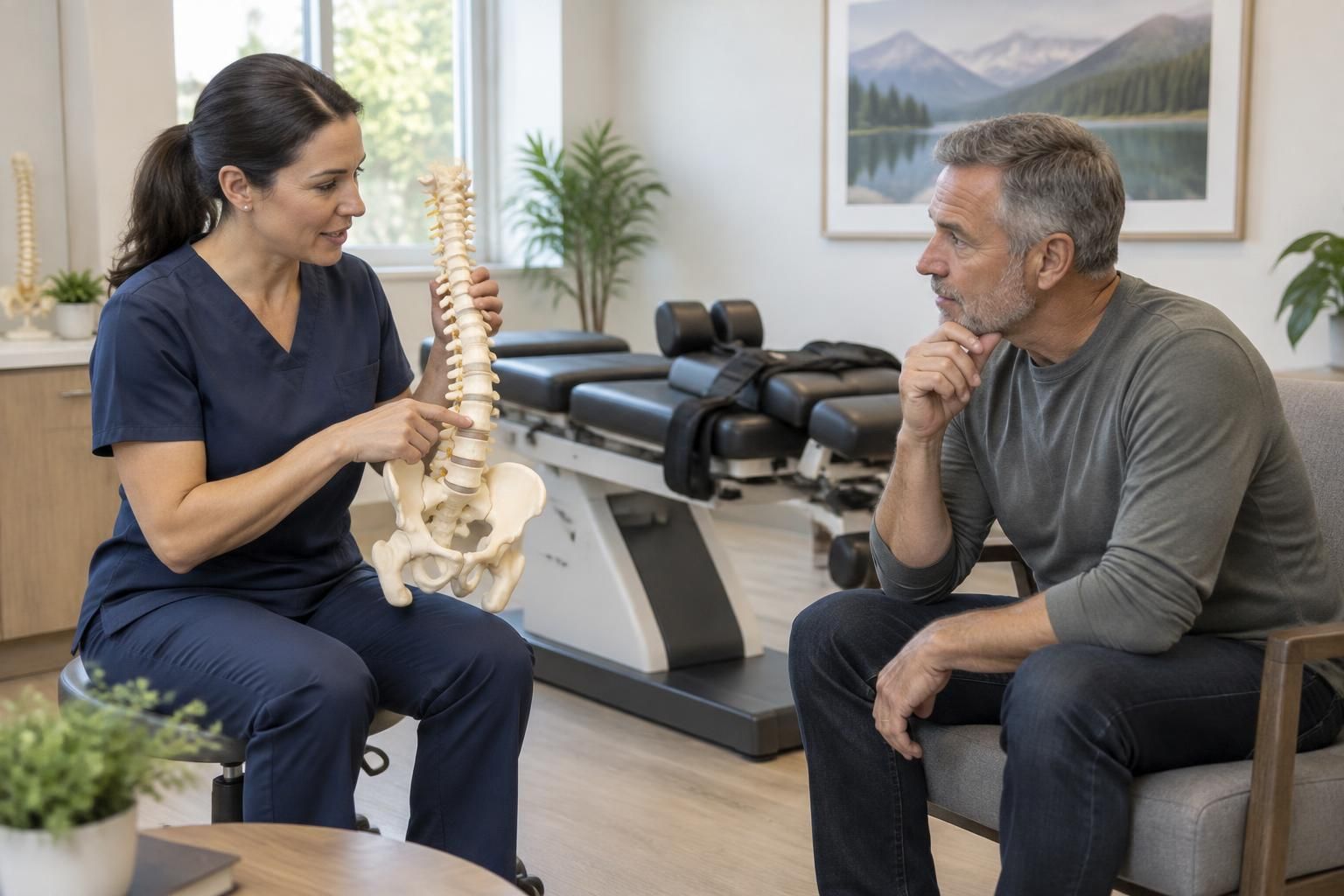
Neurovertebral decompression treatment begins with an assessment and a clear discussion of your symptoms, medical history, and expectations. For someone in Outremont considering this approach, practical preparation—comfortable clothing, up-to-date medical information, and questions to ask—may make the session easier, without guaranteeing any particular outcome.
Spinal decompression is controlled, motorized traction that may be offered to certain patients following an assessment. It is not suitable for all back pain and does not replace a diagnosis or medical consultation when a warning sign is present. The choice of this option depends in particular on the examination, the progression of symptoms and, when necessary, imaging interpreted in context.


Preparing for treatment: information to gather before the first appointment
Before a session, prepare a clear summary of what you are experiencing: where the pain starts, how far it radiates, how long it has been present, and what changes it. Pain that travels into the buttock or leg, tingling, numbness, or weakness do not all indicate the same thing; these details help the professional guide the assessment, without being enough on their own to establish the cause.
Also note any treatments you have already tried, medications or supplements you take, and any recent change in your health. Bring any medical reports or images you have, such as an MRI, but do not assume that an older image automatically explains your current symptoms. The clinical examination and pain history must be considered together.
A chiropractic consultation may be part of the care pathway for some people, while others will be assessed by a physician or another licensed professional, depending on the context. Ask who will conduct the assessment, what their role is, and how a referral to a physician will be made if certain elements require medical advice. In Mont-Royal, near Outremont and Côte-des-Neiges, Clinique TAGMED presents its approaches and assessment criteria on its page dedicated to sciatica management options.
To make your summary useful, prioritize facts rather than assumptions: “the pain increases after twenty minutes of sitting” is more informative than “my disc is out of place.” This distinction helps discuss whether decompression is appropriate without presuming a diagnosis.
Neurovertebral decompression in Outremont: understanding assessment and selection
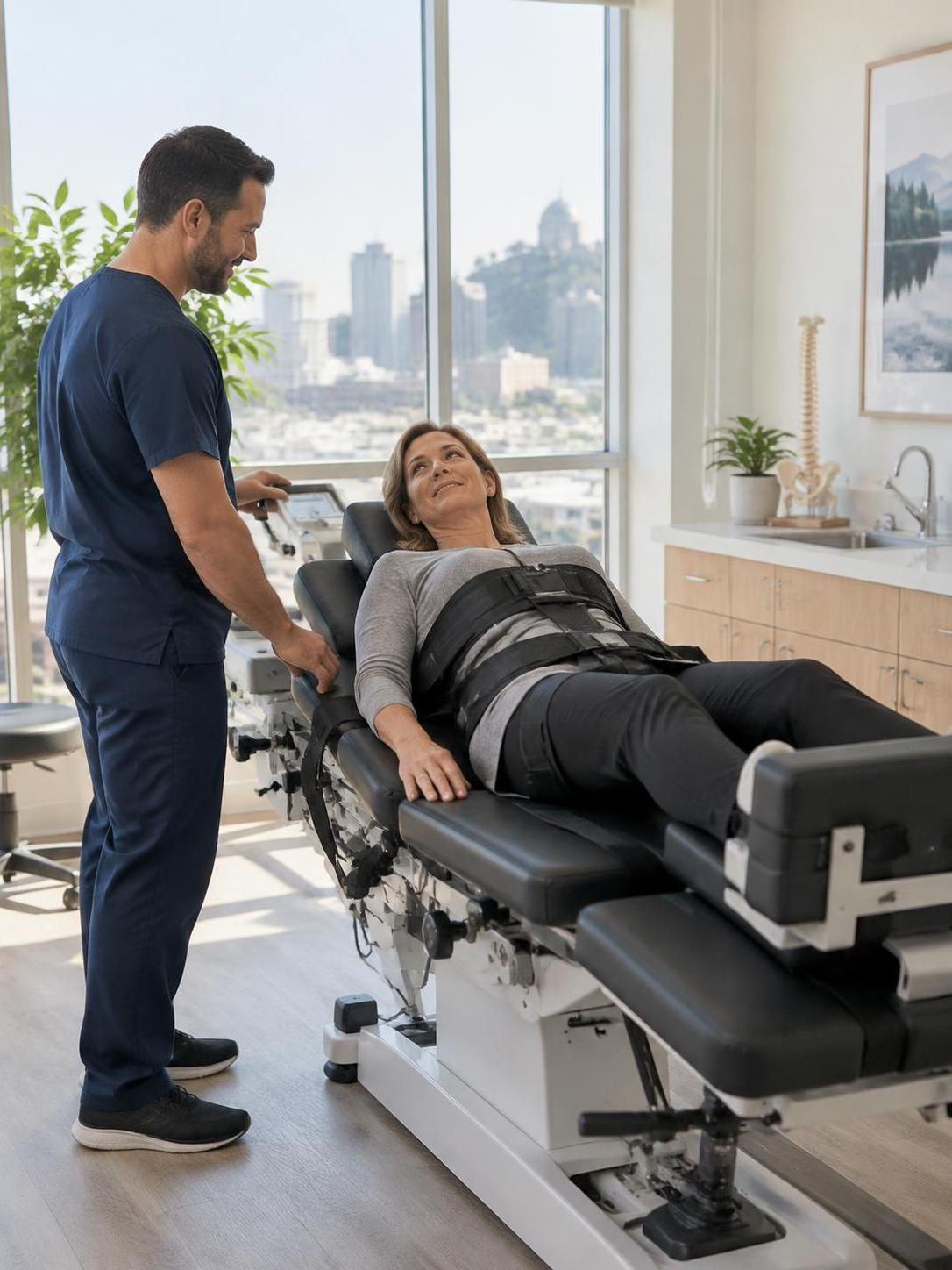
Neurovertebral decompression is performed on a motorized table that applies gradual traction, adjusted according to the person’s assessment and tolerance. The goal is to temporarily change certain mechanical stresses applied to the spine; the device does not put a disc back in place and does not guarantee pain relief. Results vary, and the available evidence does not support presenting this method as suitable for all cases of sciatica or all disc disorders.
A disc herniation or protrusion, disc narrowing, or foraminal stenosis may be among the elements examined, but their presence on imaging is not enough to determine treatment. Pain may also be referred from nearby structures or have another origin. Assessment of the spine considers mobility, sensation, strength, the path of symptoms, and daily function.
Before starting sessions, ask how your eligibility will be assessed, which situations might contraindicate traction, and what changes would lead to reassessment. An infection, tumour, certain instabilities, or other health concerns may require medical referral rather than traction treatment. When there is uncertainty or new symptoms, the priority is to clarify the situation rather than start a session.
Preparation also includes a discussion of measurable goals: walking longer, better tolerating sitting, or returning to certain activities. These functional markers make it possible to assess whether therapeutic follow-up remains appropriate, rather than relying only on an immediate impression after a session.
How to promote comfort during treatment
Choose flexible clothing that allows you to get into position comfortably and follow positioning instructions. You may eat normally; if you are sensitive to discomfort while lying down, simply avoid a very large meal just beforehand and ask staff to guide you based on your situation. There is no special dietary preparation that can guarantee the effectiveness of traction.
Relaxation may help you better tolerate a session, but it is not a condition for success. Slow breathing or a brief pause before starting may be helpful if you are apprehensive about the equipment. Clearly state if a position is uncomfortable, if pain increases, or if an unusual sensation appears: the professional can stop or adjust the session depending on the circumstances.
For travel from Outremont or other areas of Montréal, allow extra time to avoid arriving rushed, especially if driving or prolonged sitting worsens your symptoms. After the session, resume your activities according to your tolerance and the instructions you received. There is no need to “push through” pain that intensifies or travels further down the leg.
You can consult a complementary guide on what to plan for before neurovertebral decompression. Keep in mind, however, that instructions must be individualized: a general recommendation does not replace discussion with the professional who knows your medical file.
A brief checklist before the appointment
- Bring: a list of medications, relevant medical history, and available imaging reports.
- Explain: how your symptoms have progressed, which activities are limited, and whether numbness or weakness is present.
- Wear: comfortable clothing that makes it easier to get positioned on the table.
- Ask about: treatment goals, contraindications, follow-up criteria, and possible options if traction is not indicated.
This list is not a mandatory protocol. Its main purpose is to structure the discussion and prevent an important detail from being overlooked during the appointment.
What to expect during sessions and therapeutic follow-up
The first appointment should allow for discussion of how the table works, the position used, and how to report discomfort. Traction is applied in a controlled manner; the sensation varies from person to person. It is best not to assume that a session must be painless or that discomfort is necessary to achieve an effect: every reaction should be communicated to the professional.
The number and frequency of sessions should not be determined by a universal rule. Therapeutic follow-up may take into account your tolerance, changes in pain, and your ability to resume activities. If symptoms worsen, new numbness appears, or strength decreases, report it promptly and ask whether the plan should be reviewed.
Decompression may be part of a conservative approach that includes, when appropriate, a gradual return to activities, individualized exercises, or manual care. Medications may be discussed with a licensed professional; an injection or specialist opinion may be considered in certain situations. These options have different roles and limitations, and none is automatically suitable for everyone.
A decompression clinic should be able to explain its selection criteria and limitations transparently. To better place the method among the approaches offered in Montréal, the page on motorized neurovertebral decompression describes this option within the context of conservative care. It remains important not to confuse information about a service with a personalized recommendation.
| Preparation item | Why discuss it | Useful reference point |
|---|---|---|
| Symptoms and progression | They help guide the assessment and monitor function. | Note the positions or activities that change the pain. |
| Medical history and medications | Certain health conditions may change the choice of care. | Bring an up-to-date list and mention any recent changes. |
| Available imaging | It may complement the examination without replacing clinical assessment. | Bring the reports and images if you have them. |
| Goals and tolerance | They help determine whether continuing or adjusting the plan is appropriate. | Choose a concrete functional marker, such as walking or sleeping. |
To explore possible causes of pain that radiates into the leg in greater depth, SOS Sciatica also offers a resource on the causes and assessment of sciatica.
When to postpone treatment and seek a medical assessment
Persistent or recurrent pain, pain that travels below the knee, limited walking, disrupted sleep, loss of sensation, or weakness warrant a clinical assessment. These signs do not on their own prove nerve compression, but they should be assessed, particularly if they progress or affect your usual activities.
Seek an urgent medical assessment if you lose control of your bladder or bowels, experience numbness in the saddle area, significant or rapidly progressing weakness, fever or a decline in your general condition, major trauma, or pain associated with a context of cancer or infection. Rapid worsening also requires prompt attention.
In these situations, do not start or continue a decompression session while waiting for clarification. Traction care does not replace an urgent assessment and cannot determine the cause of a warning sign remotely.
If no urgent sign is present, but you are unsure whether treatment is appropriate or which professional to consult, request an assessment suited to your symptoms. In Outremont, as elsewhere in the Montréal area, proper preparation also means knowing when a conservative approach should be set aside in favour of medical advice.
Frequently asked questions about preparing for decompression
If back pain or pain that travels down your leg is leading you to consider decompression, an assessment can clarify the likely cause, signs to watch for, and whether a conservative approach is appropriate. The Mont-Royal clinic, near Outremont, presents its contact options for people who wish to discuss their situation.
Dr. Sylvain Desforges, B.Sc., D.O., N.D., osteopath
This content is educational and does not replace a personalized assessment or medical advice.
