


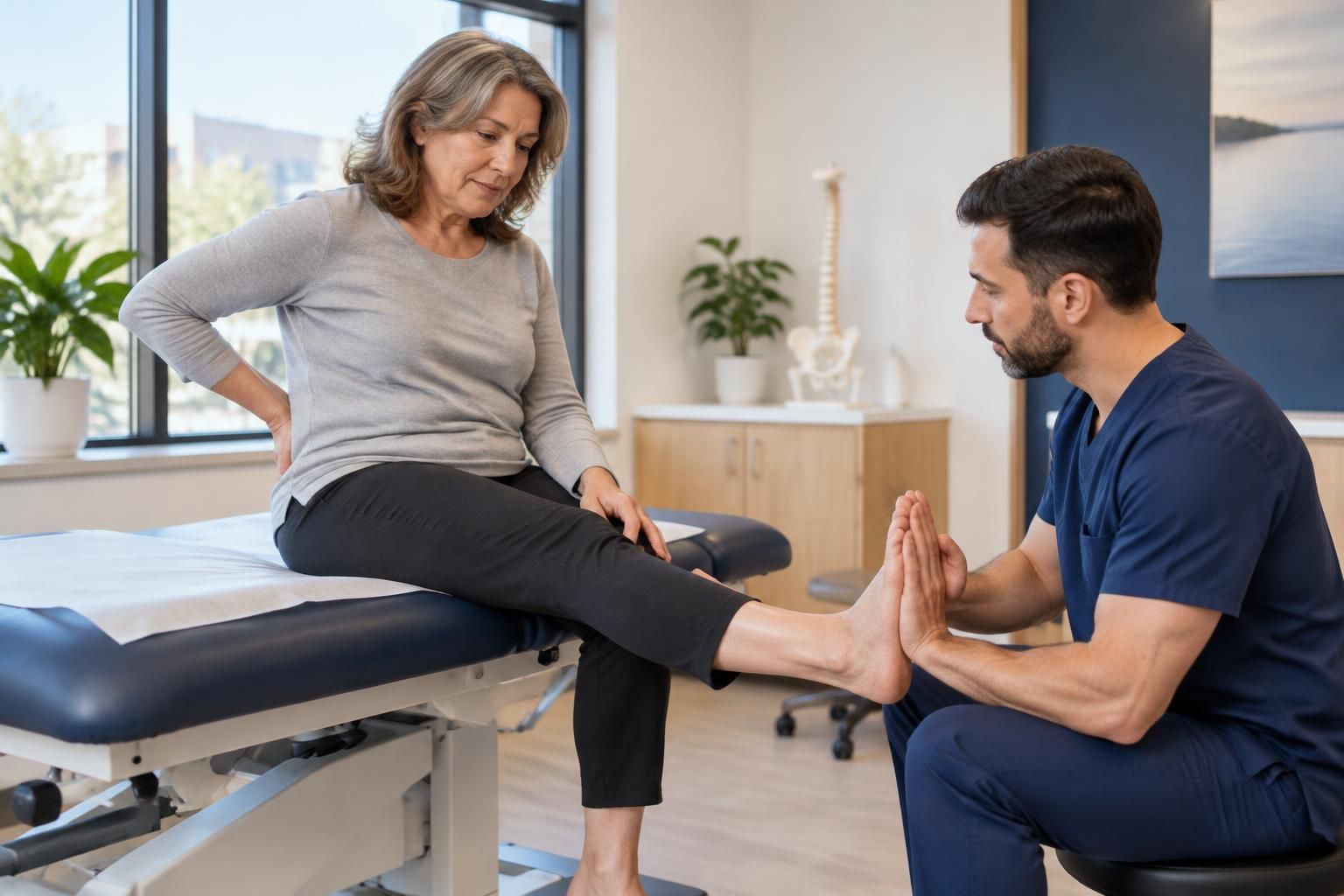
Pain consistent with sciatica accompanied by muscle weakness warrants careful assessment: it is important to distinguish a leg that feels tired from actual loss of strength and to determine whether a nerve is affected. In Rivière-des-Prairies, as elsewhere in the Montréal area, diagnosis is based first on the history of symptoms and neurological examination; imaging or other tests are requested only when the context warrants them.
Weakness alone does not indicate a disc herniation, and the path of the pain is not enough to precisely locate a nerve root. Its onset, progression and effects on walking or daily activities help determine the level of urgency and the next steps.




In brief: sciatica and muscle weakness in Rivière-des-Prairies
- A feeling of fatigue does not always mean a motor deficit. Objective weakness may present, for example, as a new difficulty lifting the foot or pushing off with the toes.
- The neurological examination compares both sides. Strength, sensation, reflexes and walking are assessed in light of the reported symptoms.
- Imaging is not automatic. An MRI may be considered if the signs, their progression or care planning make it relevant.
- Weakness that progresses rapidly or is accompanied by urinary or bowel problems requires urgent medical assessment.
What muscle weakness with sciatica may reveal
The term sciatica commonly refers to pain that starts in the lower back or buttock and travels down the leg. When a lumbar or sacral nerve root is irritated, tingling, an area of reduced sensation or weakness may also occur. However, leg pain may also be referred from the back or arise from another structure; it therefore does not, on its own, confirm compression of the sciatic nerve.
It is helpful to clarify what “weakness” means. A leg may feel less steady because pain limits effort, sleep is disrupted or the person is apprehensive about a movement. A motor deficit is instead a functional difficulty that examination can reveal, such as being unable to lift the front of the foot in the same way as on the other side. The distinction requires an assessment, not self-interpretation based on a single movement.
The L4, L5 and S1 nerve roots contribute to different movements and sensations in the lower limb. As an indication, L5 involvement may be associated with difficulty lifting the foot, while S1 involvement may affect pushing off with the forefoot or the Achilles reflex. These associations are not absolute rules: symptoms overlap and must be interpreted alongside the complete examination.
A disc herniation or protrusion may irritate a nerve root, but other causes are possible, including foraminal narrowing. The examination also seeks to distinguish radicular pain from referred low back pain, involvement of another nerve region or a cause that does not originate in the spine. To better understand the terms used in an assessment, see the MSD Manual article on muscle weakness.
How diagnosis and the neurological examination are performed
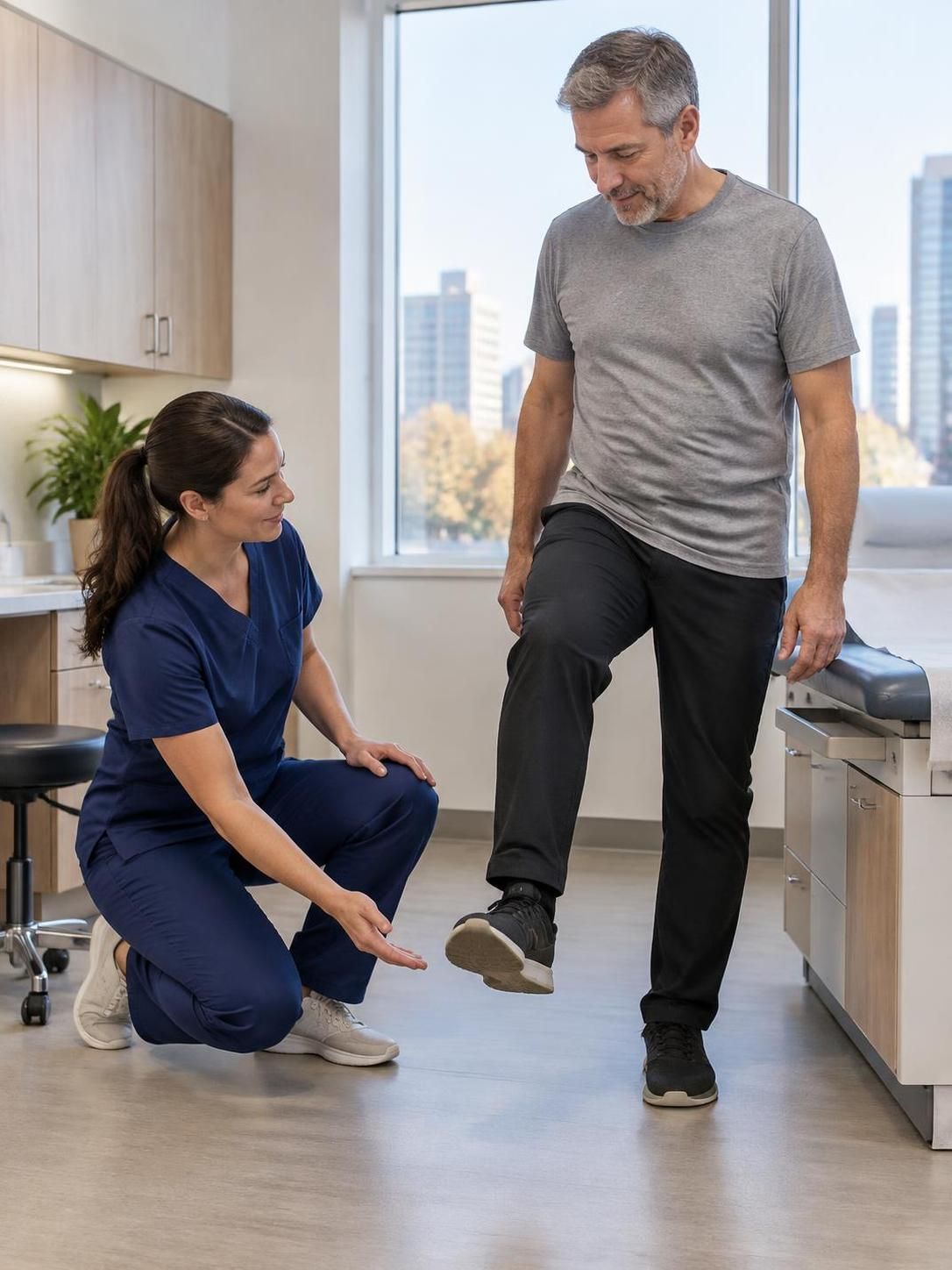
The consultation generally begins with questions about when the pain began, its path, duration and recent changes. The professional will want to know whether the weakness appeared suddenly or gradually, whether it is worsening, and whether it interferes with walking, stairs or foot control. Medical history, medications and the circumstances in which symptoms appeared also help guide the assessment.
The neurological examination may include strength testing of several muscle groups, assessment of sensation and reflexes, and observation of walking. Certain movements place tension on nerve structures; the straight leg raise test, for example, may reproduce radicular pain in some people. However, no single test can confirm or rule out all possible causes.
A fictional example illustrates this: a person experiences pain travelling down the back of the thigh after several hours of driving and says their leg “gives out.” If strength is preserved during the examination and the sensation of weakness varies with pain, the interpretation differs from that of a person who gradually loses the ability to lift the foot. In both cases, symptoms should be described precisely and reassessed if their nature changes.
An MRI is not necessary for every episode of sciatic pain. It may be considered if significant or persistent neurological signs are present, if the progression does not follow the expected course or if the results may change management. Electromyography, or EMG, answers specific questions about the function of nerves and muscles; it is not routine. The tests sometimes used in the assessment of sciatica should be selected according to the clinical presentation, not as a mandatory checklist.
Everyday factors that affect symptoms
In Rivière-des-Prairies, travelling by car or public transit, sedentary work and working from home can make certain positions difficult to tolerate. Prolonged posture may worsen pain in some people, while others feel worse when walking or bending. There is no universal position that relieves every symptom profile.
Walking, stairs, bending the back, coughing or changes of position may provide clues about progression, but cannot independently identify the cause. It may be helpful to note activities that worsen symptoms, those that remain possible, and changes in strength or sensation. Pain travelling further down the leg, spreading numbness or new weakness warrants reassessment.
When symptoms allow, maintaining or gradually resuming daily activities is often preferable to prolonged inactivity. Exercises must be adapted to the individual and stopped if pain clearly intensifies, travels further down the leg or is accompanied by increased weakness. Physiotherapy may help establish functional progression; the methods and goals depend on the assessment and services actually available.
For residents who wish to compare resources in the area, a physiotherapy clinic in Rivière-des-Prairies provides local information, without replacing the choice of a professional suited to their situation. The key is to have any neurological change reassessed rather than continuing an exercise that worsens symptoms.
When to seek a medical consultation or urgent care
A consultation is indicated if pain persists or returns, travels below the knee, disrupts sleep or limits walking and usual activities. Numbness, loss of sensation, weakness or reduced function should also be reported. How quickly an appointment is needed depends in part on the severity of the signs and their progression; a remote assessment cannot determine this.
See a professional promptly if weakness appears, walking becomes more difficult, sensation decreases or pain worsens despite adapting activities.
Obtain urgent medical assessment in the event of loss of bladder or bowel control, numbness in the saddle area, significant or rapidly progressive weakness, fever or poor general health. Significant trauma, pain in the context of cancer or infection, or rapid worsening also require urgent assessment.
These signs cannot establish a precise diagnosis, but they may indicate a situation that should not wait for routine follow-up. If there is any doubt about rapid worsening, urgent medical services should be prioritized rather than attempting treatment at home.
The resources from SOS Sciatica on signs that indicate when to seek care may help identify thresholds for concern, without replacing a personalized examination.
Management options after assessment
Management depends on the likely cause, the presence or absence of a motor deficit, and progression. When the situation is stable and no urgent signs are identified, advice on adjusting activities and gradually resuming movement may be part of the approach. Exercises, physiotherapy and certain manual therapies may be considered according to needs and tolerance.
Medications should be discussed with an authorized health professional, who can take other health conditions and individual risks into account. An injection may be considered in certain situations after medical assessment. If a significant neurological deficit progresses, significant compression is suspected or the clinical progression warrants it, specialist referral or even a surgical discussion may be necessary.
Neurovertebral decompressionneurovertebral decompression is a form of progressive, controlled motorized traction. For certain patients selected after assessment, it may be considered to temporarily modify the mechanical stresses applied to discs and nerve roots, particularly in presentations consistent with a disc herniation or protrusion. It does not put a disc “back in place,” is not suitable for all cases of sciatica and never replaces urgent assessment; results vary, and no number of sessions is suitable for everyone.
The contraindications and appropriateness of this approach must be verified individually. TAGMED Clinic, located at 1140 Beaumont Avenue in Mont-Royal, presents its sciatica management options in Montréal; this information does not mean that decompression is indicated in every case. This modality must also be distinguished from exercises, manual therapies, injections and surgery, which have different objectives.
Frequently asked questions about sciatica and muscle weakness
Does a tired leg mean a nerve is compressed?
Not necessarily. Pain, fatigue or apprehension may create a feeling of weakness; testing strength and function helps distinguish these situations.
When does weakness related to sciatica become urgent?
Significant or rapidly progressive weakness requires urgent assessment. Urinary or bowel problems and numbness in the saddle area are also emergency warning signs.
Is an MRI always needed to establish the diagnosis?
No. Imaging is selected based on symptoms, examination and progression, particularly when its results may guide care decisions.
Is neurovertebral decompression suitable for all cases of sciatica?
No. It may be considered for certain patients after an assessment and verification of contraindications. It does not replace urgent care, and results vary.
What should be noted before a consultation in Rivière-des-Prairies?
Note when symptoms began and how they have progressed, the activities that affect them, and any difficulties with walking or movement. Mention any weakness, loss of sensation or recent worsening.
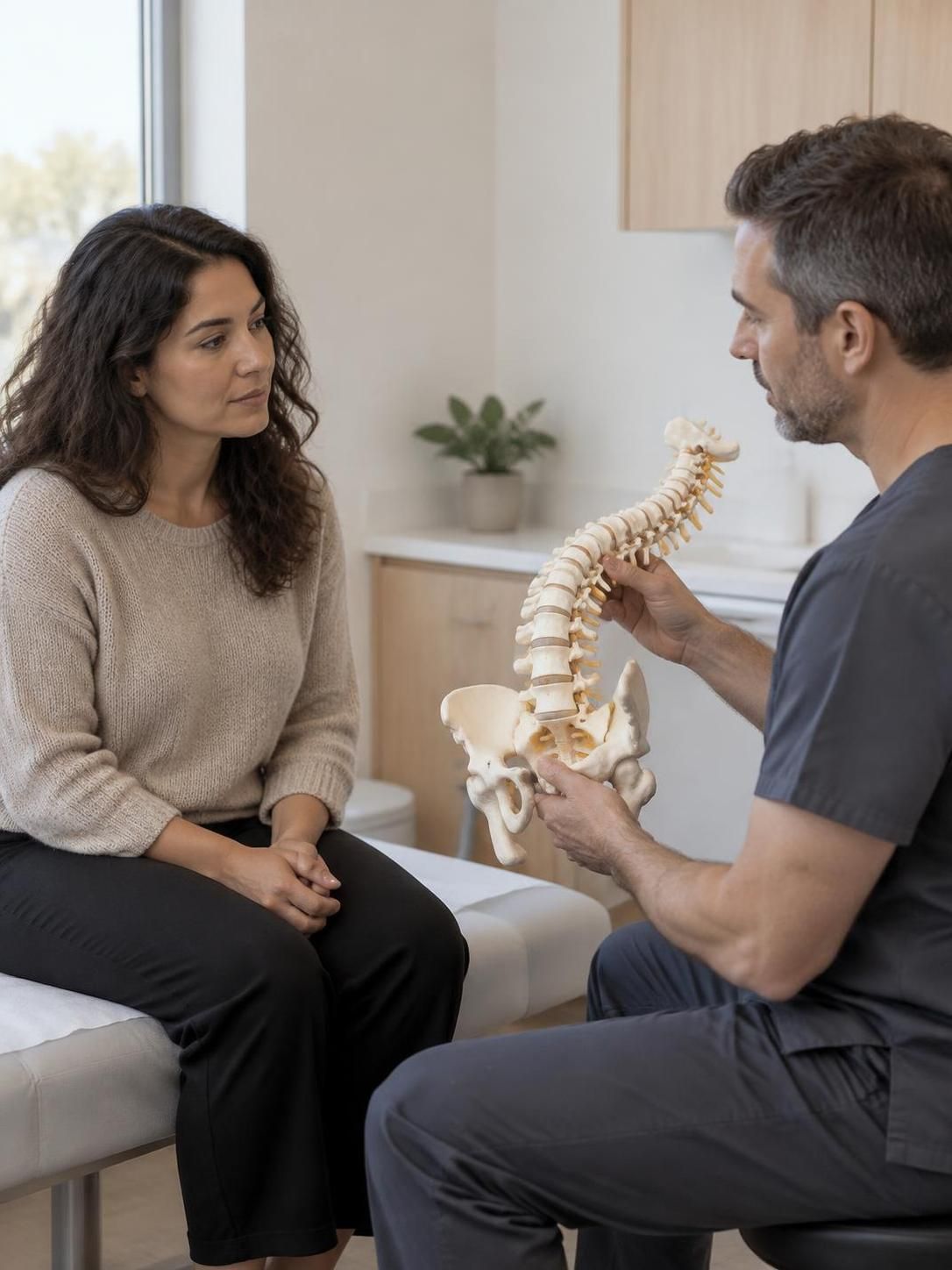
If low back pain travels down the leg or is accompanied by weakness, an assessment can help clarify the likely cause, the signs to monitor and the appropriateness of a conservative approach. People in Rivière-des-Prairies can review the options offered in Mont-Royal and determine whether a personalized assessment fits their situation.
Request information about an assessment
Sylvain Desforges, B.Sc., D.O., N.D., Doctor of Osteopathy
This content is educational and does not replace a personalized assessment or medical consultation.
