


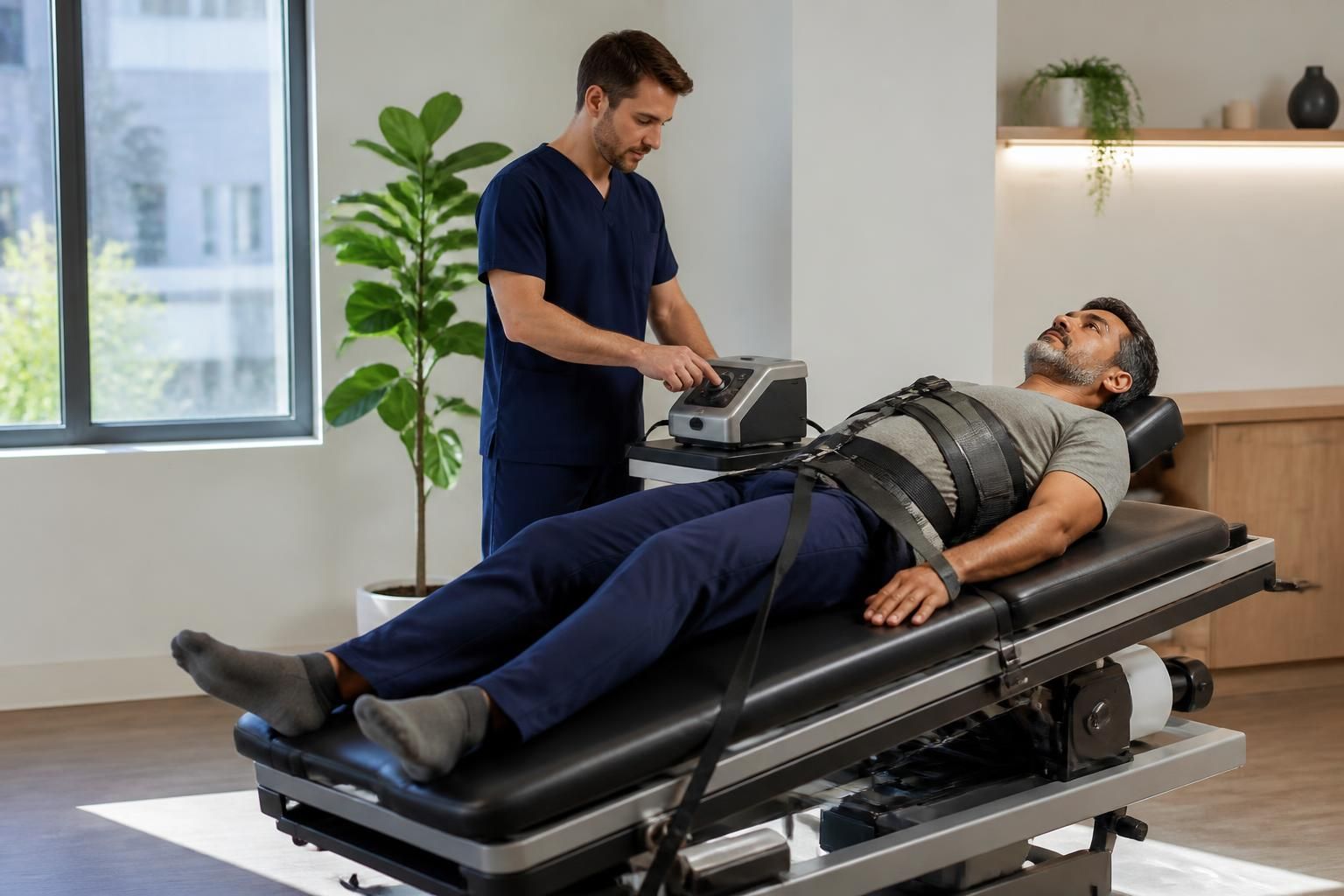




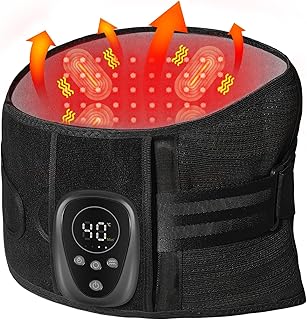

Neurovertebral decompression stands out as an innovative technique in the landscape of back care in Montréal, particularly for Ahuntsic-Cartierville residents facing persistent pain related to the spine, herniated discs, and nerve compression.
By promoting a non-invasive, personalized treatment, this method offers an appealing alternative for those seeking effective pain relief without immediately resorting to surgery. However, a clinical assessment remains essential to ensure its suitability based on symptoms and the individual situation.
In brief: key points on neurovertebral decompression in Ahuntsic-Cartierville
- Non-invasive treatment that reduces pressure on the intervertebral discs and nerves.
- Targeted indications: herniated disc, disc bulge, disc degeneration, and symptoms related to sciatica.
- Personalized approach based on a thorough clinical assessment.
- Significant improvement reported by approximately 71% of patients.
- Complementary care with physiotherapy and other rehabilitation care.
- Proximity to Ahuntsic-Cartierville, with specialized services such as TAGMED Clinic in Mount Royal.
- Watch for warning signs that may warrant urgent medical follow-up.
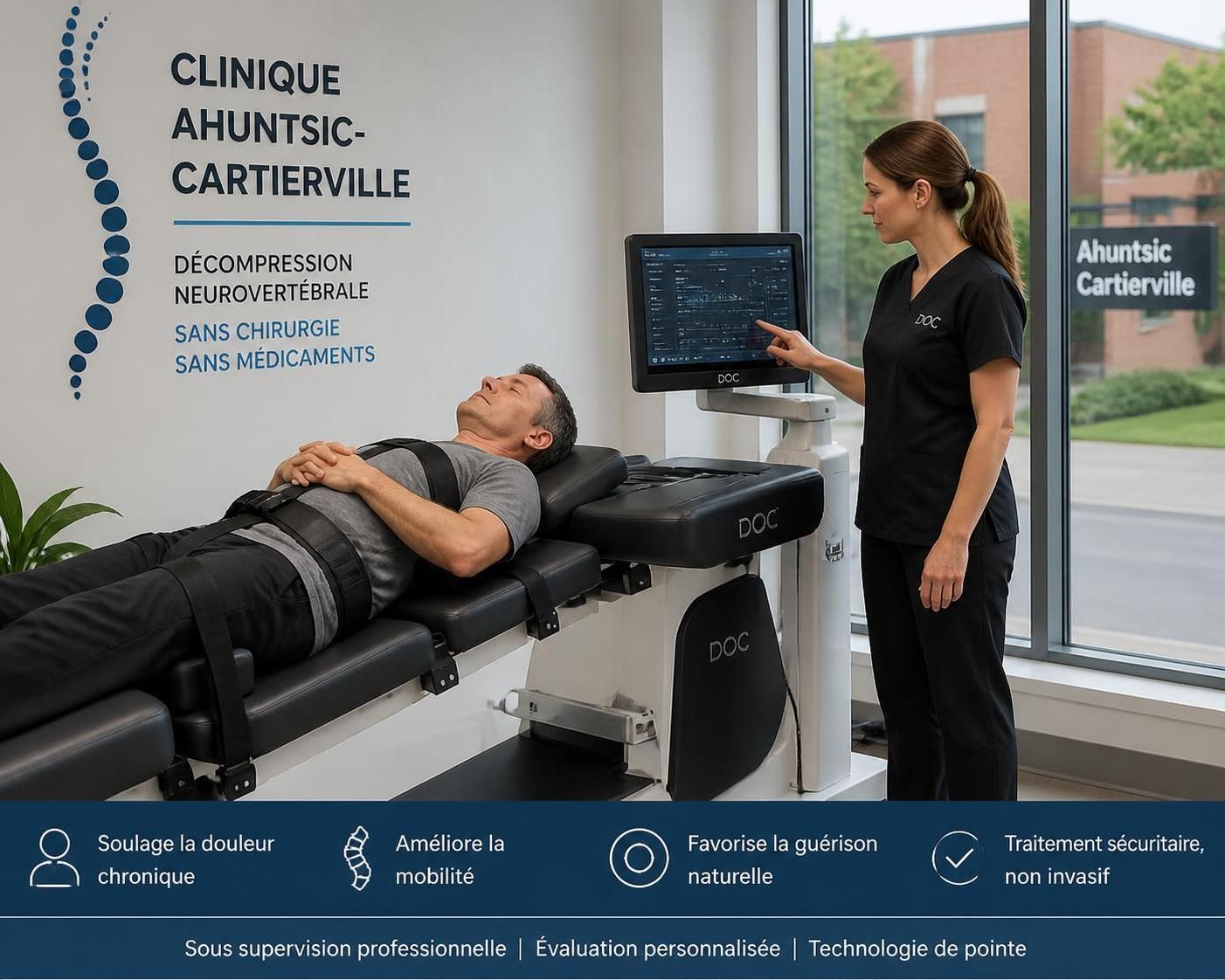
Understanding neurovertebral decompression: mechanisms suited to low back pain and sciatica
Neurovertebral decompression is based on a biomechanical principle involving controlled, motorized traction applied to the spine. This technique aims to reduce pressure on the intervertebral discs and surrounding nerve roots. The goal is not to abruptly straighten the spine, but rather to create vertebral space that may promote improved blood flow and, potentially, a process of resorption or relief.
In compatible cases such as a herniated disc or protrusion, reducing this nerve compression may result in less inflammation and gradual relief of low back pain that can sometimes radiate into the leg—a pain often experienced by Ahuntsic-Cartierville residents who work in jobs involving prolonged sitting or commuting by public transit.
Radicular pain, caused by irritation of a nerve root, is often responsible for pain travelling down the leg. This pain may be accompanied by tingling, numbness, or even muscle weakness, all signs consistent with disc compression. Decompression aims to lessen these symptoms by changing spinal mechanics without surgical intervention.
It is important to note that neurovertebral decompression is not suitable for all types of back pain. For example, pain that is purely muscular or related to spinal joints will generally not benefit from this type of treatment. Therefore, a precise assessment, sometimes including medical imaging, is essential to identify the mechanical components suited to this approach.
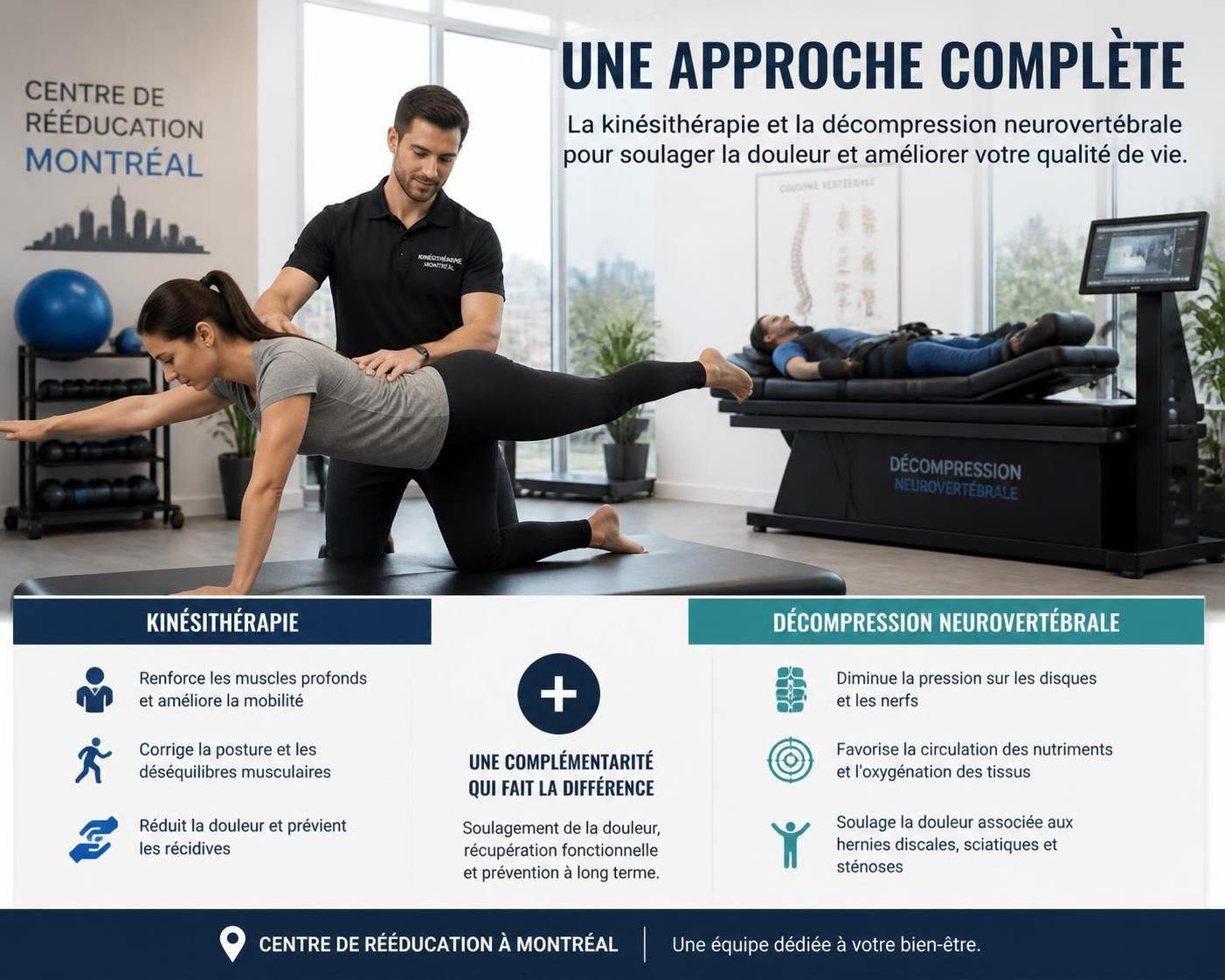
Decompression is also distinct from physiotherapy or manual care, which nonetheless contribute to spinal rehabilitation by strengthening muscles and flexibility. When thoughtfully combined with these methods, it may optimize functional recovery and reduce the risk of recurrent low back pain.
Understanding the complex mechanisms behind neurovertebral decompression supports informed decision-making and appropriate therapeutic follow-up.
Factors that may influence pain and response to treatment in Ahuntsic-Cartierville
Lifestyle factors specific to Ahuntsic-Cartierville residents, such as working from home, prolonged public transit use, or an active urban lifestyle, affect how the spine experiences and tolerates mechanical stress. These factors may worsen or lessen the pain some patients experience, particularly when nerve compression is moderate to severe.
For example, prolonged sitting without adequate lumbar support, common among office workers, places continuous stress on the lumbar discs. This stress contributes to disc degeneration and may worsen a herniation or protrusion. Neurovertebral decompression can then help relieve this mechanical stress and promote recovery.
Appropriately adapted physical activity remains a cornerstone of back pain management. In Ahuntsic-Cartierville, the many parks and bike paths encourage a gradual return to mobility. Nevertheless, it is essential to avoid sudden movements or unsuitable exercises that could worsen a disc condition. Physiotherapy then plays a complementary role by providing targeted, safe exercises to strengthen spinal stability and improve posture.
Some patients also find that their pain is influenced by nighttime postures or poor sleep quality. By helping reduce pain and relieve nerve tension, neurovertebral decompression may promote more restorative sleep. This improvement often contributes to a positive cycle in overall recovery.
Individual tolerance of treatments varies, notably according to age, the presence of other conditions, or a history of chronic pain. Personalizing decompression protocols, adjusted in the clinic, is therefore essential to maximize positive effects while minimizing potential discomfort, such as temporary sensations of stiffness.


Signs and situations to watch for: knowing when to seek care for spinal pain in Ahuntsic-Cartierville
It is essential to distinguish between spinal pain that may benefit from conservative care, such as neurovertebral decompression, and pain requiring urgent medical assessment. Several symptoms or changes warrant prompt consultation with a health professional. These signs may include:
- Severe and persistent pain, especially if it worsens despite treatment.
- Pain radiating below the knee with numbness, tingling, or increasing muscle weakness.
- Loss of sensation or a burning sensation in the perineal area (saddle anaesthesia).
- Difficulty walking or loss of bladder or bowel control, symptoms requiring urgent care.
- Unexplained fever or a decline in general health that may suggest an infectious process.
- Significant trauma to the spine with acute pain.
If these signs are present, prompt consultation with a health professional is recommended to prevent worsening. For other pain compatible with chronic nerve compression, a thorough assessment may guide treatment options such as neurovertebral decompression, while always respecting evidence-based practice and patient safety.
Seek care without delay if you notice: marked and progressive muscle weakness, loss of sphincter control, saddle anaesthesia, or fever associated with your back pain.
For persistent pain with a prescription for adapted activities, neurovertebral decompression may be considered following a specialized assessment.
Evolving treatment options for sciatica and low back pain in Ahuntsic-Cartierville
Treatments for sciatica and spine-related pain have advanced considerably in recent years, with the emergence of less invasive methods and personalized protocols. Neurovertebral decompression is part of this trend by offering treatment that specifically targets the mechanical cause without surgery.
Maintaining or gradually resuming daily activities is often recommended, taking each person’s abilities and tolerance into account. Rehabilitation through physiotherapy frequently accompanies decompression, with the aim of strengthening the trunk’s stabilizing muscles, improving posture, and preventing recurrence.
In a clinical setting, such as TAGMED Clinic in Mount Royal, near Ahuntsic-Cartierville, neurovertebral decompression is often integrated into a multidisciplinary care plan that also includes osteopathy. This integration supports comprehensive symptom management by combining progressive motorized traction with gentle manipulation and functional advice.
With regard to medications, they may be used to modulate pain and inflammation, according to the recommendations of an authorized professional. However, these treatments remain symptomatic and do not replace appropriate mechanical care. Similarly, epidural injections may be considered in some cases, but their effect is often temporary compared with a decompression approach.
Finally, surgery remains an option for cases of severe nerve compression or prolonged failure of conservative treatments. Neurovertebral decompression may be a preliminary step intended to optimize the chances of avoiding or delaying a more invasive intervention.
| Criterion | Neurovertebral decompression | Conventional treatments | Surgery |
|---|---|---|---|
| Invasiveness | Non-invasive | Variable (medications, injections) | Invasive |
| Objective | Mechanical reduction of nerve pressure | Symptom relief | Surgical decompression |
| Side effects | Minimal | Possible depending on treatment (e.g., medication effects) | Operative and post-operative risks |
| Reported effectiveness | Approximately 71% improvement | Variable | Variable, reserved for severe cases |
| Treatment duration | Several personalized sessions | Depends on the treatment | Hospitalization and post-operative rehabilitation |


What results can be expected after neurovertebral decompression treatment?
Most patients report a noticeable reduction in pain and improved mobility, often after several sessions adapted to their condition.
Is this technique suitable for all types of low back pain?
No, it is mainly indicated for nerve compression related to a herniated disc or protrusion. Pain that is purely muscular or joint-related may require other approaches.
What signs should prompt someone to quickly consult a professional?
Signs such as progressive weakness, loss of bladder control, or saddle anaesthesia require urgent medical assessment and should not be taken lightly.
Does neurovertebral decompression replace surgery?
Not necessarily. It may delay or help avoid surgery for some patients, but it does not replace surgery in all cases, particularly in the presence of severe neurological deficits.
What does a typical decompression session involve?
A session generally lasts between 15 and 30 minutes, during which the patient is positioned on a motorized device that applies controlled traction to the spine.
If you have low back pain or sciatica in Ahuntsic-Cartierville, a specialized assessment can determine whether neurovertebral decompression is an option worth considering for you. This process can help clarify the likely cause, signs to watch for, and the suitability of non-invasive treatment using motorized spinal traction.
Contact TAGMED Clinic in Mount Royal
Sylvain Desforges, B.Sc., D.O., N.D., osteopath and naturopath
This educational content does not replace a personalized assessment by a health professional.
