


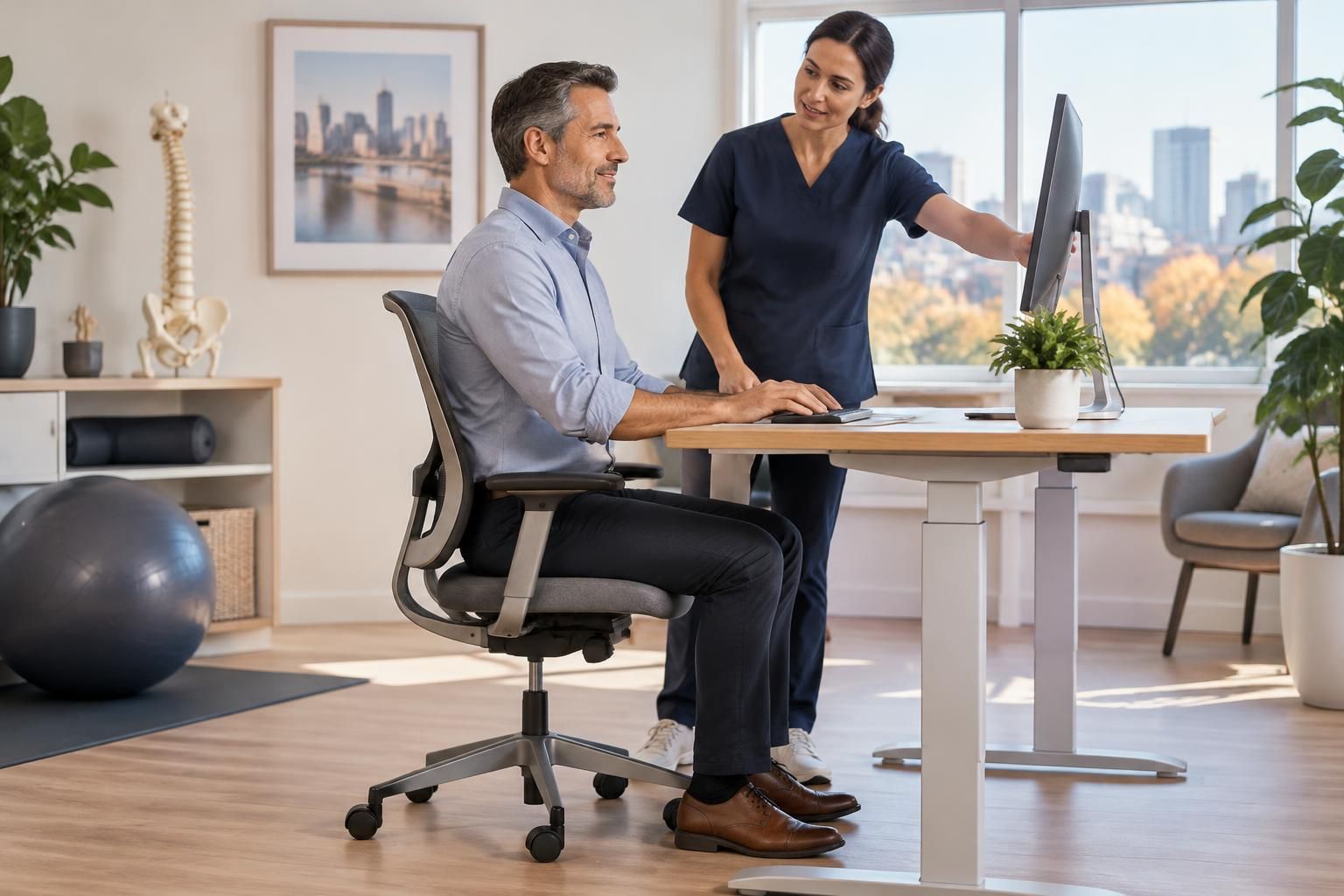
Pain that starts in the lower back or buttock and travels down the leg can make a workday difficult, especially when it worsens after long periods of sitting or driving. In Montréal-Ouest, as elsewhere, the term “postural sciatica” often describes symptoms influenced by positions and tasks; it is not enough to determine the cause or confirm compression of the sciatic nerve.
Workplace prevention relies less on perfect posture than on realistic adjustments: varying positions, adapting the workstation setup, and planning active breaks. These measures may improve work tolerance, but persistent pain, numbness, or weakness warrants an individualized assessment.
Posture does not explain everything. Pain aggravated by sitting can have several causes, and pain travelling down the leg is not enough to establish a diagnosis.
Movement matters. Alternating tasks and positions is often more realistic than trying to remain still in a supposedly ideal alignment.
Some signs require prompt attention. Progressive weakness or loss of bladder or bowel control requires urgent assessment.
In brief: adjust the workstation according to your comfort, regularly interrupt prolonged positions, and avoid forcing a movement that increases symptoms. If the pain travels below the knee, recurs often, or limits walking and sleep, seek advice from a health professional.


Postural sciatica in Montréal-Ouest: what your work position can change
The term “sciatica” is commonly used to describe pain felt in the buttock and sometimes along the leg. When a nerve root is irritated, pain may be accompanied by tingling, numbness, or weakness; however, low back pain that radiates is not always radiculopathy. Muscles, joints, or other structures may also contribute to symptoms.
A prolonged position can make pain more noticeable for some people, without necessarily being the original cause of the problem. For example, someone who works at a computer for several hours may notice that discomfort increases by late morning, then lessens after walking for a few minutes. Another person may feel better sitting and experience more discomfort when standing still.
There is therefore no single posture that suits all types of pain. A rounded back, a sustained arch in the lower back, crossed legs, or a seat that is too low may be uncomfortable for some people, but their effect depends on the person, the duration, and all tasks being performed. The goal is to identify tolerable positions and reduce prolonged exposure rather than constantly monitor yourself.
Working from home can blur this distinction: a kitchen table, a laptop set too low, and little movement can prolong a position that was not chosen for work. In an office or while travelling between Montréal-Ouest and other areas, time spent sitting can also add to screen-based work. A simple change—switching tasks, standing up for a call, or taking a short walk—may help prevent the entire day from being spent in the same posture.
Occupational health prevention recommendations focus on demands, task organization, and opportunities to adapt the work environment, not only the chair. Preventing ergonomic risks in the workplace offers an approach focused on identifying and reducing risk factors. To understand the various possible causes of pain radiating down the leg, also consult the guide to the causes and assessment of sciatica.
An ergonomic posture is therefore not a fixed position to maintain for eight hours. Rather, it involves an adjustable workstation and an organization that allows you to change position without constantly interrupting work.
Workstation setup and alternating positions
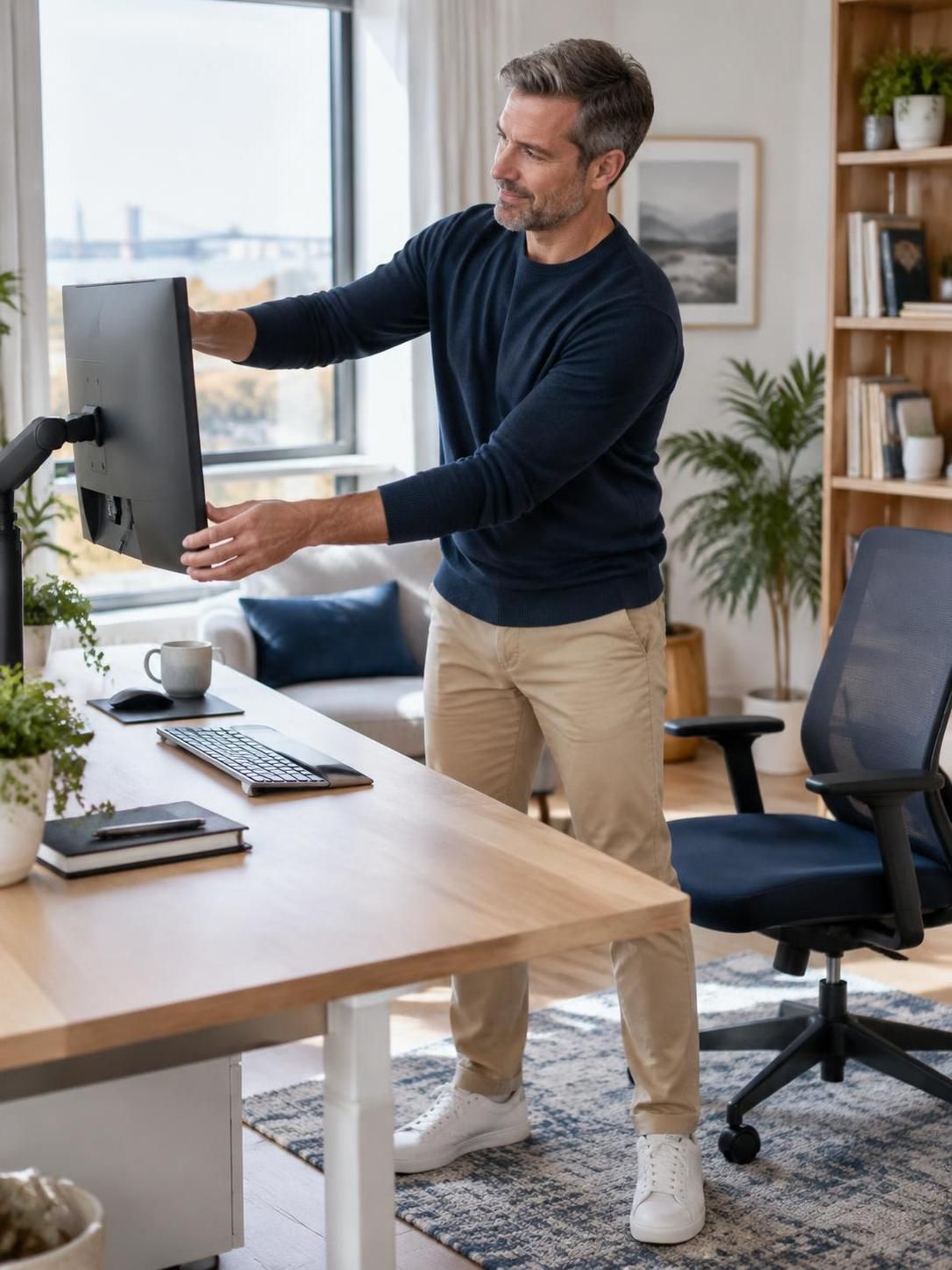
To review your workstation setup, start by observing what actually happens throughout the day. Does the screen force you to tilt your head? Do your feet rest on the floor? Is the keyboard close enough for your shoulders to remain relaxed? A useful adjustment is one that reduces a noticeable demand and can be maintained without additional discomfort.
An adjustable chair can make adaptation easier, but it is not a solution on its own. Your feet should be supported, the backrest should provide comfortable support, and your forearms should rest close to your body without raising your shoulders. If the screen is too low, placing it on a stand can reduce the need to lean forward; with a laptop, a separate keyboard and mouse can allow your hands to be brought closer while raising the screen.
The right height depends on the person’s size, the task, and their comfort. There is no need to aim for precise angles or keep the knees and elbows in a perfect position. If an adjustment increases pain, causes tingling, or makes you tense up, it is better to modify it than to follow it at all costs.
Variety is as important as equipment. Alternating screen work with a standing task, walking for a few minutes, taking a call while moving, or briefly changing chairs can reduce the time spent in a position that irritates symptoms. Active breaks do not need to be long or follow the same schedule for everyone; they can be incorporated into the natural transitions of the day.
- At the screen: place content at a height that allows you to look straight ahead and keep frequently used items within reach.
- When sitting: aim for stable foot support and a relaxed posture, then change position before discomfort becomes significant.
- When working remotely: avoid working for several hours on a laptop placed on your lap or on a table that is too low; make short transitions between tasks.
- In the office: identify with the team the tasks or equipment that require a prolonged posture and request an appropriate adjustment where possible.
An ergonomic approach benefits from considering work as a whole: task duration, pace, travel, loads, and room for adjustment. Advice from ÉTS on ergonomics and work adaptation reinforces this adjustment-based approach. If pain prevents normal functioning despite changes, it is preferable to have the situation assessed rather than adding accessories without knowing what is maintaining the symptoms.
There is no need to wait for an ideal day to get started: a better-positioned screen, a movement break, or a task performed standing can be modest but practical adjustments.
Driving, stretching exercises, and symptom management during the day
Driving to work can add a period of sitting to an already sedentary day. Adjust the seat so you can reach the pedals without fully extending your leg or leaning toward the steering wheel, and choose an angle that feels comfortable to you. On a long trip, taking a break to walk and change position may be helpful; however, there is no universal interval that suits every driver.
Stretching exercises are not automatically appropriate simply because pain travels down the leg. A bending movement or position that relieves one person may intensify another person’s symptoms. If a movement causes pain to travel farther down the leg, increases numbness, or triggers weakness, stop it and seek reassessment.
Gentle stretching may be considered when it is comfortable and recommended in the given context, but it cannot on its own identify the cause. Piriformis syndrome, nerve root irritation, and other problems can produce similar sensations. An assessment takes into account the history of symptoms, their distribution, and the examination; imaging is not necessary in every situation.
Heat or a change in activity may provide temporary comfort for some people, but responses vary. Protect the skin if using a heat source and avoid an application that causes a burning sensation or increases discomfort. Accessories, cushions, and belts do not replace assessment of persistent pain; be wary of promises of guaranteed relief or of treating nerve compression with a product alone.
| Work situation | Cautious adjustment | When to reassess |
|---|---|---|
| Prolonged sitting work | Vary positions, bring tools closer, and incorporate short periods of movement. | If pain intensifies or travels farther down the leg. |
| Driving or travel | Adjust the seat to reach the controls without tensing up and plan stops on long trips. | If driving becomes difficult or the leg loses strength or sensation. |
| Standing task | Avoid prolonged stillness and alternate tasks when work organization permits. | If pain limits walking or persists after work. |
| Exercise or stretching | Choose a tolerated movement, without forcing it or trying to push through the pain. | Stop if symptoms spread or numbness progresses. |
For guidance on activity and stretching suited to the situation, the resource on exercises when sciatica symptoms are present can help prepare a discussion with a professional. The key is to favour gradual, cautious progression rather than a one-size-fits-all protocol found online.
A workday may also require temporary task modifications. When lifting loads, driving, or travel clearly aggravate symptoms, discussing this with the employer or occupational health personnel may make it possible to explore realistic options, without assuming that time off work or maintaining all tasks is required in every case.
When to seek care for pain travelling down the leg
A clinical assessment is indicated if pain persists, recurs regularly, or limits walking, sleep, or usual tasks. Pain below the knee, tingling, loss of sensation, or weakness also warrant professional attention, especially if symptoms are changing. These signs do not on their own confirm sciatica, but they help guide the examination.
Seek urgent care without delay if you lose bladder or bowel control, experience numbness in the saddle area, or have significant or rapidly progressing weakness. Fever or feeling generally unwell, significant trauma, pain in the context of cancer or infection, or rapid worsening also require urgent medical assessment.
If these signs are present, do not try to address the situation only through stretches, chair changes, or traction. An urgent medical assessment can determine the appropriate next steps.
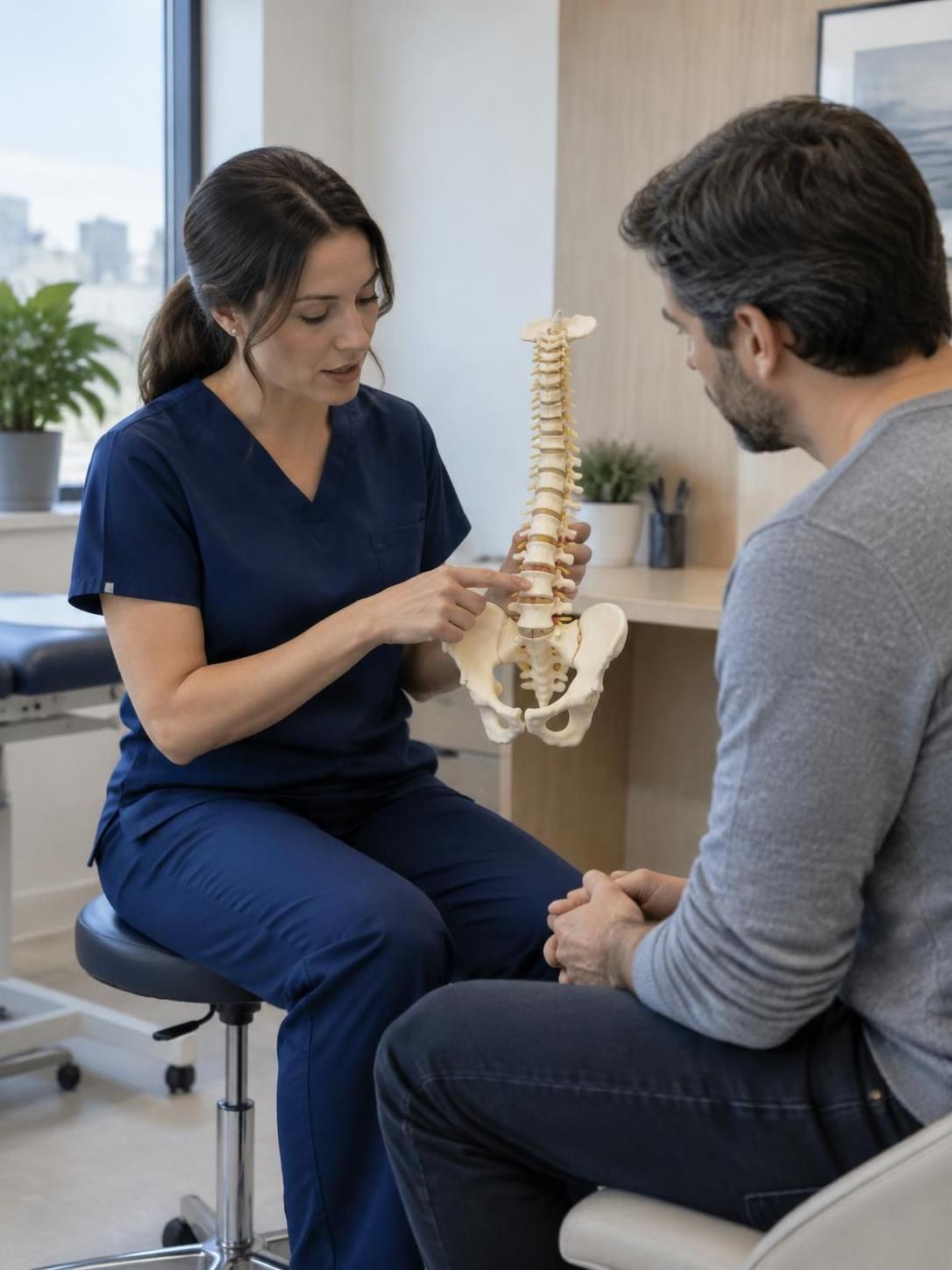
When there are no emergency signs, the professional can assess movement, strength, sensation, and the progression of symptoms. Depending on the clinical picture, they may recommend activity advice, adapted exercises, physiotherapy, or manual care when appropriate. Medications require the advice of an authorized professional, while injections or a surgical opinion may be discussed in some situations based on symptoms, examination findings, and progression.
For people in Montréal-Ouest, the challenge is often finding an assessment that takes real-life constraints into account: commuting, screen-based work, and difficulty taking breaks. Information from the INSPQ resource on work-related musculoskeletal disorders can also support reflection on occupational factors, without replacing advice suited to your situation.
Pain that gradually changes walking or strength should not automatically be attributed to poor posture. The more clearly its progression is described—onset, aggravating positions, associated symptoms—the more useful the assessment can be.
Management options and the role of spinal decompression
Management depends on the likely cause, symptom severity, and their progression. When safe, maintaining tolerated activity and gradually resuming it may be preferable to prolonged immobility. A professional can help select exercises or movement strategies suited to the situation, then adjust them based on the body’s response.
Spinal decompression is a form of motorized, gradual, controlled spinal traction. Following an assessment, it may be considered for some patients whose profile is compatible with symptoms related to a disc or nerve root. Its purpose is to temporarily modify certain mechanical stresses applied to the spine; it does not put a disc back in place and is not suitable for all radiating pain.
Results vary, and no number of sessions applies to everyone. The assessment must take into account medical history, neurological symptoms, available examinations, and possible contraindications. Decompression never replaces urgent assessment and cannot be presented as necessarily avoiding surgery.
Exercises, manual care, medications, injections, and surgery have different roles depending on the situation. Motorized traction is not the same as conventional traction, and neither approach is universally superior. Potential benefits, limitations, and alternatives should be discussed before beginning an intervention.
TAGMED Clinic indicates that, depending on the assessment, it offers motorized spinal decompression, specific osteopathy, or a precision percussor. Its Montréal clinic is located at 1140 Beaumont Avenue in Mont-Royal, near Outremont and Côte-des-Neiges; this address does not mean it is located in Montréal-Ouest. People who wish to explore sciatica assessment and management options in Montréal can consult this resource while keeping in mind that the choice depends on the clinical profile.
For lasting workplace prevention, workstation adaptations and a clinical approach can complement each other: one targets everyday demands, while the other helps clarify symptoms and relevant options. No strategy should delay care if concerning neurological signs appear.
Frequently asked questions about postural sciatica at work
Can poor posture cause sciatica?
A prolonged position can aggravate symptoms for some people, but it does not on its own identify the cause. Pain radiating down the leg can have several origins.
How often should you take active breaks?
There is no universal frequency. Try to vary tasks and move before discomfort becomes pronounced, taking your work and tolerance into account.
Are stretching exercises always helpful?
No. A movement may relieve one person and irritate another person’s symptoms. Stop if pain travels farther down the leg, numbness progresses, or weakness appears.
When should you seek care for sciatic pain?
Seek care if pain persists or recurs, limits walking or sleep, or is accompanied by numbness, loss of sensation, or weakness. Loss of bladder or bowel control, saddle anaesthesia, or rapidly progressing weakness require urgent assessment.
Is spinal decompression suitable for all types of sciatica?
No. This motorized traction may be considered for some patients after an assessment, but results vary and contraindications exist. It does not replace urgent medical assessment or other management options.
If pain travelling down the leg complicates work, travel, or sleep, an assessment can help clarify the likely cause, signs to watch for, and the relevance of a conservative approach. TAGMED Clinic, located in Mont-Royal, provides information on managing sciatica symptoms and workplace ergonomics.
Sylvain Desforges, B.Sc., D.O., N.D., osteopath and naturopath
This content is educational and does not replace a personalized assessment or medical advice.
