


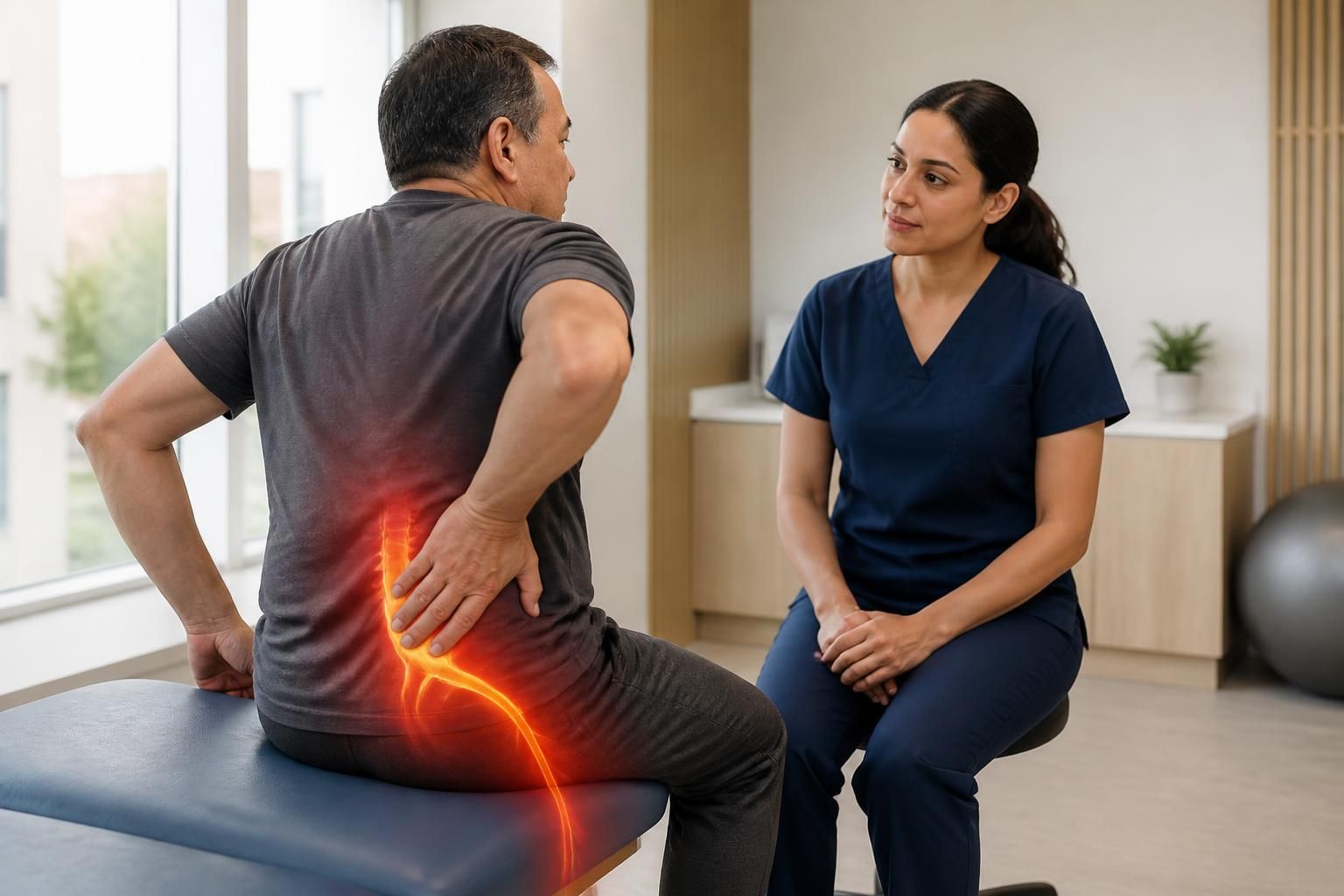


Sciatica, characterized by nerve pain radiating from the lower back to the leg, often causes concern among residents of Rivière-des-Prairies–Pointe-aux-Trembles, particularly when it leads to numbness, tingling, or muscle weakness. Promptly recognizing the warning signs specific to this condition is essential to avoid complications and tailor sciatica treatment to the clinical situation.
In this context, the Montréal area, with its urban lifestyle and transportation-related factors, presents particular challenges for managing sciatic pain. Being vigilant for symptoms associated with sciatic nerve inflammation can help direct the person promptly toward an appropriate assessment, while considering the treatment options available in 2026.
Key warning signs of sciatic nerve pain in Rivière-des-Prairies–Pointe-aux-Trembles
Many pains commonly described as “sciatica” result from irritation or compression of the sciatic nerve, located below the lumbar spine. Indeed, classic symptoms include pain radiating from the lower back to the buttock, thigh, and sometimes as far as the foot. However, this alone is not enough to establish an accurate diagnosis. In Rivière-des-Prairies–Pointe-aux-Trembles, where daily life often involves lengthy commutes, prolonged sitting, or carrying loads, recognizing warning signs is essential.
Among these signs, the onset of marked muscle weakness in the leg or foot is an indicator of severity. This weakness may appear, for example, as difficulty lifting the foot (foot drop) or walking on the toes or heels. The onset of significant numbness, particularly in the so-called “saddle” region (around the perineum), should also prompt prompt medical consultation. This perineal numbness may indicate cauda equina syndrome, which requires urgent medical care.
Another important warning concerns sphincter dysfunction. Difficulty controlling the bladder or bowels, with involuntary loss of urine or stool, may also accompany severe sciatica. These symptoms require immediate assessment, particularly in the context of especially intense sciatic pain in Rivière-des-Prairies–Pointe-aux-Trembles.
Finally, symptoms suggestive of sciatic nerve inflammation, such as burning, persistent tingling, or pins and needles, signal a need for increased attention. These signs may be accompanied by pain that worsens with prolonged sitting, on public transit, or while working remotely, all of which are very common in this urban area.
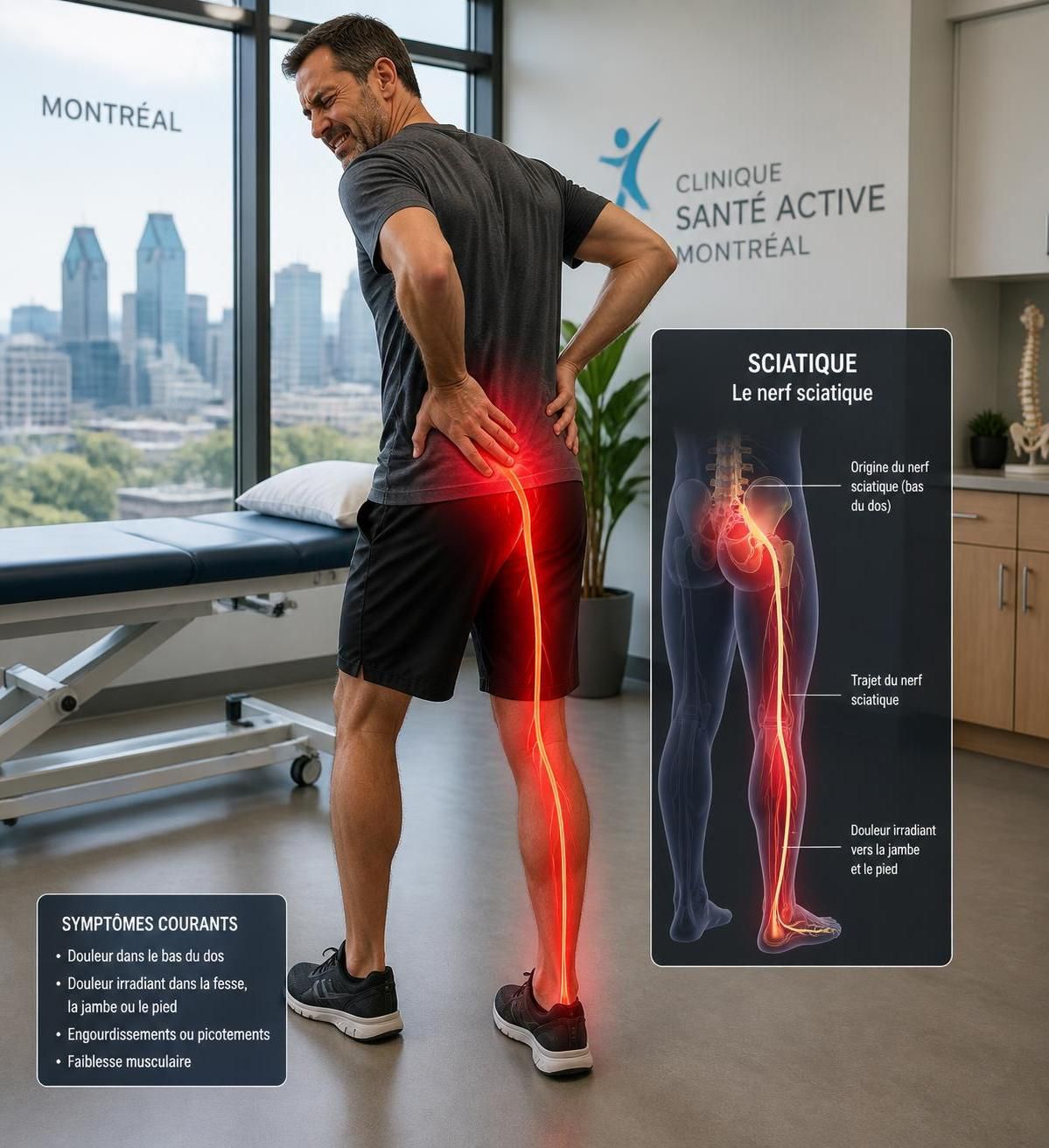
Distinguishing symptoms for a better understanding of sciatic pain in Rivière-des-Prairies
Sciatic nerve pain presents in many ways, and for residents of Rivière-des-Prairies–Pointe-aux-Trembles, understanding this variety is a step toward more effective management. While some people describe a dull ache or pulling sensation, others report electric shock-like sensations or burning. These different symptom profiles partly reflect the origin and level of nerve involvement.
For example, compression of the L5 nerve root may cause pain radiating to the outer thigh, side of the calf, and top of the foot, often accompanied by tingling. In contrast, involvement of the S1 nerve root affects the back of the thigh, calf, and sole of the foot, sometimes with more throbbing sensations. Although important, this distinction should not be used alone to establish a diagnosis, which requires an overall analysis of symptoms and a complete clinical examination.
In addition to pain, sensory disturbances such as localized numbness or tingling help identify sciatic nerve inflammation. These sensory changes may fluctuate throughout the day and worsen with prolonged sitting, a common aggravating factor in office settings and during daily commutes in Rivière-des-Prairies–Pointe-aux-Trembles.
Muscle weakness, for its part, may reflect a motor deficit. For example, difficulty bending the knee or lifting the foot can complicate walking and everyday activities. In some patients, this weakness may progress gradually, often illustrating more severe mechanical nerve compression such as a herniated disc or foraminal stenosis. These symptoms warrant a cautious approach.
To further understand these symptoms and their implications, it may be helpful to consult specialized resources describing the nuances among different types of sciatica and appropriate care.
Comparative manifestations of the L5 and S1 nerve roots
| Nerve root | Typical pain area | Sensory symptoms | Motor signs |
|---|---|---|---|
| L5 | Buttock, outer thigh, top of the foot | Tingling, burning in the foot and leg | Weakness in foot dorsiflexion (lifting the toes) |
| S1 | Buttock, back of the thigh, calf, sole of the foot | Numbness, tingling behind the leg and foot | Weakness in plantar flexion (preventing standing on the toes) |
How local conditions affect the perception and progression of sciatic symptoms in Rivière-des-Prairies–Pointe-aux-Trembles
In Rivière-des-Prairies–Pointe-aux-Trembles, a range of lifestyle and environmental factors can alter the intensity and progression of sciatic pain. For example, prolonged sitting, often due to remote work or travelling by car, increases pressure on an inflamed sciatic nerve. This situation may worsen numbness and nerve pain, particularly at the end of the day.
Similarly, certain postures adopted during office work in neighbourhoods such as Pointe-aux-Trembles promote lower-back muscle tension, which in turn may worsen nerve irritation. Frequent driving in the Montréal metropolitan area, particularly for Rivière-des-Prairies residents, also places demands on the back and may trigger a recurrence of symptoms.
From a functional perspective, walking, stairs, or intense physical activities may either relieve or worsen pain. For some, moderate walking helps release tension, while others experience increased symptoms. This variation highlights the importance of a personalized assessment before recommending a suitable exercise program.
Finally, tolerance for pain and discomfort varies among patients, affecting their ability to manage symptoms day to day. Sciatica that is not addressed or is poorly understood can lead to significant limitations at work and in family activities, which is especially important in an active community such as Rivière-des-Prairies–Pointe-aux-Trembles.
- Prolonged sitting : a common aggravating factor, especially during remote work
- Physical activity : should be gradual and adapted, avoiding triggering exertion
- Walking and stairs : may influence pain depending on the individual profile
- Work posture : poor workstation setup may increase nerve irritation
- Psychosocial factors : stress and anxiety may heighten the perception of pain
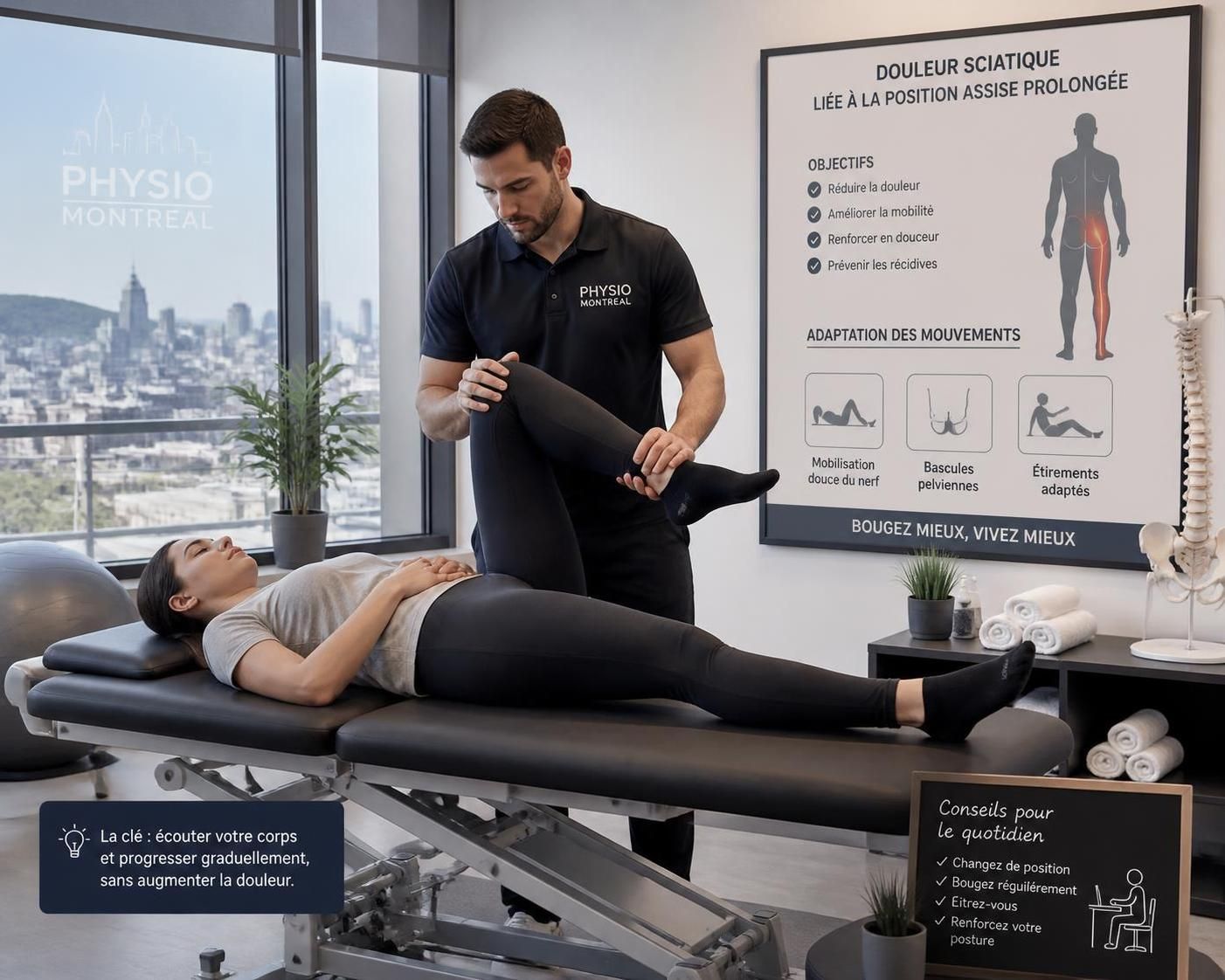
Recognizing signs that warrant urgent or non-urgent consultation for sciatica
When facing sciatic pain, it is crucial to distinguish signs requiring immediate medical assessment from those that allow for monitoring and conservative treatment. An urgent consultation is necessary in particular if pain is accompanied by a marked motor deficit, a noticeable loss of strength, or an abnormal sensation around the perineum, with urinary or bowel dysfunction.
More broadly, sciatica that persists beyond one week without improvement, or pain that limits usual activities and is consistently worsened by sitting or walking, warrants prompt consultation with a health professional. In Rivière-des-Prairies–Pointe-aux-Trembles, where access to health services varies, it is advisable to prioritize local specialized clinics such as TAGMED Clinic for a thorough assessment.
Urgent cases should be directed to a medical service without delay. Prompt care is critical to help avoid permanent complications related to prolonged nerve compression. In addition, certain secondary symptoms, such as fever associated with pain or major mobility limitations, also warrant expedited consultation.
Careful medical follow-up will make it possible to select the most appropriate treatment options, including medication recommendations, manual care, or spinal decompression. Find more information on signs indicating when to seek care for sciatic pain.
Treatment options and the importance of spinal decompression for sciatica in Montréal
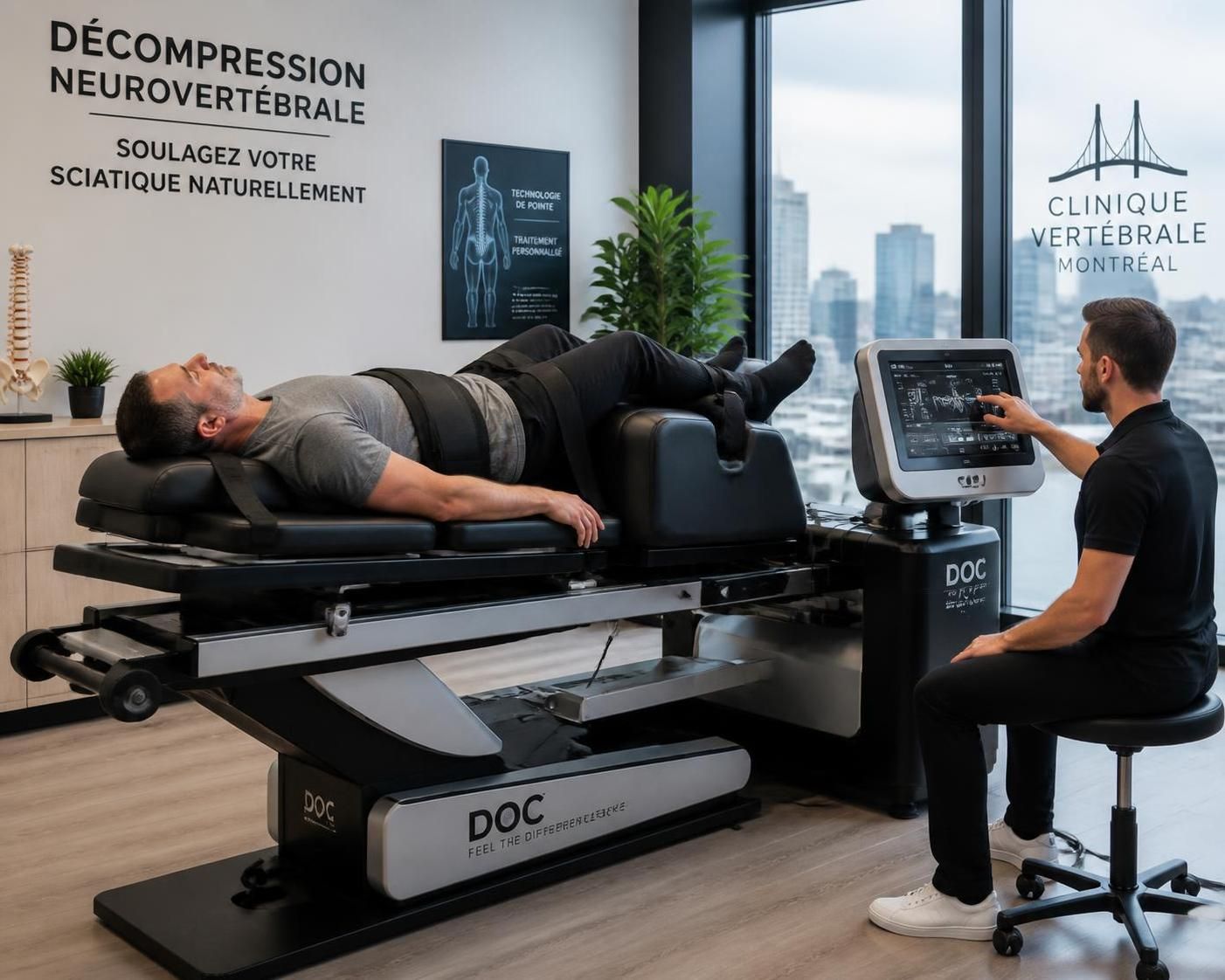
Managing sciatica often involves gradual approaches that begin with maintaining or resuming appropriate physical activity when safe. In Montréal, particularly among residents of Rivière-des-Prairies–Pointe-aux-Trembles, motorized spinal decompression is an option considered after a rigorous clinical assessment, especially in cases of herniated disc, disc protrusion, or foraminal stenosis.
This technique involves controlled, gradual traction intended to temporarily reduce pressure exerted on the intervertebral discs and nerve roots. It differs from conventional traction through its motorized and precise approach, offering the potential for relief for some patients whose sciatica is consistent with these mechanical factors. However, it is important to note that decompression is not suitable for everyone and does not replace urgent medical assessment when severe warning signs are present.
Treatment at TAGMED Clinic, located in Mont-Royal near Côte-des-Neiges and Outremont, may include spinal decompression combined with gentle manual techniques such as specific osteopathy or the use of a precision percussion device to improve mobility and reduce secondary tension. Experience suggests that this integrated approach may benefit some patients, but results vary according to the clinical profile and adherence to contraindications.
In addition, tailored specific exercises taught after assessment contribute to maintaining functional mobility. Careful follow-up is recommended to adjust the number of sessions and treatment progression according to the individual response.
To learn more about motorized spinal decompression and its role in treating sciatica in Montréal, consulting specialized professionals is the best approach.
What signs should prompt a prompt consultation for sciatica?
Progressive muscle weakness, numbness in the perineal region, or urinary control problems are signs requiring urgent medical consultation. Intense pain and associated fever also call for prompt medical advice.
Can sciatic pain be managed at home in Rivière-des-Prairies–Pointe-aux-Trembles?
In cases without serious warning signs, measures such as relative rest, gentle movement, and cautious pain management may be considered. However, consulting a professional for appropriate follow-up is recommended.
Is spinal decompression suitable for all cases of sciatica?
No, this technique is reserved for certain carefully assessed profiles, especially in the presence of a herniated disc or compatible stenosis. It does not replace urgent medical assessment and is not automatically indicated in all cases.
What tests can identify the cause of sciatica?
A clinical examination combined with imaging such as MRI can help clarify the source of pain, particularly to detect a herniated disc or stenosis. These tests are decided based on the progression and clinical signs.
When does sciatic pain require surgery?
Surgery may be considered if a significant neurological deficit persists or if nerve compression is severe and does not respond to conservative treatments. This decision is made by a specialist after a complete assessment.
If you live in Rivière-des-Prairies–Pointe-aux-Trembles and experience nerve pain in the lower back radiating down the leg, an assessment can help clarify the likely cause of your discomfort. This process will also help you understand which signs to monitor and determine whether a conservative approach is appropriate or whether more specialized follow-up is needed.
Book an appointment for a sciatica assessment in Montréal
Dr. Sylvain Desforges, B.Sc., D.O., N.D., osteopath
This content is educational and does not replace a personalized consultation with a health professional.
