


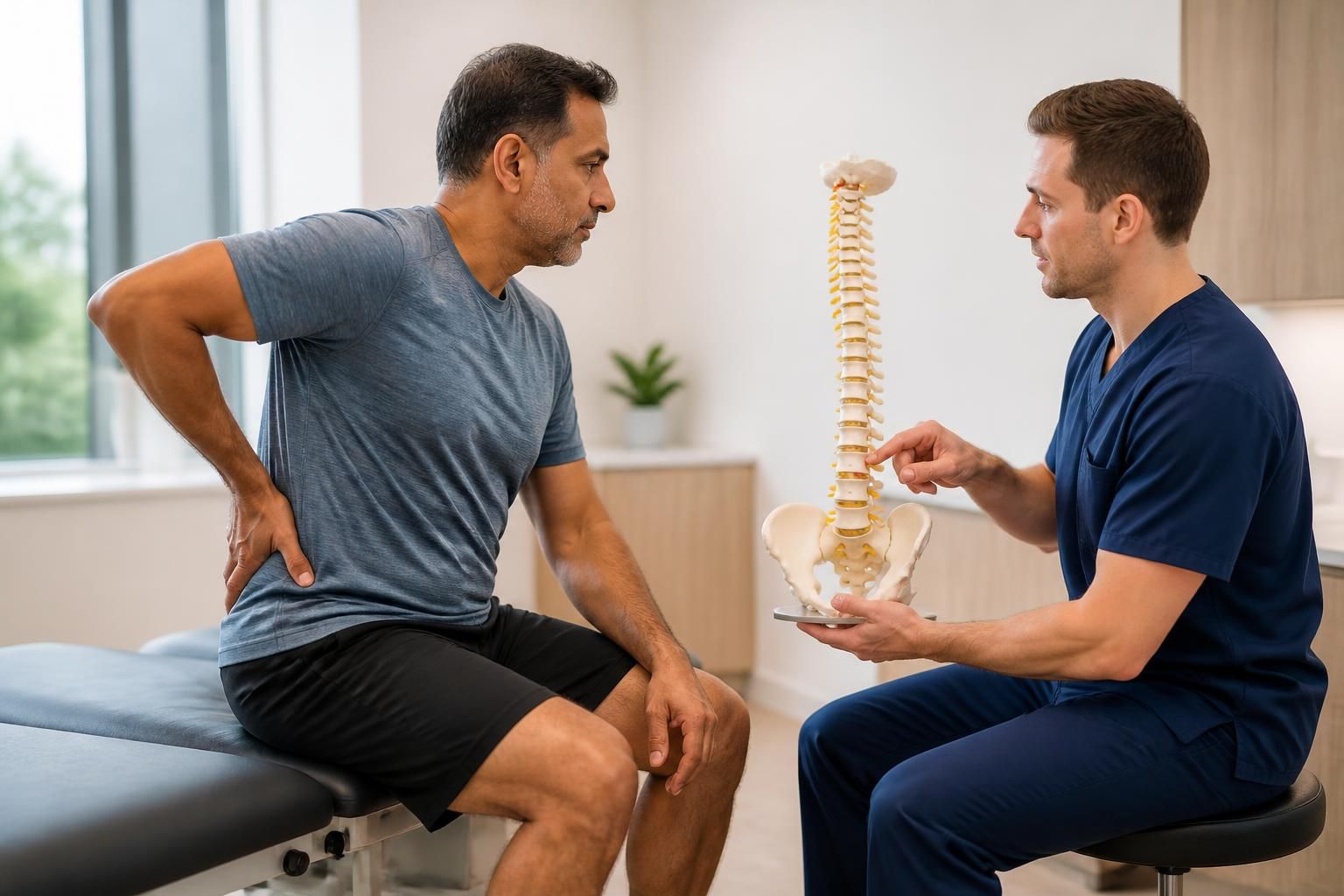


Sciatic pain can significantly affect participation in sports, particularly in an urban setting such as Montréal-Nord, where outdoor and indoor physical activities are very popular. Accurately understanding the sciatic nerve, its symptoms, and how to adapt your exercises is essential for preventing injuries and protecting back health. Athletes of all levels need to know how to recognize signs of nerve irritation or compression in order to manage their condition effectively without pushing their body too hard.
Prevention advice, including suitable exercises, well-targeted stretches, and appropriate muscle strengthening, can directly help reduce sciatic pain related to sports participation. In Montréal-Nord, where remote work and frequent travel alter posture, properly incorporating these recommendations into your routine can support overall well-being. It is also important to seek a professional assessment when symptoms persist or worsen, in order to avoid complications.
In brief: key points for balancing sciatic pain and sports activities in Montréal-Nord
- Understanding the sciatic nerve : pain that travels from the lower back to the leg.
- Recognizing symptoms : pain, numbness, tingling, and one-sided muscle weakness.
- Adapting exercises : prioritize stretching and strengthening to avoid aggravation.
- Injury prevention : posture, warm-up, sports equipment, and consistency.
- Specialized consultation : recommended when signs persist, or in cases of weakness or loss of function.
- Neurovertebral decompression : a non-surgical option that may be considered following medical assessment.
Understanding sciatic pain to better manage sports activities
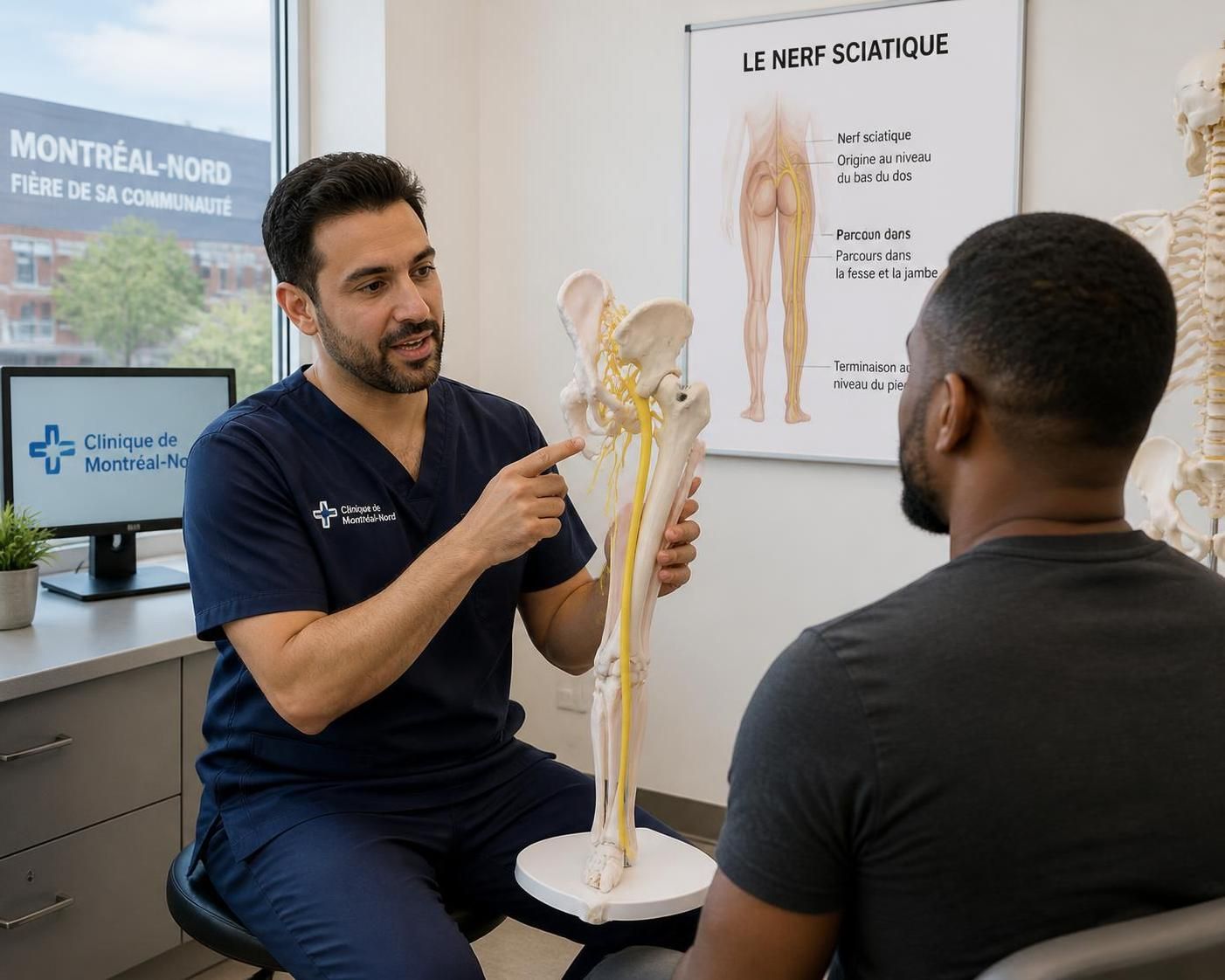
The sciatic nerve is the largest and longest nerve in the human body. It originates from the central nerve roots located in the lower back, between the L4 and S3 vertebrae. Its pathway travels through the buttock, down the back of the thigh, then divides around the knee toward the leg and foot. This anatomy explains why sciatic pain can occur along a specific, often one-sided pathway from the lower back to the foot.
In a sports context, this pain can be triggered by various causes, including compression or irritation of the sciatic nerve caused by a herniated disc, disc protrusion, or foraminal stenosis. These conditions affect the spine by altering pressure on the nerve roots. In Montréal-Nord, where the population is active and often exposed to sedentary days followed by intense sports participation, early detection of symptoms is crucial.
Sciatica is characterized not only by shooting or burning pain in the lower back and buttock, but also by sensations known as paresthesia, such as tingling or numbness. Muscle weakness may also occur. It is important to note that these symptoms should not be confused with simple low back pain, as sciatica involves a specific nerve impairment.
A comprehensive assessment, often performed in physiotherapy, can identify whether the pain is related to nerve dysfunction or other musculoskeletal issues. This distinction is fundamental in guiding appropriate care, whether conservative or more targeted.
To learn more about understanding the possible causes of sciatica, it is advisable to consult specialized resources that support individuals in their prevention and treatment process.
Main aggravating factors and practical advice for safely participating in sports despite sciatic pain
Managing sciatic pain during sports activities requires particular attention to factors that may aggravate or relieve symptoms. In Montréal-Nord, where climate conditions and the urban environment can influence sports habits, it is essential to plan an activity program carefully.
Prolonged sitting, commonly experienced during remote work, often increases pressure on the sciatic nerve, worsening pain. Repeated trunk flexion or certain intense movements without preparation can also exacerbate symptoms. Similarly, high-impact sports or activities that place substantial demands on the lumbar spine, such as soccer or running on hard surfaces, should be practised with caution.
Conversely, moderate walking, aquatic activities, or cycling at a controlled pace are generally better tolerated. Targeted muscle strengthening of the core, back, and leg muscles helps support the spine and reduce nerve vulnerability.
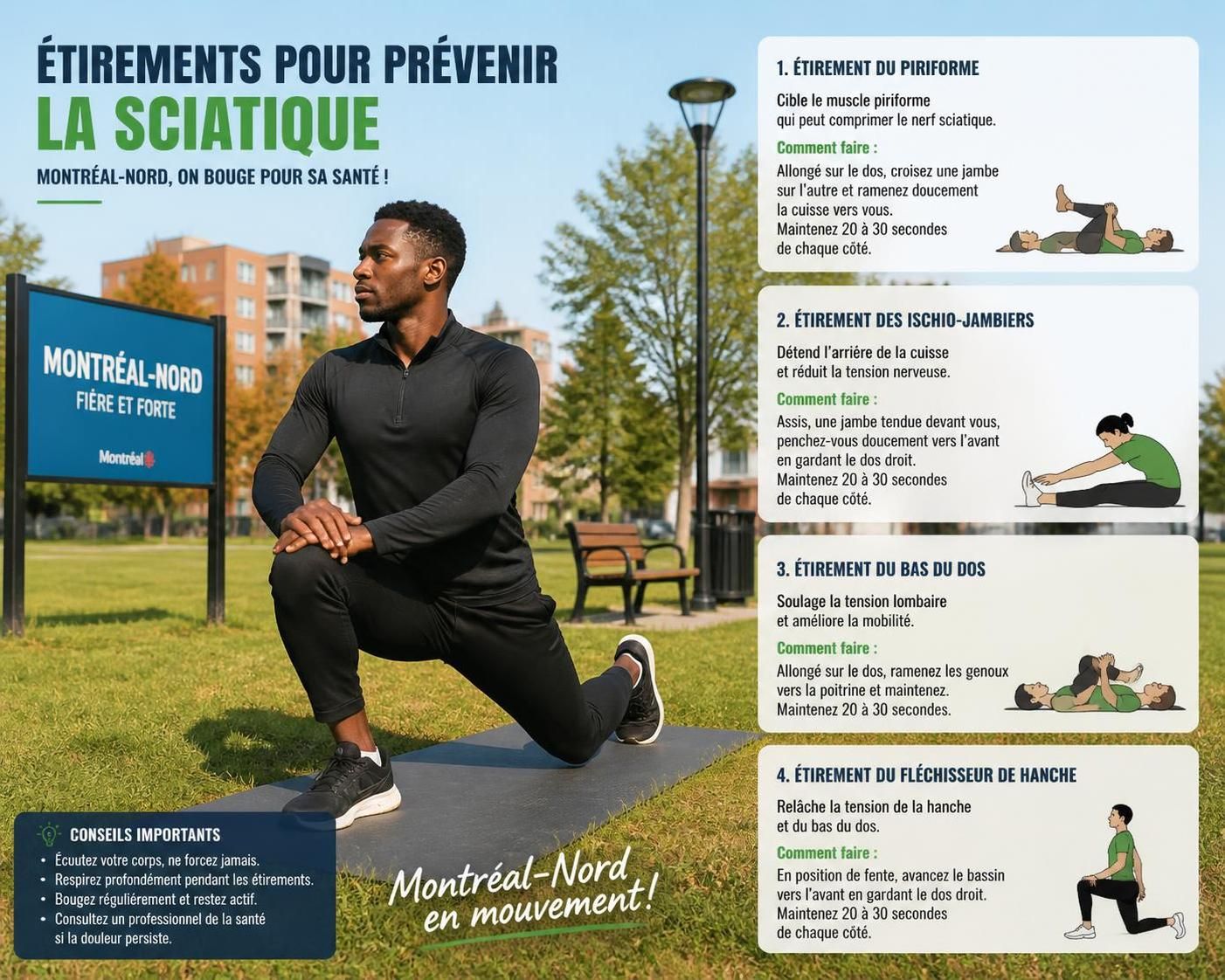
An appropriate warm-up that includes targeted stretching exercises for the sciatic nerve and buttock muscles, particularly the piriformis, is recommended before any sports session. These well-targeted stretches may improve nerve mobility and reduce muscle tension. However, do not force movements in the presence of acute pain, and always adjust intensity to individual limits.
Here are some essential practical tips:
- Start by prioritizing low-impact activities.
- Incorporate progressive stretching and strengthening sessions.
- Avoid sudden movements or excessive lumbar rotation.
- Use appropriate equipment, including shoes with good cushioning.
- Consult a health-care professional if symptoms persist or worsen.
To gain a deeper understanding of movements to prioritize and those to avoid, it is helpful to explore specific exercises recommended for sciatica.
Professional assessment and care in Montréal-Nord: toward a safe return to sports
When sciatic pain is persistent or recurrent, a thorough assessment becomes essential. In the greater Montréal-Nord area, the availability of suitable services, such as those offered by Clinique TAGMED or other back specialists, allows for multidisciplinary care that supports recovery.
Consultation often begins with a detailed clinical examination to distinguish the nature of the pain, identify muscle tension, and assess neuromuscular integrity. Sometimes, imaging tests may be recommended to rule out a herniated disc, stenosis, or disc protrusion, which are common causes of sciatica.
Initial treatment is based on conservative approaches: adapted physical activities, personalized exercises, manual therapy, and postural advice. Physiotherapy plays a central role in this process, allowing for a gradual return to sports while minimizing the risk of recurrence.
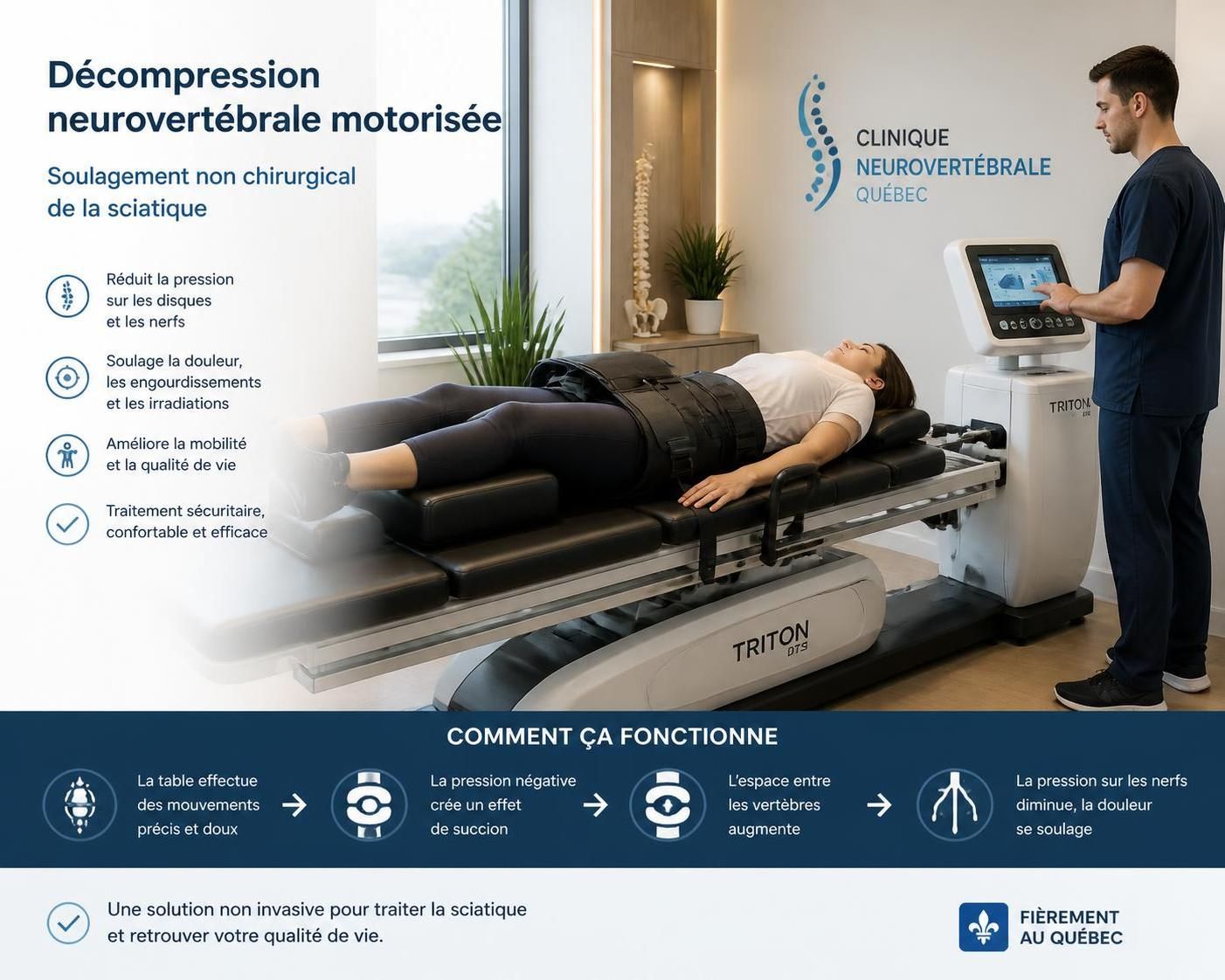
In this regard, motorized neurovertebral decompression, offered in Quebec, including at certain centres near Mont-Royal, is an interesting complementary option. It involves a controlled form of progressive traction applied to the lumbar spine to temporarily reduce the mechanical stresses responsible for nerve compression. However, this method is not universally recommended and requires careful patient selection and prior professional assessment.
To learn more about sciatica treatment options in Montréal and motorized neurovertebral decompression, it is advisable to consult qualified specialists who can guide you toward the best option for each individual situation.
Tips for incorporating injury prevention into your sports routine in Montréal-Nord
Preventing injuries related to sciatica involves appropriately managing back health. In Montréal-Nord, where weather conditions, urban lifestyle, and sports facilities influence physical activity, properly strengthening and stretching the lower back and lower limbs is essential.
A balanced program combining regular stretching, targeted strengthening, and respect for the body’s signals helps maintain flexibility and stability. For example, stretching the piriformis muscle, which is often involved in sciatic nerve irritation, may reduce pressure placed on the nerve root. Likewise, strengthening the abdominal and back muscles supports the spine, thereby limiting excessive movements that contribute to injury.
Following proper warm-up and recovery routines, along with cautious progression in training intensity, also helps reduce risks.
Here is a list of best practices to adopt:
- Always warm up before any sports activity.
- Include stretching exercises targeting the lower back and legs.
- Gradually strengthen the posterior chain and core.
- Avoid overload and respect recovery time.
- Consult a musculoskeletal health expert at the slightest concern.
| Type of sports activity | Recommendation for sciatic pain | Specific precautions |
|---|---|---|
| Walking and hiking | Recommended during the recovery phase | Prioritize flat terrain and appropriate footwear |
| Cycling | Moderately recommended | Avoid overly flexed postures; adjust the saddle |
| Swimming | Highly recommended | Focus on backstroke to avoid strain on the lower back |
| Running | Practise with caution | Avoid hard surfaces; limit duration and intensity |
| Contact sports | Often not recommended during an acute flare-up | High risk of lower back trauma |
Integrating personalized sports advice into your routine can help prevent musculoskeletal and neurological injuries and maintain fitness over the long term.
In summary, the sound management of sciatic pain in the context of sports activities requires a good understanding of the condition, cautious adaptation of exercises, and prevention focused on back health. Addressing these issues through a local professional assessment, particularly in Montréal-Nord, supports a safe return to regular and enjoyable physical activity.
What symptoms differentiate sciatic pain from typical low back pain?
Sciatic pain follows a specific pathway from the lower back to the buttock and leg, often on one side, and may be accompanied by tingling, numbness, or muscle weakness. In contrast, typical low back pain is generally localized to the back without specific radiation.
Is it safe to continue playing sports when experiencing sciatic pain?
It may be possible to engage in adapted physical activity, provided that pain does not worsen and movements remain moderate. Following appropriate exercises and adjusting intensity are essential for preventing injuries.
When should you seek care for persistent sciatic pain?
A medical consultation is recommended when pain persists for several weeks or when numbness, muscle weakness, or urinary function problems develop. These signs require urgent assessment.
How does neurovertebral decompression work to relieve sciatica?
It is a motorized, controlled traction of the spine intended to reduce pressure on the intervertebral discs and nerve roots. This technique may improve symptoms in certain selected patients following a thorough clinical assessment.
Which exercises should be avoided for sciatica during sports participation?
Exercises involving excessive lumbar flexion, rapid trunk twisting, and high-intensity movements are generally not recommended. It is preferable to prioritize gentle stretching and appropriate strengthening exercises.
If you have sciatic pain that limits your sports activities in Montréal-Nord, a personalized assessment can help you understand the likely source of your discomfort, identify signs to watch for, and determine whether a conservative or specialized approach may be appropriate. Do not hesitate to consult a professional team for appropriate support.
Book an appointment for an assessment
Dr. Sylvain Desforges, B.Sc., D.O., N.D., osteopath
This content is for educational purposes and does not replace a personalized clinical assessment.
