


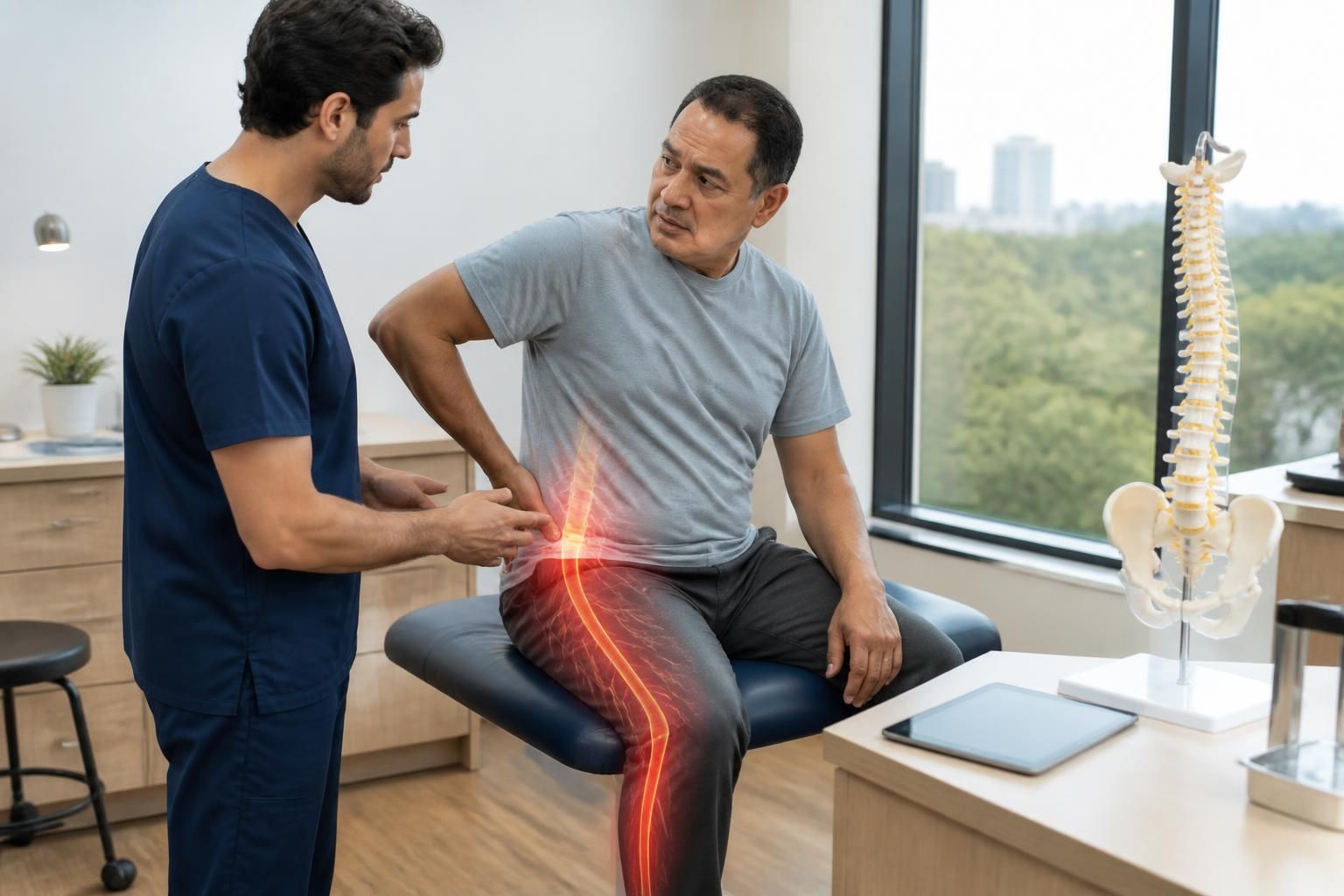
Pain that becomes long-lasting in the lower back and travels down to the buttock or leg may suggest chronic sciatica, especially when it persists for more than three months. In Villeray neighbourhoods, as elsewhere in Montréal, this prolonged form of sciatica often worries those affected because it significantly impacts daily quality of life, mobility, and overall well-being. Chronic sciatica commonly presents as persistent pain that may be accompanied by numbness, tingling, or even muscle weakness, signs that require particular attention.
Accurately recognizing chronic sciatica relies on a detailed understanding of the symptoms and how they evolve over time, as well as an assessment of the underlying causes, which can vary from one person to another. Whether it involves nerve compression related to a herniated disc, foraminal stenosis, or local inflammation of the sciatic nerve, the variety of mechanisms leads to nuanced clinical presentations. The approach in Montréal incorporates a contextual perspective, taking into account urban living conditions, work arrangements—including remote work, which is common in Villeray—and access to local care to ensure appropriate management.


![CB2 Natural Pain Relief Oil [TOPICAL] - Extra Stength Pain Relief for Arthritis, Inflammation, Nerve, Joint & Muscle Pain, Neuropathy, Sciatica, More Effective Than Hemp Pain Relief Cream, Natural Ingredients, Made in Canada, 50mL](https://m.media-amazon.com/images/I/61rGLQYyf0L._AC_UL320_.jpg)


In brief: key points for understanding chronic sciatica in Villeray
- Persistent symptoms: throbbing or burning pain in the lower back and/or travelling down one leg, often on one side only.
- Various causes: herniated disc, lumbar osteoarthritis, foraminal stenosis, or chronic inflammation of the sciatic nerve.
- Careful diagnosis: based on clinical history, physical examination and, where appropriate, medical imaging.
- Aggravating factors: prolonged sitting, material handling, muscle strain, and sedentary lifestyles common in Montréal settings.
- Importance of a consultation: new neurological signs or an unfavourable progression require prompt medical assessment.
- Treatment approaches: maintaining appropriate activity, symptom-based treatments, physiotherapy, and possible use of motorized neurovertebral decompression following assessment.
Recognizing the typical and specific symptoms of chronic sciatica
Understanding the manifestations of chronic sciatica is essential for identifying it in a context where pain becomes persistent and may sometimes be resistant to conventional treatments. Characteristic sciatic pain often begins in the lumbar region, radiates to the buttock, and then travels down the leg, following the course of the sciatic nerve. For some patients in Villeray neighbourhoods, this pain may include burning sensations, electric-shock sensations, or heaviness in the leg.
Symptoms often include sensory disturbances such as tingling or numbness, and sometimes muscle weakness that alters walking. Unilateral pain is the norm, although in exceptional cases both legs may be affected if compression or inflammation is bilateral. It is important to note that with truncated sciatica, the pain may not travel down to the foot but may stop at the thigh or knee, sometimes making the distinction complex.
To better identify these symptoms, sciatica must be distinguished from other pain of lumbar, muscular, or joint origin. For example, muscle tension in the buttock region may cause radiating pain, but without the neurological signs of true sciatica.
A comparative table of symptoms can help guide this consideration:
| Symptoms | Chronic sciatica | Muscle pain / Pseudo-sciatica |
|---|---|---|
| Radiating pain | Yes, follows the course of the sciatic nerve (buttock to foot) | Rare or limited to a local area |
| Numbness and tingling | Often present in the leg | Absent or very mild |
| Muscle weakness | Possible, depending on nerve compression | No |
| Unilateral pain | Common | May be bilateral |
| Changes with position | Worsened by prolonged sitting, lumbar flexion | Varies, often improves with rest |
These distinctions facilitate seeking an accurate medical assessment, particularly at specialized clinics such as the TAGMED Clinic in Mont-Royal, near Villeray, where the approach is adapted to the specific needs of Montréal patients.
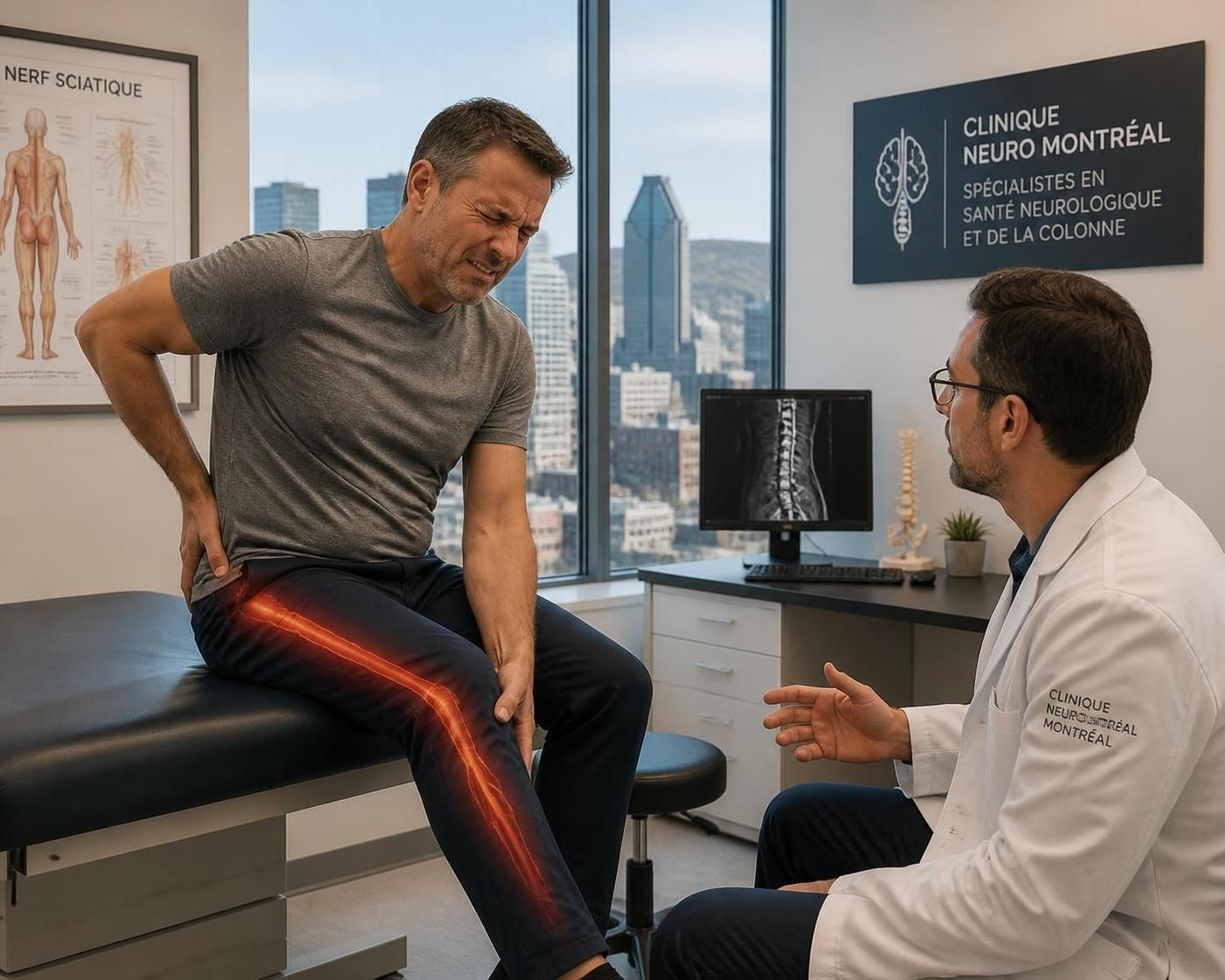
Clinical explanations of chronic sciatica: mechanisms and diagnosis
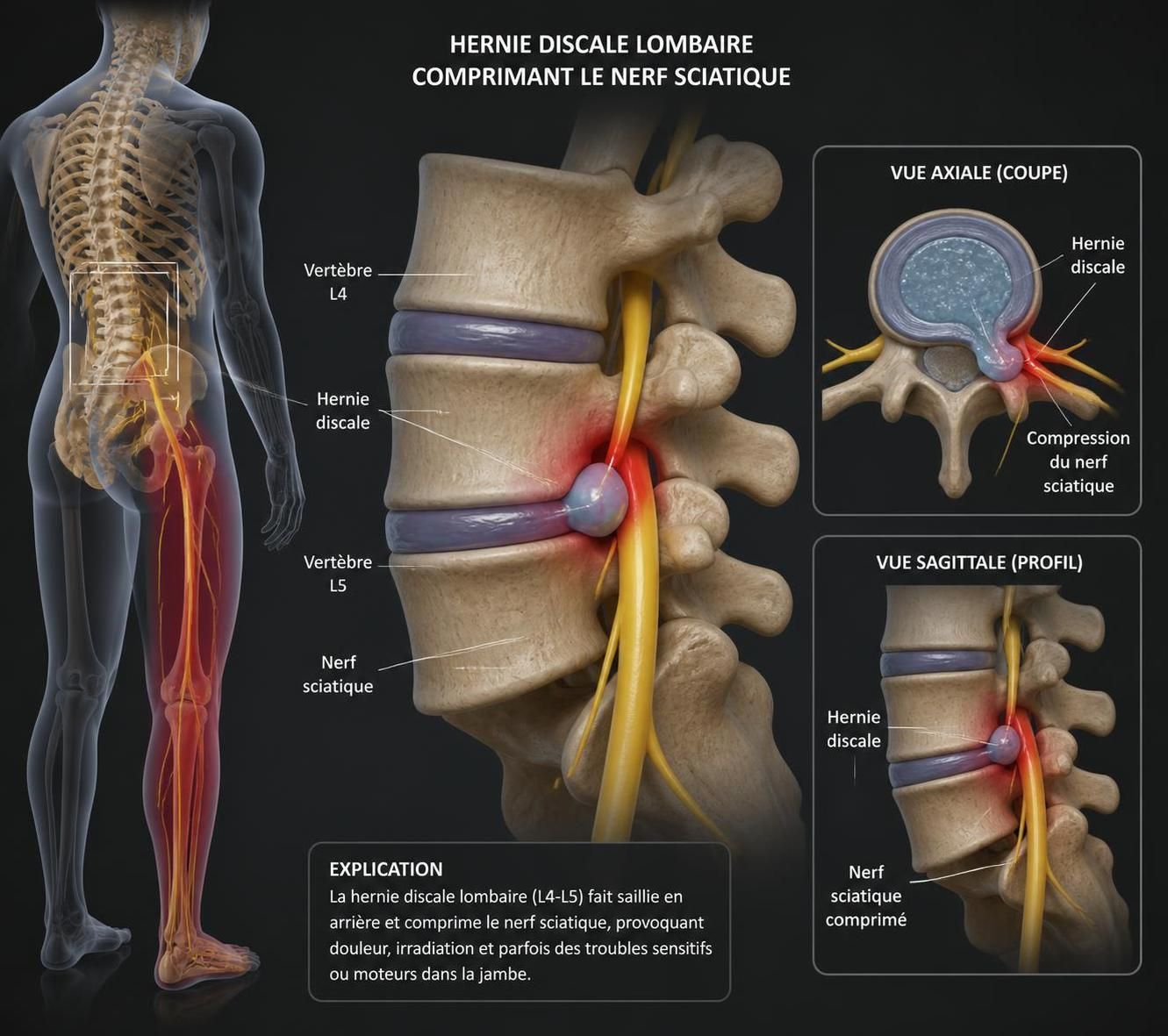
The sciatic nerve, formed by the L4, L5, and S1 nerve roots, may be irritated or compressed at several levels, triggering the persistent symptoms seen in chronic sciatica. A lumbar herniated disc is a common cause, particularly when the intervertebral disc places pressure on a nerve root.
In addition to herniation, other structural changes may occur more frequently in adults in the Villeray area, including disc protrusion, disc space narrowing, or foraminal stenosis, which reduces the space available for nerves to pass at the lumbar root level. These changes related to osteoarthritis or aging contribute to prolonged nerve irritation.
Local inflammation around the nerve may also perpetuate pain even after partial resolution of the initial compression. This sensitization of the nervous system can lead to chronic sciatica, with pain that is independent of the initial mechanical cause.
In addition, the distinction between radicular pain (due to nerve compression) and referred pain (of joint or muscular origin) is often subtle. This is why diagnosing sciatica remains complex without a complete assessment combining symptom history, a targeted clinical examination, and sometimes medical imaging.
The use of specific assessment techniques can clarify the level of nerve involvement and adapt corresponding treatments: for example, pain originating from the L5 root will follow a different path from pain related to the S1 root, and this information may help guide management.
Factors influencing chronic sciatica in Villeray neighbourhoods
Several lifestyle and urban-environment factors can influence the intensity and persistence of chronic sciatic pain among Villeray residents. This Montréal community, with its many people working remotely or in sedentary jobs, has conditions that may contribute to worsening symptoms.
Prolonged sitting, often adopted in front of a screen or during public-transit commutes, increases lumbar pressure and mechanical strain on the sciatic nerve. In addition, muscle strain related to poor posture or a lack of regular breaks contributes to local inflammation.
Moderate, well-paced physical activity may nevertheless improve the situation by strengthening the core stabilizing muscles and promoting mobility. Conversely, sudden movements or lifting heavy loads without preparation may worsen nerve compression.
Each person responds differently according to their medical profile, age, general health, and orthopaedic history. Therefore, anyone with long-lasting sciatic pain is advised to adapt their activities gradually and consult a professional to determine the best personalized strategies.
Finally, sleep disrupted by chronic pain can create a vicious cycle, affecting recovery and overall well-being.
When to seek a medical consultation for persistent sciatic pain in Villeray
Medical follow-up is needed when sciatic pain persists despite initial self-care measures or when it is accompanied by warning symptoms. A medical consultation makes it possible to assess the exact nature of the symptoms, rule out serious causes, and define a treatment plan based on severity and functional impact.
Signs that should prompt a timely consultation include:
- Persistent or recurrent pain, not responding to conservative treatments after several weeks.
- Pain below the knee associated with significant numbness or tingling.
- Muscle weakness that is progressive and interferes with walking or foot movements.
- Significant loss of sensation in the leg or perineum.
- Changes in bladder or bowel function : urgent specialized care is needed.
- Fever or unusual general symptoms accompanying the pain.
In the presence of symptoms such as significant weakness or impaired perineal sensation, an urgent medical consultation at a hospital is recommended to rule out serious complications of sciatica.
In Villeray neighbourhoods, access to health professionals specializing in musculoskeletal disorders and to the services of the TAGMED Clinic near Mont-Royal is an important resource for guiding early assessment and care.
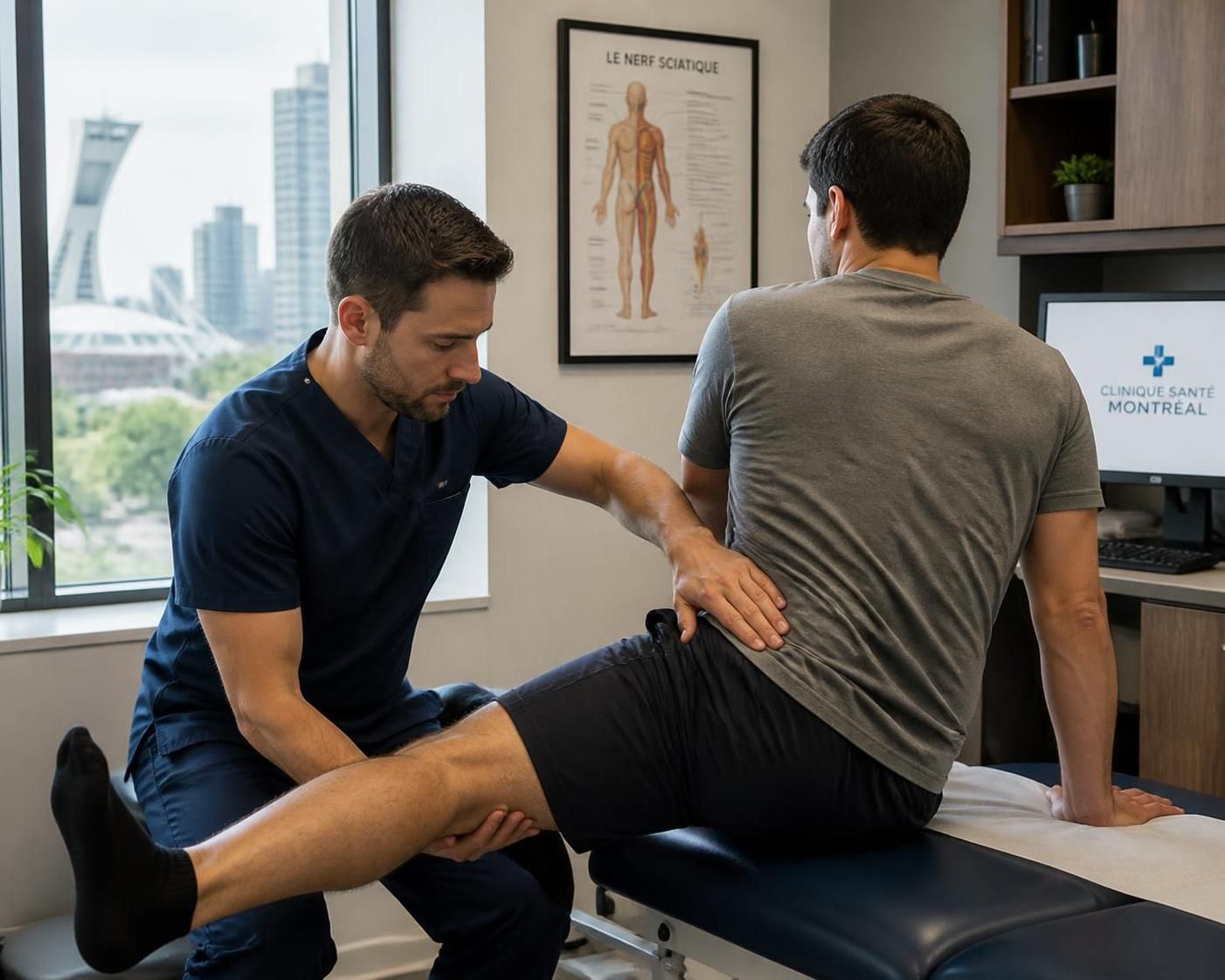
Treatment options for chronic sciatica in Montréal: between caution and innovation
Managing chronic sciatica in an urban setting such as Villeray neighbourhoods involves a gradual and personalized approach. The aim is to reduce pain, preserve function, and improve quality of life.
First, maintaining or gradually resuming appropriate physical activity is encouraged to limit stiffness and muscle deconditioning, under the supervision of qualified professionals. Adapting the workstation and taking frequent breaks help reduce secondary flare-ups related to prolonged positions.
Symptom-based treatments may include pain-relieving or anti-inflammatory medications prescribed on the advice of a local physician. Physiotherapy and manual therapies, such as osteopathy, can also help relieve pain and improve joint and muscle mobility.
One method gaining popularity in Montréal for certain patients is motorized neurovertebral decompression. This technique involves controlled spinal traction intended to reduce pressure on nerve roots and promote more favourable mechanical conditions around the sciatic nerve.
It is essential to emphasize that neurovertebral decompression is not indicated for every case. Its use requires a complete assessment and careful patient selection, particularly for those with a compatible herniated disc, disc protrusion, or foraminal stenosis. Results with this approach vary, and no specific number of sessions is suitable for everyone.
Furthermore, motorized decompression does not replace urgent medical consultation in the event of rapidly worsening symptoms, nor does it guarantee that surgery can be avoided in severe situations. It is part of a range of possible treatments, alongside exercise, physiotherapy, and, when needed, medications or injections.
Patients in Villeray neighbourhoods therefore have access to qualified professionals who can offer a holistic, tailored approach including advice, manual therapies, rehabilitation, and, for some, neurovertebral decompression.


What are the characteristic signs of chronic sciatica?
Pain that persists for more than three months, accompanied by numbness, tingling, and sometimes muscle weakness, is a key indicator. Difficulty walking or pain worsened by prolonged sitting should also be noted.
Can chronic sciatica be prevented in Villeray?
Maintaining regular physical activity, adopting good posture, avoiding sudden movements, and ensuring an ergonomic work setup are effective ways to limit the onset of chronic symptoms.
When should you consult a professional in Montréal?
Persistent pain that limits activities or neurological signs such as loss of strength, progressive numbness, or difficulty controlling the bladder are urgent reasons to seek a consultation.
Can neurovertebral decompression replace surgery?
This method may help certain patients, but it does not replace surgery when surgery is required. Its results vary depending on the case and careful patient selection.
How can sciatica be distinguished from muscle pain?
Sciatica follows the precise course of the nerve and includes neurological signs (numbness, tingling, weakness), whereas muscle pain often remains localized without these symptoms.
Sciatic pain that persists over time can limit your mobility and affect your daily life in Villeray and surrounding areas. A personalized assessment can help clarify the likely cause, identify signs to monitor, and determine whether a conservative approach is appropriate for your situation. For a complete assessment and tailored advice, you can book an appointment at a nearby specialized clinic, such as the TAGMED Clinic in Mont-Royal.
Dr. Sylvain Desforges, B.Sc., D.O., N.D., osteopath
This content is for educational purposes and does not replace a personalized consultation with a health professional.
