


The sensation of numbness associated with sciatica is a common source of discomfort for residents of Parc-Extension in Montréal. This sensation can limit daily activities and disrupt well-being, particularly when it travels down the leg along with the typical pain of the sciatic nerve. Understanding the causes of this numbness and adopting appropriate strategies can help better manage these often unsettling symptoms.
Each case of sciatica with numbness deserves individualized attention based on the nature of the symptoms, their intensity, and their duration. It is essential to distinguish simple nerve irritation from more severe compression in order to tailor interventions, which may range from simple postural modifications to specialized approaches such as neurovertebral decompression or osteopathy, available in Mont-Royal and the surrounding area.
Understanding numbness in sciatica: mechanisms and affected areas
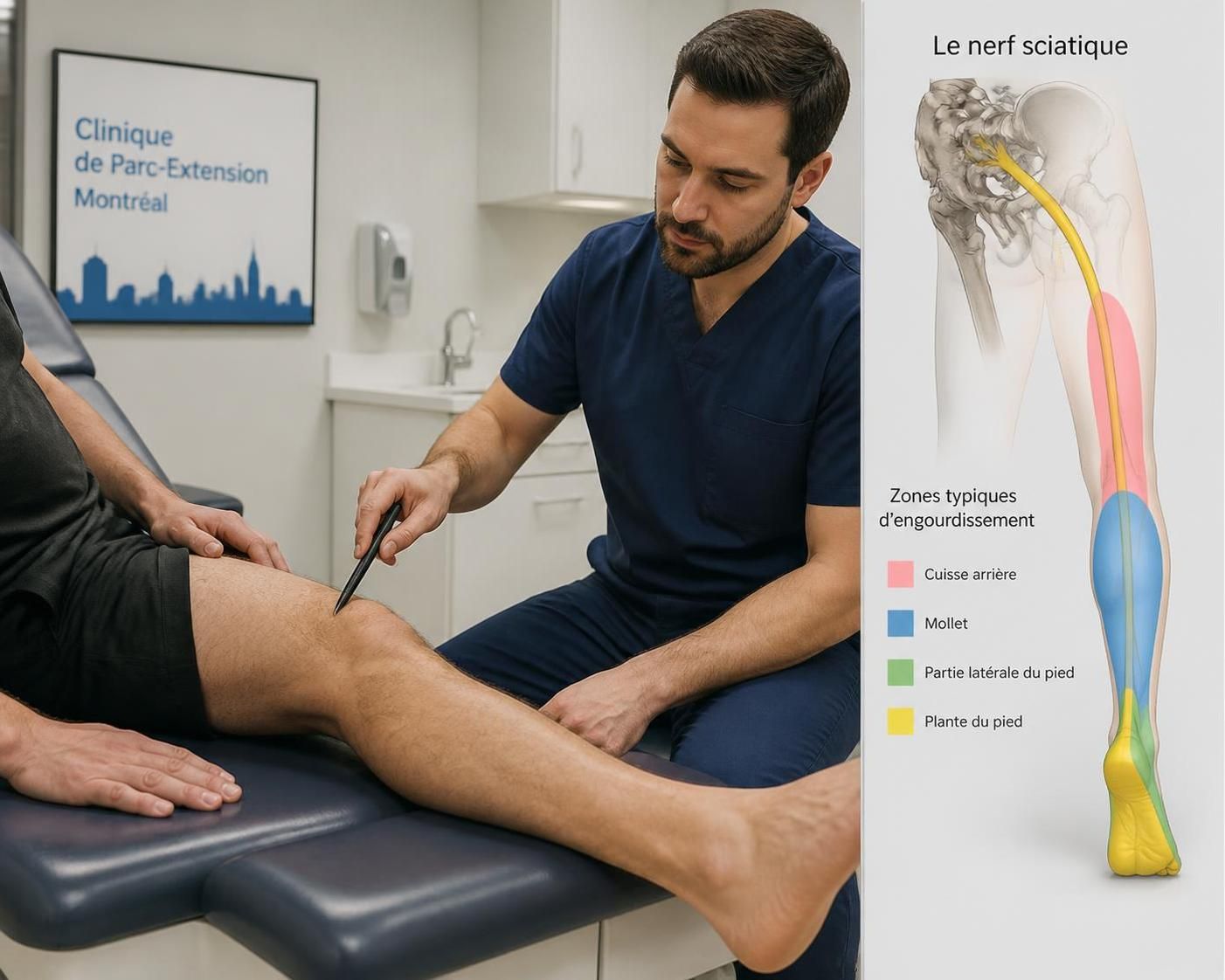
Numbness in the context of sciatica generally results from irritation or compression of the sciatic nerve, which can affect the normal transmission of nerve signals. This nerve is made up of several nerve roots from the lumbar spine, primarily the L4, L5, and S1 roots, which control sensation and movement in the leg.
When the nerve is compressed, whether by a herniated disc, disc protrusion, or foraminal stenosis, sensory transmission becomes altered. Patients in Parc-Extension often report tingling, burning, or numbness that follows the nerve’s course through the buttock, thigh, calf, and sometimes to the toes.
This type of radicular pain associated with sensory disturbances differs from low back pain without nerve involvement, which is not accompanied by numbness. For example, femoral neuralgia, another form of radicular pain, involves different nerve roots and affects the front of the thigh, while piriformis syndrome can cause local irritation of the sciatic nerve in the buttock, with similar symptoms.
It is important to note that the precise location of numbness may indicate the affected nerve root, but this interpretation alone is never enough to establish a diagnosis. Clinical expertise and, at times, imaging tests are needed to understand the exact cause of the compression.
For example, in some Montréal patients, an L5-S1 lumbar disc herniation may cause an electric-like sensation in the sole of the foot and toes, whereas L4 foraminal stenosis may cause numbness mainly in the calves or the back of the thigh. This distinction guides the choice of appropriate treatments to reduce sciatic nerve inflammation.
Numbness signals that nerve function is altered, requiring particular attention to prevent compression from progressing to motor weakness. Early identification of these signs is crucial in the Parc-Extension area, where access to specialized care such as at Clinique TAGMED in Mont-Royal facilitates personalized care.
Factors influencing numbness and its progression in Parc-Extension
Several factors affect the severity and frequency of sciatica-related numbness. The typical lifestyle of Parc-Extension residents, including frequent public transit use, working from home in apartments, and long periods of sitting, tends to worsen the situation for some patients.
Remaining seated, particularly without regular breaks, can increase pressure on the lumbar spine and sciatic nerve. For example, working for several hours on a laptop placed on a non-ergonomic table can cause prolonged back flexion, increasing disc compression or muscle tension, particularly in the piriformis muscle.
Conversely, certain moderate physical activities such as walking and swimming can promote blood circulation and nerve health, which may gradually reduce numbness. Results, however, depend on the underlying cause and individual tolerance.
Sleep management also affects symptoms. An unsuitable mattress or restrictive sleeping positions can maintain nerve irritation. For example, sleeping on your stomach in a position that keeps the spine in prolonged flexion may worsen compression of a sensitive nerve root.
Local care in Parc-Extension should therefore include tailored advice to reduce aggravating daily positions, avoid sudden twisting movements, and recommend active breaks. Physiotherapy and therapeutic massage play an important role in reducing muscle tension and facilitating better posture, thereby helping reduce symptoms.
It is noteworthy that the response to exercises or postural advice can vary among individuals. Some patients experience rapid relief with targeted exercises, while others require closer follow-up, particularly from professionals trained in motorized neurovertebral decompression.
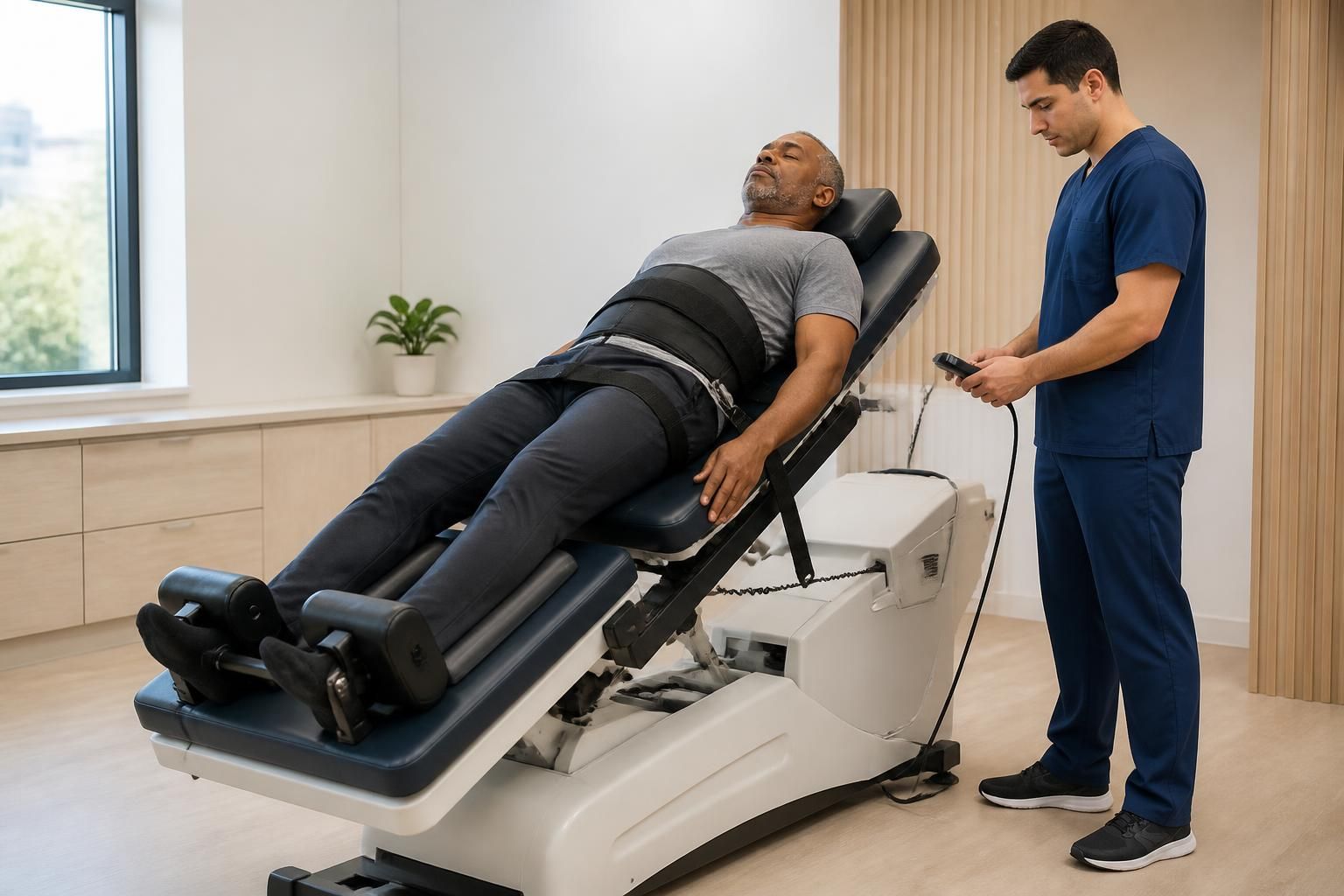
This progressive, controlled spinal traction works by temporarily modifying the mechanical stresses around the discs and sciatic nerve. It is available in the Mont-Royal area, alongside manual approaches such as osteopathy, allowing treatment to be tailored to each patient’s specific condition.
Targeted exercises to relieve numbness caused by sciatica
Including gentle, properly dosed exercises is one of the effective strategies for reducing numbness associated with sciatica, particularly when it results from muscle tension or moderate compression.
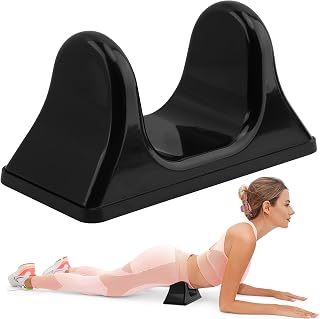
Among the recommended exercises, the piriformis muscle stretch is often mentioned because of its proximity to the sciatic nerve. This stretch is performed lying on your back, bending the affected leg, placing the ankle on the opposite knee, and then gently pulling the thigh toward you. However, it is essential to avoid this exercise if leg pain worsens, as nerve irritation may then increase.
The knee-to-chest movement stretches the gluteal muscles and lower back, promoting muscle relaxation. Performed cautiously, it may relieve initial stiffness. However, if a disc herniation is worsened by flexion, this stretch is not recommended.
Sciatic nerve mobilization exercises, performed sitting or lying down, in which the leg is gently extended while raising the head, help the nerve glide more effectively within its pathway. This technique improves nerve circulation and sensation, reducing the feeling of numbness.
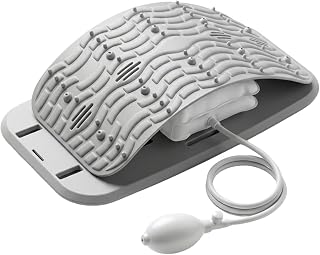
The McKenzie method, through progressive back extensions, may also reduce pressure on lumbar nerve roots if it is tolerated without worsening symptoms in the leg.
Here is a summary table of commonly used exercises according to their mechanism and indications:
| Exercise | Main movement | Duration / Frequency | Precautions |
|---|---|---|---|
| Piriformis stretch | Bent leg, ankle on opposite knee, gently pull toward you | 30 s, 3 repetitions, 2–3 times/day | Stop if leg pain increases |
| Knee-to-chest | Lying down, bring one knee toward the chest, keeping the other leg extended | 30 s, 3 repetitions per leg | Avoid if flexion worsens pain (e.g., disc herniation) |
| Sciatic nerve mobilization | Lying down or sitting, extend the leg while raising the head | 5–10 repetitions, 1–2 times/day | Do not hold at end range if there is a burning sensation |
| McKenzie method (back extension) | Progressive back extension while lying face down | 30–60 s, 3 repetitions, 2–3 times/day | Stop if leg pain worsens |
These exercises should be undertaken cautiously and adapted to your tolerance. They are not suitable for all types of sciatica, and consulting a professional for a personalized program, such as those offered at the Clinique TAGMED in Montréal, is strongly recommended.




When numbness warrants a consultation in Parc-Extension
It is vital to recognize signs indicating the need for a medical or specialized consultation. Sciatica with numbness can progress to complications if it is neglected, especially when accompanied by warning symptoms.
Here are the indications for consulting a professional in Montréal or the surrounding area:
- Persistent or worsening numbness that does not decrease despite simple measures.
- Significant muscle weakness in the leg or difficulty walking.
- Sciatic pain that disrupts sleep or daily activities.
- Loss of bladder or bowel control, or an anaesthetic sensation in the perineal region (saddle area).
- Fever associated with low back pain or impaired general health with no apparent cause.
- Pain following major trauma or in the context of known cancer.
These signs should never be taken lightly. A prompt assessment at a specialized centre in the Greater Montréal area, such as in Mont-Royal, can rule out serious causes and guide appropriate care, whether conservative care or specific treatments.
Warning: In the event of rapidly developing weakness, loss of bladder function, or perineal numbness, see a health-care professional immediately for an urgent assessment.
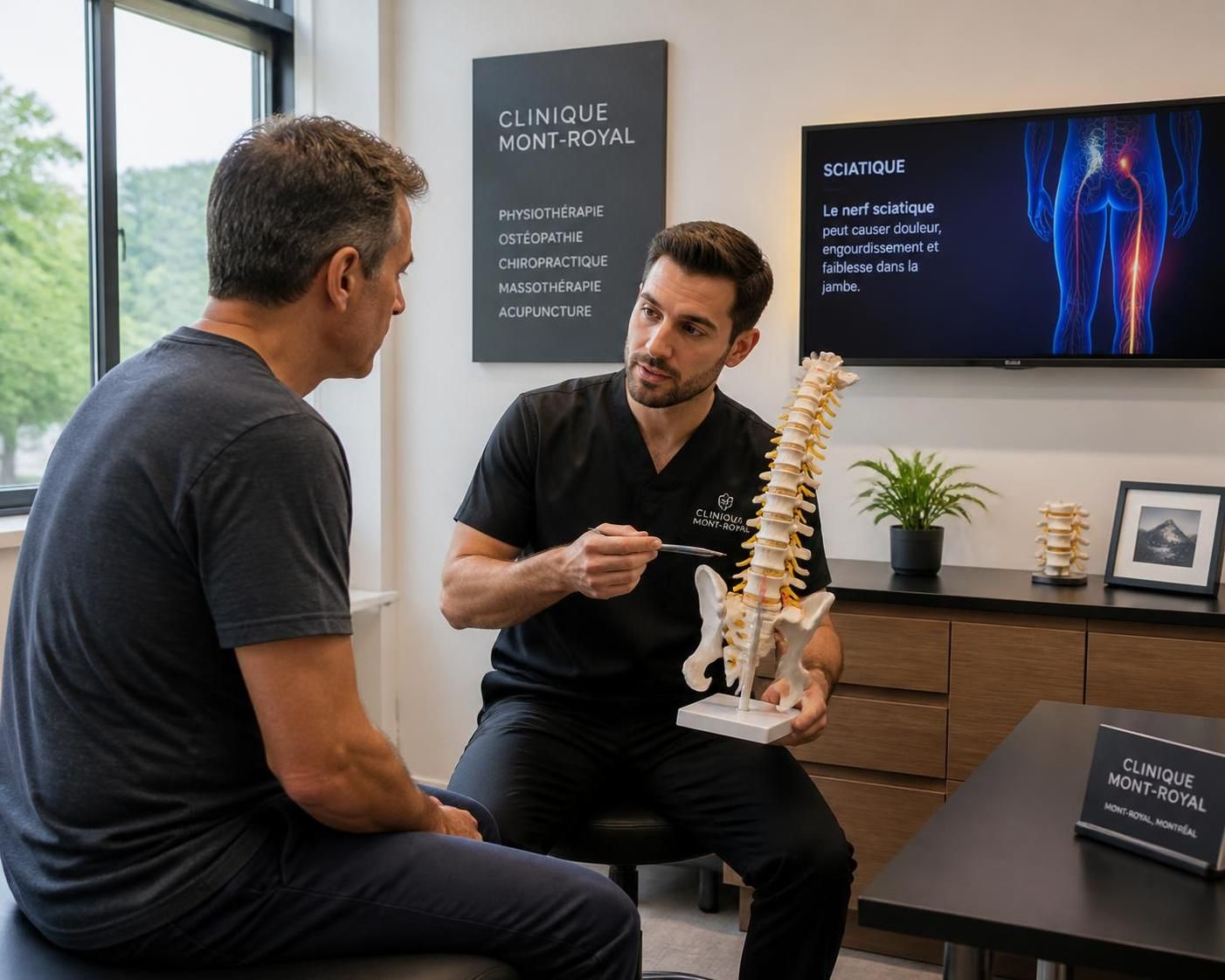
Effective options for reducing numbness and improving nerve health
The treatment of sciatica with numbness in Parc-Extension is based on a gradual approach tailored to the identified cause. The main goal is to reduce sciatic nerve inflammation and restore optimal nerve function.
Maintaining or gradually resuming physical activity is encouraged as soon as possible, as overly restricted mobility can perpetuate muscle stiffness and worsen compression.
Physiotherapy and therapeutic massage provide recognized benefits for relieving muscle tension, improving posture, and promoting better local circulation. These services can be included in a broader treatment plan, combined with appropriate exercises performed under professional supervision.
In addition, motorized neurovertebral decompression is a relevant non-surgical option for certain patients with disc protrusion, a mild herniation, or foraminal stenosis. Through controlled, progressive traction, this technique aims to temporarily reduce pressure on nerve roots, promoting functional recovery. This approach, available at Clinique TAGMED among other locations, remains subject to strict selection criteria.
It is important to emphasize that pain-relieving or anti-inflammatory medications may be offered under medical supervision to manage acute pain, but should not be the only option. Injections may be considered in certain cases after diagnostic confirmation, while surgery remains an option reserved for situations involving severe neurological deficits or significant compression.
Here is a comparative overview of the main management options:
| Treatment option | Benefits | Limitations | Typical indications |
|---|---|---|---|
| Maintaining / gradually resuming activity | Promotes mobility and reduces stiffness | May be limited by pain | Mild/moderate cases without motor deficit |
| Physiotherapy and therapeutic massage | Reduces muscle tension and improves ergonomics | Results vary depending on the underlying cause | Nerve irritation and postural imbalance |
| Motorized neurovertebral decompression | Progressive traction targeting decompression of nerve roots | Not suitable for everyone; requires a thorough assessment | Mild disc herniation, protrusion, or foraminal stenosis |
| Medications and injections | Rapid management of inflammation and pain | May mask symptoms without treating the cause | Severe acute cases or cases resistant to conservative care |
| Surgery | Treatment for major nerve compressions | Invasive, with surgical risks and variable recovery | Significant motor deficits or progressive compression |
To learn more about the various strategies suited to your symptoms, you can consult resources on sciatica treatment options as well as the specific services offered by Clinique TAGMED in Mont-Royal.
{“@context”:”https://schema.org”,”@type”:”FAQPage”,”mainEntity”:[{“@type”:”Question”,”name”:”Quels sont les signes du2019urgence u00e0 surveiller devant des engourdissements liu00e9s u00e0 une sciatique ?”,”acceptedAnswer”:{“@type”:”Answer”,”text”:”Les symptu00f4mes tels quu2019une perte de contru00f4le urinaire, une faiblesse rapide et importante des jambes, ou une anesthu00e9sie dans la ru00e9gion gu00e9nitale nu00e9cessitent une consultation mu00e9dicale urgente. Ces signes peuvent indiquer une urgence neurologique appelu00e9e syndrome de la queue de cheval.”}},{“@type”:”Question”,”name”:”Est-ce que tous les engourdissements dans la jambe signifient une sciatique ?”,”acceptedAnswer”:{“@type”:”Answer”,”text”:”Pas nu00e9cessairement. Du2019autres troubles neurologiques ou vasculaires peuvent causer des engourdissements similaires, du2019ou00f9 lu2019importance du2019une u00e9valuation mu00e9dicale pour un diagnostic pru00e9cis.”}},{“@type”:”Question”,”name”:”Peut-on ru00e9duire les engourdissements de la sciatique par des exercices u00e0 domicile ?”,”acceptedAnswer”:{“@type”:”Answer”,”text”:”Oui, u00e0 condition que les exercices soient adaptu00e9s et ru00e9alisu00e9s avec prudence. Lu2019u00e9tirement du piriforme et la mobilisation douce du nerf sciatique peuvent aider, mais en cas de douleur accrue, il faut cesser lu2019exercice et consulter un professionnel.”}},{“@type”:”Question”,”name”:”La du00e9compression neurovertu00e9brale est-elle une solution pour tous les cas de sciatique ?”,”acceptedAnswer”:{“@type”:”Answer”,”text”:”Non, cette technique est ru00e9servu00e9e u00e0 certains patients su00e9lectionnu00e9s. Elle aide u00e0 diminuer temporairement la pression sur les racines nerveuses mais ne convient pas u00e0 toutes les formes de sciatique.”}},{“@type”:”Question”,”name”:”Comment bien amu00e9nager son espace de travail u00e0 la maison pour u00e9viter la sciatique ?”,”acceptedAnswer”:{“@type”:”Answer”,”text”:”Utilisez une chaise ergonomique offrant un bon support lombaire, maintenez une bonne posture, faites des pauses ru00e9guliu00e8res pour bouger et u00e9vitez de rester assis trop longtemps sans changer de position.”}}]}What emergency signs should be monitored with numbness related to sciatica?
Symptoms such as loss of bladder control, rapid and significant leg weakness, or numbness in the genital area require urgent medical consultation. These signs may indicate a neurological emergency called cauda equina syndrome.
Does all leg numbness mean sciatica?
Not necessarily. Other neurological or vascular conditions can cause similar numbness, which is why a medical assessment is important for an accurate diagnosis.
Can sciatica-related numbness be reduced with exercises at home?
Yes, provided the exercises are appropriate and performed cautiously. Piriformis stretching and gentle sciatic nerve mobilization may help, but if pain increases, stop the exercise and consult a professional.
Is neurovertebral decompression a solution for all cases of sciatica?
No, this technique is reserved for certain selected patients. It helps temporarily reduce pressure on nerve roots but is not suitable for all forms of sciatica.
How can you properly set up your home workspace to prevent sciatica?
Use an ergonomic chair that provides good lumbar support, maintain good posture, take regular breaks to move, and avoid sitting too long without changing position.
Living with numbness caused by sciatica in Parc-Extension can significantly affect your quality of life. A professional assessment can help identify the likely cause, signs to monitor, and the best conservative approach to adopt. For personalized care near Mont-Royal, do not hesitate to contact the Clinique TAGMED, specializing in sciatica treatment in Montréal.
Dr. Sylvain Desforges, B.Sc., D.O., N.D., osteopath
This content is for educational purposes and does not replace a personalized assessment by a health-care professional.
