


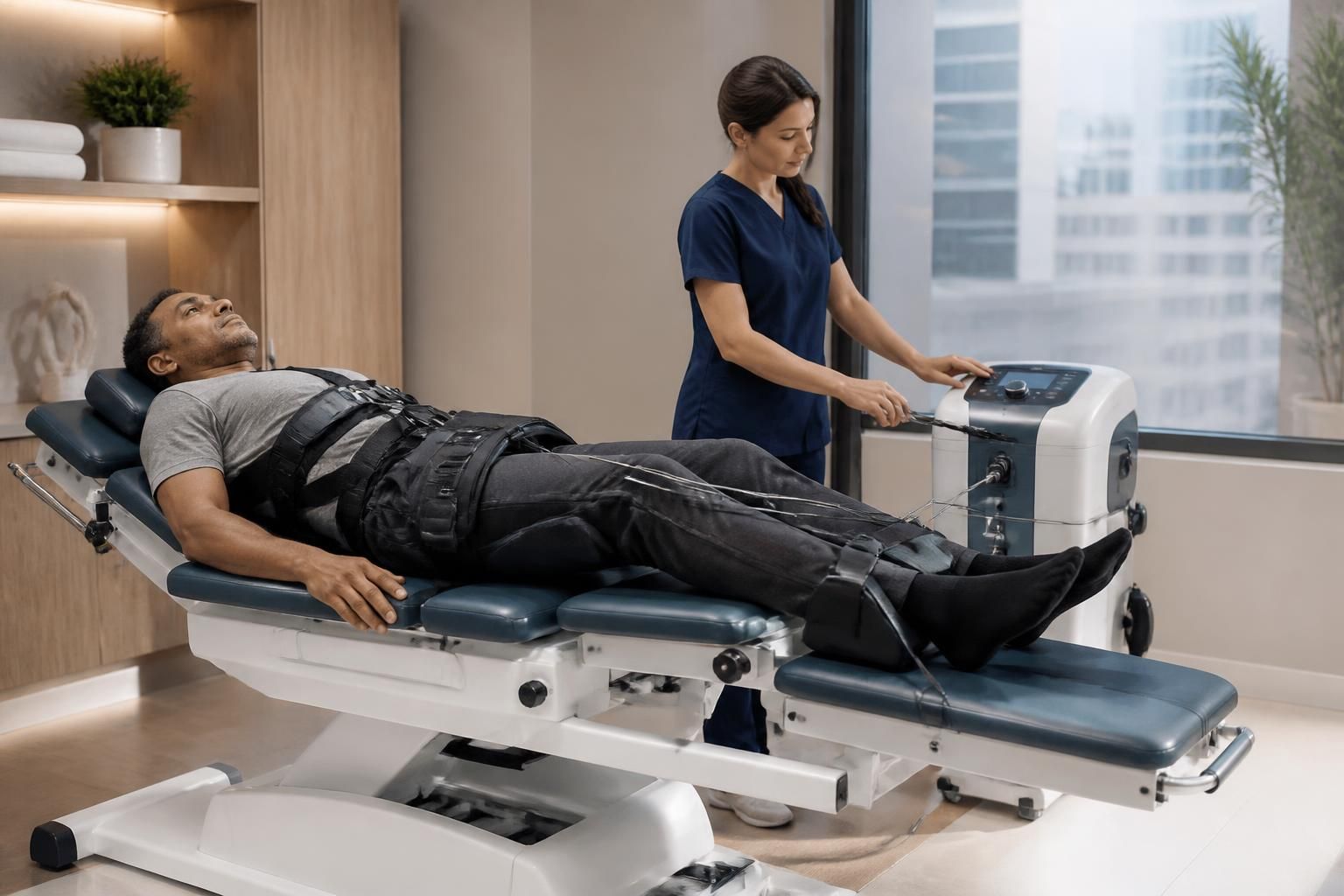


Neurovertebral decompression in Ville-Marie is recognized for its role specifically adapted to complex cases involving severe or difficult-to-manage spinal conditions. This innovative technique, which stands apart from traditional methods, offers a motorized and controlled approach that precisely targets nerve compression and the mechanical stresses responsible for pain.
By focusing on personalized protocols, practitioners in Ville-Marie tailor each session to the patient’s unique condition. This specificity is all the more crucial in treating recurrent disc herniations or extensive foraminal stenosis, where conventional decompression may not be sufficient to effectively relieve symptoms.
In brief: key points on neurovertebral decompression in Ville-Marie for complex cases
A closer look at spinal treatment with neurovertebral decompression in Ville-Marie
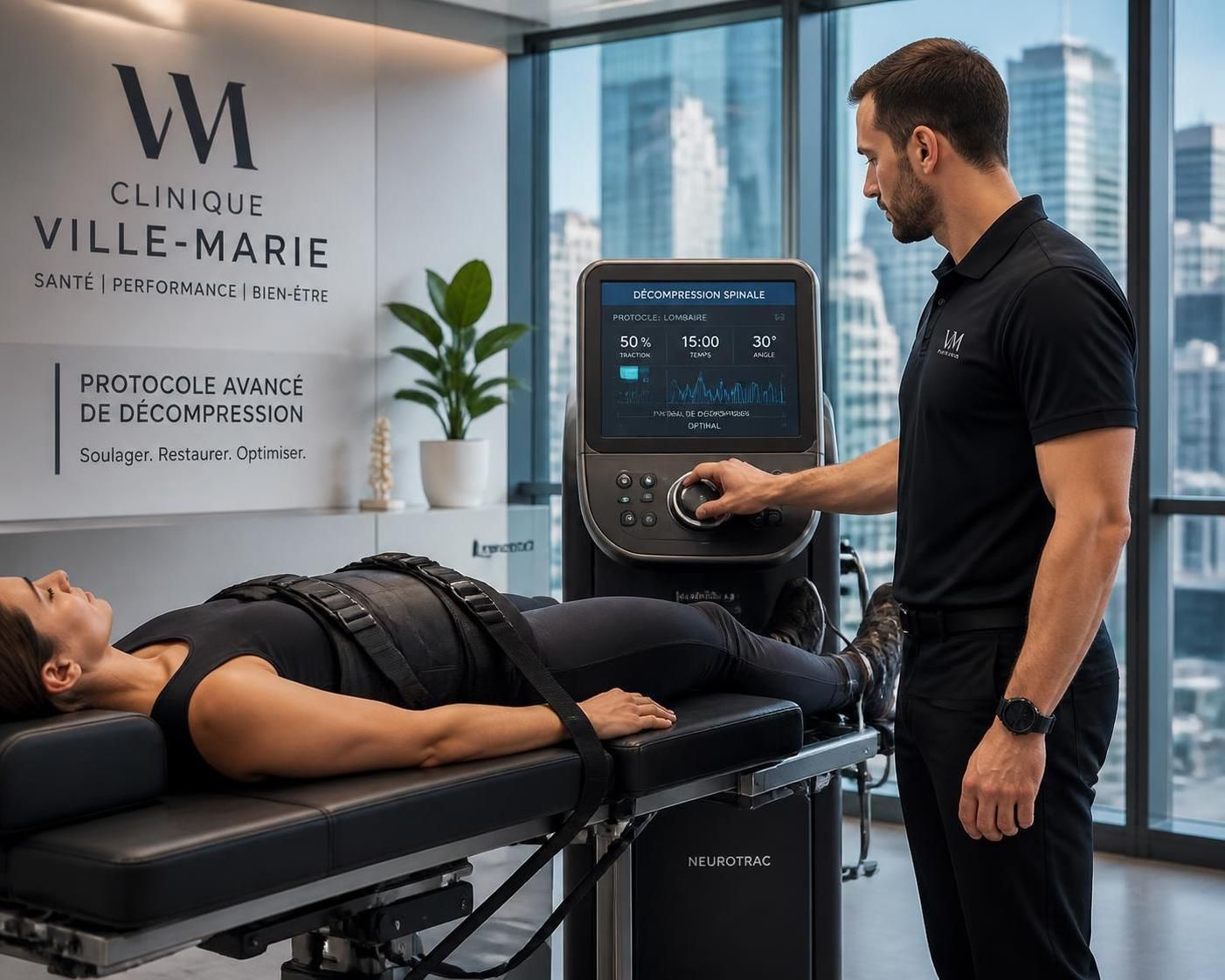
In the context of complex cases, neurovertebral decompression performed in Ville-Marie relies on advanced technologies that allow precise control of the intensity and location of the traction applied to the spine. This method differs significantly from conventional traction, which is often too general or insufficiently specific, particularly in treating disc herniations associated with significant nerve compression.
The spine is complex and subject to many daily stresses—whether from prolonged sitting, remote work, or physical activity—and requires a targeted approach. Motorized decompression then acts on the injured intervertebral disc to temporarily reduce intradiscal pressure by increasing the space between the vertebrae, particularly in the lumbar and cervical regions most often affected in complex cases.
With a detailed clinical assessment often accompanied by imaging (MRI or X-ray), specialists tailor the protocol to provide a direction and range of forces precisely adjusted to the patient’s morphology. For some patients, this biomechanical precision may promote partial resorption of the disc protrusion, a reduction in neurological symptoms, and improved restoration of mobility.
From a physiological perspective, reducing mechanical stresses has an indirect anti-inflammatory effect while facilitating local blood circulation, which is essential for disc nutrition and tissue recovery.
In Ville-Marie, several specialized clinics, such as Clinique TAGMED, incorporate these techniques into multidisciplinary follow-up that includes osteopathy and personalized exercises, thereby providing comprehensive care tailored to the needs of patients with sometimes complex or multifaceted clinical profiles.
The role of associated rehabilitation in complex cases in Ville-Marie
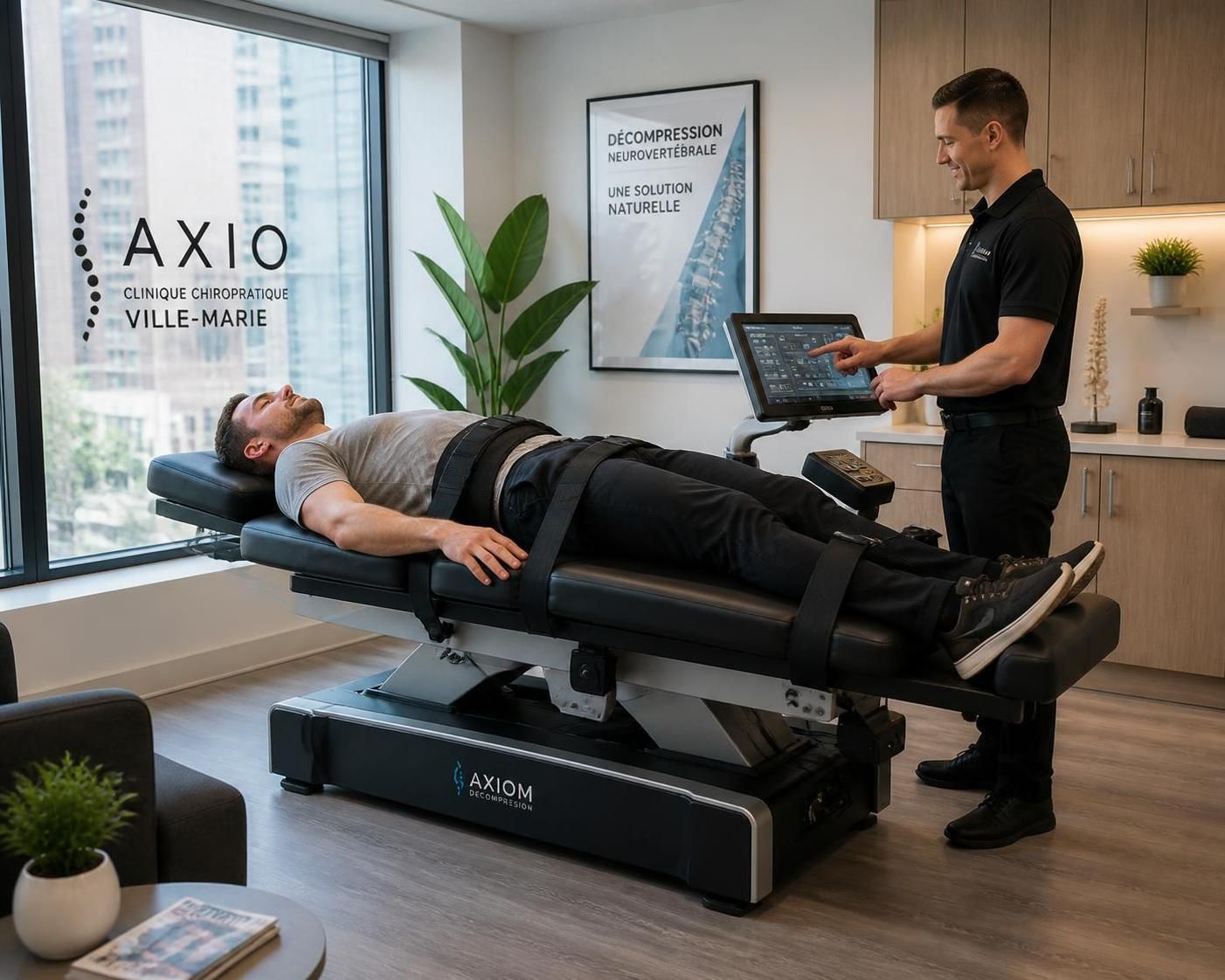
Decompression alone is not always sufficient to restore optimal function in complex cases. This is why it is integrated into a comprehensive rehabilitation program. Targeted physiotherapy, including core-strengthening and muscle-stretching exercises, plays an essential role in stabilizing the spine and reducing the risk of recurrence.
In addition, specific osteopathy offered in certain Ville-Marie clinics complements decompression by improving joint mobility and neuromuscular function. This three-part approach provides a therapeutic framework that respects the patient’s anatomy and physiology.
Rehabilitation exercises are introduced progressively and adapted to the individual, with particular attention to the body’s tolerance signals; it is especially recommended to stop any activity that worsens symptoms and promptly seek care if symptoms such as increasing numbness or muscle weakness appear or worsen.
This gradual approach optimizes outcomes and supports a more confident and lasting return to daily, sports, and professional activities. It is particularly relevant for residents of the metropolitan area, who are often exposed to postural stresses related to remote work or urban commuting.
Specific features of managing complex cases with neurovertebral decompression in Ville-Marie
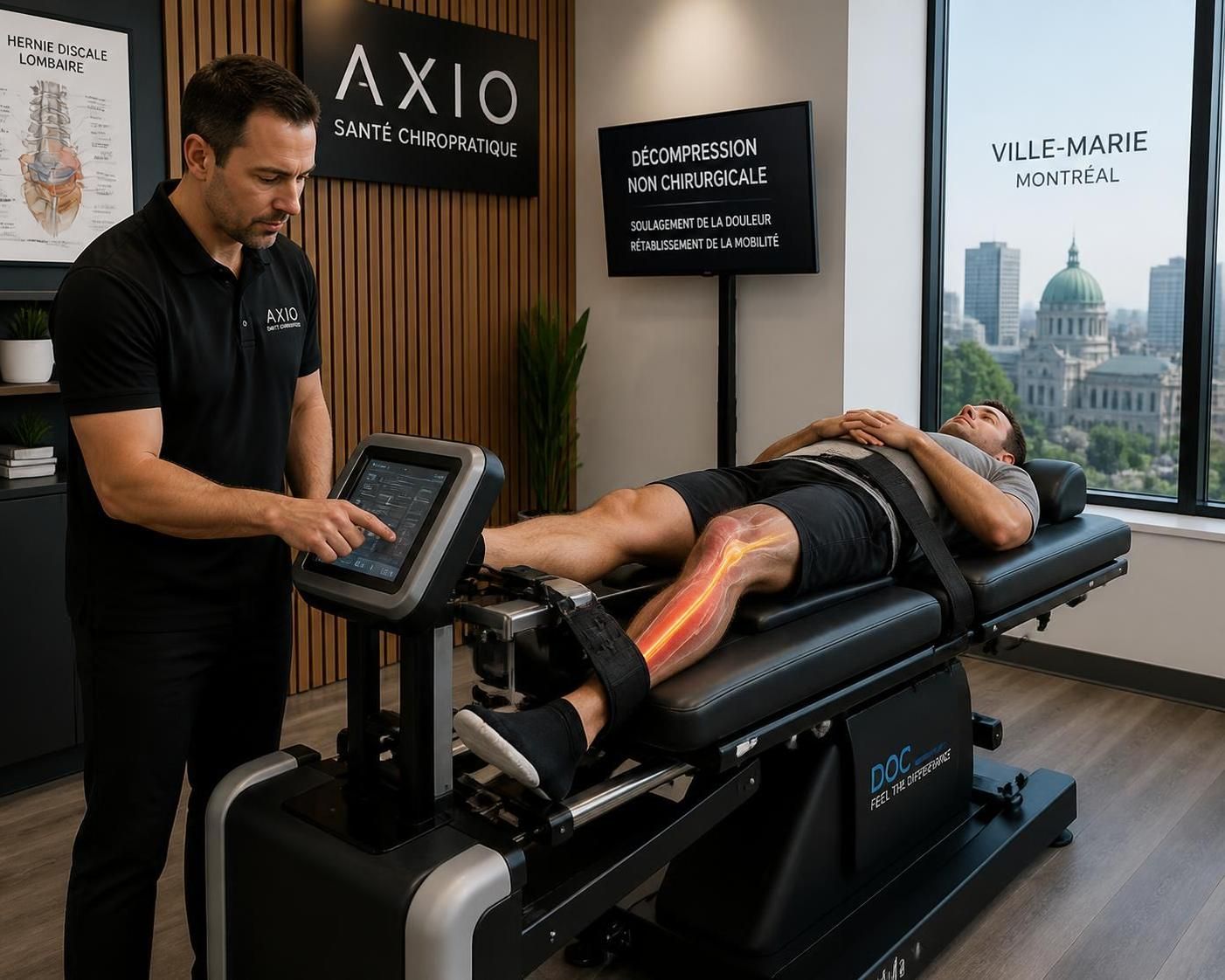
Complex spinal conditions treated in Ville-Marie primarily include large disc herniations, recurrent disc protrusions, severe foraminal stenosis, and associated radicular syndromes. For these cases, decompression must be considered with caution and clinical rigour, as only a specialized assessment can determine whether it is appropriate.
Indeed, this method is not suitable for all patient profiles. Certain contraindications, such as vertebral fractures, infections, or severe instability, rule out neurovertebral decompression. Therefore, candidate selection is based on an in-depth assessment conducted by experts at Clinique TAGMED and similar centres in the heart of Ville-Marie.
For eligible patients, segmental motorized traction gradually reduces mechanical compression without causing additional pain, even in cases where symptoms are particularly intense or disabling. This gentle approach contrasts with more extensive surgical procedures, which are often reserved as a last resort.
A clinical case recently reported in Ville-Marie illustrates this success well. A patient with a lumbar disc herniation and severe sciatic pain experienced a notable reduction in pain and improved function after a series of decompression and rehabilitation sessions, without requiring neurosurgery. This case highlights the relevance of combining cutting-edge technology with multidisciplinary expertise for optimal management of complex situations.
Comparison table: Neurovertebral decompression versus spinal surgery in complex cases in Ville-Marie
| Criterion | Neurovertebral decompression | Spinal surgery |
|---|---|---|
| Invasiveness | Non-invasive, uses controlled motorized traction | Surgical procedure with an incision, often under general anesthesia |
| Session duration | 15 to 30 minutes per session | Several hours of surgery |
| Recovery time | Short, often without extended time away from work | Long, with hospitalization and sometimes prolonged rehabilitation |
| Risks | Low, with real-time adjustments based on tolerance | Risks of infection and neurological or anesthetic complications |
| Cost | Lower over the medium and long term | High, including hospitalization and post-operative care |
| Outcomes | Progressive effects on pain reduction and functional improvement | Often faster relief, but potential risks and complications |
The video illustrates advanced neurovertebral decompression protocols used for complex spinal cases, explaining the biomechanical mechanisms and clinical benefits observed in Montréal.
Complex cases and neurovertebral decompression: recommendations for optimizing care
- Thorough multidisciplinary assessment : combining in-depth clinical examinations and imaging to personalize treatment.
- Progressive follow-up : regular adjustment of sessions according to symptomatic and functional responses.
- Combined with rehabilitation : adapted exercises that promote lumbar stabilization and reduce muscle tension.
- Identification of contraindications : strict exclusion of cases involving instability or serious conditions requiring prompt neurosurgical assessment.
- Clear information and support : informing patients about the nature of treatment, its benefits, and its limitations.
This second video presents testimonials and case studies on neurovertebral decompression in Montréal, particularly regarding benefits observed in patients with complex spinal conditions.
{“@context”:”https://schema.org”,”@type”:”FAQPage”,”mainEntity”:[{“@type”:”Question”,”name”:”Quels sont les critu00e8res pour considu00e9rer la du00e9compression neurovertu00e9brale dans les cas complexes ?”,”acceptedAnswer”:{“@type”:”Answer”,”text”:”Une u00e9valuation clinique approfondie visant u00e0 identifier les pathologies compatibles et u00e0 exclure les contre-indications est essentielle avant du2019envisager la du00e9compression neurovertu00e9brale.”}},{“@type”:”Question”,”name”:”La du00e9compression neurovertu00e9brale est-elle douloureuse ?”,”acceptedAnswer”:{“@type”:”Answer”,”text”:”La technique est gu00e9nu00e9ralement confortable et ajustu00e9e pour u00e9viter toute douleur durant les su00e9ances, gru00e2ce u00e0 un contru00f4le pru00e9cis de la force exercu00e9e.”}},{“@type”:”Question”,”name”:”Combien de su00e9ances sont nu00e9cessaires pour observer une amu00e9lioration ?”,”acceptedAnswer”:{“@type”:”Answer”,”text”:”Habituellement, un protocole comprend 15 u00e0 25 su00e9ances, mais le nombre exact varie selon la gravitu00e9 et la ru00e9ponse individuelle.”}},{“@type”:”Question”,”name”:”La du00e9compression remplace-t-elle la chirurgie ?”,”acceptedAnswer”:{“@type”:”Answer”,”text”:”Elle offre une alternative non invasive pour certains patients mais ne remplace pas la chirurgie lorsque cette derniu00e8re est mu00e9dicalement nu00e9cessaire.”}},{“@type”:”Question”,”name”:”Quels signes justifient une consultation urgente ?”,”acceptedAnswer”:{“@type”:”Answer”,”text”:”Faiblesse musculaire rapidement progressive, perte du contru00f4le urinaire ou intestinal, fiu00e8vre ou douleur intense nu00e9cessitent une consultation mu00e9dicale immu00e9diate.”}}]}What are the criteria for considering neurovertebral decompression in complex cases?
A thorough clinical assessment to identify compatible conditions and rule out contraindications is essential before considering neurovertebral decompression.
Is neurovertebral decompression painful?
The technique is generally comfortable and adjusted to avoid pain during sessions, thanks to precise control of the force applied.
How many sessions are needed to see improvement?
Typically, a protocol includes 15 to 25 sessions, but the exact number varies depending on severity and the individual response.
Does decompression replace surgery?
It offers a non-invasive alternative for some patients but does not replace surgery when surgery is medically necessary.
What signs warrant urgent consultation?
Rapidly progressive muscle weakness, loss of bladder or bowel control, fever, or severe pain require immediate medical attention.
If you have complex back or radicular pain in Ville-Marie, an assessment by a neurovertebral decompression expert can help you better understand your condition, identify signs to watch for, and determine whether this treatment is appropriate for you.
Specialized neurovertebral decompression assessment in Ville-Marie
Sylvain Desforges, B.Sc., D.O., N.D., osteopath and naturopath
This content is provided for educational purposes and does not replace personalized medical advice.
