

Structural deformity developing during growth, with wedge-shaped vertebrae and an increased, relatively rigid kyphotic curve.
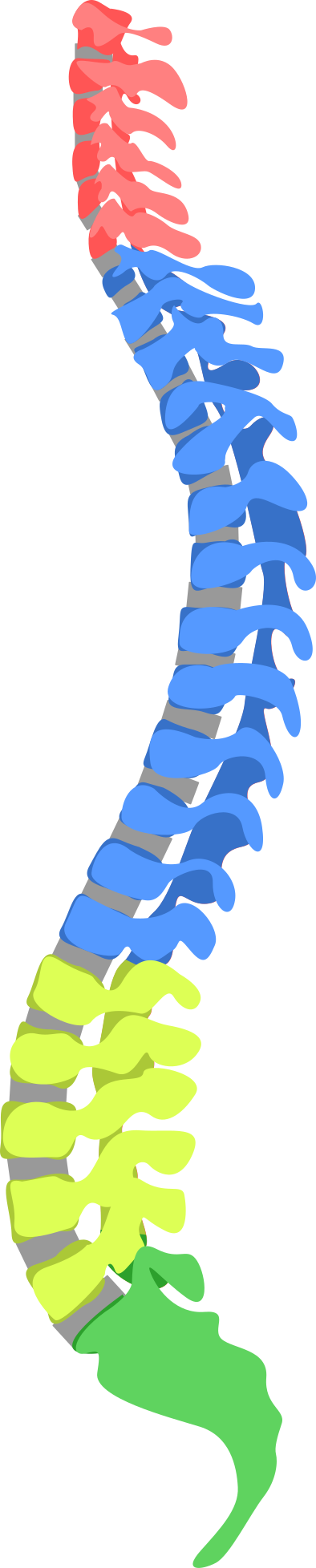
mikeingram1; recoloration : MJL — CC0 1.0. Image source.

Understanding the mechanism
Scheuermann kyphosis is a structural growth-related spinal deformity, usually in the thoracic region, associated with wedging of several vertebrae. It differs from a flexible postural roundback. Endplate irregularities and Schmorl nodes can accompany it. The diagnosis cannot be made from a side-view photograph alone or from the assumption that the adolescent simply needs to stand straighter.
Symptoms and warning signs
A relatively rigid rounded back, fatigue or discomfort after activity may prompt assessment. Appearance can also have a meaningful emotional and social impact for an adolescent. Neurological symptoms, unusual night pain or rapid change require investigation. These should not be dismissed as inevitable features of an already known spinal deformity or treated without checking their cause.
Diagnosis and investigations
Examination assesses flexibility, trunk balance and remaining growth. Standing radiographs characterize the curve and vertebral shape. MRI is reserved for particular questions, including neurological findings or surgical planning. The team distinguishes Scheuermann disease from postural kyphosis, fracture and other causes. A single angle measurement does not replace this broader assessment of structure, growth and function.
Treatment and outlook
Options include observation, suitable exercise, bracing for selected growing patients and, less commonly, surgery. Symptoms, rigidity and progression influence the choice. Exercise can improve capacity and comfort without automatically reshaping already formed vertebrae. Follow-up should consider the young person's activity and goals, with clear explanations of what each intervention can realistically change.
The role of TAGMED care
At TAGMED, supportive care may address associated discomfort and activity tolerance after the diagnosis has been clarified. Decompression, laser and manipulation must not be promoted as guaranteed correction of a structural deformity. Forceful procedures over a vulnerable segment should be avoided. Coordination with orthopaedic care is important when bracing or growth surveillance is indicated, even if symptoms temporarily settle.
Practical follow-up
Comparing capacity before and after care can include sitting endurance and school or sporting activities. A straighter photograph does not establish structural correction. Growth and the measures selected by the specialist remain important when judging progression and the purpose of treatment.
Frequently asked questions
Is this just slouching?
No. Scheuermann disease involves vertebral structural changes rather than a flexible posture alone.
Can sport continue?
Often, with activity adjusted to symptoms and the treating team's recommendations.
Is a brace always required?
No. Remaining growth, curve size and progression guide that decision.
Do exercises straighten the bones?
They may improve function and available posture without reliably reversing structural bone deformity.
When is prompt assessment needed?
With neurological loss, substantial unusual pain or rapid change in the presentation.
Conceptual diagram: the steps depend on clinical findings and do not provide an individual diagnosis.
Medical references
- American Academy of Orthopaedic Surgeons. Kyphosis (Roundback) of the Spine.
- American Academy of Orthopaedic Surgeons. Scoliosis Overview.
References document the topic; their inclusion does not imply endorsement of TAGMED services by those organizations.
Educational information from The Spine Page. This entry does not replace an individual assessment. Documentary version: October 12, 2026. Sylvain Desforges, B.Sc., D.O., N.D., osteopath and naturopath.
TAGMED clinic contact details
For non-urgent consultations and information about available services.
Clinique TAGMED — Terrebonne
1150, rue Lévis, Suite 200
Terrebonne (Québec) J6W 5S6
450‑704‑4447
Clinique TAGMED — Montréal
1140, avenue Beaumont
Mont-Royal (Québec) H3P 3E5
1‑877‑672‑9060