

Nociceptive pain arises when nociceptors are activated by actual or potential injury to non-neural tissues. It can accompany injury or inflammation, among other conditions. This mechanism can coexist with other contributors and does not automatically establish the severity or precise source.
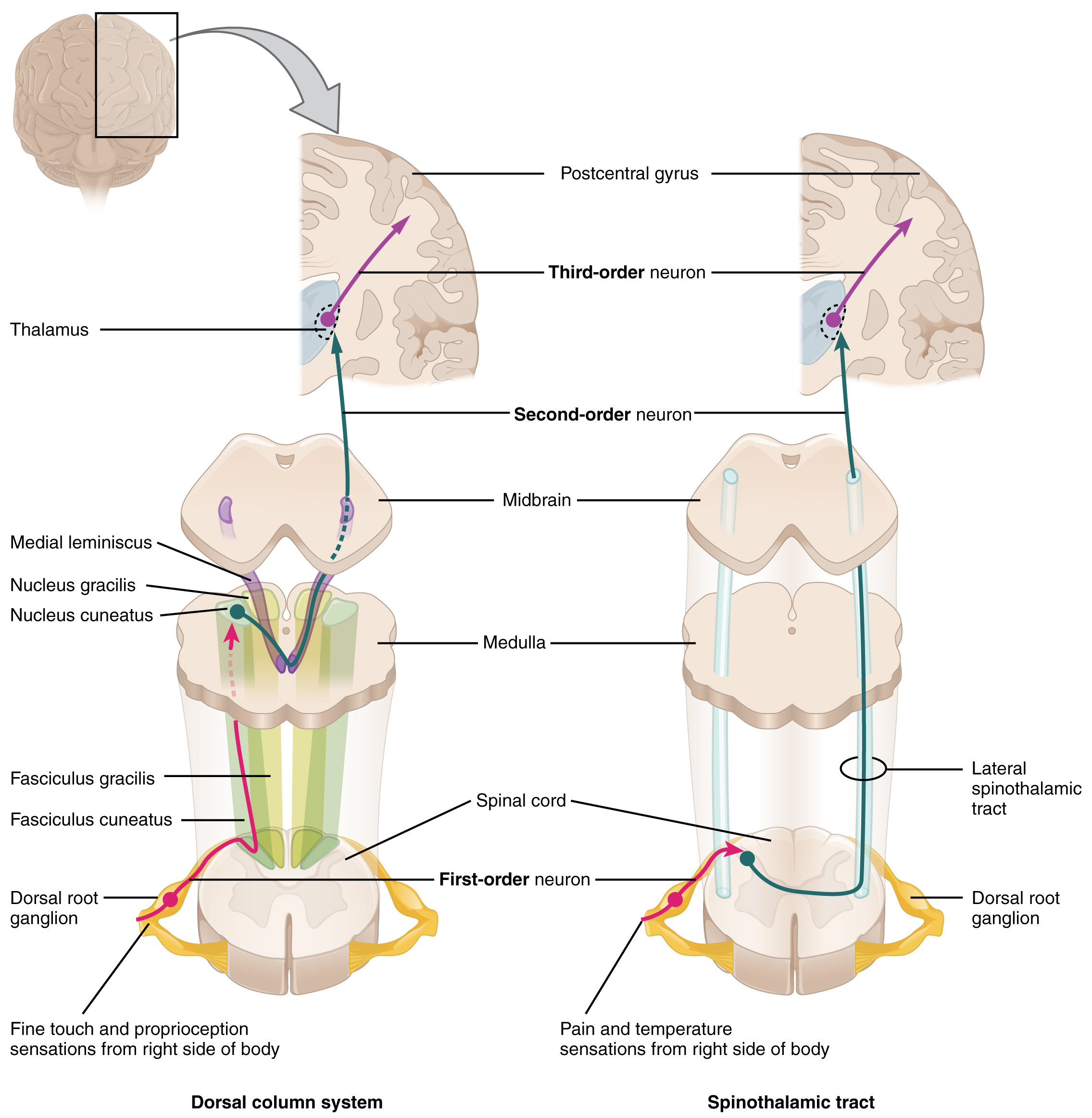
OpenStax College — CC BY 3.0. Image source.

Function and mechanism
A sprain, an irritated joint or some muscular presentations can include a nociceptive component. Information arising from tissues is subsequently modulated within the nervous system. Perceived intensity is therefore not an exact gauge of anatomical damage, and calling pain nociceptive does not automatically establish that the underlying condition is harmless.
Assessment and interpretation
Assessment looks for a plausible relationship between circumstances, location and painful activities. It also checks alternative explanations, including neurological, infectious and inflammatory disease. Arthritis on a scan does not by itself identify the painful structure. Classification organizes clinical reasoning rather than imposing one exclusive label on every aspect of a person's symptoms.
Role of TAGMED care
At TAGMED, management may combine explanation, temporary load adjustment and gradual return to activity. Manual care may support selected indications. Immediate relief does not prove that the mechanism was exclusively mechanical or that a disc lesion has been repaired. The response should be judged over a meaningful period.
Follow-up and warning signs
Follow-up compares capability and recovery between activities. Fever, major trauma or new weakness requires appropriate medical assessment. New urinary retention, loss of bladder or bowel control, or saddle numbness requires immediate emergency care.
Frequently asked questions
Does nociceptive mean acute?
No. This mechanism can contribute to acute or persistent pain.
Is inflammation always responsible?
No. Several types of tissue loading or injury may contribute.
Does severe pain mean a large lesion?
The relationship is not proportional; clinical assessment is still necessary.
Can several pain mechanisms coexist?
Yes, including nociceptive, neuropathic and nociplastic contributions.
Is imaging always essential?
No. It is selected when it can answer a useful question and affect care.
A nociceptive mechanism does not necessarily explain every aspect of an individual's pain.
Medical references
- International Association for the Study of Pain. IASP Terminology.
- National Institute of Neurological Disorders and Stroke. Pain.
- Academy of Orthopaedic Physical Therapy — JOSPT. Interventions for the Management of Acute and Chronic Low Back Pain: Revision 2021.
References document the topic; their inclusion does not imply endorsement of TAGMED services by those organizations.
Educational information from The Spine Page. This entry does not replace an individual assessment. Documentary version: October 12, 2026. Sylvain Desforges, B.Sc., D.O., N.D., osteopath and naturopath.
TAGMED clinic contact details
For non-urgent consultations and information about available services.
Clinique TAGMED — Terrebonne
1150, rue Lévis, Suite 200
Terrebonne (Québec) J6W 5S6
450‑704‑4447
Clinique TAGMED — Montréal
1140, avenue Beaumont
Mont-Royal (Québec) H3P 3E5
1‑877‑672‑9060