

Mass effect is a change in the position or shape of a structure caused by pressure from something nearby. In spinal imaging it may involve the dural sac, a nerve root or the spinal cord, and does not necessarily mean a tumour.
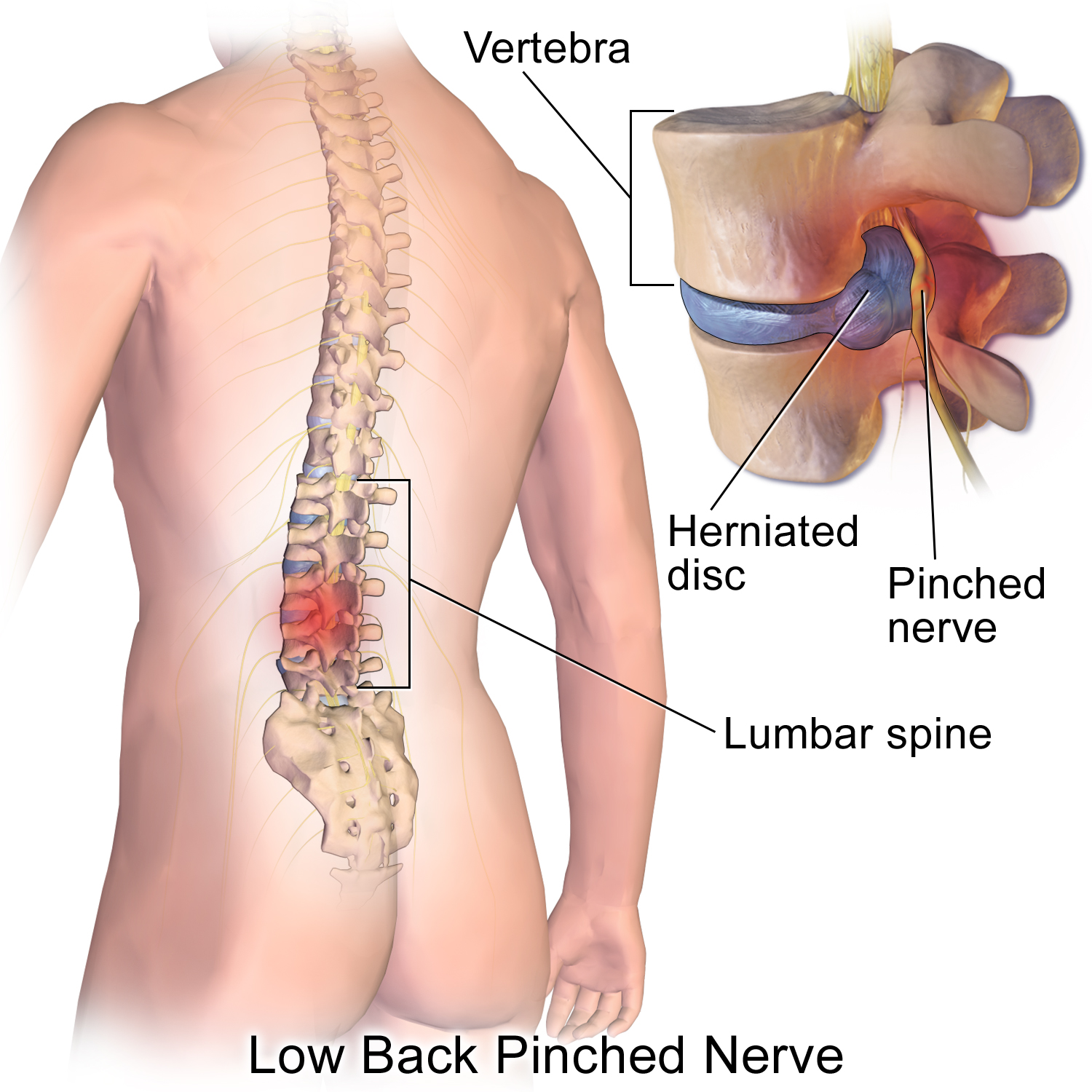
Blausen.com staff (2014), Medical gallery of Blausen Medical 2014, WikiJournal of Medicine 1(2), DOI: 10.15347/wjm/2014.010 — CC BY 3.0. Image source.

Meaning on imaging
Mass effect describes a mechanical consequence visible on imaging. A disc herniation, collection, haemorrhage or tumour can displace or deform a neighbouring structure. The term alone identifies neither the cause nor its functional consequences. It should be read with the rest of the report, including the anatomical level.
Indications and assessment
The report usually describes the displaced structure and associated findings. Assessment looks for radiating pain, weakness, sensory changes or altered walking. MRI helps examine neural tissues, while other investigations may clarify the cause. The importance of a finding depends on what structure is affected and whether symptoms are developing.
Limitations and interpretation
Displacement, contact and compression are not exact synonyms. A small effect on the dural sac does not automatically mean nerve injury. Conversely, compression that matches neurological deficits may require urgent action. The timing and progression of symptoms matter alongside the shape and size of the finding on the scan.
Role of TAGMED care
At TAGMED, unexplained mass effect or associated neurological findings requires medical assessment before mechanical care. Motorised decompression does not remove a mass and cannot replace surgical decompression. Progressive weakness or new bladder or bowel dysfunction requires immediate medical assessment, rather than waiting to see whether a routine treatment session helps.
Frequently asked questions
Does the word mass mean cancer?
No. The expression describes an effect on nearby structures and has several possible causes.
Is surgery always required?
No. The cause, severity, symptoms and their progression determine the appropriate next steps.
Can mass effect occur without pain?
Yes. Some contacts or displacements cause few symptoms and need clinical interpretation.
Why identify the affected structure?
An effect on the dural sac may differ substantially from an effect on the spinal cord.
Can I wait if strength is declining?
New or progressive weakness needs assessment without delay, particularly with other neurological symptoms.
Original conceptual diagram; no patient diagnostic image.
Medical references
- RadiologyInfo.org — ACR, RSNA et ASRT. Spine MRI.
- American Academy of Orthopaedic Surgeons. Cervical Spondylotic Myelopathy (Spinal Cord Compression).
- Eisenmenger et al., RadioGraphics / RSNA, 2023. Focused Abbreviated Survey MRI Protocols for Brain and Spine Imaging.
References document the topic; their inclusion does not imply endorsement of TAGMED services by those organizations.
Educational information from The Spine Page. This entry does not replace an individual assessment. Documentary version: October 12, 2026. Sylvain Desforges, B.Sc., D.O., N.D., osteopath and naturopath.
TAGMED clinic contact details
For non-urgent consultations and information about available services.
Clinique TAGMED — Terrebonne
1150, rue Lévis, Suite 200
Terrebonne (Québec) J6W 5S6
450‑704‑4447
Clinique TAGMED — Montréal
1140, avenue Beaumont
Mont-Royal (Québec) H3P 3E5
1‑877‑672‑9060