

Abnormality located within spinal cord tissue, requiring imaging and clinical context to determine its nature.
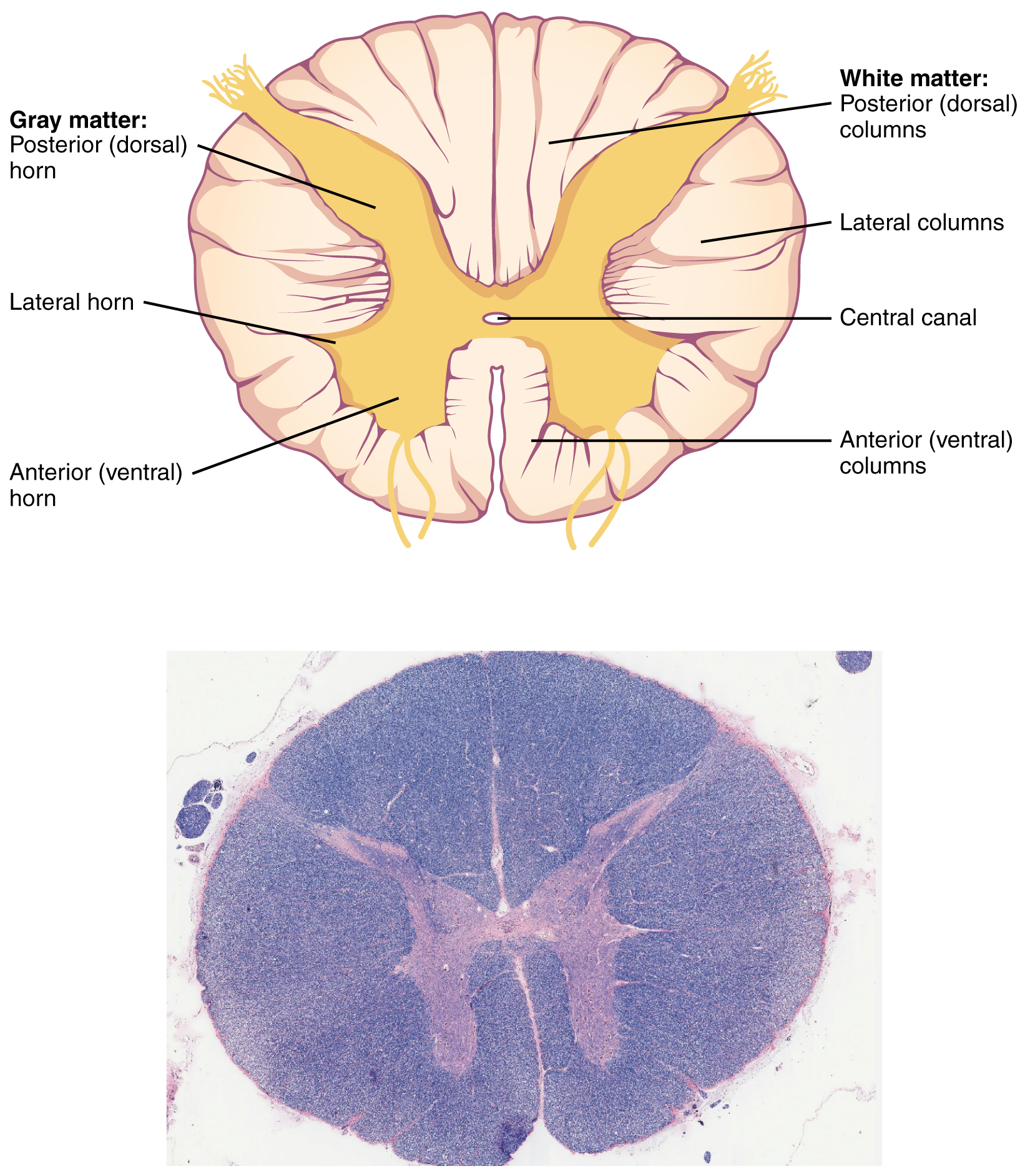
OpenStax — CC BY 4.0. Image source.

Radiology
Principle and interpretation
Causes include tumor, inflammation, ischemia or a fluid cavity. The term identifies location, does not automatically mean cancer and does not refer to vertebral bone marrow.
Indications, limitations and precautions
MRI sequences, possible enhancement and evolution guide differential diagnosis. Progressive weakness, gait change or sphincter dysfunction warrants prompt neurological assessment.
Points to consider
An imaging sign describes an appearance that may have several explanations. Distribution, extent, other sequences and previous studies contribute to interpretation. The radiologist’s conclusion should be correlated with symptoms and examination before treatment is selected.
Role of TAGMED care
At TAGMED, assessment aims to understand symptoms, history and functional limitations. Manual care and osteopathy, motorized spinal decompression, laser and shockwave have different indications. The term described in this entry is not enough to select any of these modalities. Their relevance, limitations and possible contraindications should be discussed in relation to diagnosis and individual goals.
Related concepts and distinctions
These concepts belong to the same field, but are not synonyms.
- Intradural extramedullary lesion — Abnormality inside the dura but outside spinal cord tissue, potentially displacing or compressing the cord and roots.
- Extradural lesion — Abnormality outside the spinal dura, including in the epidural space, vertebrae or neighboring tissues.
- Bone sclerosis — Increased apparent density or mineralization of a bone region on imaging, which can reflect different processes.
Conceptual guide: Intramedullary lesion. Blocks summarize useful relationships; they are not an individual anatomical image.
Medical references
- American College of Radiology / RSNA, RadiologyInfo. Spine MRI.
- National Cancer Institute. Adult Central Nervous System Tumors Treatment (PDQ), Patient Version.
References document the topic; their inclusion does not imply endorsement of TAGMED services by those organizations.
Educational information from The Spine Page. This entry does not replace an individual assessment. Documentary version: October 13, 2026. Sylvain Desforges, B.Sc., D.O., N.D., osteopath and naturopath.
TAGMED clinic contact details
For non-urgent consultations and information about available services.
Clinique TAGMED — Terrebonne
1150, rue Lévis, Suite 200
Terrebonne (Québec) J6W 5S6
450‑704‑4447
Clinique TAGMED — Montréal
1140, avenue Beaumont
Mont-Royal (Québec) H3P 3E5
1‑877‑672‑9060