



In Longueuil, pain that starts in the lower back and travels down into the buttock or leg can make driving, desk work, and even sleep difficult. Some common mistakes — staying still for too long, returning to activities too quickly, or choosing exercises without considering symptoms — may perpetuate discomfort, but they cannot alone explain the cause of the pain.
Sciatica describes a group of symptoms, not a single cause. A delayed sciatica diagnosis or an incorrect identification of the cause may delay appropriate care; conversely, pain that gradually improves does not necessarily require imaging or specialized treatment. The goal is to identify signs that require an assessment, then adjust activities and care according to how symptoms progress.



In brief: mistakes to avoid when sciatic pain develops in Longueuil
Avoid prolonged immobility. Prolonged bed rest can contribute to stiffness; gentle, tolerated movements are generally preferable when the situation allows.
Do not assume the cause. A disc herniation is one possibility, but the path of the pain alone is not enough to confirm a diagnosis.
Return gradually. Returning to activities too quickly or doing poorly adapted exercises can trigger symptoms again.
Seek advice if signs persist. Weakness, loss of sensation, or pain that limits walking warrants an assessment rather than prolonged self-medication.
These guidelines are helpful for people who spend long periods sitting at work, frequently drive between Longueuil and Montréal, or try to maintain their activities despite pain. However, they do not replace a clinical assessment, especially if symptoms change or worsen.
Confusing sciatica, low back pain, and the cause of pain
The word “sciatica” often refers to pain that follows part of the nerve pathway, from the lower back or buttock toward the thigh, calf, or foot. Irritation of a nerve root can also cause tingling, numbness, or weakness. Low back pain, by contrast, is mainly felt in the lower back, although both problems can coexist.
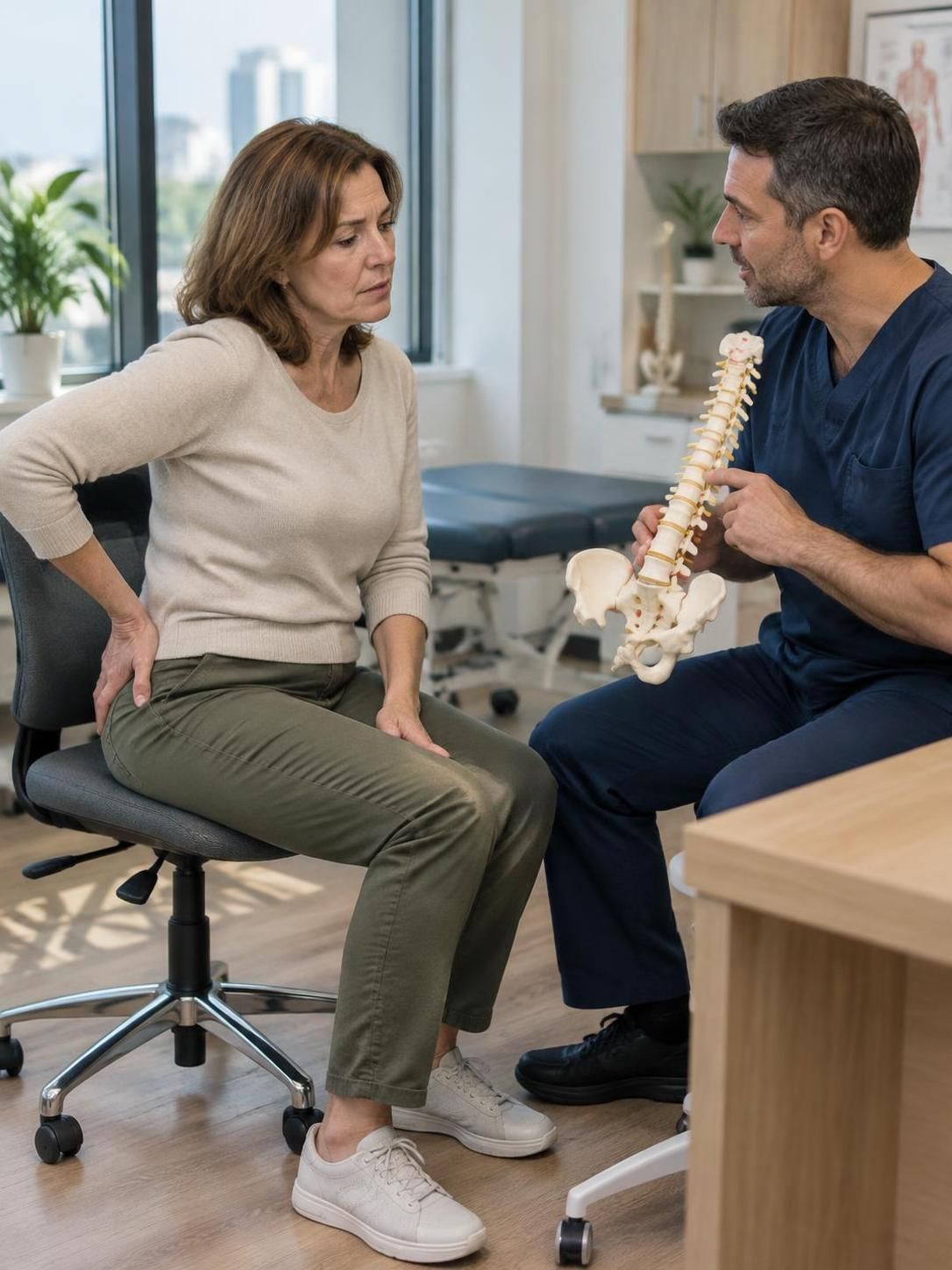
A disc herniation or protrusion can irritate a nerve root, but other factors can contribute to leg pain. The assessment considers the history of symptoms, sensation, strength, and certain movements; imaging is interpreted only in light of this clinical picture. An abnormality visible on an MRI does not, on its own, prove that it is responsible for the pain.
Incorrectly identifying the cause can lead to actions that do not match the problem. For example, an intense leg stretch may be poorly tolerated by someone whose symptoms are mainly neurological, while another person may benefit from appropriate mobility exercises. Resources on the possible causes and assessment of sciatica help explain why symptoms must be interpreted together.
Pain below the knee, tingling, or weakness cannot determine with certainty which nerve root is affected. Progression also matters: pain that gradually decreases does not call for the same decisions as progressively worsening loss of strength. The first mistake to avoid is therefore turning a symptom into a certain diagnosis without an examination.
Prolonged rest, poor posture, and everyday activities
Rest can help you find a comfortable position during a flare-up, but prolonged rest is generally not a sufficient strategy. Staying in bed for several days can contribute to stiffness and make returning to activities more difficult. When there are no emergency signs and movement is tolerable, short walks and regular changes in position can help maintain mobility.
Poor posture is not a universal explanation for sciatica, and there is no one perfect position that suits everyone. Nevertheless, sitting for long periods without a break can increase discomfort for some people. At home or at the office in Longueuil, try varying your positions, keeping your feet supported, and getting up regularly rather than trying to maintain a rigid posture for hours.
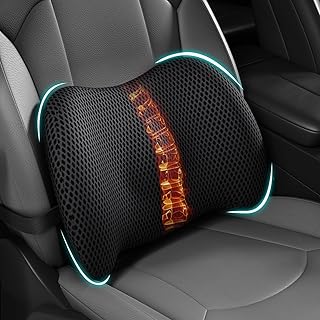
When driving, moving the seat close enough so you do not have to stretch your legs and comfortably supporting your back can make the trip more tolerable. When lifting an object, keep it close to your body and avoid combining a heavy load with sudden twisting. These adjustments do not necessarily treat the cause, but they may limit the stresses that trigger symptoms in some people.
Heat wrapped in a cloth can provide temporary relief for some people, while others prefer cold at first. Avoid direct contact with the skin and do not fall asleep with a heat source. The most helpful position is simply the one that reduces symptoms without causing new numbness or increased radiating pain.
Poorly adapted exercises and returning to activities too quickly
Physical activity is not automatically prohibited when sciatic pain occurs. However, immediately returning to usual loads, tennis, or golf involving rapid rotations can exceed your current tolerance. Returning to activities too quickly is especially likely to complicate monitoring: a flare-up after exertion does not necessarily mean serious damage has occurred, but it indicates that the intensity or movement should be reviewed.
Poorly adapted exercises are a concern when they clearly reproduce pain travelling down the leg, increase tingling, or leave lasting worsening after the activity. It is preferable to start with gentle movements, short walks, or comfortable mobility, then increase gradually according to your body’s response. Do not force a painful stretch based on the idea that you need to “push through” the pain.
- Reduce or stop a movement that causes sharp pain farther down the leg.
- Monitor changes if numbness spreads or new weakness appears.
- Resume in stages your tasks and leisure activities, alternating exertion and recovery.
- Seek professional advice if you are unsure which movements are appropriate for your situation.
Walking, cycling, or swimming may be tolerated by some people, but no sport is a universal solution. Exercise recommendations should be adapted to symptoms, physical condition, and the likely cause. An overview of exercises to choose or avoid according to tolerance can support this reflection, without replacing a personalized program.
The practical guide is your response after activity: mild discomfort that returns to its usual level may be acceptable, while distinctly stronger nerve pain or loss of function warrants a pause and reassessment. The right pace is gradual, not heroic.
Inappropriate self-medication and lack of medical follow-up
Inappropriate self-medication may include prolonged use of a medication, mixing products, or restarting a treatment previously prescribed for a different situation. The choice of medication and its duration depend in particular on other health conditions and treatments already being used. A physician or pharmacist can check what is appropriate; this article provides neither a prescription nor dosage information.
Neglecting persistent symptoms can also delay clarification of the situation. Pain that remains intense, returns often, disrupts sleep, or limits walking warrants a discussion with a professional. Lack of medical follow-up becomes particularly concerning if neurological symptoms appear or worsen.
Imaging is not routine for all pain compatible with sciatica. It may be considered according to the examination, symptom duration, warning signs, or preparation for specialized treatment. The physician relates the images to the symptoms, because results do not automatically identify the source of the pain.
Non-personalized treatments in Longueuil — as elsewhere — may miss the mark if they rely only on a list of exercises or a technique chosen without an assessment. For persistent or recurrent pain, a reasonable first step is to assess symptoms, limitations, and functional goals. The signs that indicate when to seek care provide guidance for deciding the level of attention required.
See a professional if pain persists or recurs, travels below the knee, limits walking or disrupts sleep, or if numbness, loss of sensation, weakness, or loss of function appears.
Seek urgent medical assessment in the event of loss of bladder or bowel control, numbness in the saddle area, significant or rapidly progressive weakness, fever or altered general condition, major trauma, or pain in the context of cancer or infection. Rapid worsening also requires urgent attention.
Treatment options and the role of spinal decompression
Care depends on the examination and progression. When the situation allows, maintaining or gradually returning to activities, tailored advice, and progressive exercises can support function. Physiotherapy or manual care may be discussed when appropriate; medications are prescribed by an authorized professional, and injections may be considered for certain profiles.
Spinal decompression is a form of progressive, controlled motorized traction. Following an assessment, it may be considered for certain patients with symptoms compatible with disc or foraminal involvement. Its goal is to temporarily modify certain mechanical stresses applied to lumbar structures; it does not “put” a disc back into place and is not suitable for all causes of pain.
Results vary, and no duration or number of sessions is appropriate for everyone. This approach does not replace urgent medical assessment or other options indicated by the situation; it does not guarantee avoidance of surgery. Contraindications, neurological signs, and medical history must be reviewed before deciding whether it is relevant.
At Clinique TAGMED, located at 1140 Beaumont Avenue in Mont-Royal, near Outremont and Côte-des-Neiges, approaches may include, depending on the assessment, motorized decompression, specific osteopathy, or a precision percussor. For people in Longueuil, the first issue is whether these options match the clinical picture, rather than choosing a technique based solely on the name of the treatment. The options for sciatica assessment and management are presented online.
Surgery or a specialist opinion may be discussed when significant compression, a neurological deficit, or clinical progression warrants it. The options are not automatically mutually exclusive: what matters is choosing the next step according to symptoms, goals, and individual risks.
Frequently asked questions about sciatica treatment mistakes
Should you stay in bed until the pain goes away?
Brief rest can help you find a comfortable position, but prolonged immobility can contribute to stiffness. If no emergency signs are present, gentle, tolerated movements are generally preferable.
Does leg pain confirm sciatica?
No. Pain radiating into the leg can have several causes, and its path is not enough to establish a diagnosis. The history of symptoms and clinical examination guide the assessment.
When should you seek care for pain travelling down the leg?
A consultation is indicated if pain persists, recurs, disrupts sleep, or limits walking, or if there is numbness or weakness. Loss of bladder or bowel control, saddle anaesthesia, or rapidly progressive weakness requires urgent assessment.
Is spinal decompression appropriate for all cases of sciatica?
No. It may be considered for certain patients after an assessment, but it is not appropriate for all causes or situations. Results vary, and emergency signs must be assessed without delay.
Is heat better than cold?
Both can provide temporary relief depending on individual tolerance. Use a barrier between the skin and the heat or cold source, and stop the application if it irritates the skin or worsens discomfort.
Persistent pain travelling down the leg can have several explanations. An assessment can help clarify the likely cause, the signs to monitor, and the relevance of a conservative approach, without presuming treatment before the examination.
Request an assessment at Clinique TAGMED
Dr. Sylvain Desforges, B.Sc., D.O., N.D., osteopath
This content is educational and does not replace a personalized assessment or medical advice.
