




Sciatica is a condition frequently encountered among Laval workers, particularly those exposed to long hours of sitting or repetitive physical exertion. This often disabling pain can significantly affect quality of life and work productivity. Understanding the mechanisms of sciatica and its risk factors is crucial for implementing effective prevention strategies, as well as tailored treatments that support a safer, lasting return to work activities.
The wide range of underlying causes of sciatica, from disc herniation to postural imbalances, requires a thorough assessment. In Laval, workers benefit from targeted approaches combining ergonomics, therapeutic exercises and innovative treatments, including motorized neurovertebral decompression, an increasingly recognized non-invasive method. It is essential to clearly distinguish mild forms from cases requiring urgent medical attention in order to optimize care.
In brief: key points on sciatica among Laval workers
Common mechanisms and causes of sciatica among workers
Sciatica refers to pain related to irritation or compression of the sciatic nerve, the longest nerve in the human body, which originates in the lumbar region and extends into the legs. Among workers, several factors can contribute to this painful condition. It is crucial to understand that low back pain radiating into the leg is not always sciatica in the strict sense; it may be referred pain or related to other causes.
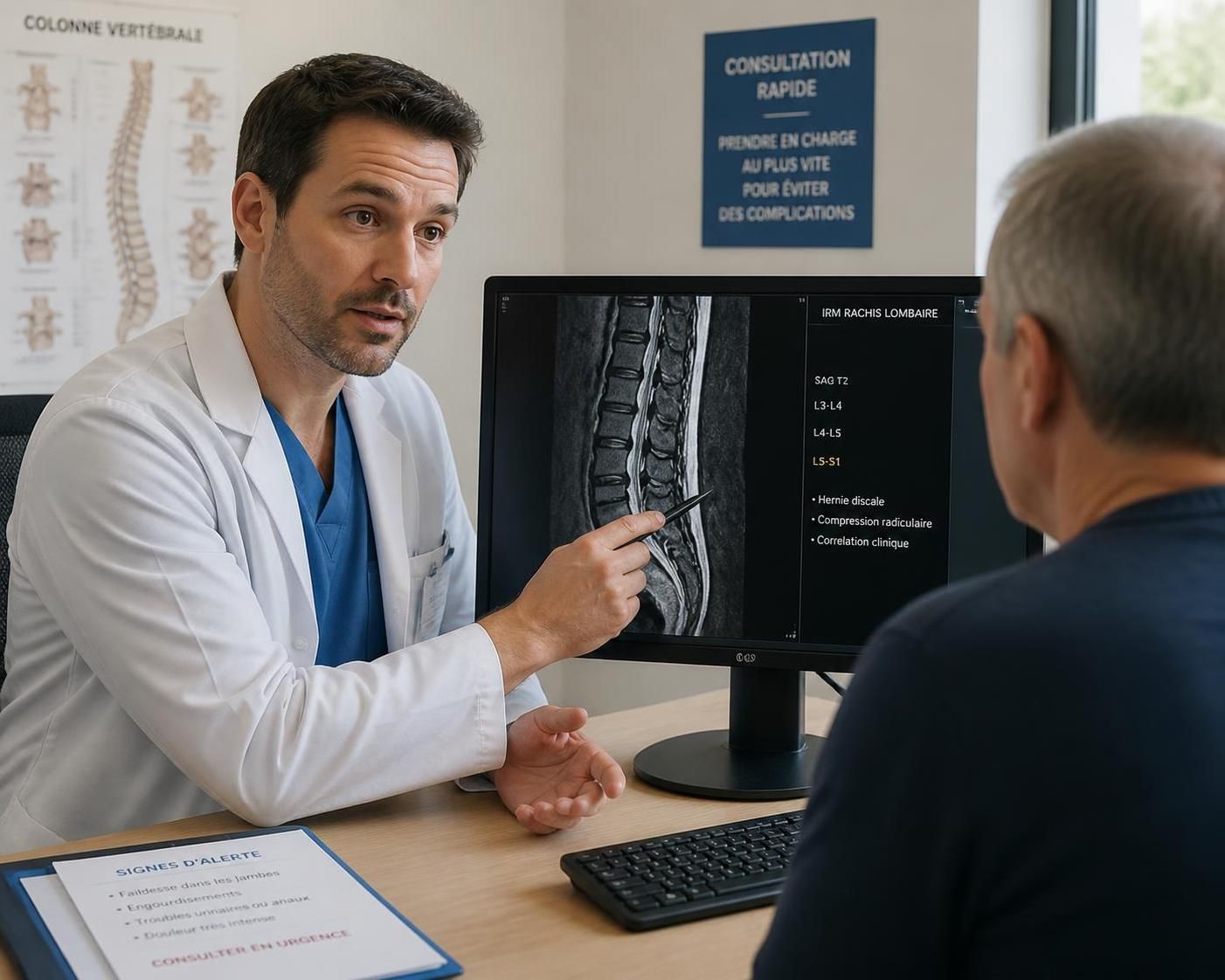
The main cause is often a lumbar disc herniation, particularly between the L4-L5 or L5-S1 vertebrae. This herniation puts pressure on the nerve root, causing intense pain that may be accompanied by numbness and motor impairments. In addition, natural aging, a sedentary lifestyle or unsuitable work postures can promote conditions such as foraminal stenosis, in which the canal through which the nerve passes narrows.
Other conditions, although less common, must be considered in a complete clinical context: lumbar osteoarthritis, work-related trauma or piriformis muscle syndrome, which can also irritate the sciatic nerve without a disc-related origin. The latter is often misdiagnosed and may delay appropriate care.
Among Laval workers, the combination of biomechanical and environmental factors (poor ergonomics, inadequate equipment use) plays a significant role. For example, prolonged sitting at a computer can increase pressure on the lumbar discs and aggravate a latent disc protrusion. Likewise, carrying heavy loads without appropriate postural protection can cause repeated microtraumas, resulting in inflammation of the nerve root.
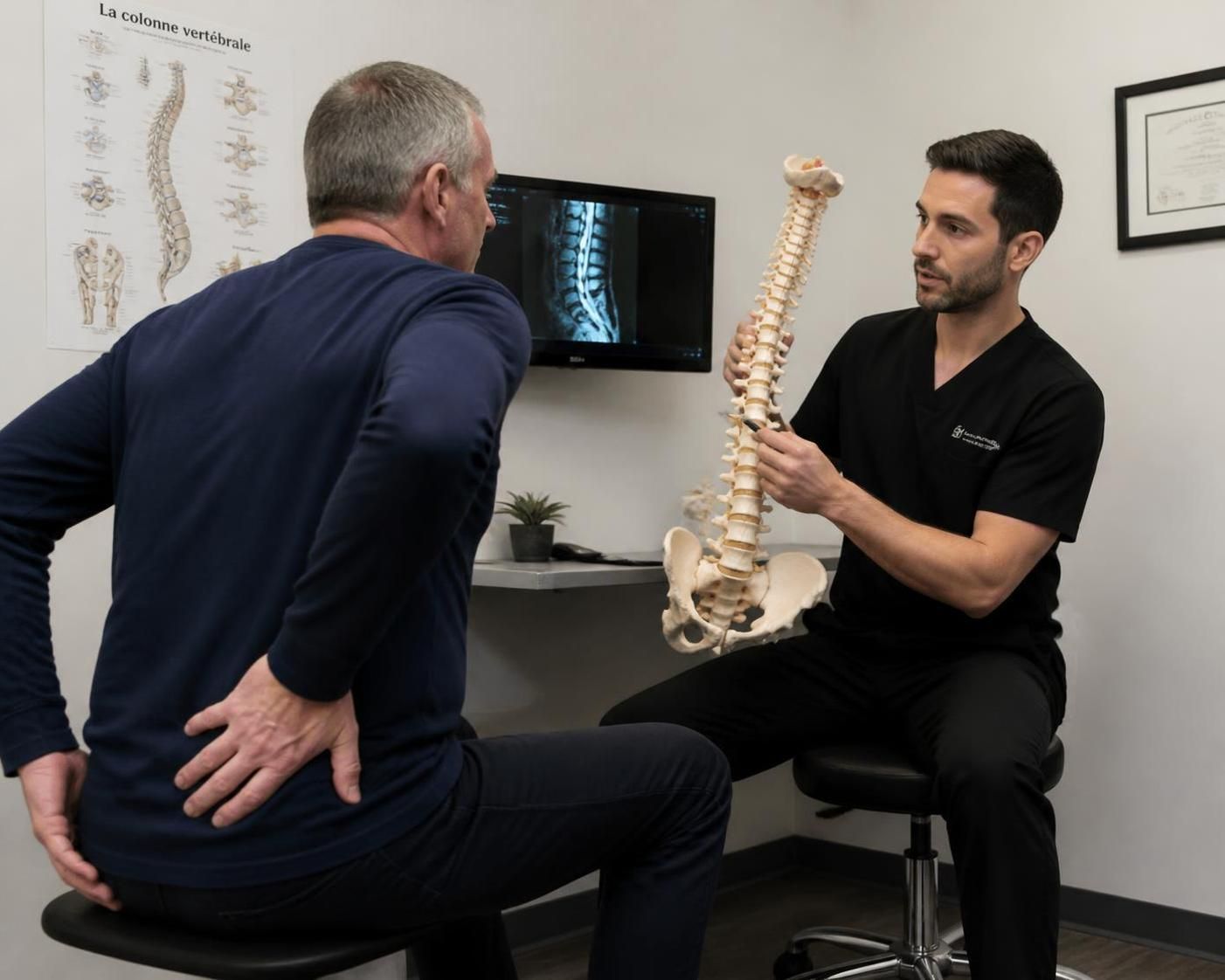
Therefore, a diagnosis should never be based solely on a simple description of symptoms. A complete clinical assessment, sometimes supplemented by imaging (MRI or CT scan), is necessary to differentiate the causes and target the most effective treatment.
Aggravating factors and preventive measures tailored to Laval workplaces
In Laval work environments, several factors can worsen existing sciatic pain or contribute to its onset. Prolonged sitting without appropriate lumbar support, a lack of regular breaks and repeated movements that heavily strain the lower back are the main aggravating factors.
Prolonged driving, which is common for some workers in Laval, also worsens symptoms because of sustained contraction of the lumbar muscles and a lack of movement. Remote work, which has increased in recent years, exposes some employees to improvised workstations without the necessary ergonomic adjustments.
To minimize these risks, creating an ergonomic environment is essential. This includes a chair with adjustable lumbar support, a desk at the proper height and a screen positioned at eye level to avoid neck flexion. Encouraging active breaks, even brief ones, to release muscle tension and promote blood circulation can greatly reduce the pressure placed on the spine.
Targeted therapeutic exercises are often recommended. These exercises aim to strengthen the core muscles, improve lumbar mobility and restore optimal posture. However, it is crucial to emphasize that these exercises must be tailored to each individual, taking their clinical condition and physical abilities into account. Slow progression, without pushing through pain, is preferable to avoid worsening symptoms.
In the workplace, ergonomics training and personalized advice help raise workers’ awareness of best practices. For example, administrative staff and technicians can benefit from educational sessions on appropriate postures and safe movement techniques, which effectively complement therapeutic interventions.
In some patients, radicular pain is accompanied by numbness or tingling sensations in the leg. These sensations, as well as progressive muscle weakness, should be taken seriously and warrant prompt clinical reassessment. This follow-up is essential, particularly in a work context where maintaining function is paramount.
Motorized neurovertebral decompression: an innovative option for Laval workers
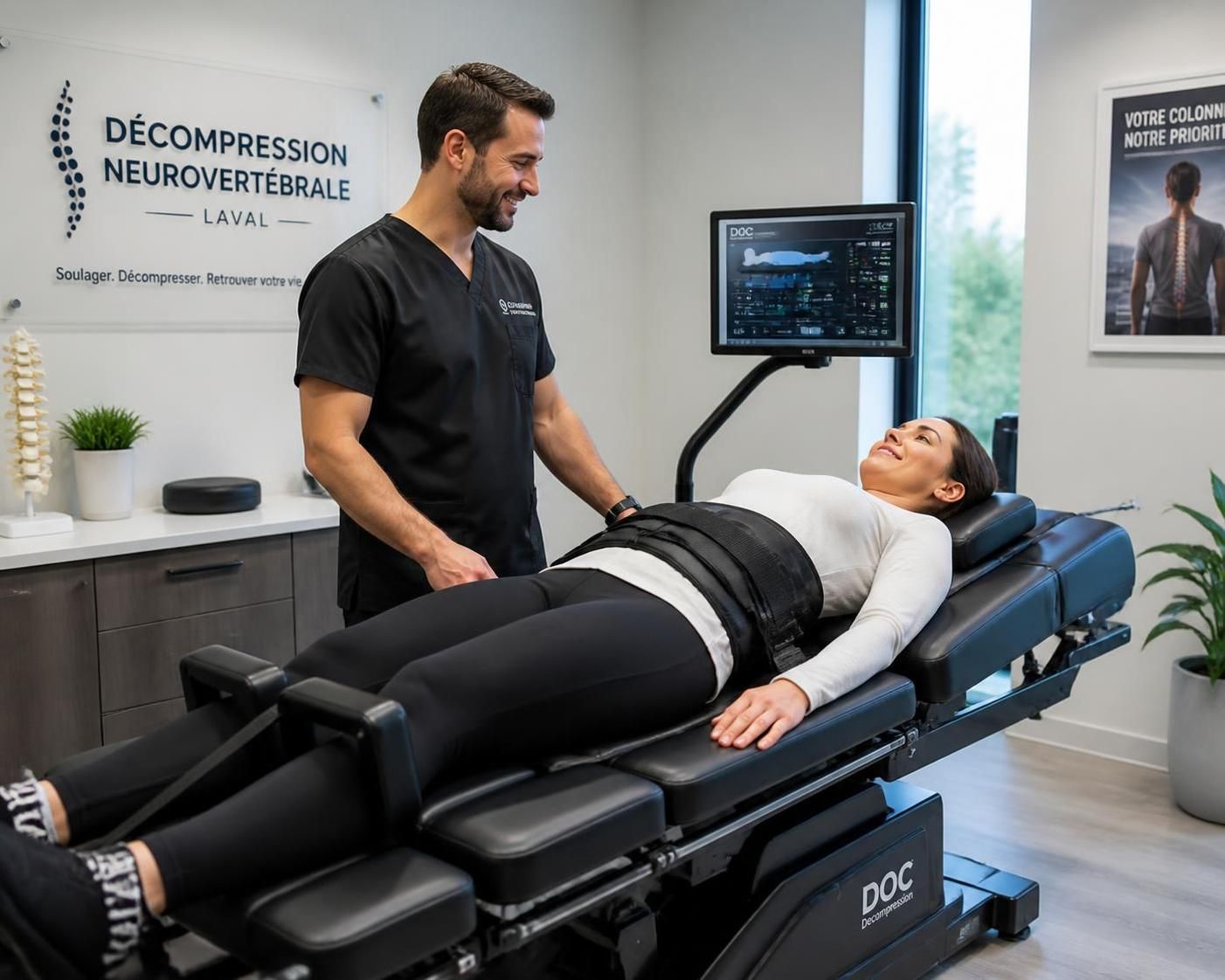
Motorized neurovertebral decompression is a non-invasive technique intended to reduce pressure on nerve roots in the lumbar region. This method uses a controlled traction device that mobilizes the spine progressively and precisely. It is mainly intended for patients with a disc herniation, disc protrusion or foraminal stenosis compatible with this treatment.
In Laval, Clinique TAGMED offers this technology among its therapeutic options. The approach stands out for its comfort and ease of integration into workers’ care plans, often allowing noticeable improvement in symptoms after several sessions. Decompression may also promote increased local blood circulation and better hydration of the intervertebral discs, contributing to recovery.
However, decompression is not suitable for everyone or a miracle solution. A thorough clinical assessment is necessary to determine the appropriate indication. It does not replace medical treatment in cases of severe complications or surgery when surgery becomes necessary. Professionals consider contraindications, including fractures, infections or certain spinal instabilities.
These motorized treatments are often combined with osteopathic manual care or physiotherapy sessions, along with a tailored exercise program. This synergy aims to optimize outcomes, promote functional rehabilitation and prevent recurrence. Interdisciplinary collaboration also involves regular follow-up and adjustments according to individual progress.
For example, a worker experiencing lumbar sciatica due to a disc herniation may need regular consultations for decompression treatments combined with postural advice and a specific therapeutic exercise plan. This type of comprehensive approach has shown beneficial results in several cases in Laval, offering a credible alternative that can reduce pain while often avoiding premature surgery.
When to seek care and follow-up options for workers with sciatica
Sciatic pain can vary in intensity and duration, but certain signs should prompt you to seek care from a health professional without delay. In a Laval work context, prompt follow-up can often prevent worsening and maximize the chances of a quick recovery.
Signs requiring careful clinical assessment include persistent pain below the knee, progressive numbness, marked muscle weakness or significant walking limitations. These symptoms suggest more serious nerve involvement that requires appropriate care, sometimes including additional tests such as an MRI.
Conversely, urgent medical care is needed if serious symptoms occur, such as loss of bladder or bowel control, numbness in the perineal region (the saddle area) or rapidly developing paralysis. These signs may indicate cauda equina syndrome, which is a medical emergency.
- Persistent or recurrent pain below the knee
- Progressive numbness or tingling in the leg
- Muscle weakness or motor impairments
- Significant limitations in mobility or work
Signs requiring urgent medical assessment:
- Loss of bladder or bowel control
- Perineal numbness
- Rapid or progressive paralysis of the lower limbs
- Fever associated with low back pain
Effective management often combines several interventions. In addition to neurovertebral decompression, treatments may include targeted exercises, manual care or, in some cases, prescribed medication to manage pain. Collaboration with an occupational health physician may be helpful in adapting the workstation and supporting a gradual return to work.
A personalized approach is especially important for Laval workers, who face specific physical or sedentary demands while seeking to preserve their spinal health over the long term.
- Avoid prolonged sitting without breaks to reduce pressure on the lumbar discs.
- Include personalized therapeutic exercises to strengthen the back and improve posture.
- Seek prompt care if pain below the knee is associated with numbness or weakness.
- Promote an ergonomic work environment with appropriate lumbar support.
- Consider motorized neurovertebral decompression as an option that complements comprehensive treatment.
| Treatment option | Main indication | Benefits | Limitations |
|---|---|---|---|
| Motorized neurovertebral decompression | Disc herniation, compatible foraminal stenosis | Non-invasive, gradual relief, improves local circulation | Not suitable in cases of instability; results vary between patients |
| Personalized therapeutic exercises | Moderate to severe low back pain | Muscle strengthening, functional improvement | Requires supervision and adjustments; may worsen symptoms if performed incorrectly |
| Manual care (osteopathy, physiotherapy) | Mechanical symptoms, muscle contractures | Muscle relaxation, improved mobility | Limited for severe inflammatory causes |
| Medication (analgesics, anti-inflammatory drugs) | Acute pain | Rapid pain reduction | Does not treat the cause; risk of side effects |
What are the typical symptoms of sciatica in a worker?
Sciatica causes pain radiating from the lower back into the buttock and leg, sometimes accompanied by numbness, tingling and muscle weakness. Certain positions or exertion can worsen these symptoms.
How does neurovertebral decompression help relieve sciatica?
This motorized technique gently stretches the lumbar spine, reducing pressure on the nerve roots. It promotes local blood circulation and may ease pain in some cases after several sessions.
What precautions should be taken when performing exercises for sciatica?
Exercises must be adapted to the specific condition, performed gradually and without pain. If symptoms worsen, they should be stopped and a professional should be consulted.
When should you seek urgent care for sciatica?
Urgent medical care is necessary if you experience loss of bladder or bowel control, numbness in the perineal area or rapidly developing paralysis of the legs. These signs may indicate a medical emergency.
How can sciatica be prevented in Laval workplaces?
Improve your workstation ergonomics, take regular breaks to move, perform back-strengthening exercises and consult a specialist if pain persists.
If sciatic pain is disrupting your work or daily life in Laval, a personalized assessment can help identify the likely cause and signs to watch for. This will help guide appropriate conservative treatments, including options such as motorized neurovertebral decompression when indicated.
For professional follow-up and personalized support, you can book an appointment with Clinique TAGMED, specializing in sciatica treatment in Laval.
Sylvain Desforges, B.Sc., D.O., N.D., osteopath and naturopath
This content is educational and does not replace a personalized assessment by a health professional.
