


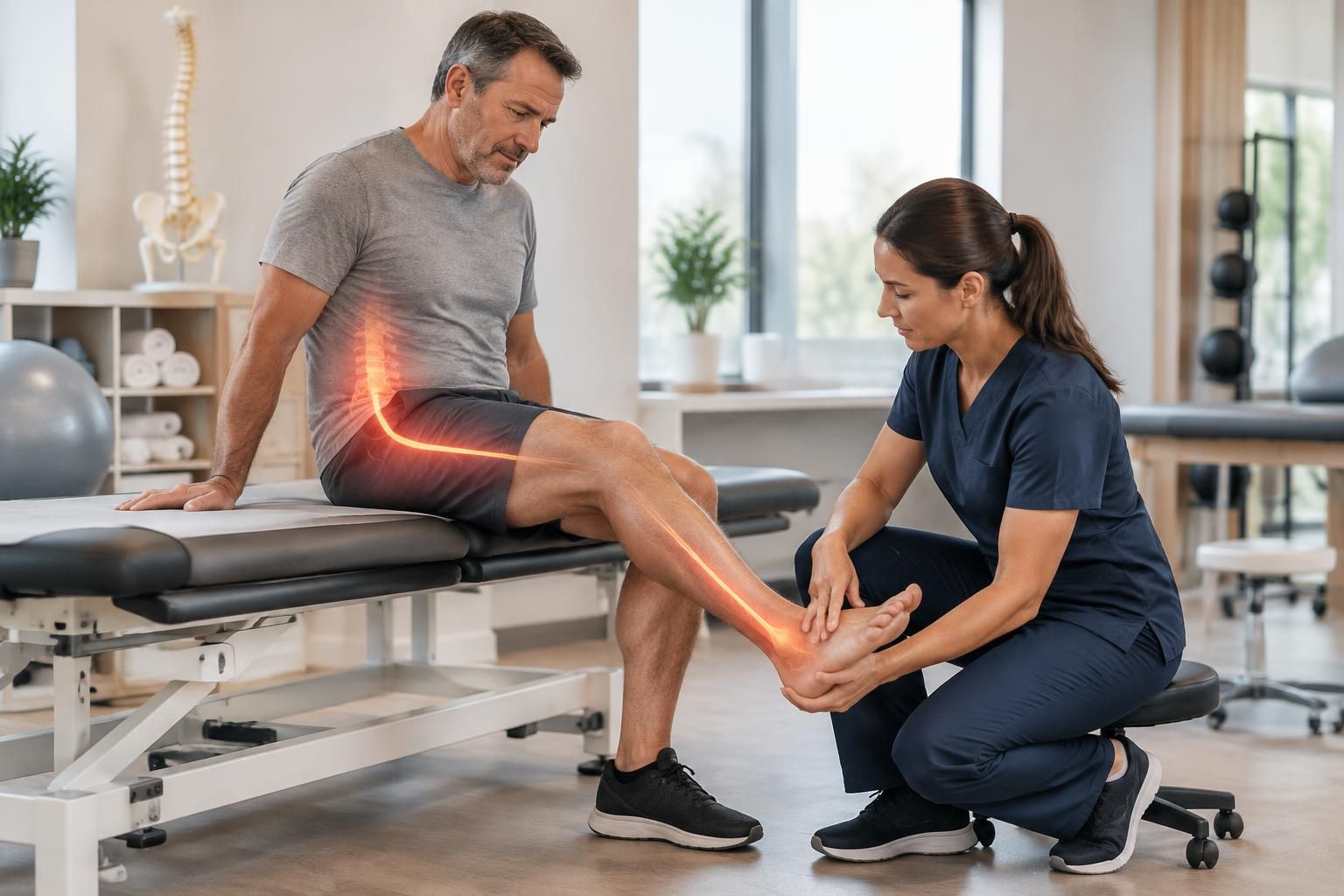
Foot pain may be related to sciatica when a nerve root in the lower back is irritated, but this symptom alone does not identify its cause. Tingling, a burning sensation, or weakness may accompany pain that travels down the leg; however, a local foot problem or peripheral nerve involvement may produce similar signs.
In Saint-Léonard, commuting, periods of sitting at work, and walking during daily activities can make these symptoms especially bothersome. Local approaches begin by distinguishing among the possibilities and assessing foot mobility, strength, and sensation, rather than assuming it is always disc compression.
In brief: recognizing foot pain that may be related to sciatica
The pattern can guide, not confirm. Pain that starts in the back or buttock and travels down the leg may suggest nerve root irritation.
Neurological signs matter. Tingling, loss of sensation, or difficulty lifting the foot warrant assessment, especially if they are progressing.
The foot can also be the source. Localized pain triggered by weight-bearing or pressure may be due to a problem separate from sciatica.
Care should be individualized. Physiotherapy, kinesitherapy, and other approaches depend on clinical findings and progression.
How to distinguish nerve pain from a local foot problem
Sciatica generally describes pain related to irritation of a lumbar nerve root, often felt in the buttock and leg. When it reaches the foot, it may be accompanied by shooting pain, burning, or tingling. The distribution of symptoms can help guide a clinician’s examination, but it is not enough to determine which root is involved or establish a diagnosis.
Involvement of the L5 or S1 roots can sometimes affect sensation and certain foot movements. For example, new difficulty lifting the front of the foot or standing on tiptoes should be reported. However, these observations alone cannot precisely locate an injury.
Pain concentrated under the heel, around a joint, or on a toe, and reproduced mainly by pressure or weight-bearing, may point to a local cause. Diabetes, certain injuries, and other nerve conditions can also cause sensory changes in the foot. To better understand possible symptoms, see this overview of the link between the sciatic nerve and foot pain.
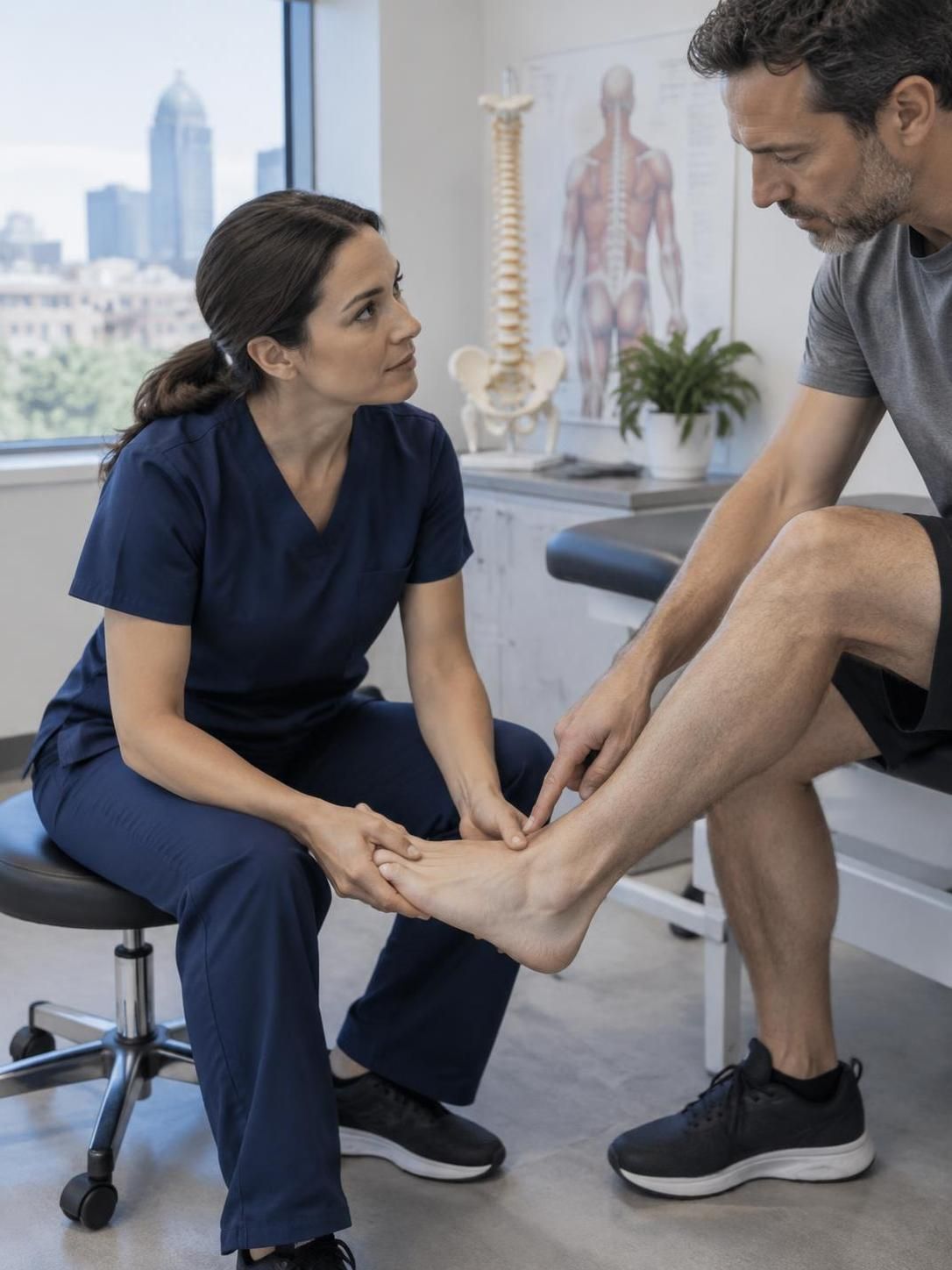
During an assessment, the history of symptoms is considered alongside an examination of strength, reflexes, sensation, and gait. Imaging is not automatically needed; its usefulness depends in particular on progression and observed signs. A public health resource on consultation and treatment for sciatica highlights the value of care tailored to the situation.
In Saint-Léonard, daily habits can affect symptoms
Prolonged sitting, driving, or a work-from-home setup with little variation may increase discomfort for some people. Others find that gradual walking helps them maintain mobility. There is no universal response: if an activity causes pain to travel farther down the leg or worsens numbness, it is better to stop and seek advice.
For someone who works sitting down in Saint-Léonard, changing positions regularly, planning short breaks, and avoiding remaining still for long periods may be more realistic than trying to find the perfect posture. Stable footwear and a clear space also reduce the risk of tripping when weakness or loss of sensation affects the foot. These measures do not necessarily treat the cause, but they may make activities easier while an assessment is arranged.
Note where the pain begins, how far it travels, and what seems to change it.
Watch for changes in sensation, foot mobility, and difficulty walking.
Maintain tolerable activity if it does not worsen symptoms; avoid pushing through pain that is progressing.
Seek advice if symptoms persist, recur, or disrupt sleep and usual tasks.
Physiotherapy or kinesitherapy may help address function and a gradual return to activities when appropriate. The choice of exercises depends on the assessment: a movement that is helpful for one person may irritate another person’s symptoms. For additional guidance, the page on signs indicating when to seek care for sciatica can help prepare for a discussion with a health professional.
A simple note on activities, symptom duration, and observed changes can make the consultation more concrete. It helps describe the situation without having to interpret every sensation yourself.
Local approaches and management options to consider
Pain management depends on the likely cause, symptom intensity, and whether a neurological deficit is present. Depending on the context, a professional may recommend maintaining adapted activity, temporarily modifying certain tasks, or using individualized exercises. Medications require advice from an authorized professional, particularly to account for contraindications and adverse effects.
Local care in Saint-Léonard can begin with an assessment by a health professional able to examine the symptoms and refer to the appropriate resource. Manual therapy or osteopathy may be considered in certain contexts, but they do not replace assessment of progressive weakness or necessary medical care. It is helpful to ask what goal is being pursued and how progress will be reassessed.
| Option | Potential role | Limitation to keep in mind |
|---|---|---|
| Adapted activity and exercises | Maintain function and support a gradual return to activities. | Exercises should be adjusted if symptoms worsen. |
| Physiotherapy or kinesitherapy | Support mobility and functional abilities based on the assessment. | Content and outcomes vary according to the situation. |
| Motorized spinal decompression | Controlled traction sometimes considered for certain profiles after assessment. | Not suitable for everyone and does not replace urgent assessment. |
| Specialized medical assessment | Assess persistent pain, a deficit, or a cause requiring targeted management. | Tests and treatments depend on clinical findings. |
Spinal decompression is a form of progressive, controlled motorized traction. It may be considered for certain patients whose presentation is consistent with disc or foraminal involvement, after contraindications have been checked. Results vary, no number of sessions is appropriate for everyone, and this approach does not put a disc “back into place”; nor does it guarantee avoiding surgery.
Clinique TAGMED, located in Mount Royal near Outremont and Côte-des-Neiges, states that it offers, depending on the assessment, motorized spinal decompression and specific osteopathic approaches. This Montréal resource is not located in Saint-Léonard: the appropriateness of a service should be discussed based on needs and clinical signs. The sciatica management options in Montréal are provided for informational purposes.
When to seek care for foot pain associated with sciatica
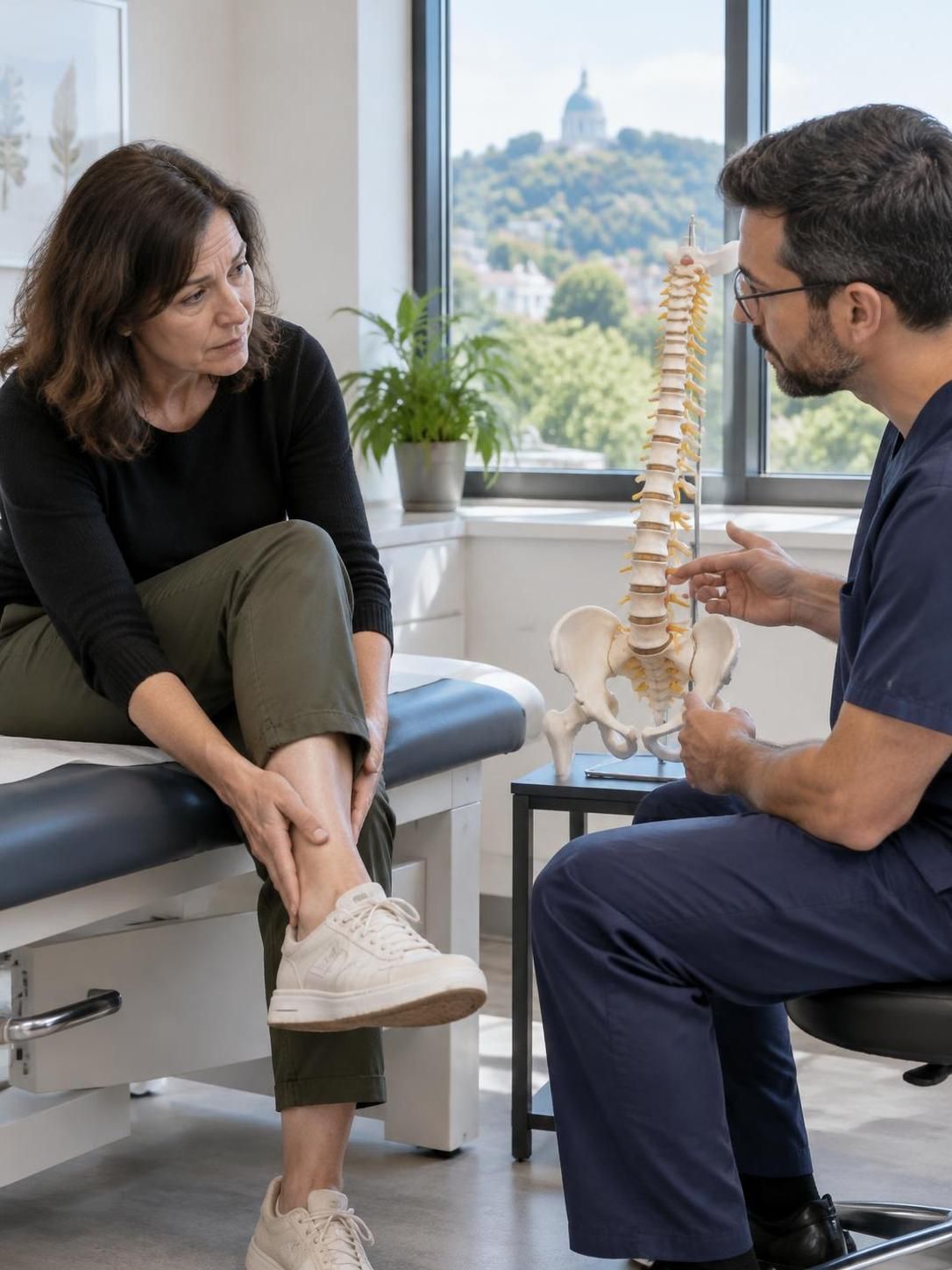
A clinical assessment is indicated if pain persists or recurs, travels below the knee, limits walking, disrupts sleep, or is accompanied by numbness, loss of sensation, or weakness. New difficulty lifting the foot or loss of function deserves particular attention.
Urgent medical assessment is needed in the event of loss of bladder or bowel control, numbness in the saddle area, significant or rapidly progressing weakness, fever, or poor general health. Major trauma, a context of cancer or infection, or rapid worsening also requires prompt care.
A virtual consultation can help discuss symptoms when this option is appropriate, but it does not always replace an in-person examination. When an urgent sign is present, do not wait for a remote appointment.
Frequently asked questions about foot pain and sciatica
Can sciatica cause pain all the way to the foot?
Yes, pain related to a nerve root can travel down to the foot and may be accompanied by tingling or numbness. However, the pattern alone cannot confirm its cause.
How can I tell if the pain is coming from the foot instead?
Very localized pain reproduced by weight-bearing or pressure may suggest a local cause, but this indication is not enough for a diagnosis. The examination considers the leg, back, sensation, and strength.
When should I seek care in Saint-Léonard?
Seek care if pain persists, limits walking, or is accompanied by numbness or weakness. Rapidly progressive weakness, saddle numbness, or bladder or bowel problems require urgent assessment.
Is spinal decompression suitable for all sciatic pain?
No. It may be considered for certain profiles after an assessment and verification of contraindications. It does not replace urgent care, and its results are not guaranteed.
If foot pain accompanied by symptoms in the leg complicates your travel or activities in Saint-Léonard, an assessment can help clarify the likely cause, signs to watch for, and whether a conservative approach is appropriate. The Clinique TAGMED contact page provides information about the steps to take in Mount Royal.
Sylvain Desforges, B.Sc., D.O., N.D., osteopath and naturopath
This content is educational and does not replace a personalized assessment by a health professional.
