





Managing back pain is a major concern for Côte-des-Neiges residents, in this vibrant Montréal neighbourhood where many adults experience the impact of a sedentary lifestyle, long commutes, or prolonged postures. In these situations, two non-invasive approaches stand out: physiotherapy and neurovertebral decompression. Each offers different mechanisms and objectives to relieve pain and improve spinal function.
Understanding the differences and complementarity between these methods is essential to choosing a strategy suited to your condition. Given the various possible causes of back pain and the diverse clinical profiles encountered in Montréal, particularly in Côte-des-Neiges, it is important to assess each treatment according to its scope of action, indications, as well as patients’ reported experiences and the conclusions of the most recent clinical research.
In brief: key points to know about physiotherapy and neurovertebral decompression
- Physiotherapy offers rehabilitation techniques, therapeutic exercises, and manual therapy aimed at restoring mobility and muscle function.
- Neurovertebral decompression uses targeted motorized traction to reduce pressure on the intervertebral discs and nerve roots, which may help in certain cases of disc herniation or protrusion.
- Both methods are non-invasive and may be complementary depending on the clinical assessment and the patient’s needs.
- Decompression is not suitable for everyone, especially in cases of spinal instability or specific medical conditions.
- A thorough assessment is required to determine the best approach, with attention to symptoms such as radiating pain, numbness, or muscle weakness.
Understanding the mechanisms and objectives of physiotherapy and neurovertebral decompression in Côte-des-Neiges
Physiotherapy, widely recognized in specialized clinics in Montréal, addresses a broad range of musculoskeletal concerns, including back pain that may suggest sciatica or nerve involvement. It combines personalized strengthening, stretching, and posture-improvement exercises with manual therapy techniques to optimize joint and muscle function. In Côte-des-Neiges, patients benefit from expertise adapted to the urban context and the constraints associated with office work or working from home.
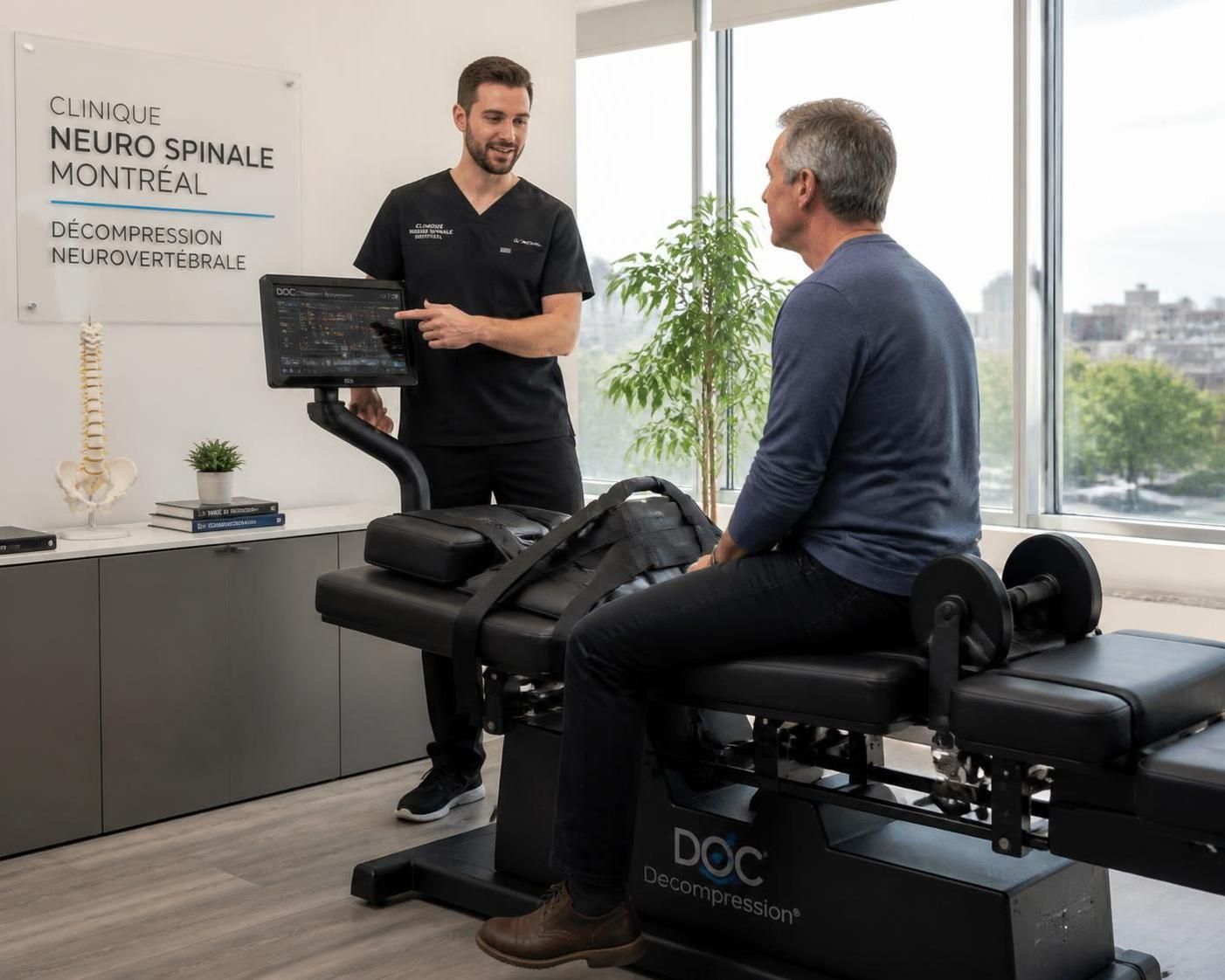
In parallel, neurovertebral decompression is a more targeted method involving controlled motorized traction of the spine. This technique aims to reduce internal pressure within the intervertebral discs, helping to reduce disc protrusions or herniations that may compress nerve roots. Decompression therefore acts directly on spinal structures, with the goal of relieving pain, improving local blood circulation, and promoting better tissue healing, in a safe and monitored setting.
This fundamental distinction helps explain why some Côte-des-Neiges patients turn to physiotherapy for a comprehensive, functional approach, while others may benefit from neurovertebral decompression for the specific management of disc conditions. Effectiveness, however, depends largely on the underlying cause, severity, and adherence to medical contraindications.
Detailed approach and clinical indications for treating back pain
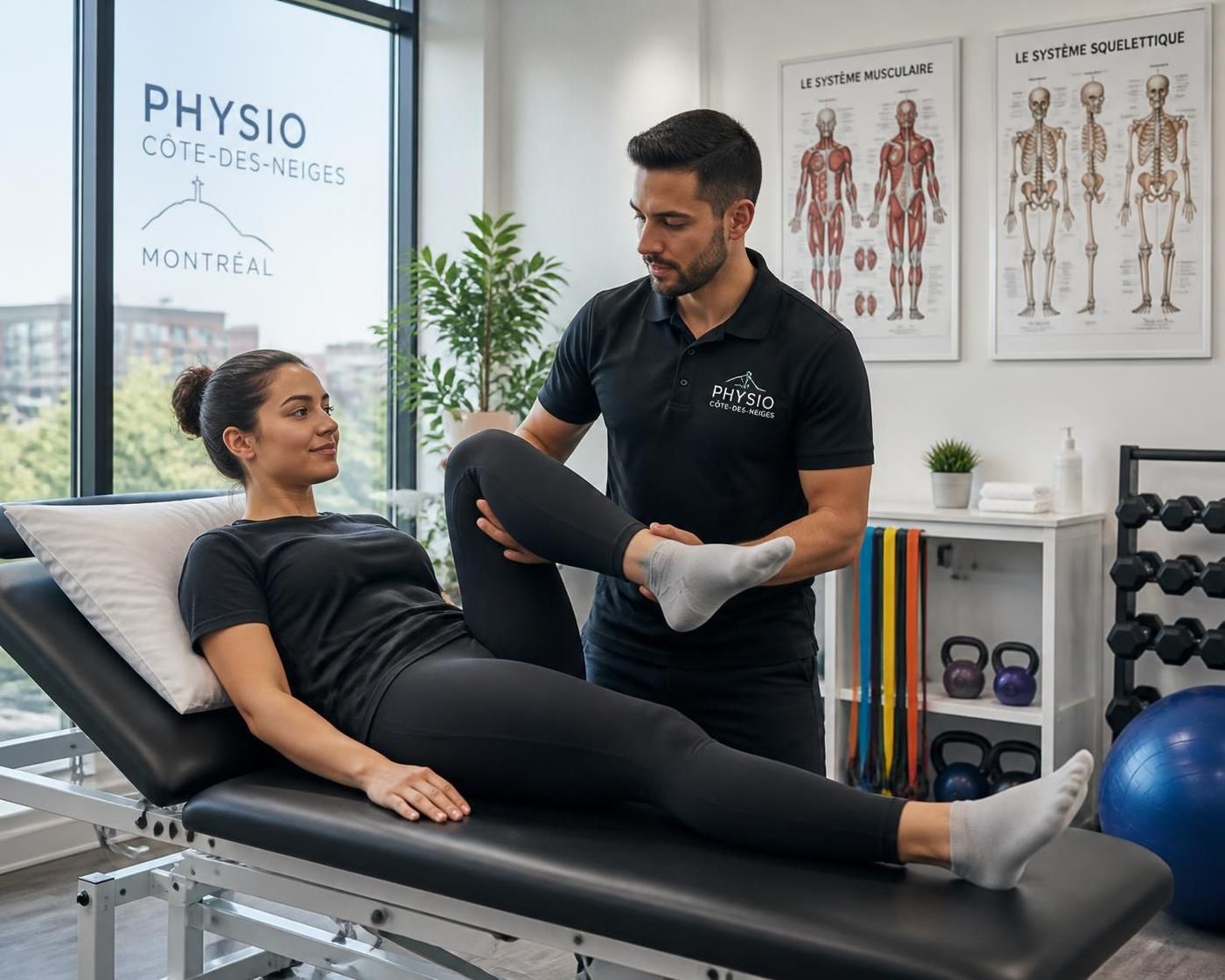
Physiotherapy is first and foremost based on a comprehensive assessment that includes examination of movement, muscle strength, posture, and functional limitations. It often targets the paraspinal muscles, deep muscle chains, and joints to restore optimal balance. The use of manual therapy, such as gentle mobilizations or manipulations, complements this approach. This process supports not only pain resolution but also the prevention of recurrence through learning exercises suited to daily or work life.
Neurovertebral decompression, on the other hand, is mainly intended for symptoms related to nerve compression or reduced disc space. The technique involves applying controlled, gradual traction force using specialized equipment. The patient is positioned comfortably, often lying down, with harnesses placed to precisely target the area to be treated. This treatment takes place over several sessions, generally 2 to 3 times per week, each lasting between 20 and 45 minutes. Ongoing adjustments to the force help avoid excessive tension and ensure an optimal “pumping” effect on the discs.
The main indications considered in Côte-des-Neiges include disc herniations, disc protrusions, or moderate foraminal stenosis responsible for radiating pain, numbness, or tingling. However, this method is not recommended in cases of spinal instability, infections, recent fractures, or other conditions in which traction could worsen the situation. Therefore, a prior consultation with a qualified health professional is essential before undertaking this type of treatment.


Comparison of benefits and limitations: physiotherapy versus neurovertebral decompression
The effectiveness of both methods varies according to the factors involved in the pain and the patient’s individual characteristics. Physiotherapy offers a versatile approach that can address a broad range of back pain, whether muscular, joint-related, or associated with mild nerve involvement. It promotes active patient engagement and self-management, which are key elements of rehabilitation and prevention. Its limitations include the need for a certain time commitment and variability in results depending on cooperation and adherence to exercises.
Neurovertebral decompression, for its part, offers targeted action on spinal structures, particularly useful when mechanical pressure on nerve roots has been established. Benefits include its non-invasive nature, customization of the applied forces, and the absence of medication-related side effects. However, despite its promising principle, it is not a universal solution or a systematic alternative to physiotherapy or surgery, particularly when precise clinical selection criteria are absent. Cost, the number of sessions required, and the heterogeneity of clinical responses are also among the limitations to consider.
| Criterion | Physiotherapy | Neurovertebral decompression |
|---|---|---|
| Mechanism of action | Exercises, manual therapy, muscle rehabilitation | Targeted motorized spinal traction |
| Main indications | Muscle pain, postural concerns, mild radicular pain | Disc herniations, protrusions, moderate foraminal stenosis |
| Side effects | Rare; sometimes temporary pain related to exercises | May be contraindicated depending on the case; temporary fatigue or discomfort |
| Treatment duration | Variable, often several weeks to months | Typically 10–14 sessions, 2 to 3 times per week |
| Patient involvement | Active; participation at home is essential | Passive; treatment delivered by the practitioner |
| Limitations | Requires cooperation; results vary | Not suitable for everyone; requires a thorough assessment |
Integrating physiotherapy and neurovertebral decompression into a personalized spinal care plan
In Côte-des-Neiges, as in other Montréal neighbourhoods, back pain management increasingly relies on a multidisciplinary, personalized approach. A qualified professional may recommend a combination or sequence of treatments to optimize results based on the severity and nature of symptoms.
For example, a patient with moderate radicular pain related to a disc protrusion may begin care with physiotherapy incorporating exercises and manual therapy to improve mobility, strengthen stabilizing muscles, and reduce inflammation. If results are not satisfactory, motorized neurovertebral decompression may be considered to relieve nerve compression more directly, with close follow-up and ongoing reassessment.
This evolving approach must always take personal factors into account, such as activity level, work (particularly working from home, which is common in Montréal), family circumstances, or physical limitations. Practical ergonomic advice and behavioural adjustments may also strengthen the effectiveness of care.
It is therefore recommended to explore these options at a specialized clinic recognized for its musculoskeletal health services, ensuring care tailored to your situation.
This video illustrates how a motorized neurovertebral decompression session unfolds, with clear explanations of the expected benefits and the patient’s experience.
Discover how a physiotherapist in Montréal adapts manual therapy and exercises to effectively treat low back pain and prevent recurrence.
{“@context”:”https://schema.org”,”@type”:”FAQPage”,”mainEntity”:[{“@type”:”Question”,”name”:”Quand devrais-je consulter pour une douleur lombaire ou sciatique ?”,”acceptedAnswer”:{“@type”:”Answer”,”text”:”Il est conseillu00e9 de consulter si la douleur persiste plus de quelques semaines, surtout si elle s’accompagne de douleurs irradiantes sous le genou, d’engourdissements, de faiblesse musculaire ou d’un impact sur la marche. Une u00e9valuation pru00e9coce permet d’orienter le traitement de fau00e7on adaptu00e9e.”}},{“@type”:”Question”,”name”:”La du00e9compression neurovertu00e9brale est-elle adaptu00e9e u00e0 tous les types de douleurs de dos ?”,”acceptedAnswer”:{“@type”:”Answer”,”text”:”Non. Cette technique est principalement indiquu00e9e pour certains types de douleurs liu00e9es u00e0 une compression nerveuse par hernie discale ou protrusion. Des contre-indications mu00e9dicales existent, du2019ou00f9 lu2019importance du2019une u00e9valuation professionnelle avant toute su00e9ance.”}},{“@type”:”Question”,”name”:”Quels sont les risques potentiels de la physiothu00e9rapie et de la du00e9compression neurovertu00e9brale ?”,”acceptedAnswer”:{“@type”:”Answer”,”text”:”La physiothu00e9rapie peut occasionner des courbatures ou douleurs temporaires apru00e8s certains exercices, gu00e9nu00e9ralement passant avec lu2019adaptation du programme. La du00e9compression neurovertu00e9brale peut provoquer un inconfort temporaire, fatigue ou douleur modu00e9ru00e9e. Une surveillance mu00e9dicale u00e9vite les complications.”}},{“@type”:”Question”,”name”:”Peut-on suivre une ru00e9u00e9ducation avec ces deux approches simultanu00e9ment ?”,”acceptedAnswer”:{“@type”:”Answer”,”text”:”Selon lu2019u00e9valuation clinique, une combinaison graduelle et coordonnu00e9e de physiothu00e9rapie et de du00e9compression neurovertu00e9brale peut u00eatre envisagu00e9e pour maximiser les bu00e9nu00e9fices. Cela nu00e9cessite un suivi ru00e9gulier et une bonne communication entre praticiens.”}},{“@type”:”Question”,”name”:”Comment choisir entre physiothu00e9rapie et du00e9compression neurovertu00e9brale ?”,”acceptedAnswer”:{“@type”:”Answer”,”text”:”Le choix du00e9pend de la nature et de la cause de la douleur, de son intensitu00e9, ainsi que des pru00e9fu00e9rences et tolu00e9rances du patient. Une consultation spu00e9cialisu00e9e u00e0 Cu00f4te-des-Neiges permettra de du00e9finir la stratu00e9gie la plus adaptu00e9e u00e0 votre cas.”}}]}When should I seek care for low back pain or sciatica?
It is advisable to seek care if pain persists for more than a few weeks, especially if it is accompanied by pain radiating below the knee, numbness, muscle weakness, or an impact on walking. An early assessment can help guide treatment appropriately.
Is neurovertebral decompression suitable for all types of back pain?
No. This technique is mainly indicated for certain types of pain related to nerve compression from a disc herniation or protrusion. Medical contraindications exist, which is why a professional assessment before any session is important.
What are the potential risks of physiotherapy and neurovertebral decompression?
Physiotherapy may cause muscle soreness or temporary pain after certain exercises, which generally resolves as the program is adjusted. Neurovertebral decompression may cause temporary discomfort, fatigue, or moderate pain. Medical supervision helps prevent complications.
Can rehabilitation using both approaches be undertaken at the same time?
Depending on the clinical assessment, a gradual, coordinated combination of physiotherapy and neurovertebral decompression may be considered to maximize benefits. This requires regular follow-up and good communication between practitioners.
How do I choose between physiotherapy and neurovertebral decompression?
The choice depends on the nature and cause of the pain, its intensity, and the patient’s preferences and tolerance. A specialized consultation in Côte-des-Neiges will help define the strategy best suited to your case.
If you are experiencing persistent back pain or symptoms consistent with nerve irritation in Côte-des-Neiges, a professional assessment may help determine the likely cause and clarify appropriate treatment options, whether through physiotherapy, neurovertebral decompression, or a combined approach.
Discover sciatica treatment options in Montréal
Dr. Sylvain Desforges, B.Sc., D.O., N.D., osteopath
The content presented is intended primarily for educational purposes and does not replace a personalized assessment by a qualified professional.
