



Cervical Facet Syndrome: Neck Pain, Headache and Diagnosis
Cervical facet joints may contribute to neck pain, stiffness and referred pain toward the shoulder, shoulder blade or back of the head. These symptoms overlap with disc, muscular and neurological disorders.
Pain worsened by neck rotation or extension may suggest a facet component but does not confirm the source. Cervicogenic headache is also a clinical diagnosis that requires exclusion of primary headache disorders and concerning neurological signs.
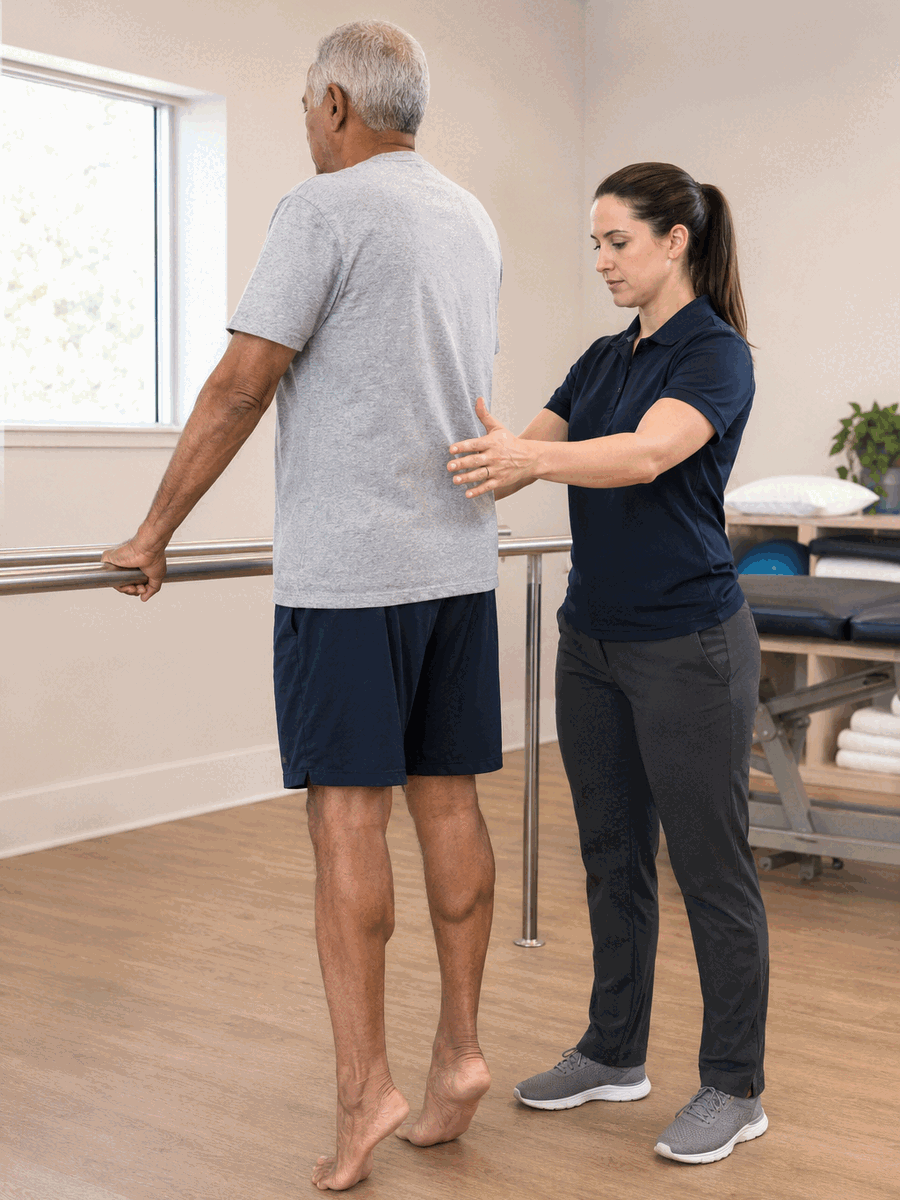
Which findings suggest cervical facet pain?
The pattern is often unilateral, with stiffness, rotation pain and local tenderness. Arm pain with tingling, weakness or loss of dexterity suggests associated nerve-root or spinal-cord involvement.
Differential diagnoses include disc pain, muscle strain, migraine, occipital neuralgia, radiculopathy, myelopathy, inflammatory arthritis and trauma-related disorders. Balance problems, hand clumsiness or abnormal reflexes require particular attention.
Mechanical profile
Observe positions and movements that change symptoms.
Distribution
Distinguish local pain, referred pain and a radicular pattern.
Neurology
Document strength, sensation, reflexes, balance and dexterity as appropriate.
Function
Follow walking, sleep, work, driving and priority activities.
Assessment of the neck, nerves and spinal cord
MRI is most useful when radiculopathy, myelopathy, trauma, prior surgery or red flags are present. Visible facet osteoarthritis without clinical matching does not establish the pain source.
Assessment must distinguish local mechanical pain from radiculopathy, myelopathy, vascular pathology, fracture or inflammatory disease.
| Observation | Cautious interpretation | Useful decision |
|---|---|---|
| Rotation pain with stiffness | Possible facet component | Compare with muscles, disc and headache. |
| Arm pain with tingling | Assess for radiculopathy | Check strength, sensation and reflexes. |
| Hand clumsiness or gait change | Possible myelopathy | Prompt medical assessment. |

Active care and targeted interventions
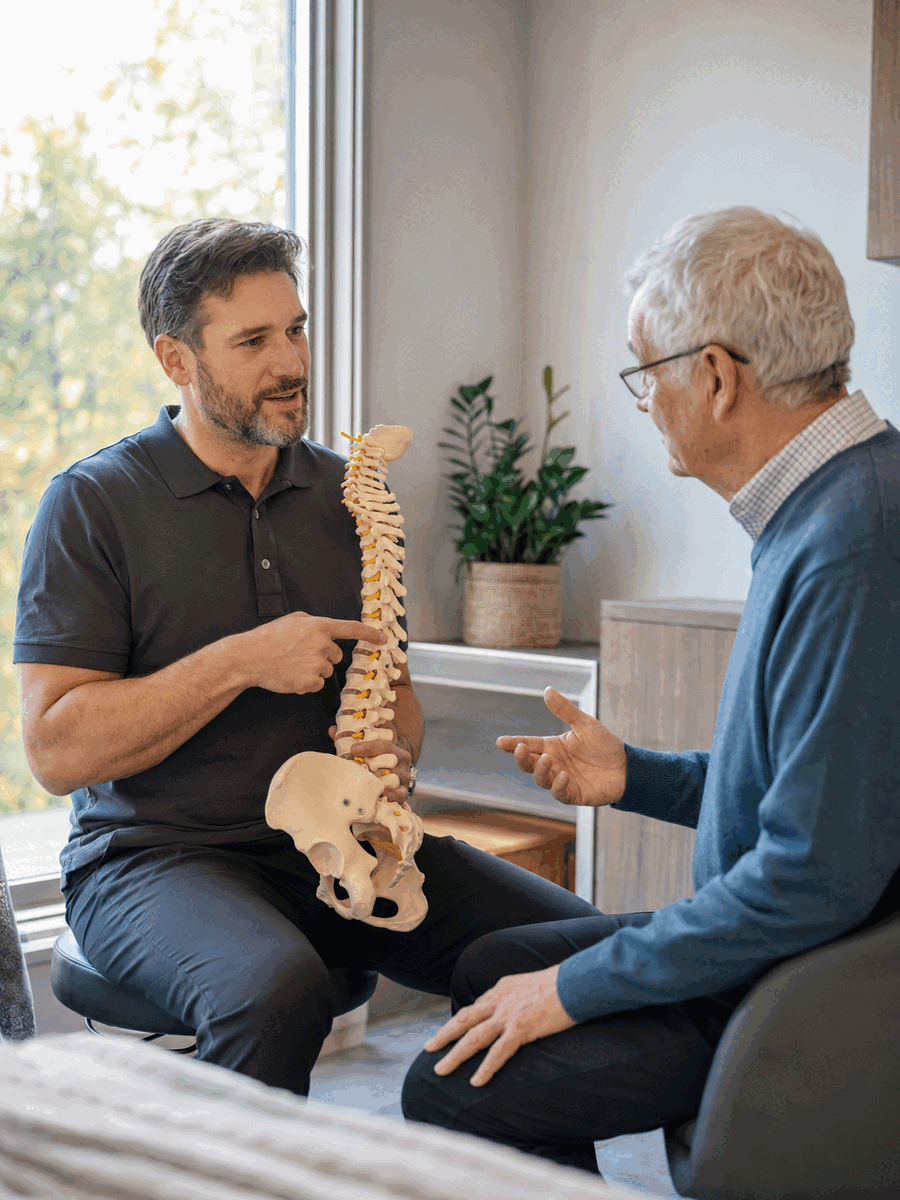
Initial care emphasizes education, tolerable mobility, cervical and scapular endurance, ergonomics and graded return to activity. In carefully selected persistent pain, medial branch blocks or radiofrequency treatment may be discussed by a specialist.
A temporary response to an intervention does not replace monitoring of function, sleep, work tolerance and neurological status.
Elements to document before and during care
A useful record connects observations with verifiable goals and explicit criteria for progression.
- Pain distribution and headache features
- Rotation range and postural tolerance
- Strength, sensation, reflexes and dexterity
- Balance, gait and myelopathy signs
- Trauma, surgery or inflammatory disease
- Sleep, driving and work goals
Follow symptoms, function and neurological status
The pattern is often unilateral, with stiffness, rotation pain and local tenderness. Arm pain with tingling, weakness or loss of dexterity suggests associated nerve-root or spinal-cord involvement.
Follow-up is not limited to a pain score. It includes symptom distribution, strength, sensation, sleep, exercise tolerance and participation in priority activities.
Working diagnosis
Does it explain the symptoms and response to loading?
Measured outcome
Are function and neurology improving along with pain?
Review point
When should the plan continue, change or stop?
Referral threshold
Which signs require imaging, specialist review or urgent care?
Common errors to avoid
- Attributing every headache to the neck
- Missing early myelopathy
- Treating an arthritic image alone
- Forcing movements that worsen symptoms
- Using passive care without active progression
- Delaying assessment after major trauma
Questions to ask before a targeted intervention
Which structure is actually targeted?
Ask how the hypothesis is supported and which alternatives remain possible.
Which benefit is expected?
Define a functional goal rather than a broad promise.
What are the risks and limits?
Clarify contraindications, uncertainty and stopping signs.
What happens if it fails?
A credible plan defines the next step before treatment starts.
Related guides in the facet-joint silo
Facet arthropathy and foraminal stenosis
Explore this topic and compare its clinical intent.
Disclosed clinical resource
Readers who wish to verify a service may consult this separate, disclosed resource. Transactional information should be confirmed directly with the clinic.
TAGMED Clinic — disclosed clinical resource
Information about assessment of spinal pain and selected non-surgical approaches. This resource is external to The Spine Page and should be compared with other relevant options.
Frequently asked questions
Can cervical facet pain cause headaches?
Upper cervical joints may contribute to referred occipital pain, but not every headache is cervicogenic.
Does rotation pain confirm the diagnosis?
No. It may guide assessment but is not specific.
Why can pain reach the shoulder blade?
Cervical joints can produce referred pain that does not necessarily follow a nerve-root pattern.
How is radiculopathy distinguished?
Arm pain with tingling, numbness, weakness or reflex change increases concern for nerve-root involvement.
When is MRI useful?
It is more relevant with neurological deficit, possible myelopathy, trauma, prior surgery or selected persistent symptoms.
Are diagnostic blocks sometimes used?
Yes. Controlled medial branch blocks may be used before radiofrequency treatment in selected persistent cases.
Which exercises are commonly considered?
Tolerable mobility, deep neck-flexor endurance, scapular control and graded activity according to the individual profile.
Is manipulation always appropriate?
No. The decision depends on diagnosis, vascular risk, neurological findings, trauma and tolerance.
Which signs require prompt care?
Weakness, gait disturbance, hand clumsiness, bladder or bowel change, fever or major trauma.
Can the pain recur?
Yes. Managing load, activity, sleep and endurance may reduce recurrence risk without eliminating it completely.
Main clinical sources
- NICE — Low back pain and sciatica recommendations
- American College of Radiology — Low Back Pain
- Clinical review — Facet joint syndrome
- Consensus guidelines — cervical facet joint pain
Last editorial review: August 2026. General educational information only.
Dr. Sylvain Desforges, B.Sc., D.O., N.D., osteopath – The Spine Page
Clarify possible cervical facet pain
Compare local pain, headache, radiculopathy and myelopathy signs before selecting treatment.
Dr. Sylvain Desforges, B.Sc., D.O., N.D., osteopath